
If you’re comparing sealcoating companies for a Michigan asphalt driveway, don’t start by asking which quote is cheapest. Start by asking whether the quotes describe the same job. For homeowners maintaining an asphalt investment, a lower number can reflect less cleaning, fewer included prep steps, different crack treatment, a different sealer system, or simply a vaguer scope.
This guide gives Michigan homeowners nine practical points to check when collecting driveway sealing quotes and choosing the best driveway sealing company for the job. Use them to ask clearer questions about the materials, preparation, application, and written terms. The right answers depend on your driveway’s condition, the selected product, and the weather on the scheduled day.
Key Takeaways
- Compare written scope before price. Two quotes can have similar totals while covering different preparation, crack treatment, materials, and curing requirements.
- Check the work boundary, preparation, crack and oil-spot treatment, sealer, application, access restrictions, and written workmanship terms.
- More coats, a higher-priced sealer, or one application method are not automatic signs of better quality. The system has to fit the pavement and the product requirements.
- Sealcoating is preventive maintenance for suitable asphalt. It can protect the surface and improve appearance, but it cannot rebuild failed support, correct sinking, or repair potholes.
- Michigan weather makes timing part of the comparison. Product-specific temperature, rain, and curing requirements matter when you are planning driveway access.
Sealcoating Quote Comparison Checklist
Use these nine questions to compare sealcoating quotes side by side, spot missing details, and understand what each contractor includes before you commit.
| Compare | Ask This | A Useful Answer Should Explain |
|---|---|---|
| 1. Surface prep | How will the driveway be cleaned? | What debris or contamination will be removed before sealing? |
| 2. Cracks | Which existing cracks are included? | What can be treated within the sealcoating scope, and what may need other repair? |
| 3. Oil spots | How are contaminated areas handled? | Whether cleaning, priming, exclusion, or another prep step is needed. |
| 4. Sealer | What product or product category is used? | What is being applied, and which product instructions govern the job? |
| 5. Coat system | How many coats or passes are planned? | Why does the planned system fit the product and current pavement? |
| 6. Application | How will the sealer be applied? | Why the method fits the material, texture, and intended application rate. |
| 7. Edges | How will nearby surfaces be protected? | How borders, concrete, landscaping, and adjoining areas will be handled. |
| 8. Curing | When can people and vehicles return? | Product- and weather-specific return-to-use guidance. |
| 9. Workmanship terms | What is covered, excluded, and documented? | Written expectations for scope, concerns, and any applicable warranty terms. |
Before You Compare Quotes, Make Sure Asphalt Driveway Sealcoating Is the Right Job

A clean quote comparison only helps if the driveway is actually a sealcoating candidate. Asphalt sealing is an essential step in maintaining a suitable asphalt driveway. It is a surface-maintenance treatment that helps extend pavement life by protecting against UV damage, water penetration, oxidation, and automotive fluids while restoring a darker, more uniform appearance. It does not add structural support back to failed pavement.
That distinction matters when an asphalt driveway has potholes, sinking areas, widespread interconnected cracking, or movement. Crack filling and sealing limit water infiltration, but treating a crack is not the same as rebuilding weak pavement beneath it. Deeper defects should be repaired first, since long lasting protection depends on coating sound pavement rather than failed areas. These conditions may require repairs before a maintenance coating is appropriate.
At Bart’s Asphalt, residential driveway sealcoating is our only residential asphalt service; our other asphalt services are for commercial projects. We assess whether the existing surface is suitable for sealcoating rather than treating a new black finish as a fix for structural damage, because choosing the right sealcoating contractor helps protect the driveway, its life, and the homeowner’s investment.
9 Things to Compare on Every Sealcoating Quote
Here are the details worth checking in each proposal, from surface preparation to written workmanship terms.
1. Surface Cleaning and Preparation
Surface preparation is where two quotes can hide very different amounts of work, and more extensive prep can raise the quoted price. Loose dirt, grass, sand, leaves, and other debris can interfere with a clean application. Oil or automotive residue may need additional attention before sealer reaches the surface.
Look for a proposal that explains what preparation is included rather than reducing the whole job to “seal driveway.” Depending on the pavement, that may involve blowing, sweeping, mechanical cleaning, or targeted preparation in problem areas. The exact method can vary. What matters is that the contractor has accounted for the actual condition.
At Bart’s Asphalt, we believe preparation should match the surface in front of us. Our driveway sealcoating process starts with cleaning and prep, followed by applying the sealant and allowing proper curing. Preparation can include cleaning, edge trimming, and degreasing, depending on the driveway’s condition.
Review Driveway Preparation Before Sealcoating
2. Existing Crack Sealing and Treatment
Sealcoat is not a crack filler, and asphalt eventually cracks over time. If a quote includes crack treatment, it should distinguish suitable existing cracks from openings that suggest a larger pavement problem. That protects you from assuming the coating itself will bridge every defect.
Technical guidance emphasizes that cracks should be clean and dry before treatment. Crack sealing uses hot rubber crack filler to repair existing cracks, while regular sealcoating helps resist new cracks. The material and method also need to fit the crack and application conditions. For a homeowner, the practical question is simple: which cracks are included in the job, and which aren’t?
3. Oil Spots and Contaminated Areas
Oil spots need specific attention because contamination can interfere with sealer adhesion or bleed through the finish. A contractor may clean, prime, or exclude a problem area depending on the product and pavement condition. Severely softened asphalt may need repair before coating.
If one driveway sealing company has accounted for visible oil spots and another says nothing about them, the jobs may not be equivalent. Ask how each affected area will be handled and whether any staining may remain visible.
4. Sealer Type, Sealant Quality, and Product Details
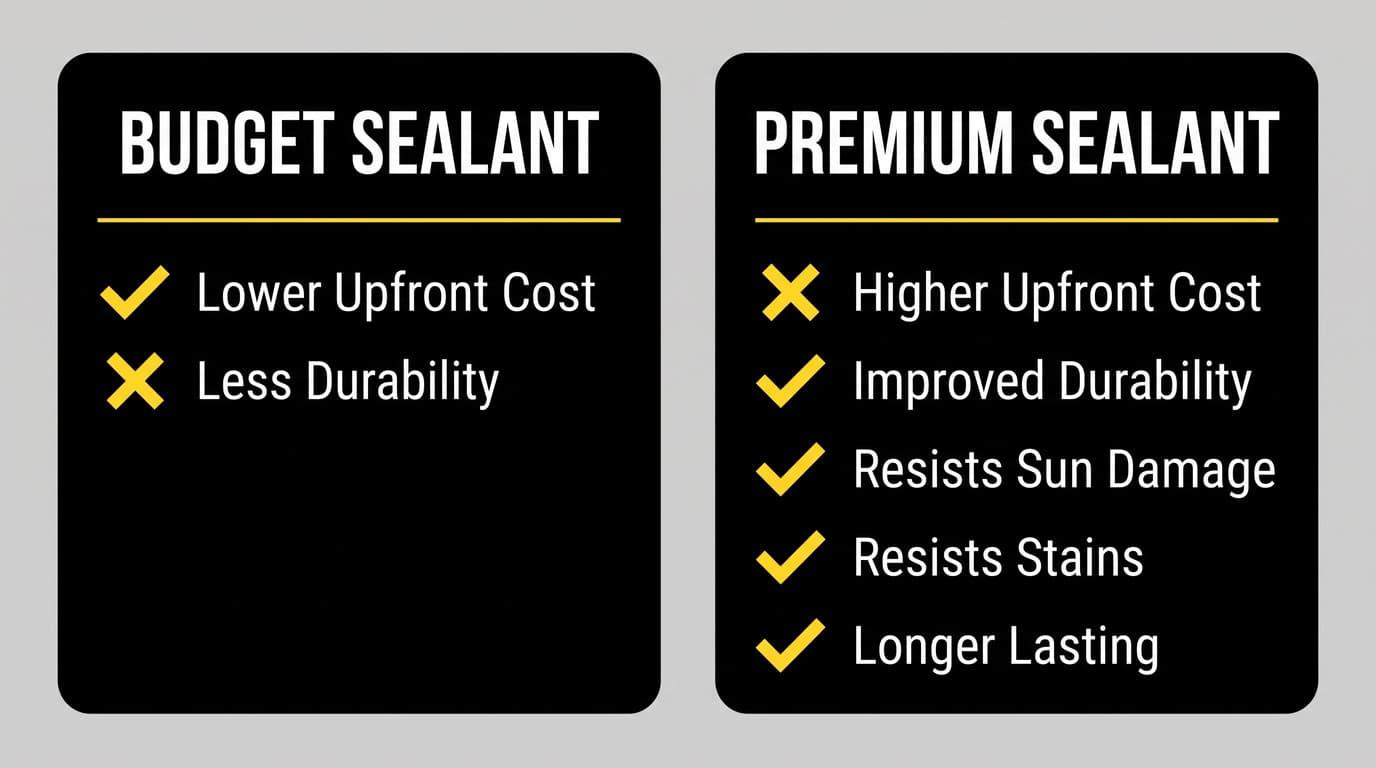
“Premium,” “commercial grade,” and “high quality” sound reassuring, but they are weak comparison terms on their own. In the market today, sealant quality varies widely, and budget sealants may cost less upfront but often do not deliver the same durability. A better quote identifies the sealer or product category and gives you enough information to understand the proposed system.
Product choice affects application instructions, curing, appearance, and maintenance. Additives or sand may also be part of a system. Rather than assuming the most expensive sealer offers the longest-lasting protection, compare the actual material and the manufacturer’s requirements for using it correctly. Higher-quality sealants usually cost more, but they improve durability, resist sun damage and stains better, and can last longer than diluted retail options.
We use asphalt emulsion and acrylic sealers for driveway sealcoating at Bart’s Asphalt. Professional asphalt sealcoating should use commercial-grade materials, and asphalt-based products are one example homeowners may see when comparing options. Ask us which material is proposed for your driveway and how its application and care requirements affect the job.
Compare Driveway Sealer Types and Curing
5. Coat System and Application Rate

More coats are not automatically better. A written quote should state the planned coat system, and homeowners should ask how many coats will be applied, why that approach fits the existing surface, and whether it makes sense for a smooth driveway that may need only sealant rather than repairs.
Application rate, pavement porosity, previous coatings, and curing between passes can all change how a coat system performs. Ask whether the proposed number of coats and coverage rate follow the selected product’s instructions and account for the existing surface.
At Bart’s Asphalt, we provide driveway sealcoating for Jackson homeowners, with preparation and application suited to the existing pavement. Our process uses two thin coats because they generally perform better than one thick layer, and the application method can affect sealant adhesion and longevity. For a Jackson driveway with shaded areas or previous coatings, ask how those conditions affect coverage and drying between coats. We can discuss the planned application so you know what to compare in another proposal.
Explore Jackson Driveway Sealcoating
6. Application Method
Homeowners hear a lot of blanket claims about application methods: hand application is always thicker, spraying is always faster, or squeegeeing is always more uniform. Those shortcuts miss the bigger picture.
Spray, squeegee, brush, and combination methods can each have a place depending on the material, pavement texture, equipment, application rate, and crew technique. The best driveway sealing company for your job should explain why its method fits the selected sealer and your surface, rather than presenting one tool as universally superior.
7. Edging and Property Protection
A driveway does not exist in isolation. Concrete garage floors, sidewalks, curbs, patios, landscaping, lawn edges, and widened parking areas can all sit beside the asphalt being sealed. The quote should clearly define the work boundary and explain how adjoining surfaces will be handled.
Defined edges make the scope easier to understand, especially when the driveway has an apron, an extra parking pad, or an irregular shape. Ask how the crew will protect adjacent concrete and landscaping from overspray or accidental coating.
8. Drying, Full Curing, and Weather

“You can drive on it tomorrow” is not a complete access plan. Dry-to-touch, ready for traffic, and fully cured are different stages. The selected sealer, coat thickness, pavement temperature, shade, and humidity affect timing, so ask for product-specific instructions for foot traffic, vehicles, and ongoing care.
Michigan weather can change the plan quickly: a warm afternoon may lead into a cold night, or rain may require postponing the work. When scheduling driveway sealcoating in Ann Arbor or Saline, we consider the forecast and site conditions and explain when foot and vehicle access can resume. If the schedule changes, we keep homeowners informed. Our Communication Guarantee captures that commitment: “You’ll never wonder where your project stands.”
Plan Around Sealcoating Drying Times
9. Written Workmanship and Warranty Terms
A warranty can be useful, but “warranty included” says little on its own. Coverage varies by contractor, material, pavement condition, and scope. There is no reason to assume every reputable company must offer the same one-year term or cover the same types of wear.
If the proposal includes warranty or workmanship coverage, compare the duration, exclusions, reporting process, and what the contractor considers a covered concern. Ask for the applicable terms in writing before work begins.
At Bart’s Asphalt, we encourage homeowners to ask which written terms apply specifically to driveway sealcoating. Confirm the coverage and exclusions for your project rather than relying on a general service promise.
How to Compare Driveway Sealcoating Cost Without Choosing on Price Alone

If two driveway sealcoating quotes differ, look for the specific cost drivers: measured area, pavement condition, cleaning, included crack or oil-spot treatment, edge complexity, sealer, and application requirements. A larger driveway may have a lower rate per square foot because setup is spread across more pavement, even when the total is higher.
Published consumer guides show broad market ranges, but they aren’t Bart’s pricing and shouldn’t replace a site-specific quote. Our Michigan driveway sealcoating cost guide goes deeper into the factors that move the total so you can budget before comparing proposals.
Set the proposals side by side and highlight differences that could explain the totals. Request clarification or a revised scope for missing items before deciding whether the price difference reflects more work, different materials, or different assumptions.
At Bart’s Asphalt, we assess the existing driveway before recommending residential sealcoating. Our preparation can include cleaning, edge trimming, and attention to oil spots before the two-coat application. Ask us to clarify any crack treatment or other preparation included in your estimate. That gives you a clearer basis for comparing the proposed work with another quote.
Request a Free Driveway Sealcoating Estimate
Red Flags Like Budget Sealants That Deserve a Second Look Before You Sign
Most quote problems are gaps in scope or expectations that become frustrating after work starts. One missing detail does not prove poor workmanship; the concern is when basic questions stay vague after you ask. Resolve gaps like these before paying a deposit or approving the job:
- The quote gives one total but does not define the driveway area, preparation, crack treatment, material, or exclusions.
- The contractor will not identify the sealer or explain why the planned application method fits the job.
- Structural problems such as potholes, sinking, or widespread breakup are brushed off as something sealcoat will fix.
- A fixed drying or curing promise is given without reference to the product or weather.
- Warranty coverage is mentioned verbally, but the written terms are unavailable or unclear.
- There is no clear contact, physical business address, insurance documentation, or process for handling a concern.
- Verify that the contractor holds a valid local license and is licensed, bonded, and insured, including liability insurance and workers’ compensation, before hiring.
- The contractor pressures you to decide immediately or demands payment terms you are not comfortable with before you can review the written scope.
- Avoid door-to-door solicitors, companies that demand full payment upfront, or anyone willing to quote without first examining the driveway condition.
- Check independent reviews before hiring, including on platforms such as Angi or Yelp, to help identify reputable local companies.
Choose the Quote You Can Understand
The best sealcoating quote clearly explains what you’re paying for. Compare the preparation, materials, application, and written terms, and get at least three estimates when possible so you can choose the one you can understand best before approving the work. A clear scope helps you choose a contractor with confidence and match the proposal to your sealcoating needs.
At Bart’s Asphalt, our team provides residential driveway sealcoating in Ann Arbor and surrounding Washtenaw County communities. For Ann Arbor homeowners, the estimate should account for the driveway’s condition, including visible wear after winter, before recommending a coating. Ask contractors for a detailed written estimate and a portfolio of similar completed driveway projects, then read customer reviews from past projects to judge reliability. We evaluate the surface and discuss preparation, scheduling, and the weather conditions needed for application. We also provide care and access guidance so you can plan around the work.
Explore Ann Arbor Driveway Sealcoating
Frequently Asked Questions About Sealcoating Companies
These questions cover the practical details homeowners often run into after comparing the main scope.
How many sealcoating quotes should I get?
Get enough written estimates to compare scope and price confidently. Three can be useful, but there is no magic number. Two detailed proposals may teach you more than five vague totals. Use the same nine comparison points with each company so you are comparing equivalent work.
Should a driveway sealcoating quote include square footage?
It should define the area clearly enough for you to understand what is being priced. Square footage is useful, especially for larger or irregular driveways, but boundaries, aprons, widened parking areas, and exclusions matter too. Ask for clarification if you cannot tell exactly what pavement the total covers.
Is a two-coat sealcoating quote automatically better?
No. Coat count alone does not establish quality. The selected product, application rate, existing surface, preparation, and curing all affect the system. A contractor should be able to explain why the proposed coat system fits your driveway instead of using “more coats” as the whole sales argument.
How often should a Michigan driveway be sealcoated?
A two- to three-year interval is commonly used as a general planning range, but it should not be treated as an automatic rule. Sun exposure, traffic, drainage, pavement condition, previous coatings, new cracks, and product performance all affect timing. Pavement preservation is condition-based, so assess the surface before adding another coat simply because the calendar says it is time.
Can a sealcoating company repair potholes before sealing?
Some companies offer residential asphalt repair, but Bart’s Asphalt offers only driveway sealcoating. For potholes or structural damage, ask a contractor who provides residential repairs to assess the pavement before scheduling a coating.
What should I do if two sealcoating quotes are almost the same price?
If the written scopes are comparable, look at recent reviews for similar driveway projects, communication, insurance documentation, and scheduling. Choose the contractor who answers your remaining questions clearly and provides terms you understand.