
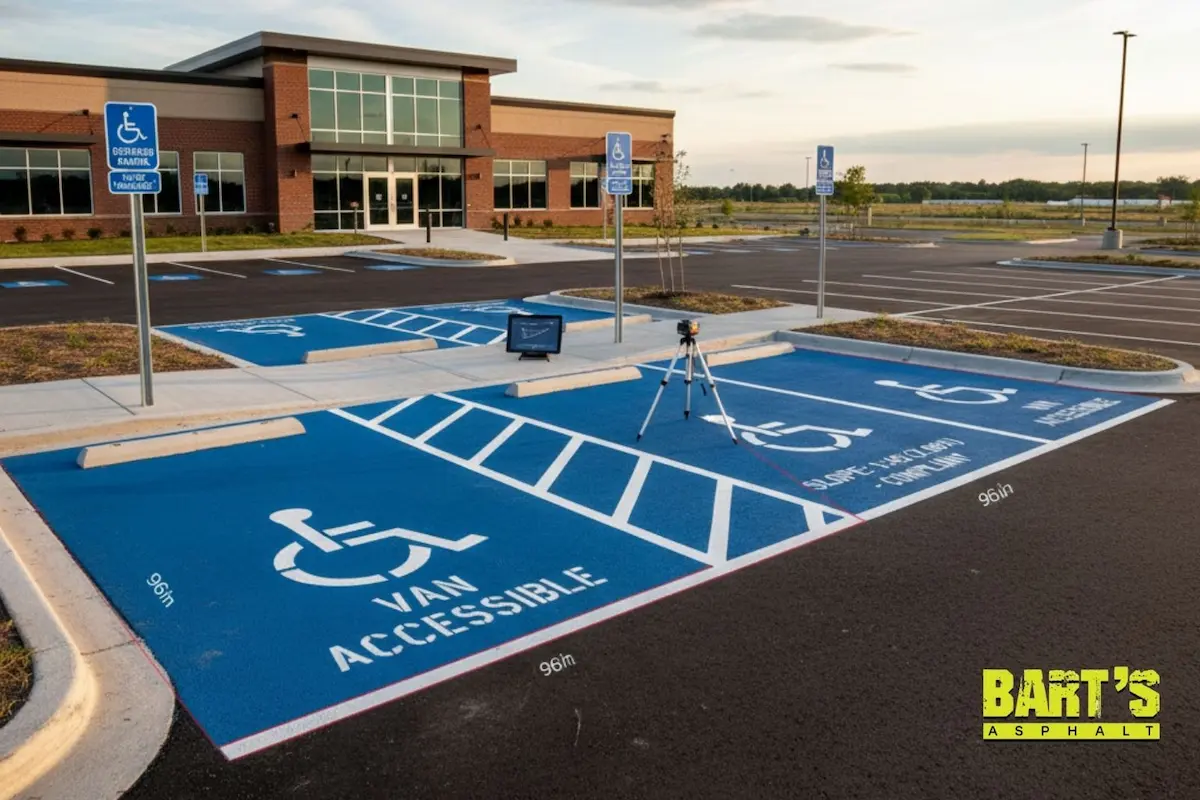
ADA and line striping essentials involve meeting specific legal standards for parking space dimensions, access aisles, signage, and slope to ensure accessibility and avoid significant legal penalties.
This guide explains why compliance is critical, details the key requirements for spaces, and outlines how to calculate the correct number of spaces and maintain compliance.
Master these key steps to ensure your parking lot meets the latest safety and inclusivity standards.
Key Takeaways
- ADA-compliant parking lot striping is essential for accessibility and avoiding legal penalties, with fines potentially reaching $75,000 for violations.
- Key requirements for compliant accessible parking spaces include specific dimensions, adequate signage, and strategic placement to ensure functionality and safety.
- Regular maintenance, inspections, and hiring professional striping services are crucial to sustain ADA compliance and provide a safe parking environment.
Why Is ADA Compliance for Parking Lots Important?
ADA compliance for parking lot striping is critically important for two primary reasons: it provides non-discriminatory, safe access for individuals with disabilities, and it is a legal mandate that protects property owners from significant financial penalties.
These two functions are inseparable; the legal standards exist to enforce the civil right of accessibility. The 2010 ADA Standards for Accessible Design provide the specific, enforceable rules for this.
Therefore, property owners must view compliance not as an option, but as a non-negotiable component of facility management that protects them from liability and ensures an inclusive environment.
The most immediate financial risk of non-compliance comes from legal penalties and potential lawsuits. The U.S. Department of Justice can levy fines of up to $75,000 for a first violation and $150,000 for subsequent violations. Furthermore, non-compliant properties are targets for civil lawsuits, which can result in costly settlements and mandated repairs. These significant financial repercussions make proactive ADA compliance a far more cost-effective strategy than reacting to a complaint or lawsuit.
What Are the Key Requirements for Accessible Parking Spaces?
Creating accessible parking spaces that truly meet ADA standards is more than just following a checklist. It’s about blending precise dimensions, visible signage, and thoughtful design to ensure safety and ease of use for all.
Dimensions of Accessible Parking Spaces
Ensuring your parking spaces meet ADA dimensions is crucial for usability and compliance. Standard accessible parking spaces must be at least 96 inches (8 feet) wide, with an adjacent access aisle at least 60 inches (5 feet) wide. This aisle can be shared between two accessible spaces, providing enough room for safe vehicle entry and exit.
Van-Accessible Dimensions Explained
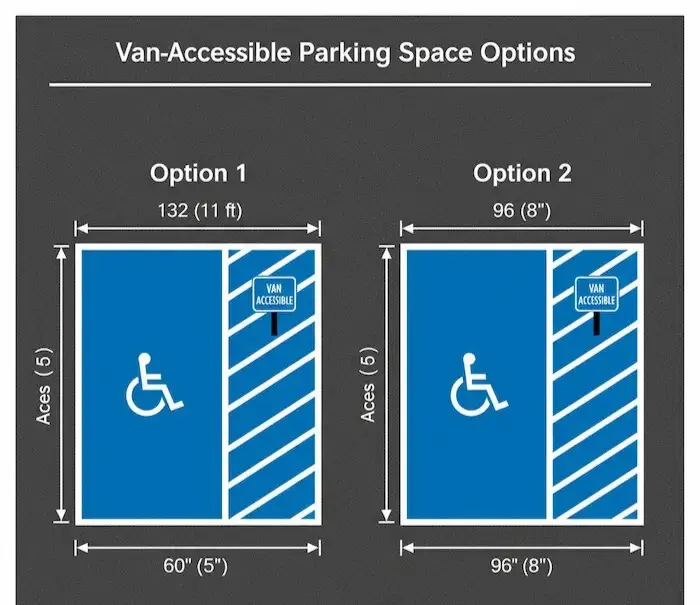
Van-accessible spaces require additional space to accommodate wheelchair lifts:
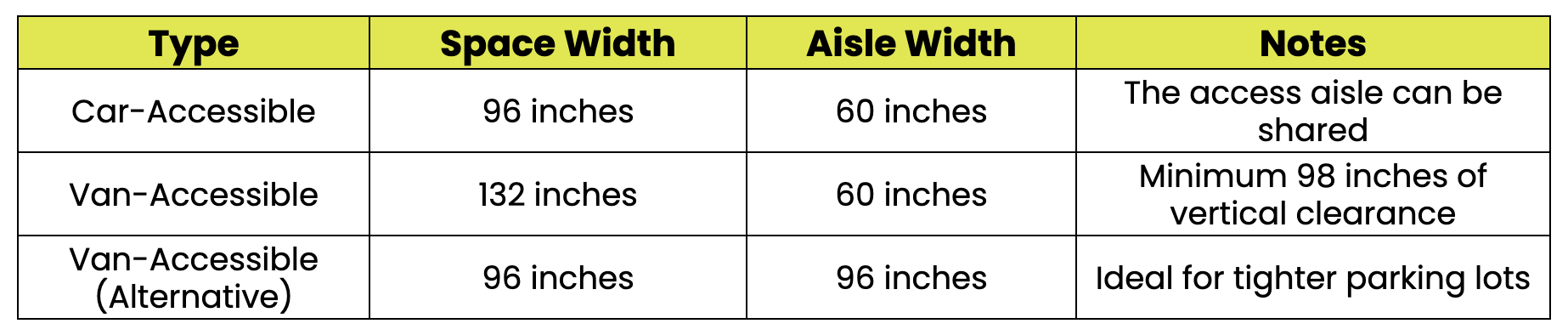
Alternatively, van-accessible parking can be 96 inches wide with a 96-inch aisle for added flexibility. This option suits facilities with limited space but still maintains accessibility.
2025 Update: The Department of Justice is now scrutinizing aisle markings more closely, emphasizing precise striping and clear visibility.
Signage for Accessible Parking Spaces
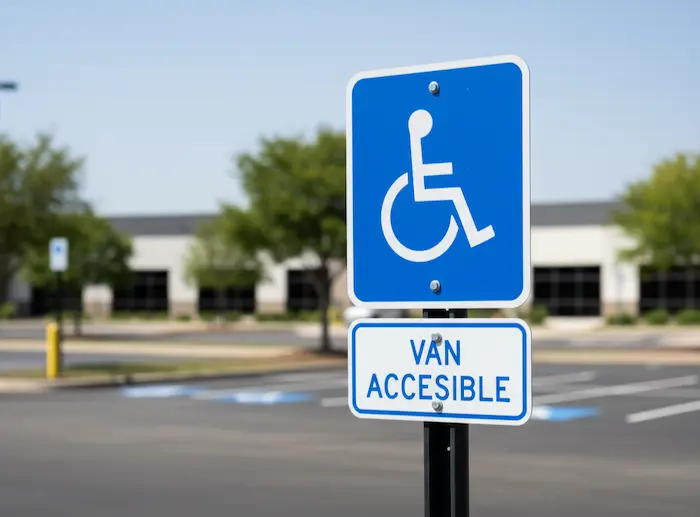
Signage is vital for compliance and user guidance. Here are key points to ensure your signage meets current ADA parking sign requirements 2025:
- Signs must display the International Symbol of Accessibility.
- Mounted at a minimum height of 60 inches for visibility.
- Van-accessible signs must clearly state “Van Accessible.”
- Use durable materials, such as aluminum, to withstand weather and vandalism.
- Reflective, weather-resistant paint should be paired with striping to enhance night visibility and durability.
- Fines for inadequate or incorrect signage range from $250 to $500 per sign, with additional penalties possible for repeat offenses.
You should pair the signage with blue pavement markings for high contrast, providing instant recognition and seamlessly tying into your parking lot striping strategy.
Location and Slope Requirements
Accessible parking spaces must be positioned along the shortest safe route to building entrances, carefully avoiding any obstructions such as dumpsters. This ensures maximum convenience and safety for individuals with disabilities, as clear access paths minimize hazards and facilitate a smooth transition from the parking lot to the building.
Thoughtful placement also helps businesses comply with ADA guidelines, reducing the chance of legal issues or accessibility complaints.
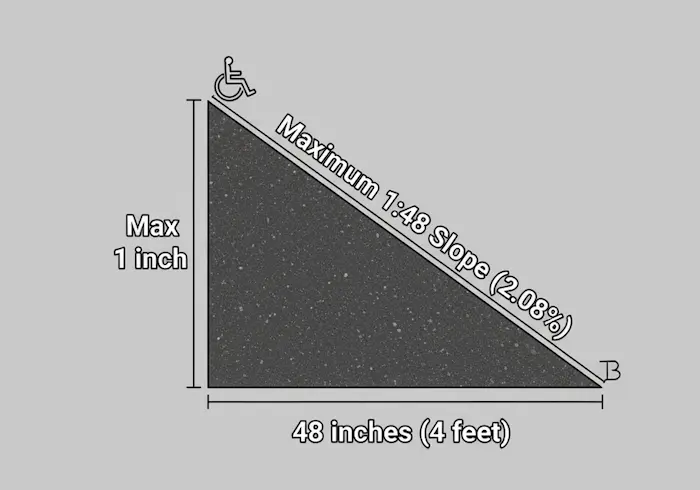
Additionally, the surface of these spaces must be level, with a maximum allowable slope of 1:48 (approximately 2.08%). This means that for every 48 inches of horizontal distance, the elevation should not rise more than 1 inch.
Maintaining this gentle slope is crucial, as steeper grades can create navigation difficulties and potential safety risks, especially for wheelchair users or those with limited mobility. By adhering to these slope requirements, property owners can provide a safe, accessible parking environment for all visitors.
Slope Calculation Example:
Slope = rise ÷ run ≤ 1/48
For example, a 1-inch vertical rise over 4 feet of horizontal distance is acceptable.
Shared access aisles must be utterly free of curb cuts or any other barriers that could impede wheelchair movement, ensuring unobstructed access for those with mobility devices.
As of 2025, enforcement agencies are intensifying slope audits, particularly in high-traffic areas, making compliance with these requirements more critical than ever.
Measure Your Spaces: Take Our Free Assessment!
Don’t leave ADA compliance to chance. Take our free assessment to measure the number of accessible parking spaces, aisles, signage height, and slope. Regular inspections ensure your parking lot remains ADA-compliant and serves all customers safely.
Calculating the Number of Accessible Spaces Needed
Knowing how many accessible parking spaces your facility must provide is crucial for ADA compliance. The number isn’t arbitrary; it’s dictated by the total number of parking spaces, with clear guidelines straight from the 2010 ADA Standards for Accessible Design.
Here’s the official breakdown you need to follow:

At least 1 out of every 6 accessible spaces must be van-accessible.
Example Calculation
Imagine your parking lot has 150 total spaces. According to the table, you need 5 accessible spots. Of those 5, at least 1 must be a van-accessible space.
Determining exact requirements can feel complex, especially for larger lots. So here is a free online ADA-accessible space calculator. Simply enter your total number of parking spots, and it instantly tells you how many accessible and van-accessible spaces you need to comply with current regulations.
Stay on top of your legal obligations with ease and step-by-step guidance!
What Are Common ADA Compliance Mistakes (and How to Avoid Them)?
Navigating ADA parking compliance can be tricky, and mistakes not only frustrate users but can also lead to costly fines. Understanding these common pitfalls will help keep your property safe, accessible, and legally compliant.

Government Research shows that improper slopes account for about 60% of ADA parking violations, while faded lines are the leading signage issue in roughly 40% of cases. Incorrect signage, mounting height, and materials cause many fines, sometimes up to $500 per sign.
Proactively spot these problems early and schedule routine inspections.
Spot These Issues? Schedule a Free Inspection Today!
Don’t wait until violations or complaints arise. Our free ADA parking lot inspection service identifies problem areas, such as slope errors and faded markings, before they become costly issues. Let experts help you keep your property compliant, safe, and welcoming.
How Do You Maintain ADA Compliance Over Time?
Keeping your parking lot ADA compliant is an ongoing commitment, not something you check off once and forget. Regular maintenance, inspections, and timely repairs are key to preventing violations and ensuring the safety of every visitor.
Preferred Schedule for Inspections and Maintenance
Conduct comprehensive ADA compliance inspections twice a year to identify early signs of wear and fading on parking lot markings and signage. These biannual evaluations are crucial for confirming that slopes, signs, and pavement markings continue to meet current standards and prevent potential violations.
When it comes to repainting or restriping, frequency should be determined by your lot’s usage. High-traffic parking areas require new striping approximately every 18 months, while moderate-traffic lots should be serviced every 2 to 3 years.
For low-traffic lots, maintenance can be scheduled as infrequently as every four years, ensuring longevity without compromising compliance or visibility.
2025 Update: Digital Documentation and Reporting
With rising ADA audits and complaint reports in 2025, it’s smart to document inspections digitally. Mobile apps and management software help track fading, signage conditions, and slope measurements, making audits easier and reducing liability.
Regular Inspections and Repairs: Stay Ahead to Cut Costs
Routine inspections are more than just upkeep; they save money. Early fixes for signage, slope corrections, or repainting can cut repair costs by up to 50% and reduce liability by 30% by preventing accidents and violations.
Inspection Checklist:
- Measure slopes to confirm a ≤1:48 ratio
- Verify signage height (minimum 60 inches)
- Check paint visibility and condition
- Examine access aisles for obstructions
- Assess pavement surface for cracks or hazards
Repainting and Restriping Best Practices
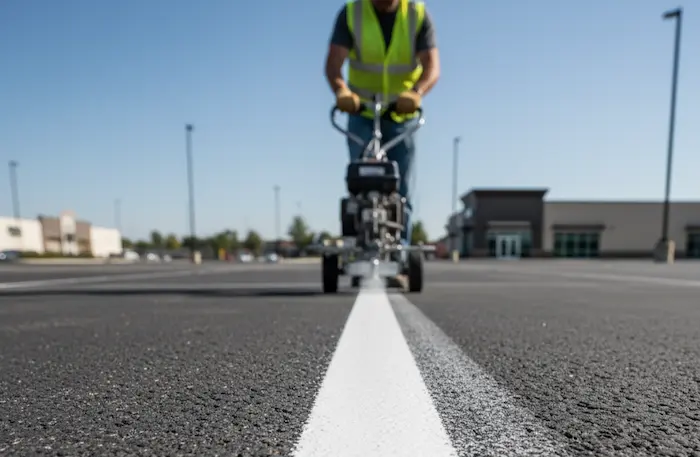
Use high-contrast blue and white weather-resistant paint to meet ADA standards and maximize visibility. For sustainability, consider low-VOC (volatile organic compounds), eco-friendly paint options. Repainting costs typically range from $0.10 to $0.20 per square foot, offering excellent value for compliance and customer safety.
Blue and white colors are standard, tested to last at least five years under typical conditions, but regular monitoring helps you plan timely repainting.
If you want to ensure ADA compliance effortlessly and reliably, contact us for a no-obligation quote on professional restriping and maintenance services. Stay ahead of 2025 regulations, reduce fines, and keep your customers safe with a compliant parking lot.
Get a Free ADA Parking Lot Maintenance Quote
Which Standards Take Precedence: State or Federal?
When it comes to ADA compliance for parking lots, the federal standards set the baseline, but states and local jurisdictions often impose stricter rules. Property owners and managers must understand this layered regulatory landscape to ensure full compliance in 2025 and beyond.
The federal ADA Standards, established in 2010, provide minimum requirements for accessible parking spaces, including the number, size, signage, and slope. However, many states and cities go beyond these minimums to enhance accessibility.
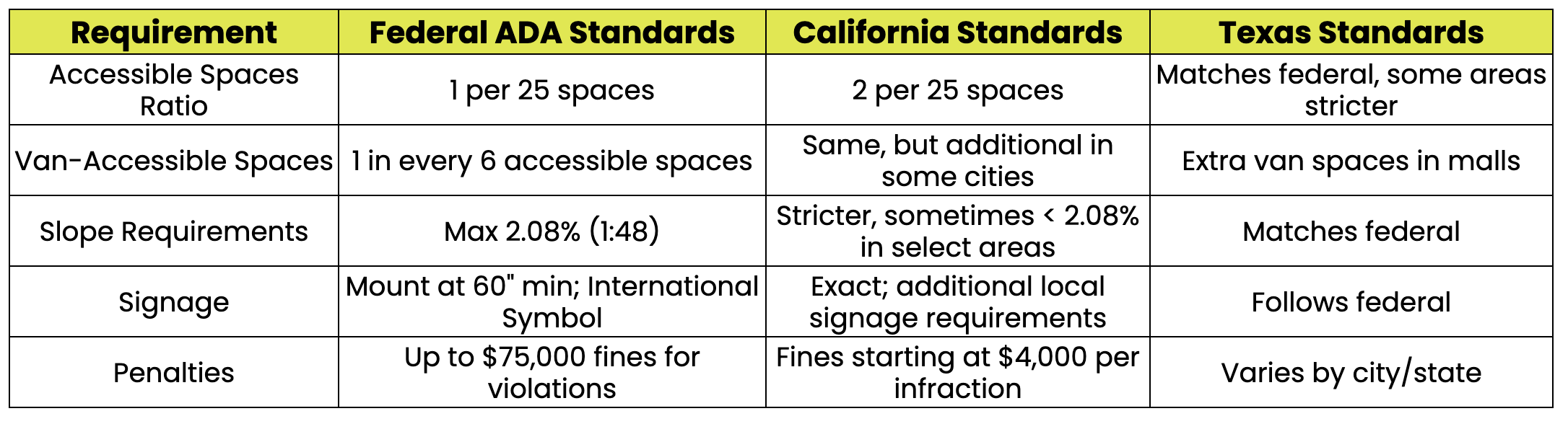
In California, state building codes require two accessible spaces per 25 total parking spaces, doubling the federal minimum and enforcing even stricter slope limits. Additional van-accessible spaces may be required in certain cities, and penalties for violations start at $4,000 due to strict enforcement.
Texas also goes beyond federal rules in some cases, particularly for malls and commercial centers, where extra van-accessible parking spaces are mandated to accommodate wheelchair lifts and ramps. This emphasizes the commitment of these states to improve accessibility, ensuring parking areas serve the needs of all visitors.
Comparison Table of Key Requirements (2025)
Navigating Compliance: Resources
- Visit your state ADA office or building code website for local regulations and updates.
- The federal ADA website (ADA.gov) offers detailed guidance and tools.
- Professional striping and compliance services often provide tailored advice based on local law.
Always prioritize the stricter regulation when federal and state standards differ; this protects you legally and benefits your customers. Staying up to date on local changes can save you costly fines and improve customer satisfaction.
Benefits of Hiring Professional Striping Services
Parking lot striping is not just about paint; it’s about precision, compliance, and safety. While DIY approaches might seem tempting, the risks of improper striping can be costly legally and operationally. Hiring professionals offers undeniable advantages that safeguard your property and customers.
Why Choose Professional Striping?
When it comes to ensuring ADA compliance and long-lasting results, choosing professional striping services is a wise investment. Experts deliver accuracy, durability, and peace of mind that DIY solutions often can’t match.
- Certified Expertise: Professional crews are ADA-trained and often hold certifications from recognized bodies such as IMSA (International Municipal Signal Association) and ISFA (International Surface Fabricators Association), ensuring up-to-date knowledge of federal and local requirements.
- Precision and Durability: Professionals use specialized equipment for even, straight lines and apply high-quality, weather-resistant paint designed to last 2 to 3 years under typical conditions.
- Legal Compliance Assurance: Incorrect striping risks fines, complaints, or lawsuits. One client we worked with avoided a $20,000 fine thanks to our thorough ADA compliance audit and corrective striping.
- Warranty Support: Many reputable services offer a 2-3 year warranty covering fading or peeling, providing peace of mind.
- Avoid Costly Mistakes: Amateurs often produce uneven lines, incorrect dimensions, or insufficient signage, common compliance pitfalls that professionals expertly avoid.
- Enhanced Curb Appeal: Clean, precise striping enhances your lot’s overall look, positively influencing customer perception and property value.
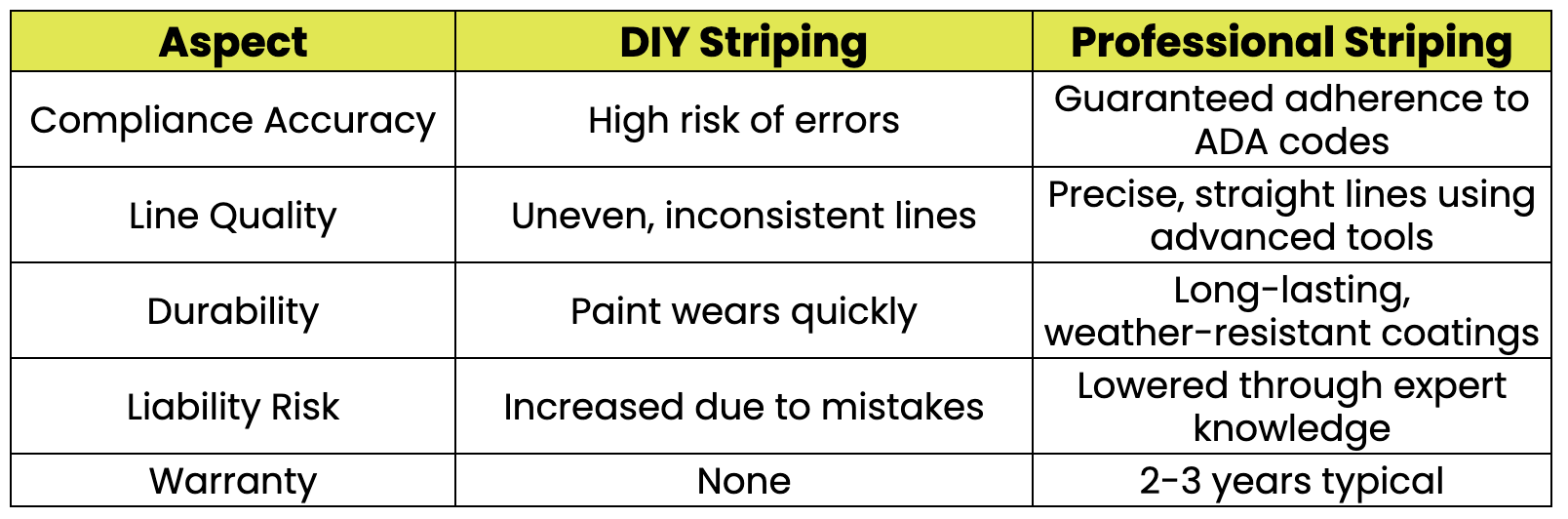
DIY vs. Professional Striping: What You Need to Know
Before deciding how to stripe your parking lot, compare the pros and cons of DIY striping versus hiring professional striping services. Understanding these differences can help you avoid costly mistakes and ensure lasting ADA compliance.
Ready for Compliant, Long-Lasting Striping?
Don’t risk fines or customer dissatisfaction. Contact Barts Asphalt today for professional, ADA-compliant striping services tailored to your property’s needs. Let our certified experts handle the details so you can focus on your business.
Summary
Ensuring your parking lot is ADA compliant goes beyond meeting legal requirements; it’s about creating an accessible, welcoming environment for all customers. From proper dimensions and signage to routine maintenance and navigating federal versus state rules, every detail matters.
Looking ahead, consider future-proofing your lot with adaptations for electric vehicle charging and evolving accessibility standards. In 2025, compliance is non-negotiable; act now to protect your business and community.
Get your free ADA-compliance assessment to get started on your path to a fully compliant, safe, and inclusive parking facility today.
Frequently Asked Questions (FAQs)
Below are answers to the most frequently asked questions about ADA parking lot compliance, striping standards, and maintenance practices. These quick insights can help you navigate regulations, avoid common mistakes, and maintain a safe, accessible parking environment.
1. Why is ADA compliance important for parking lots?
ADA compliance ensures parking lots are accessible to all, including people with disabilities, promoting inclusivity, safety, and legal protection for property owners.
2. What are the minimum dimensions for accessible parking spaces?
Accessible spaces must be at least 96 inches wide with a 60-inch-wide access aisle. Van-accessible spaces require either 132 inches in width with a 60-inch aisle or 96 inches in width with a 96-inch aisle. [See Dimensions of Accessible Parking Spaces]
3. How often should a parking lot be restriped to maintain ADA compliance?
Parking lots should be restriped every 18 to 36 months, depending on traffic levels, using high-contrast, weather-resistant paint.
4. What are common ADA parking compliance mistakes?
Common mistakes include improper slope, incorrect signage height, faded markings, aisle errors, insufficient accessible spaces, and poor location. Avoid these through bi-annual inspections and professional striping.
5. Are there any 2025 ADA parking updates I should know about?
No major federal rule changes, but enforcement has tightened, emphasizing slope accuracy, visible signage, and maintenance documentation.
6. How much does professional ADA parking lot restriping cost?
Restriping costs typically range from $1,000 to $3,000 for small lots, depending on size and paint type.
7. What fines can I face for incorrect ADA van parking?
Fines may range from $250 to $500 per signage error and can escalate to thousands for non-compliance with space dimensions or slope regulations.
8. How many accessible parking spaces are required?
It depends on the total lot size; for example, one accessible spot per 25 total spaces, with at least one van-accessible space per six accessible spots. [See Calculating the Number of Accessible Spaces Needed]
9. Can I DIY my parking lot striping?
DIY striping risks uneven lines, wrong dimensions, and compliance failures. Professional ADA-trained crews ensure precision and legal compliance.
10. Where can I find state-specific ADA parking standards?
Check your state ADA or building code websites for local regulations. California and Texas, for example, have stricter requirements than federal standards. [See State vs. Federal ADA Standards]