

If your asphalt driveway has cracks that can be treated, driveway crack filling should happen before sealcoating. Filler or flexible sealant helps reduce water entry through those openings; sealcoat protects the surrounding surface. A fresh black finish won’t repair an open crack or fix damaged pavement underneath.
That sequence matters for Michigan homeowners. Water infiltration through driveway cracks can become more damaging as temperatures rise and fall around freezing, but not every crack is a simple filling job. Crack width, movement, surrounding pavement condition, drainage, and the material used all affect the right approach.
Planning to have your driveway sealcoated? Ask Bart’s Asphalt which cracks can be treated beforehand and what preparation your quote includes.
Key Takeaways
- Fill or seal suitable cracks before sealcoating so the surface coating isn’t being asked to bridge open gaps.
- Crack movement and pavement condition matter as much as width when choosing a filler or sealant.
- Clean, dry preparation and the manufacturer’s application requirements are critical to a good bond.
- Wide cracks, potholes, alligator cracking, sinking, and crumbling asphalt may need more than surface maintenance.
- Ask Bart’s Asphalt what crack preparation is included in your residential sealcoating quote.
Why Driveway Crack Filling Comes Before Sealcoating

Sealcoating protects the asphalt surface. It can help limit exposure to water, sunlight, and other weathering, but it doesn’t rebuild a crack or restore support beneath damaged pavement.
Repairing cracks first helps prevent water penetration that can lead to structural damage, while sealcoating continues to protect the surface. If sealcoat is applied over an untreated opening, the surface may look more uniform for a time while the crack remains a weak point underneath.
Crack treatment comes first so suitable openings can be cleaned, evaluated, and filled or sealed with a compatible material. After that material has set or cured as required, sealcoating can cover the surrounding surface. Each layer does a different job instead of asking one product to do both.
Why Michigan’s Freeze-Thaw Weather Makes Open Cracks Matter
An open asphalt crack gives rain and melting snow a direct path below the surface. When that moisture freezes, thaws, and freezes again, movement in and around the crack can widen it and accelerate deterioration, while sunlight and uv rays also weather the asphalt over time.
The risk is greater when water is already collecting near the driveway or the surrounding pavement has lost support.
Michigan’s temperature swings make it important to address treatable cracks before winter, when weather and product requirements allow, since untreated cracks can lead to further damage during repeated freeze-thaw cycles.
If you’re planning sealcoating with Bart’s Asphalt, ask about the available application window rather than waiting for the first freeze.
Identify the Crack Before Choosing a Filler or Sealant
The best repair decision starts with the crack itself and the surrounding asphalt. A narrow line in otherwise stable pavement may be a straightforward maintenance issue. A wider opening with broken edges, movement, or a webbed pattern can point to a different problem.
Different methods are necessary for asphalt and concrete driveways, so this guidance is for asphalt surfaces.
Use the crack pattern as a first screening tool, not a diagnosis by width alone:
| What You See | What It Suggests | Before Sealcoating |
|---|---|---|
| Narrow, isolated crack | A localized opening with stable asphalt around it | Clean and evaluate it for a compatible pourable or flexible crack product; hairline cracks are typically treated with a flexible sealant or caulk rather than a heavier repair material. |
| Linear crack that changes seasonally | The crack may be moving as temperatures change | A flexible sealing material may be more appropriate than a rigid filler, and light weight, flexible materials are usually better for moving cracks. |
| Wide crack with broken edges | The opening may involve material loss or movement | Inspect the geometry and surrounding pavement before adding filler, sand, or backer material; filler choice depends on crack width and depth, and deeper or wider openings may need a foam backer rod under a flexible sealant. |
| Alligator cracking, potholes, or sinking | The problem may extend below the surface | Do not treat sealcoating as a structural repair. The pavement needs a different repair assessment. |
Not sure which pattern you’re seeing?
Describe the cracks and any standing water when you contact Bart’s Asphalt about driveway sealcoating. Ask whether the surface is a suitable candidate before committing to a coating.
Driveway Crack Filling vs. Crack Sealing: What Changes?
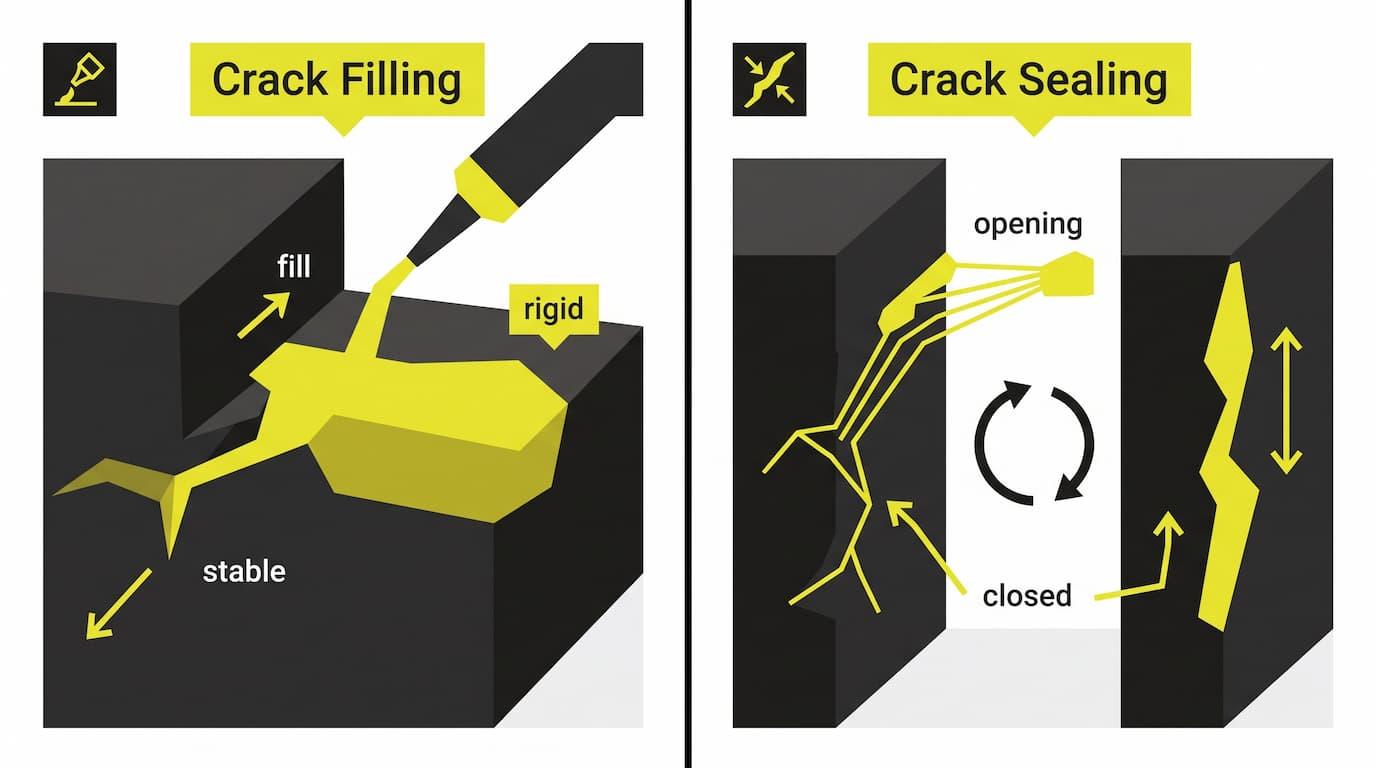
Homeowners often use driveway crack filling and driveway crack sealing interchangeably. In pavement maintenance, the distinction usually comes down to movement and how the material behaves.
Crack filling generally places material into a stable or nonworking opening to reduce water entry. Crack sealing uses a flexible sealant and installation method intended to stay bonded as a working crack opens and closes.
When sealing cracks in asphalt pavement, hot-applied crack sealants are often chosen because they provide superior adhesion to asphalt. Terminology varies among products and contractors, so the practical question is what the crack is doing and which material is designed for it.
Flexible materials matter because asphalt expands and contracts as temperatures change. A rigid material can separate if the crack continues moving. A compatible sealant is designed to stretch and compress within its limits instead of simply filling the void.
Bart’s also performs commercial crack sealing for parking lots and other commercial pavement. That is a separate commercial service. Residential crack treatment is offered only as part of a driveway sealcoating project.
How to Prepare Asphalt Cracks Before Filling
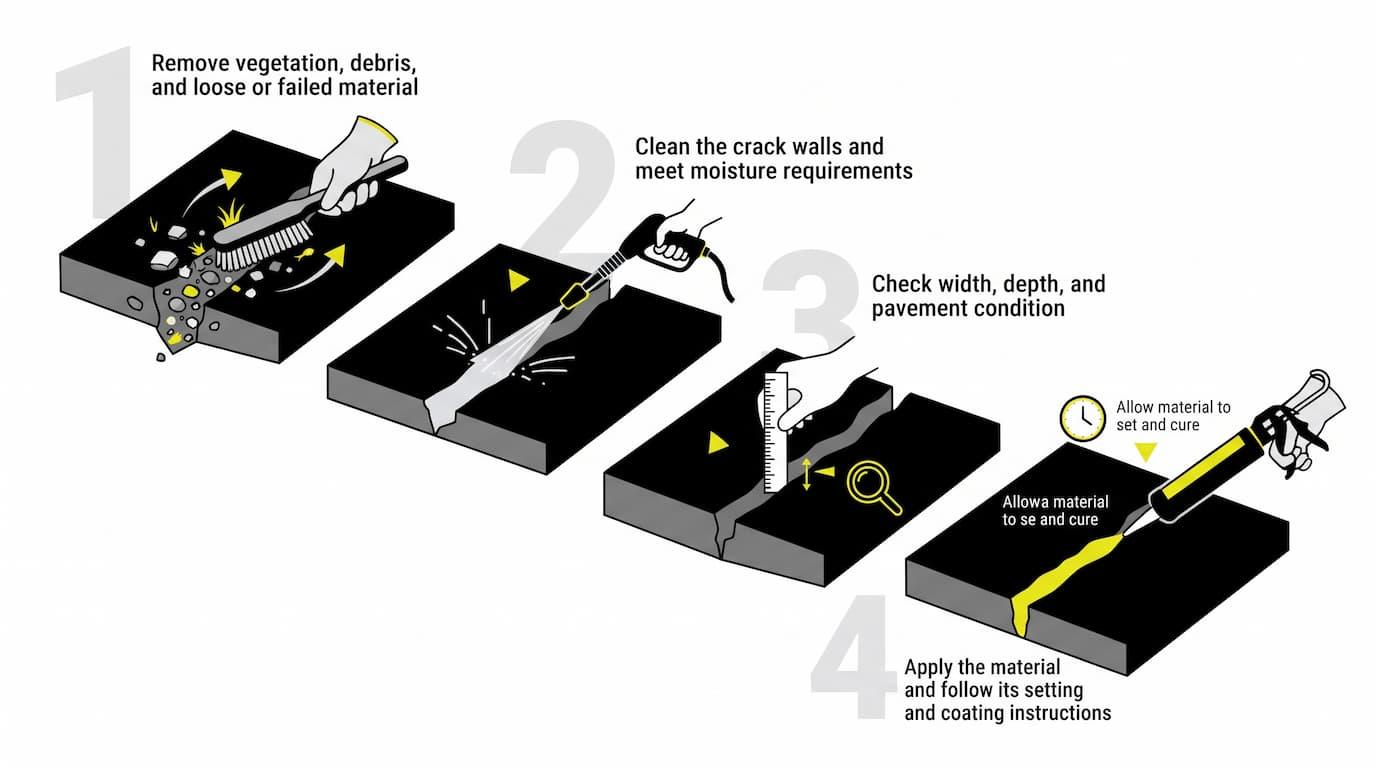
Good crack filling starts with the prep stage of the crack repair process, before you pour any filler. Dust, weeds, loose asphalt, old failed material, and moisture can interfere with the bond between the applied sealant and the crack walls, so cleaning debris is crucial because fillers bond poorly when dust and loose material remain in the opening. Preparation is often more important than chasing a particular brand name.
For a stable crack that is suitable for treatment, preparation should match the opening and the selected material:
- Remove vegetation, debris, and loose or failed material, using a wire brush on stubborn loose material if needed.
- Clean the crack walls and meet the selected product’s moisture requirements.
- Check width, depth, and pavement condition to choose a compatible treatment; some wider or deeper cracks may be supported with sand before filler is applied.
- Apply the material and follow its setting and coating instructions.
If Bart’s Asphalt is handling your sealcoating, ask what preparation you should leave for the crew before using a DIY filler. With professional sealcoating, you can also ask about crack preparation, coating compatibility, and when the driveway can reopen before work begins. Include those questions in your Bart’s Asphalt quote request.
If you wash the driveway first, a pressure washer can help clean cracks thoroughly, but moisture must be removed and the surface allowed to dry completely so the cracks meet the filler’s moisture requirements before treatment.
Common Asphalt Crack Fillers and Where They Fit
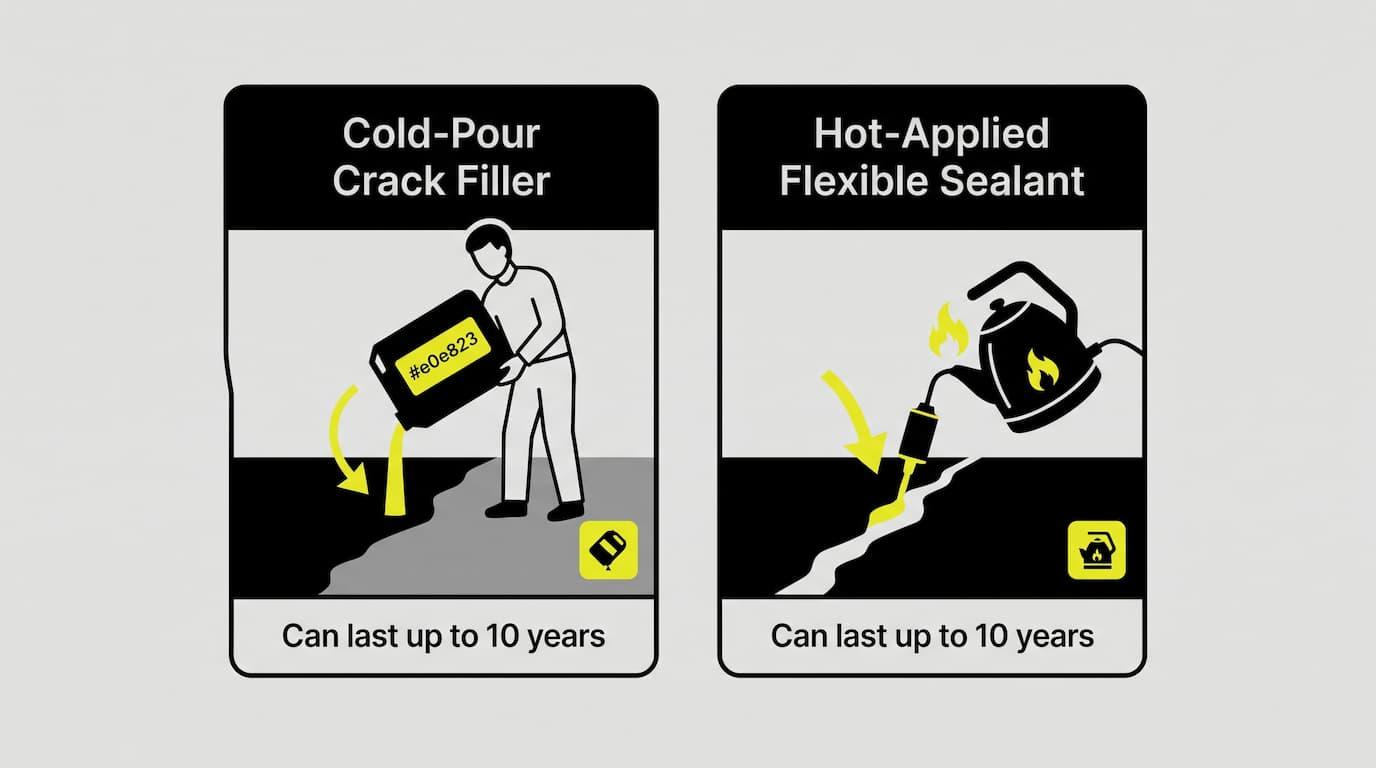
Crack movement and product limits matter more than choosing one filler for every opening. For homeowners, the two main categories to understand are cold-pour filler and hot-applied flexible sealant.
Cold-Pour Crack Filler
Cold-pour fillers are commonly used for DIY repairs because they can be applied without professional heating equipment. They are typically intended for cracks that fit the product’s stated width, moisture, and movement limits.
Hot-Applied Flexible Sealant
Professionals typically use hot-applied flexible sealants when the treatment needs to accommodate crack movement. Hot crack fillers are often preferred for high-traffic areas because they stay flexible and hold up longer. The material must still match the crack and pavement condition.
Professional hot-applied materials require controlled heating within the manufacturer’s specified range, and hot rubberized crack filler is commonly heated to about 350°F to 400°F for proper installation. Using high quality materials also helps the repair perform better over time. When properly installed, hot crack filling can last up to 10 years.
Let Crack Treatment Set Before Sealcoating
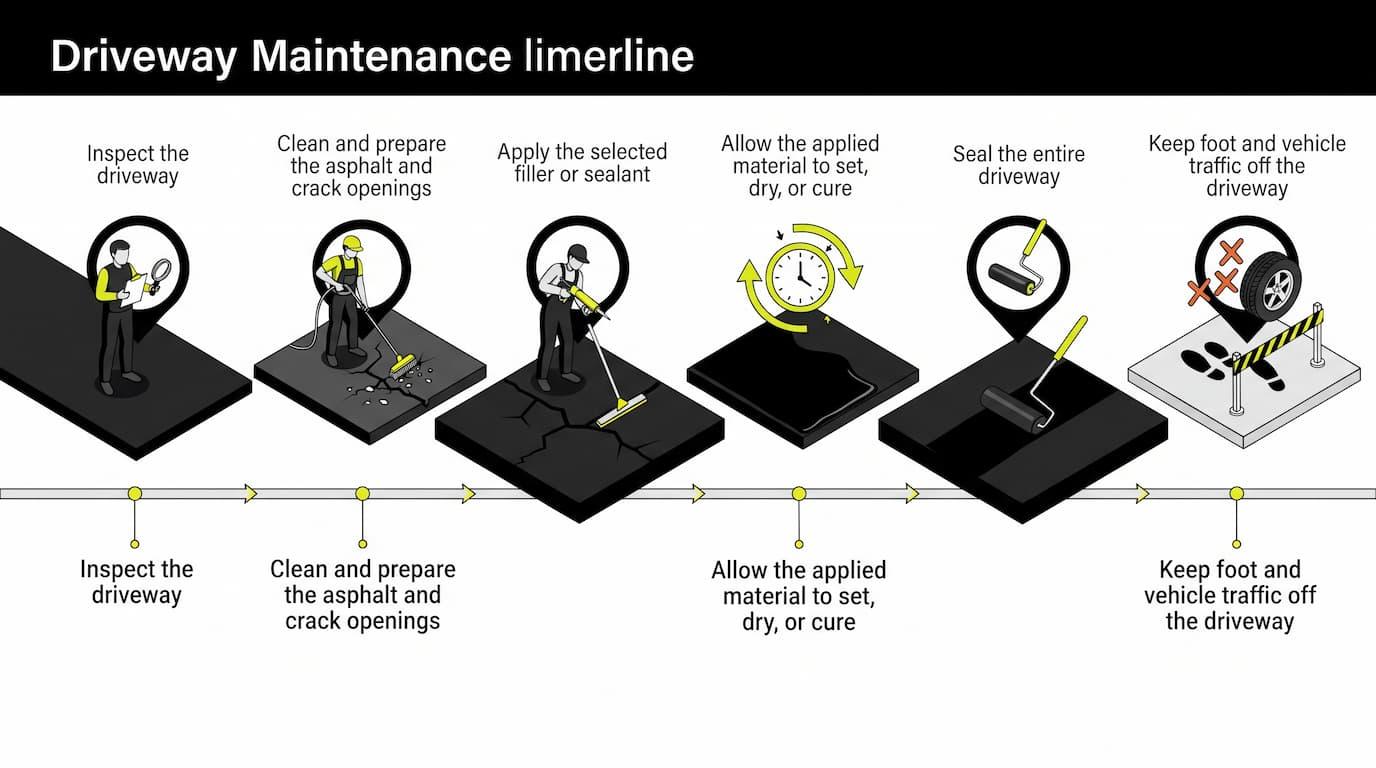
Crack treatment must reach the product’s required condition before sealcoat goes down. Hot-applied materials may set as they cool, while cold-pour products may need time to dry or cure. Applying the coating too soon can interfere with the treatment or surrounding bond, and proper curing time also helps prevent future cracking. Follow the material’s instructions for setting, drying, curing, and coating time. The sequence is straightforward:
- Inspect the driveway and distinguish suitable cracks from damage that requires a different repair.
- Clean and prepare the asphalt and crack openings.
- Apply the selected filler or sealant according to its installation requirements.
- Allow the applied material to set, dry, or cure as required by the manufacturer.
- Seal the entire driveway only after repairs have fully cured, which helps prevent moisture penetration.
- Keep foot and vehicle traffic off the driveway until the finished system is ready for use.
A fixed 24- or 48-hour rule isn’t reliable for every material. The manufacturer’s instructions and actual weather conditions should control the schedule, and many crack fillers perform best between 50°F and 85°F.
When Filling Cracks Won’t Solve the Driveway Problem
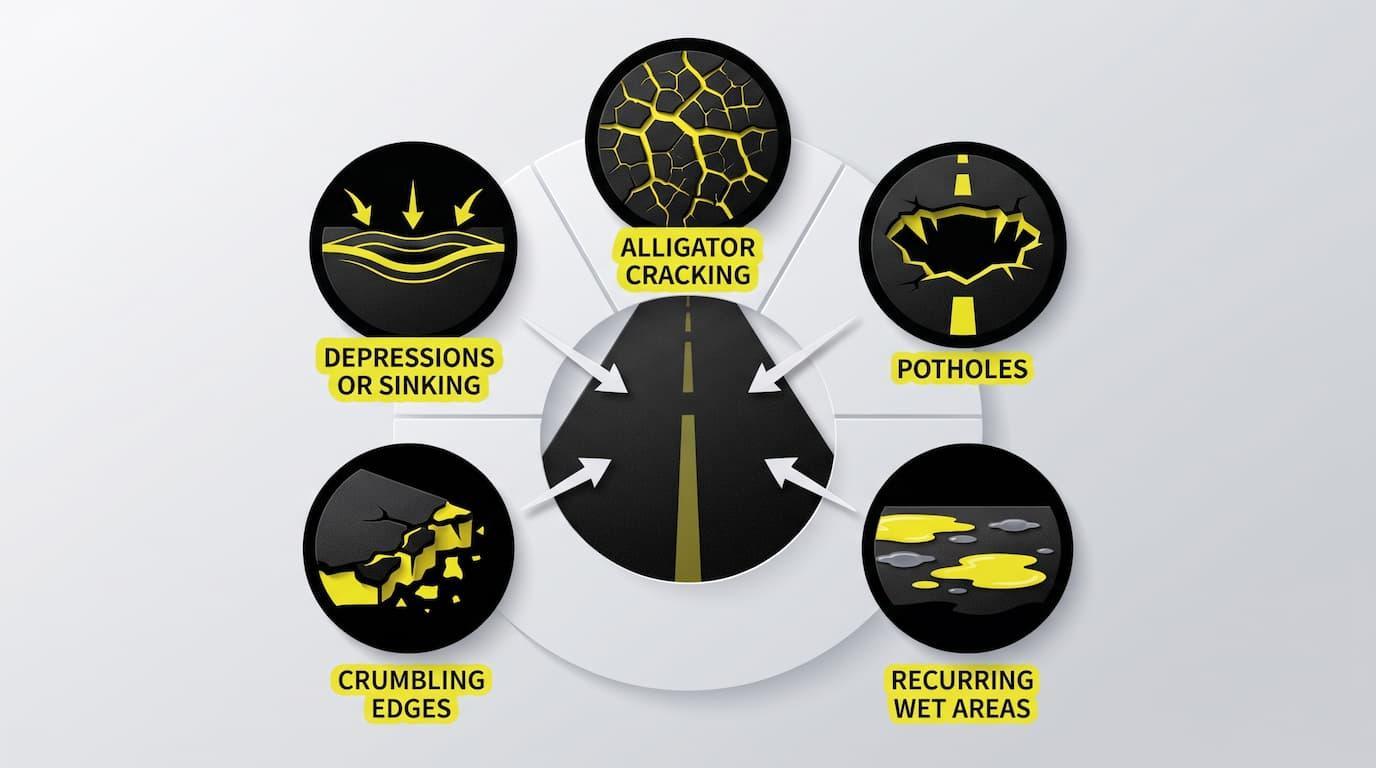
Crack filler can reduce water infiltration through an appropriate opening, but it can’t restore structural capacity. If the surrounding asphalt is moving, sinking, or breaking apart, a smooth line of filler won’t address why the pavement failed, and simply filling substantial cracks is often not enough if the underlying support or drainage issue is still present.
Watch for these red flags before spending money on a surface treatment that can lower the cost of bigger repairs in the long run:
- Alligator cracking: Interconnected cracks form a webbed pattern across an area rather than one isolated line.
- Potholes: Asphalt and supporting material have already broken away, leaving a cavity rather than a simple crack.
- Depressions or sinking: The surface has settled, which can indicate support or drainage problems below.
- Crumbling edges: Loose aggregate and broken margins don’t provide a stable surrounding surface for crack filler to bond to.
- Recurring wet areas: Standing water or poor drainage can keep feeding moisture into the same weak section.
Sealcoat won’t rebuild a failed base or stabilize loose pavement. If your driveway has these warning signs, ask Bart’s Asphalt whether residential sealcoating is appropriate before spending money on a surface treatment. Structural damage needs a separate repair assessment. Cold patch is generally used for potholes, cracks or voids wider than ½ inch, or localized missing asphalt, not as a default treatment for a wider crack.
Not sure whether your driveway is ready for sealcoating? Ask Bart’s Asphalt to review the condition before you plan the coating. Widespread structural cracking may call for resurfacing or another professional repair approach rather than surface crack filling.
DIY Crack Filling: When It Can Make Sense
DIY crack filling can make sense when you have a small number of stable cracks, the surrounding asphalt is sound, and you can follow the product instructions closely.
Cold-pour materials are generally the right product for many homeowner-friendly jobs because they don’t require hot-applied tools, while hot systems need specialized equipment. Because hot-applied products involve heat, homeowners should not try to handle them with direct fire methods.
The work still needs basic safety and preparation. Follow the manufacturer’s instructions for protective equipment, including safety glasses, crack size, moisture, application, and reopening.
If you’re already considering Bart’s Asphalt for driveway sealcoating, ask about crack preparation before buying a DIY filler. That helps you avoid applying a material that isn’t compatible with the planned coating. Let the driveway dry completely before applying patching materials.
Request Your Driveway Sealcoating Quote
How Often Should You Check Driveway Cracks?
Inspect the driveway at least twice a year when the pavement is visible and dry, especially after winter and before the next sealcoating cycle.
Look for new cracks, changes in width, weeds, loose edges, standing water, or sections that have started to sink or crumble, and keep water away from the surface where possible because repeated saturation contributes to damage.
Use the driveway’s condition and the coating manufacturer’s guidance to decide when another treatment is needed.
If a crack keeps reopening after repeated filling, don’t keep adding material indefinitely. That pattern can indicate the pavement is moving or that the original repair method doesn’t match the crack. When you contact Bart’s Asphalt about your next sealcoating project, mention any cracks that have reopened or areas that hold water, since timely repairs help protect the driveway and save money in the long run.
Plan Crack Treatment Before Your Next Sealcoat
Driveway crack filling and sealcoating serve different purposes, and the order matters. Treating suitable cracks first helps reduce water entry, while sealcoating protects the surrounding asphalt surface. For Michigan homeowners, proper preparation, compatible materials, and suitable weather conditions help both treatments do their job.
Contact Bart’s Asphalt to discuss your residential driveway sealcoating project and confirm the preparation included in your quote.
Request Your Driveway Sealcoating Quote
Driveway Crack Filling FAQs
These common questions cover a few details Michigan homeowners often want to know before crack treatment and sealcoating.
Can I sealcoat directly over driveway cracks?
Not if the cracks need separate treatment. Sealcoat protects the surface but doesn’t replace asphalt crack filler or flexible sealant. Evaluate and prepare suitable cracks before applying the coating.
Can weeds grow through filled driveway cracks?
Existing weeds and roots can interfere with crack treatment, so remove vegetation before filling. If weeds repeatedly return in a widening or crumbling crack, inspect the surrounding pavement instead of treating vegetation as the only problem.
Can I fill a driveway crack after it rains?
Only after the crack meets the moisture requirements for the product you’re using. Some fillers require a completely dry crack, and the driveway may also need to be warm for proper adhesion. Trapped moisture or a wet bonding surface can interfere with adhesion, so allow enough drying time after rain or washing.
How wide can a driveway crack be before filler is not enough?
There is no universal half-inch cutoff for every product or pavement condition. Width matters, but so do depth, movement, broken edges, and the condition of the surrounding asphalt.
Deep cracks may also need a backer rod to support the filler and reduce wasted material. In federal asphalt paving specifications, cracks wider than 1.5 inches fall outside the standard crack-sealing scope and require a different repair approach.
For a residential driveway, the product limits and pavement condition should still control the decision, and the filler should finish flush with or slightly below the surrounding surface rather than crowned high above it.
Can I drive over a filled crack immediately?
No. Keep foot and vehicle traffic off the repair until the material has set, dried, or cured as specified by the manufacturer, since that curing process determines when it’s ready for traffic. Early tire contact can pull, smear, or deform material that isn’t ready for traffic.
Does Bart’s Asphalt offer standalone driveway crack sealing?
No. Bart’s Asphalt offers driveway sealcoating as its only residential asphalt service. Appropriate crack filling or sealing may be included within that sealcoating scope when the driveway is a suitable candidate.