
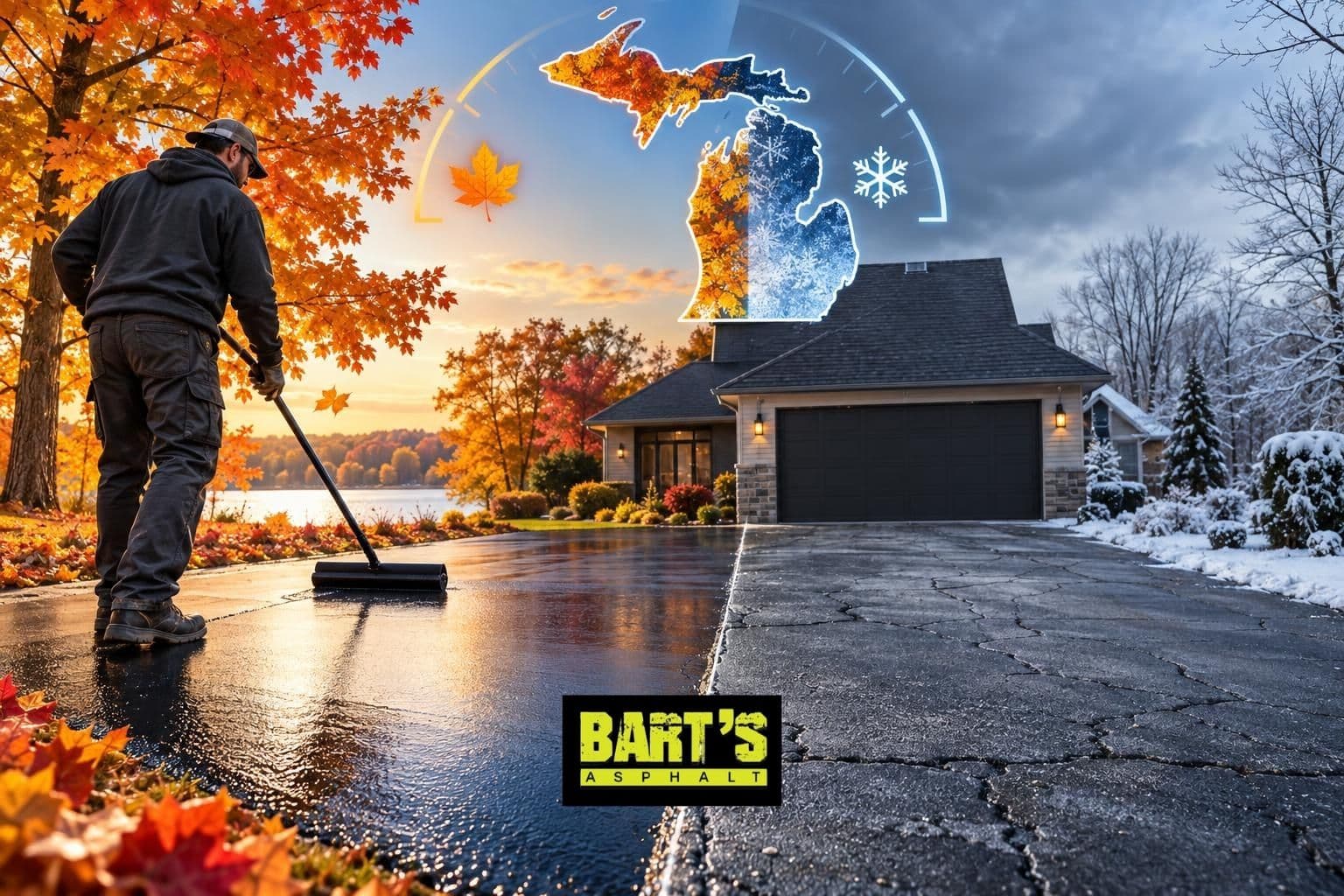
For most Michigan asphalt driveways, a properly formulated asphalt emulsion sealer is a practical choice.
Acrylic driveway sealer can suit specialty finishes, while coal tar sealer offers fuel resistance but raises greater concerns about pollutants in dust and runoff.
No category lasts longest under every condition. The pavement’s condition, the specific product, surface preparation, and curing weather all affect how well a coating holds up.
At Bart’s Asphalt, we use asphalt emulsion and acrylic sealers, not coal tar, for residential driveway sealcoating. Here’s how to compare the materials and choose a coating suited to Michigan conditions.
Key Takeaways
- Asphalt emulsion is a sensible default for many sound asphalt driveways, but formulations vary.
- Acrylic products can suit specialty finishes; confirm the exact product is approved for asphalt.
- Coal tar resists petroleum but has a much more concerning PAH pollution profile.
- No sealer repairs structural cracks, sinking pavement, or a failing base.
- Weather, cleaning, crack preparation, and cure time often decide whether a sealcoat holds up.
Asphalt Emulsion vs. Acrylic vs. Coal Tar: Quick Comparison
The best driveway sealer depends on your surface and the problem you want the coating to solve. These are broad material differences, not promises about every brand.
| Sealer | Where it fits | Main advantage | Main tradeoff |
| Asphalt emulsion | Conventional asphalt driveways | Asphalt-compatible, dark protective finish | Product quality varies; vulnerable to fuel drips |
| Acrylic | Compatible specialty or decorative finishes | Color/UV performance in suitable formulas | Higher cost may not improve ordinary driveway life |
| Coal tar | Fuel-exposed asphalt where permitted | Strong petroleum resistance | Elevated PAH concerns; local restrictions may apply |
With those differences in mind, it helps to look at what each sealer actually does on asphalt.
What Is Asphalt Emulsion Sealer, and Why Use It?
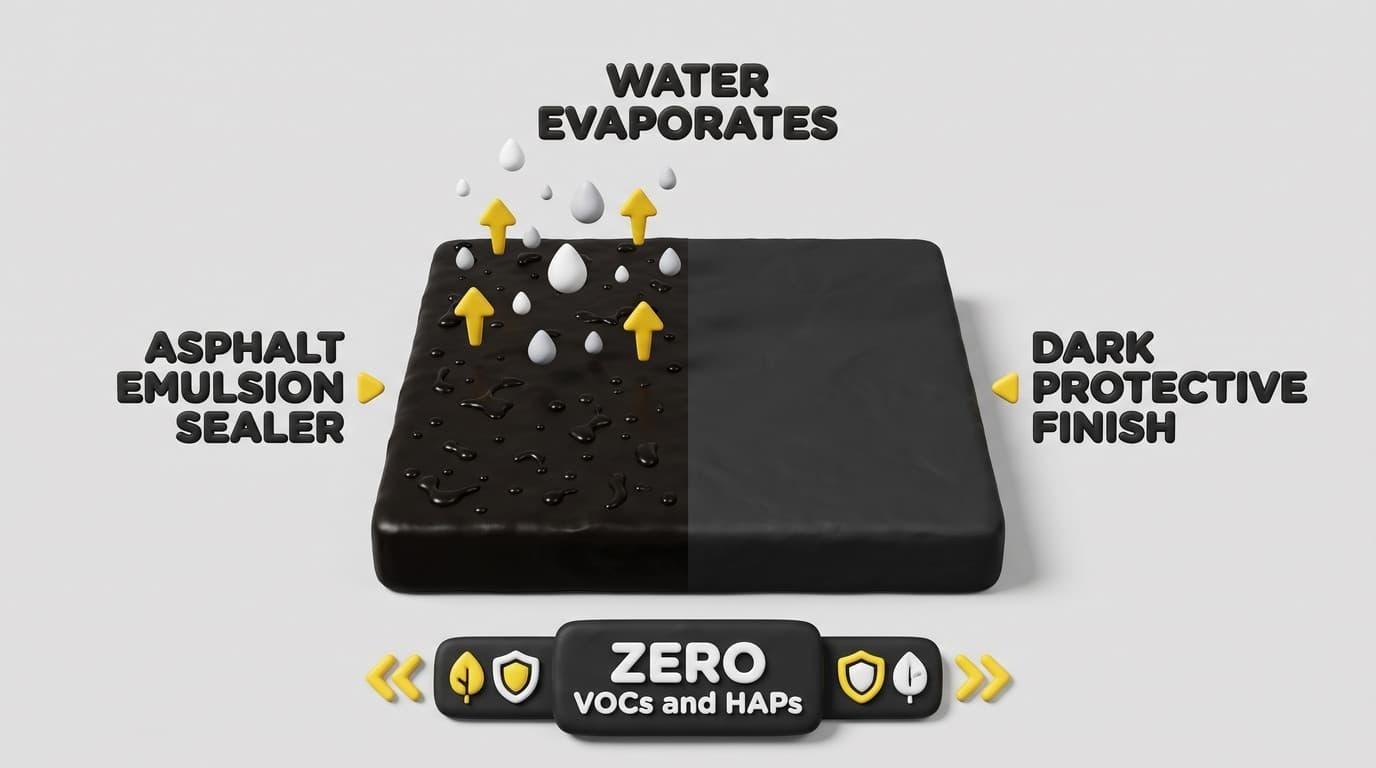
Asphalt emulsion sealer is a water-based pavement coating made with asphalt binder dispersed in water. As the water evaporates, this pavement sealer forms a protective film that refreshes faded asphalt with a dark finish and reduces weather exposure.
The formula matters. Asphalt emulsion composition and additives influence coating properties, while solids content, polymer modifiers, mineral filler, and sand can affect finish, traction, adhesion, and wear. A “higher solids” label alone doesn’t guarantee longer durability; you still need to apply the material at the manufacturer’s specified rate.
For Michigan homeowners, the appeal is straightforward: A compatible coating that protects sound asphalt without relying on coal tar. Its benefits include being safer for workers to handle and more environmentally friendly, with zero VOCs and HAPs, plus a milder odor than coal tar, making it ideal for residential use. We consider the pavement’s condition and the proposed coating system rather than recommending the same product for every driveway.
When Does Acrylic Driveway Sealer Make Sense?
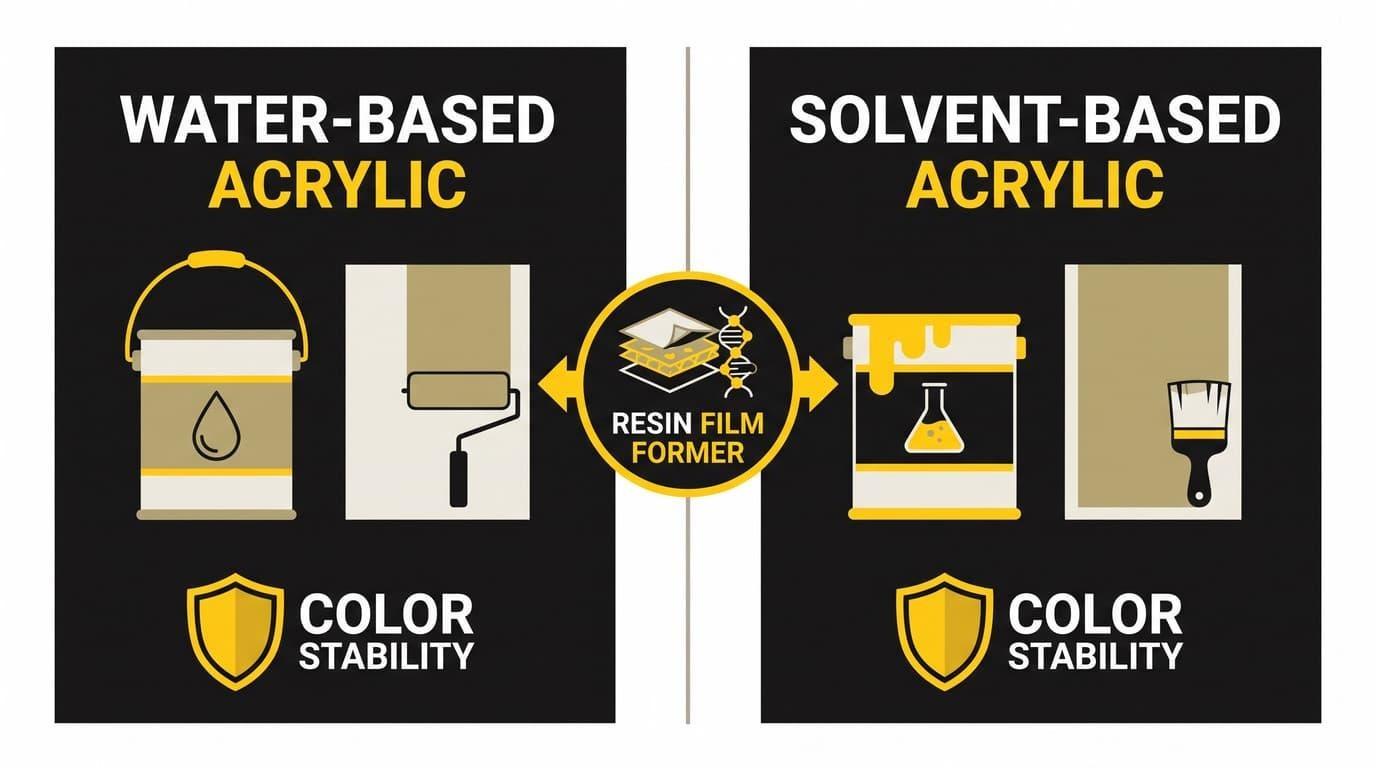
An acrylic driveway sealer uses resin, not asphalt binder, as its primary film former. Depending on the formula, it can offer color stability or a particular finish that a conventional black emulsion doesn’t provide. Some products are clear or tinted; others are designed for specific asphalt surfaces.
That doesn’t make every acrylic product a better or longer-lasting choice for a standard black driveway. Water-based and solvent-based acrylics differ, and a coating must be compatible with the pavement and any existing sealer. Ask what specific acrylic formula is proposed and why it suits your surface.
Why Is Coal Tar Sealer Controversial?
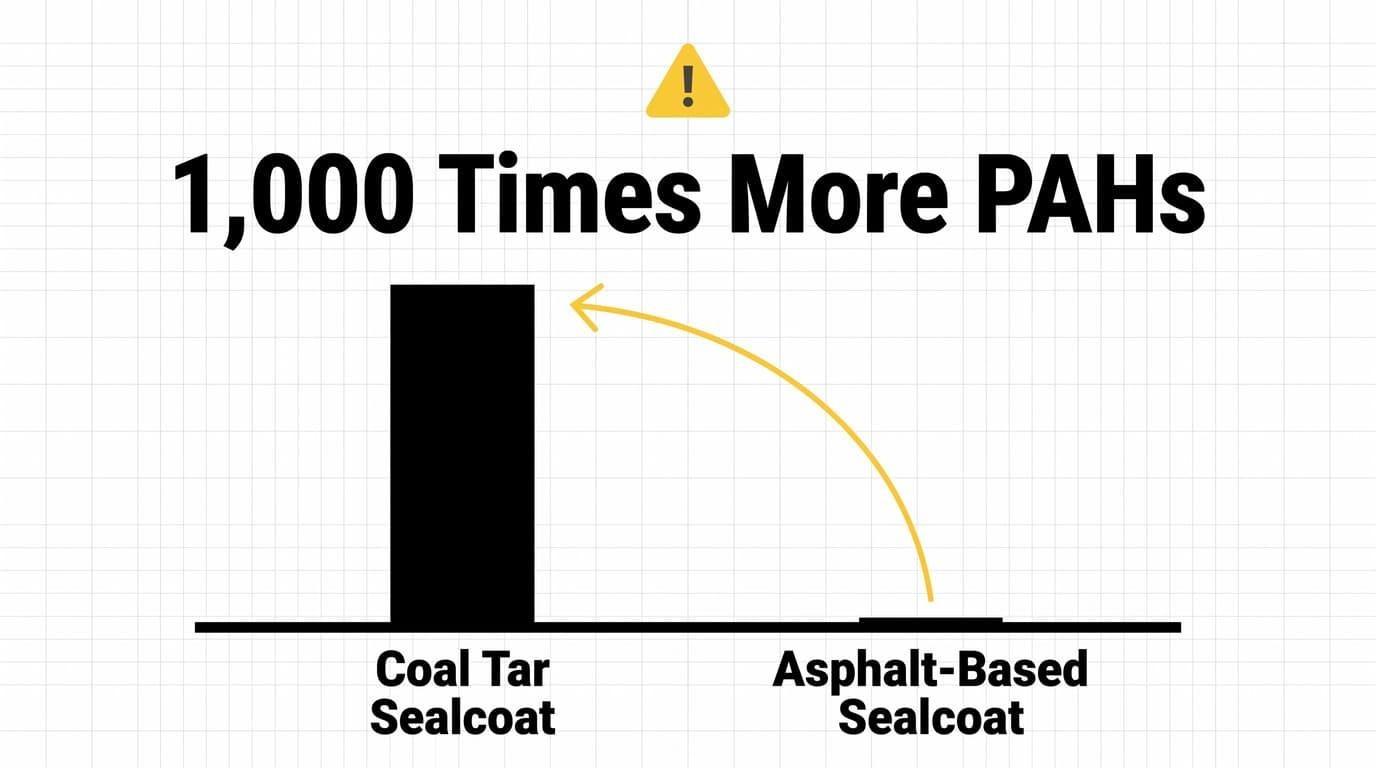
Coal tar sealer has historically been chosen for its resistance to oil and gasoline. The drawback is its polycyclic aromatic hydrocarbons (PAHs), pollutants that can move from worn sealcoat into dust, soil, and runoff.
The U.S. Geological Survey reports that coal-tar-based sealcoat typically contains about 1,000 times more PAHs than asphalt-based sealcoat. This is a general comparison, not a fixed ratio for every product. PAHs can spread through dust and runoff, and some municipalities restrict or ban coal tar sealers.
The impact doesn’t stop at the driveway. Research on coal tar runoff has found harmful effects on aquatic organisms months after application. The findings also raise concerns about exposure to contaminated house dust, particularly for young children.
That doesn’t make asphalt emulsion completely pollution-free, but it does mean it has lower odor than coal tar and can be a perfect fit for odor-sensitive settings when choosing a driveway sealer.
Which Sealer Holds Up Best Through Michigan Winters?
Michigan’s freeze-thaw cycles can worsen openings that let water reach vulnerable pavement. Pavement sustainability guidance emphasizes climate and moisture exposure as key factors in long-term performance. Sealcoating can help protect a sound surface, but it cannot bridge major cracks, stabilize sinking pavement, or repair a failing base. Coating wet, dirty, or unstable asphalt can also undermine adhesion and wear.
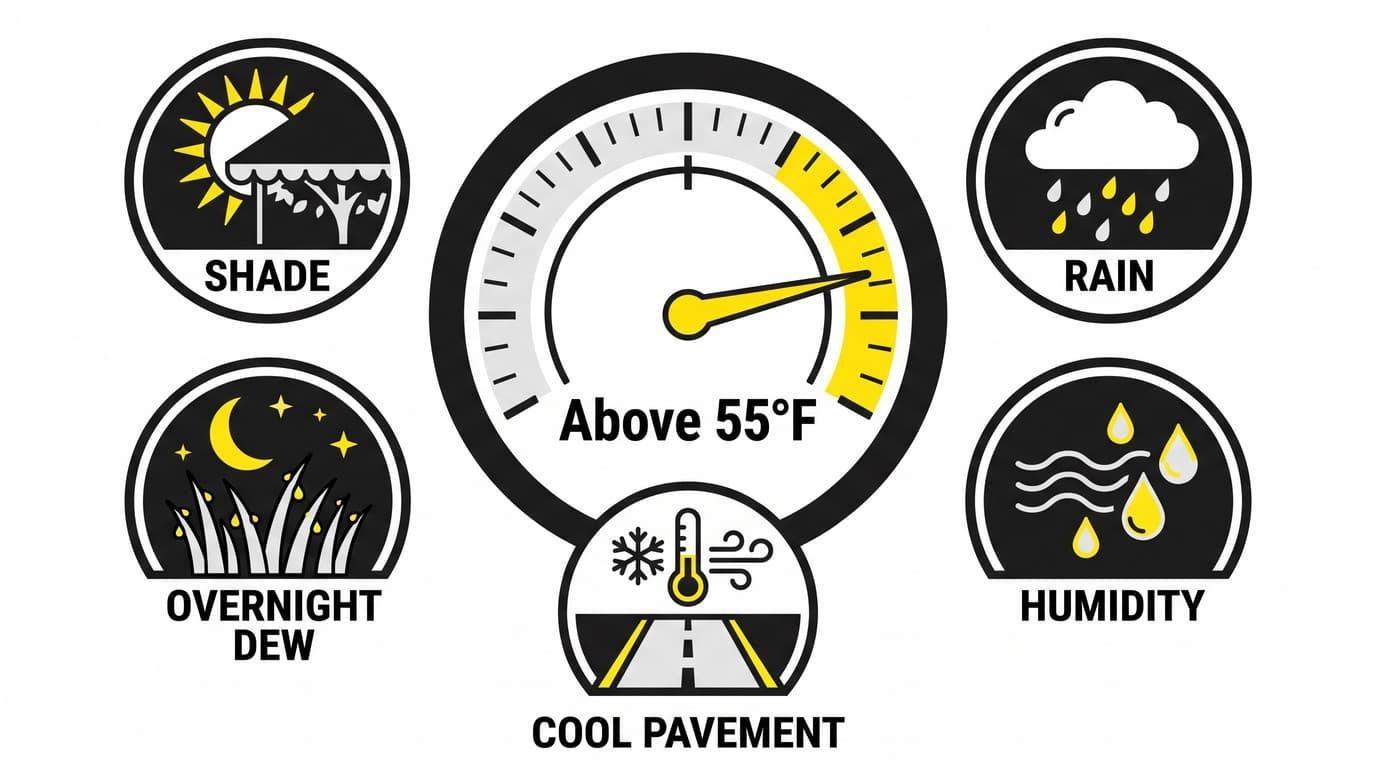
The application window matters too. Apply most asphalt sealers only when temperatures are above 55 °F. Cool pavement, overnight dew, rain, shade, and humidity can interfere with drying and curing; in high humidity, each coat must fully dry before the next. For driveway projects around Ann Arbor and Saline, we consider the forecast and site conditions when discussing preparation, scheduling, and driveway access. Air and pavement temperature requirements, along with reopening instructions, depend on the selected product, not a universal rule.
What Makes a Driveway Sealcoat Last?
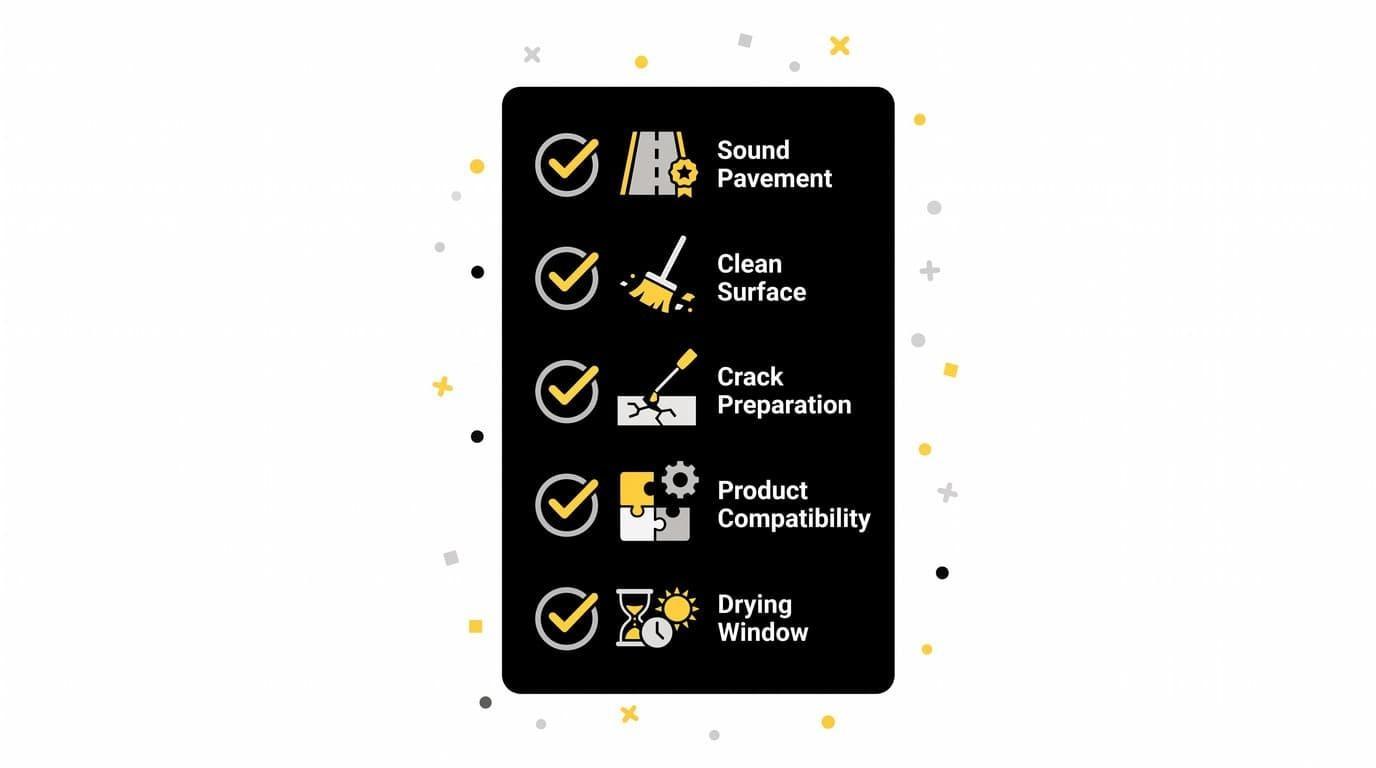
Before choosing a brand, make sure your driveway is ready for sealcoating:
- Sound pavement: Alligator cracking, potholes, or sinking may require a different repair assessment.
- Clean the surface: Remove loose debris, dirt, vegetation, and contamination that can prevent adhesion.
- Crack preparation: Identify openings that need attention before coating; sealcoat alone won’t fill cracks.
- Product compatibility: Use materials that work with the existing pavement and any previous coating.
- Drying window: Protect the work from rain and traffic until the coating has cured enough for use.
Once the driveway is ready, you can apply the coating with a squeegee or spray equipment, and the next question is how much material the coating system requires.
How Much Sealer and How Many Coats Does a Driveway Need?
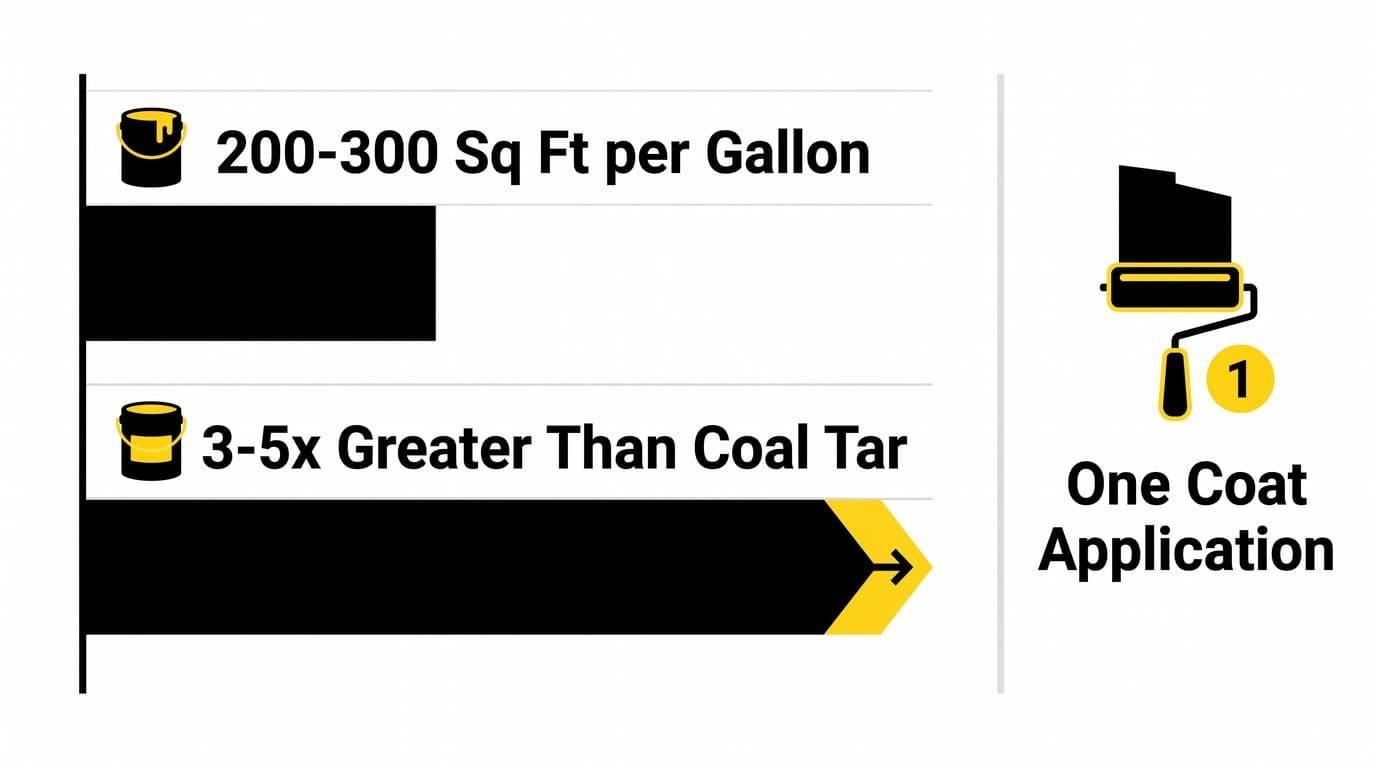
You may see coverage estimates such as 200–300 square feet per gallon, but those numbers are not universal. Some manufacturers market a product line with much higher coverage than coal tar; for example, Pavemade’s formula provides coverage of 3-5 times greater than coal tar. Pavement texture, dilution, solids, application method, and whether the rate is quoted per coat can substantially change the quantity. A rough or porous surface can consume more material than a smooth one.
Coat count also depends on the formula and surface; some systems are designed to apply asphalt emulsion in one coat for efficiency, while others require more. No universal rule applies to residential driveways or parking lots, so follow the manufacturer’s specifications. Too little sealer can cause premature wear, while too much can interfere with drying.
Ask your contractor for the product name, specified application rate, number of coats, and expected vehicle reopening time.
What Sealer Does Bart’s Asphalt Use?
At Bart’s Asphalt, we use asphalt emulsion and acrylic sealers for residential driveway sealcoating, not coal tar, with a professional application process tailored for homeowners. We assess the existing asphalt and select a compatible coating based on the pavement and application conditions.
We identify the surface preparation needed before sealcoating and consider whether the weather offers a suitable application and curing window. Our residential asphalt offering is driveway sealcoating only; structural asphalt repairs are not part of that residential service.
Explore Our Driveway Sealcoating Service
Is Sealcoating Worth It If You Already Have Good Asphalt?
On sound asphalt, preventive sealcoating with asphalt emulsion can lower long-term maintenance costs and extend pavement life by several years by refreshing the finish and limiting exposure to the elements. It works best as preventive maintenance before significant deterioration sets in.
Learn more about whether sealcoating prolongs driveway life and when it makes sense for a serviceable surface.
Choose an Asphalt Sealer That Fits Your Driveway
Before choosing an asphalt emulsion sealer, make sure your driveway is suitable for sealcoating and understand what preparation it needs.
At Bart’s Asphalt, we can discuss your driveway’s condition and whether residential sealcoating is a suitable next step. Request an assessment so we can clarify the proposed preparation and coating work in a driveway-specific written scope. We’ll also discuss weather-dependent scheduling and how long you should plan to keep vehicles off the surface. Reopening guidance will reflect the selected product and actual conditions.
Request Your Driveway Sealcoating Quote
Driveway Sealer FAQs
Still comparing products or planning your sealcoating schedule? These quick answers cover technical details that often come up before you coat a driveway
Can a new sealer go over an old coating?
Sometimes, but only when the new product is compatible with the existing coating and the old film is still sound. Peeling, contamination, or unknown prior products may require extra preparation or testing.
Does a darker black finish mean better protection?
No. Color alone cannot tell you the film thickness, adhesion, wear resistance, or how well the pavement was prepared. A fresh-looking driveway can still have untreated damage underneath.
When can I park on a freshly sealed driveway?
Follow the contractor’s and product manufacturer’s reopening instructions. Dry-to-touch times vary by product—some, such as Pavemade sealer, may dry in about 10 minutes—but that still isn’t safe for vehicles, and cars and people should stay off, especially in shade, cool weather, or high humidity, until the contractor’s reopening guidance is met.
Is a ready-to-use sealer better than a concentrate?
Not automatically. Ready-to-use describes mixing convenience, not quality. Compare the manufacturer’s solids, approved dilution, application rate, and intended pavement use.
Can sealer make a driveway slippery?
A poorly matched or improperly applied coating can affect surface traction, especially when wet, on driveways as well as other asphalt surfaces such as roads. Aggregate and surface texture matter; ask how the proposed product addresses traction on sloped areas.