

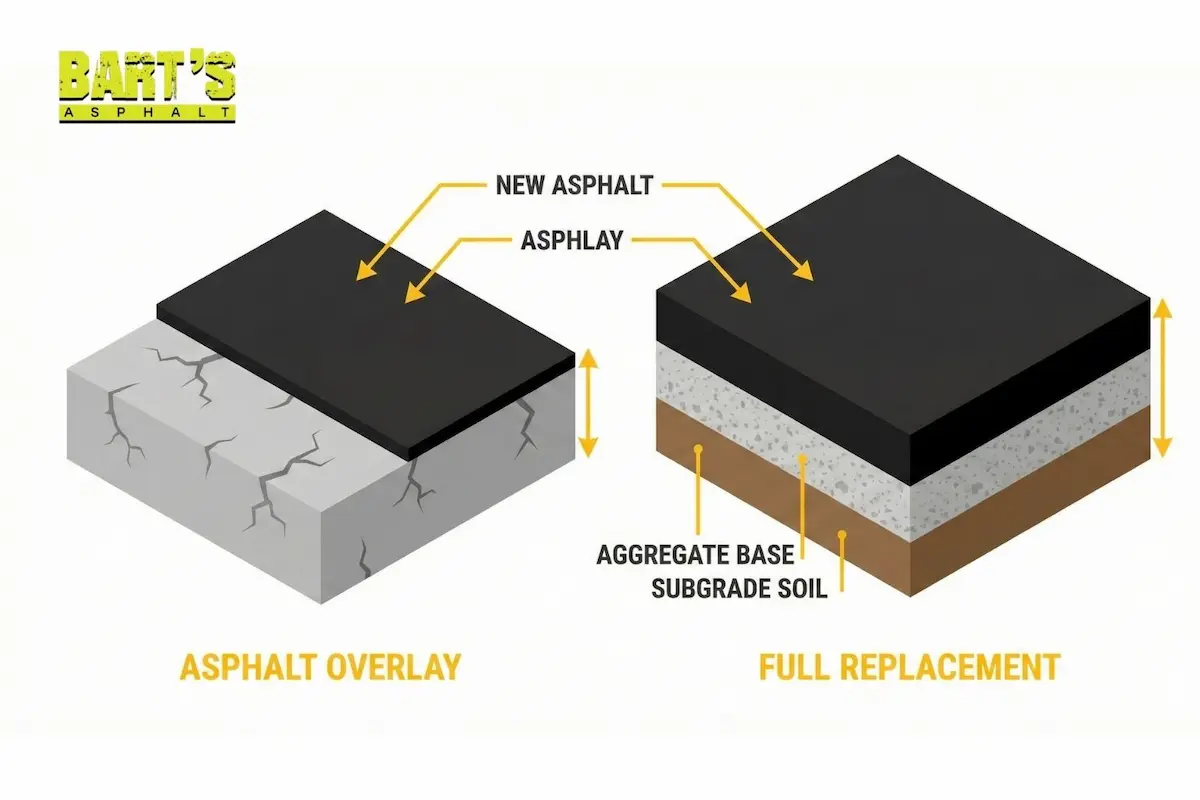
The choice between asphalt overlay and replacement depends primarily on the pavement’s foundation. An overlay is a cost-effective maintenance layer best for surface-level damage on a stable base, while replacement is a complete structural rebuild required when the subgrade has failed.
This guide compares the costs, longevity, and ideal scenarios for both methods to help you decide.
Key Takeaways
- Asphalt overlays provide a cost-effective solution for minor pavement damage, enhancing curb appeal and pavement life, while complete replacement is necessary for extensive damage involving significant structural problems.
- Complete asphalt replacement offers greater longevity and durability, typically lasting 15 to 30 years, compared to 8 to 15 years for overlays, making it more cost-effective in the long run despite being more expensive upfront.
- Proper maintenance and professional assessment are critical for maximizing the lifespan and effectiveness of both overlay and full-replacement options, ensuring that informed decisions align with your commercial property needs.
Why Choose an Overlay Over Full Replacement?
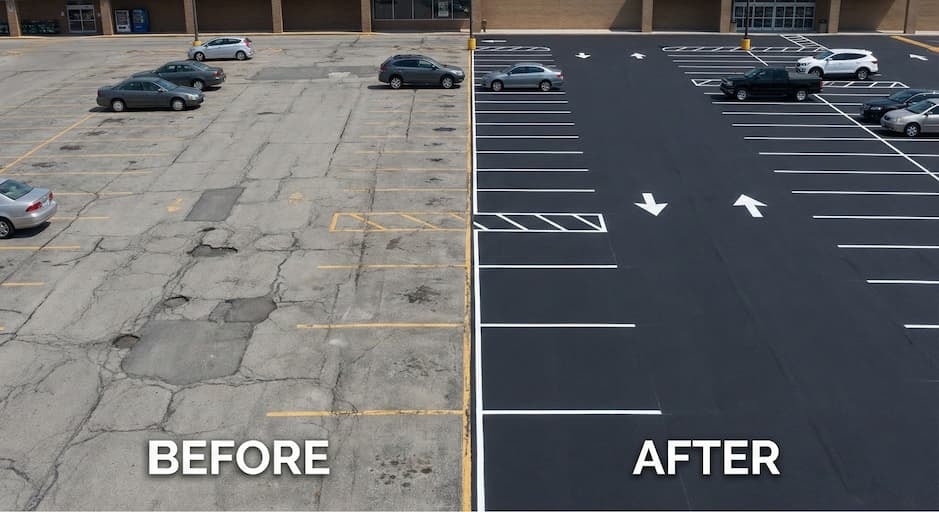
An asphalt overlay involves:
- Adding a fresh layer of bitumen mix over existing asphalt to restore its condition and extend pavement life.
- Being suitable for structurally sound asphalt surfaces with minor cracks and surface deterioration.
- Cleaning the existing surface to enhance bonding before applying the new asphalt layer.
Here’s what makes this approach attractive:
Asphalt resurfacing through overlays rejuvenates the pavement, enhancing its appearance and performance while extending pavement life.
Favored for its cost savings and quick installation, this technique is popular among property owners managing parking lot maintenance or asphalt driveways. However, it requires a stable base layer and proper asphalt binder to ensure long-term success.
Benefits of Asphalt Overlay
Data from The Pavement Group’s 2024 cost analysis shows that asphalt overlays generally cost 30-50% less upfront than full-depth replacement.
But that’s not all.
Besides cost and speed, asphalt overlays offer several benefits:
- Enhance the aesthetic appeal of paved surfaces, often making them look brand new.
- Significantly boost customer satisfaction and curb appeal.
- Improve traffic flow and the overall driving experience.
- Provide a smoother surface that ensures better durability.
- Contribute to a more comfortable and attractive environment.
Limitations of Asphalt Overlay
Despite its benefits, asphalt overlay has limitations:
- Contractors should only apply overlays to pavements that have minor surface-level issues and a structurally sound underlying foundation.
- Overlays do not address underlying issues and can only temporarily conceal problems.
- If the base layer is failing, the overlay will not provide a lasting solution, potentially leading to frequent repairs in the future.
Here’s where it gets tricky:
Improperly installed overlays can compromise existing drainage patterns. Adding height to the pavement surface may reduce the reveal along curbs, causing water to pond on the surface or flow toward building foundations rather than into catch basins. This standing water accelerates deterioration, negating the benefits of the new layer.
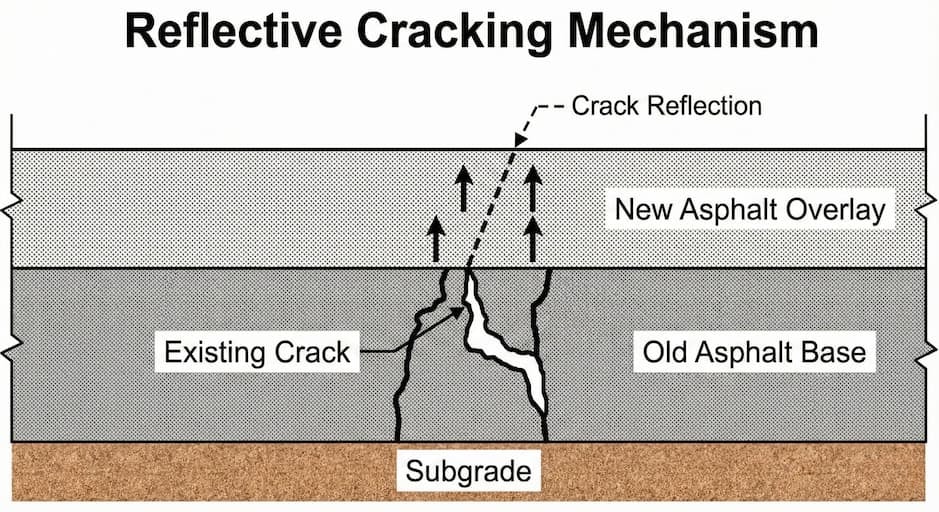
Reflective cracking is the most common failure mode for overlays placed on distressed pavement. Because the overlay bonds to the old surface, cracks in the underlying base layer eventually migrate (reflect) up through the new asphalt. This underlines the importance of repairing the base before paving; otherwise, the new surface will mirror the old damage within 12 months.
What is Full Asphalt Replacement?
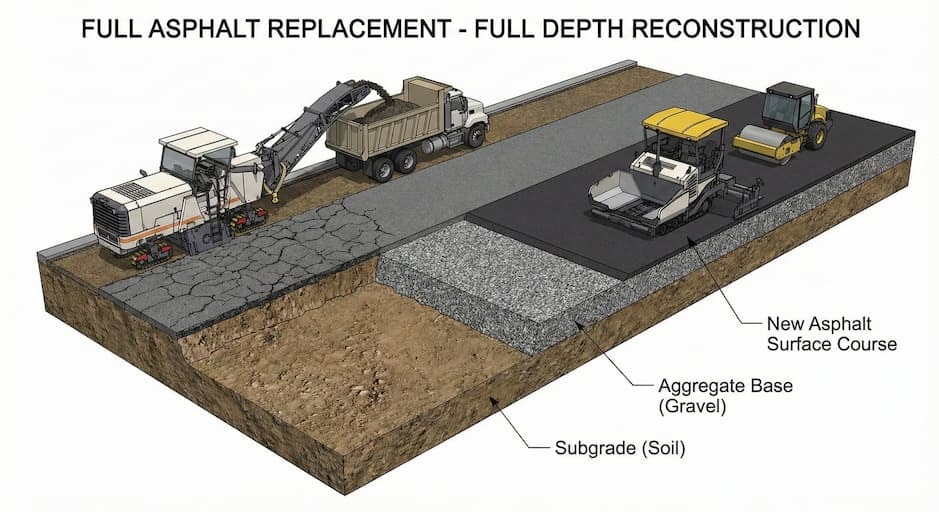
Complete asphalt replacement involves:
- Removing and completely replacing the entire structure of the asphalt pavement
- Reconstructing the existing pavement through full-depth reconstruction
- Often addressing the base and subbase layers, ensuring full depth coverage.
The process involves removing the old pavement entirely, typically using a milling machine, before installing new asphalt layers, ensuring a robust pavement’s foundation.
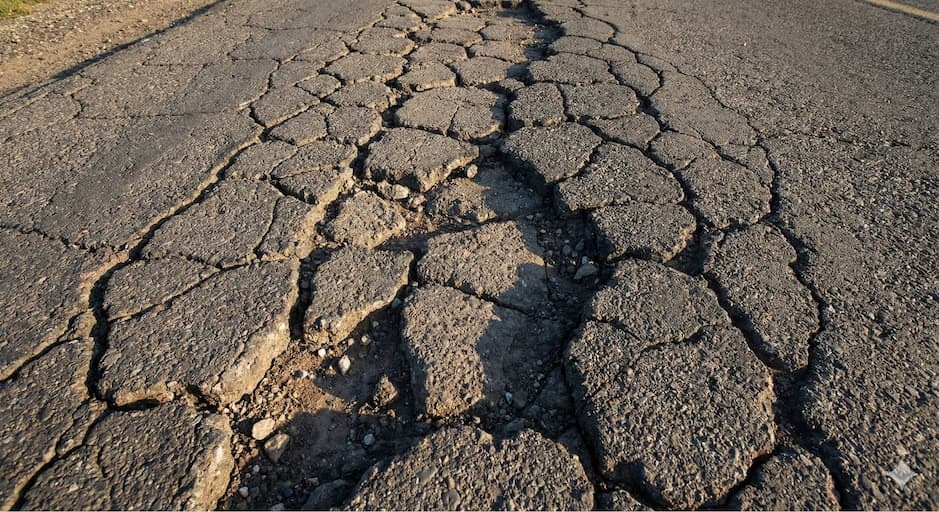
Complete asphalt replacement is necessary for deep structural issues that an asphalt overlay cannot repair. This method addresses deep structural issues for pavements with extensive damage, such as deep potholes, alligator cracking, significant structural problems, or compromised base layers.
Addressing these underlying issues, allows complete replacement ensure a longer-lasting, more durable pavement.
Advantages of Full Replacement
A key advantage of full asphalt replacement is its long lifespan. Replacing the entire structure significantly enhances the pavement’s structural integrity, promoting better performance and durability. Full replacement can provide a lifespan of 15 to 30 years, depending on traffic levels and environmental factors.
What does this mean for you?
Full replacement also allows improvements such as drainage improvements and curb alignment corrections, leading to better overall pavement. Functionality: This ensures that any underlying issues are thoroughly addressed, providing a more comprehensive, long-lasting solution that eliminates the need for frequent repairs.
Drawbacks of Full Replacement
However, complete asphalt replacement has drawbacks, primarily because it is more expensive upfront. The extensive labor and materials involved make it more costly compared to asphalt overlays. The process typically takes 4–7 days per section, significantly longer than an asphalt overlay, which can be completed in 1–2 days.
Moreover, full asphalt replacement can cause moderate disruption to traffic flow and surrounding activities due to the extensive work involved, which can be a significant drawback for businesses and properties requiring continuous access and minimal disruption to operations.
How Do Costs Compare Between Overlay and Replacement?
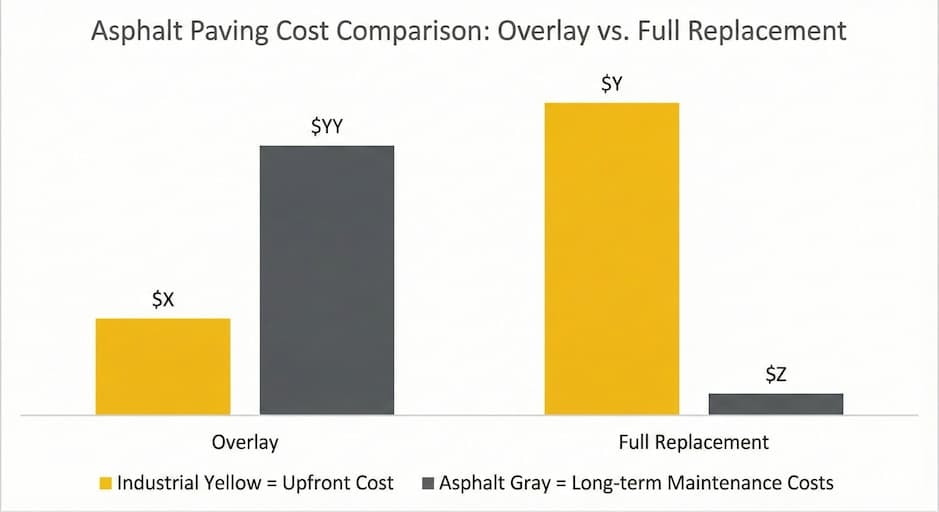
Asphalt overlays generally have a lower initial cost compared to full replacement, about 30–40% less, and offer immediate cost savings. However, while overlays may provide immediate relief for budget constraints, they can lead to higher cumulative costs due to more frequent repairs and asphalt maintenance needs. In contrast, complete asphalt replacement proves more cost-effective over the long term due to its durability and reduced need for extensive repairs.
Budgeting for asphalt paving projects requires considering both short-term and long-term costs. A thorough assessment and professional evaluation can determine the most cost-effective option, ensuring resources are allocated efficiently and unnecessary expenses are minimized.
Short-Term vs. Long-Term Costs
In the short term, asphalt overlays can save thousands compared to full replacement. They provide a cost-effective solution for properties with budget constraints, offering a quick and affordable way to restore asphalt surfaces. However, the long-term value of full replacements should not be overlooked.
Here’s the bottom line:
Despite the higher initial investment, full replacements offer greater durability, reducing the need for frequent repairs and more extensive repairs, ultimately proving more cost-effective. Balancing immediate cost savings with long-term value is crucial when deciding between an asphalt overlay and a complete replacement.
Budgeting for Asphalt Projects
Effective budgeting for asphalt projects involves understanding the cost difference over time and its impact on resources. Every unnecessary dollar spent on frequent repairs or asphalt maintenance could have been allocated to growth, equipment, or staffing, especially important when managing commercial property or parking lot investments.
A professional evaluation can offer valuable insights into the most cost-effective solution for your pavement needs. Assessing the condition of the existing asphalt and considering plans allows property owners to make informed decisions that align with their budget constraints and long-term goals.
Which Method Lasts Longer?
Longevity and durability are critical factors in deciding between asphalt overlay vs replacement. According to a 2023 performance report by the Asphalt Institute, a properly installed overlay typically lasts 10 to 15 years, provided the underlying base remains stable.
However, the typical lifespan is approximately 8 to 12 years, depending on the condition of the underlying pavement and ongoing asphalt maintenance.
Implementing a routine maintenance schedule of crack sealing and sealcoating directly leads to a 30-40% extension in the pavement’s functional lifespan.
But here’s what you need to know:
In contrast, a full asphalt replacement can last 15 to 30 years, significantly outlasting overlays. Extreme weather conditions and traffic usage heavily influence the durability of full replacements. By addressing deep structural issues, full replacements offer substantial long-term performance benefits for property owners.
Expected Lifespan of Asphalt Overlay
A properly installed asphalt overlay can last between 10 and 15 years, provided the underlying foundation is in good condition and proper maintenance is performed. The lifespan of an overlay can be extended through regular practices such as sealcoating and crack sealing, which help protect the surface layer from weathering and water infiltration.
However, factors such as a weak base layer and extreme weather conditions can significantly shorten an overlay’s lifespan. Ensuring the base is structurally sound and promptly addressing any emerging surface damage are crucial for maximizing the overlay’s durability and extending pavement life.
Longevity of Full Asphalt Replacement
Full asphalt replacement typically lasts 15 to 30 years, depending on traffic levels and environmental conditions. This extended lifespan is due to the comprehensive nature of the process, which addresses deep structural issues and ensures a robust pavement’s foundation.
Environmental factors, such as extreme weather and heavy traffic, can affect the longevity of full replacements. However, with proper maintenance and prompt issue resolution, full replacements offer substantial long-term performance benefits, making them a cost-effective solution for property owners, even when more extensive repairs are necessary.
In our 20 years of servicing local commercial properties, we have developed a specific ‘Lifecycle Strategy’ that extends parking lot usability. You can review our proprietary maintenance protocols here.
Environmental Impact and Sustainability
Evaluating the environmental impact of asphalt overlay vs replacement involves considering the resources used and waste generated.
Asphalt overlays use fewer materials and generate less waste than full replacements, contributing to more sustainable practices. Incorporating recycled materials and using permeable asphalt for better stormwater management are some sustainable practices in asphalt resurfacing.
On the other hand:
Complete asphalt replacement involves higher energy consumption and generates more waste material, as old asphalt is completely removed and disposed of. Some jurisdictions may require environmental assessments before permitting complete replacement projects, reflecting the higher environmental impact of this method.
Sustainability of Asphalt Overlay
Asphalt overlays are more sustainable because they use fewer materials and generate less waste compared to complete replacements. Local regulations often stipulate specific materials and techniques for overlays, ensuring compliance with safety and environmental standards.
Lifecycle assessments suggest that strategic overlays can result in up to 50% CO2 savings and up to 60% lower lifecycle costs when high-content recycled mixes are used. These sustainable practices make asphalt overlays a preferred choice for environmentally conscious property owners looking to minimize their carbon footprint while maintaining their asphalt pavement condition.
Environmental Considerations for Full Replacement
Complete asphalt replacement generates significant waste, including the old pavement that must be disposed of. This process also involves higher energy consumption, leading to increased carbon emissions during the removal and rebuilding phases.
In some jurisdictions, environmental assessments are required before permitting complete replacement projects, which can affect decision timelines and plans. Despite these challenges, complete replacement may be necessary to address deep structural issues and ensure optimal performance of the entire structure.
When Is Full Replacement Necessary?
Choosing between asphalt overlay vs replacement largely d
epends on the condition of the existing pavement and the specific needs of the property. Asphalt overlays are suitable for asphalt surfaces with minor cracks, surface deterioration, and a strong underlying foundation.
These conditions allow the overlay to restore the pavement’s appearance and functionality without addressing deep structural issues.
Complete asphalt replacement is necessary for extensive damage, such as deep potholes, alligator cracking, and significant structural problems that overlays cannot address. Local regulations and specific project requirements can also influence the choice between overlay vs complete replacement.
When to Choose Asphalt Overlay
An asphalt overlay is most effective when the pavement’s foundational layers are structurally sound, and there are no underlying base or subgrade problems. This method is suitable for pavements with minor cracking, oxidation, slick surfaces, reduced traction, and minor potholes.
For example:
A parking lot with a solid foundation but substantial cracks and minor potholes can benefit from an overlay, as it enhances the original look and functionality of the deteriorated asphalt surfaces. This approach works particularly well for asphalt driveways and commercial property areas where surface-level issues are the primary concern.
Government agencies generally recommend asphalt overlays for pavements in fair-to-poor condition, reserving complete replacement for deeply damaged infrastructure. Consulting pavement professionals can help determine if an overlay is the best option for your specific situation.
When Full Replacement is Necessary
Complete asphalt replacement is necessary when there is:
- Severe structural damage affecting the entire structure
- Deep potholes and deep cracks
- Alligator cracking indicates base failure
- Compromised base layers
In such cases, an overlay would be ineffective and fail to address the underlying issues. For instance, major foundation problems or deep cracks in damaged asphalt indicate the need for a complete replacement instead of an overlay through full-depth reconstruction.
Here’s why this matters:
Using an overlay in high-traffic areas without addressing foundational issues can lead to rapid failure within a few years, resulting in more extensive repairs. Regions rebuilt from a complete asphalt replacement can last 5 years or more, offering greater longevity and making it a wiser choice in the long run.
To learn more about which option is right for your property, explore our full range of asphalt services, or you could just send us a message.
Maintenance Requirements
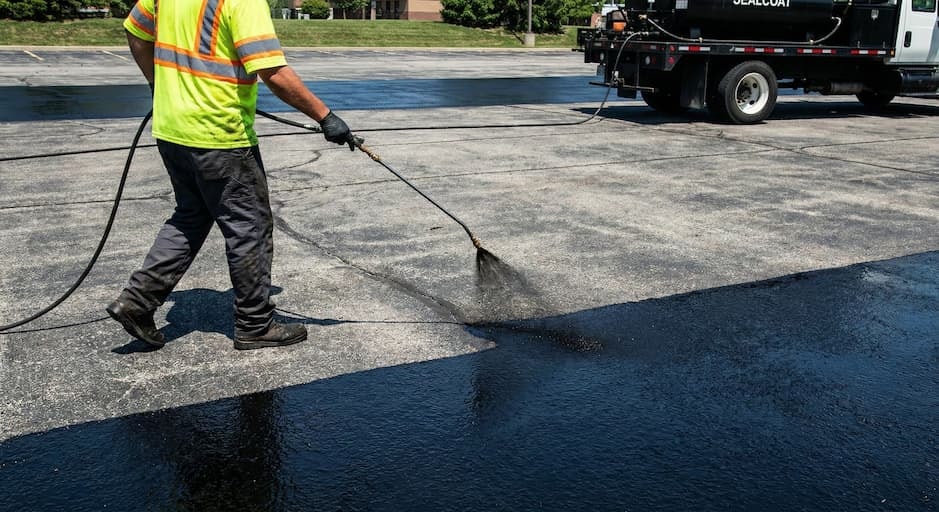
Proper maintenance is crucial for extending the lifespan of both overlay and full replacement options. Routine inspections help determine pavement condition and identify areas requiring asphalt maintenance. Regular practices, such as sealcoating and crack sealing, can significantly influence the durability of asphalt surfaces.
Both methods require ongoing attention to address emerging issues promptly and ensure the pavement remains functional and safe.
Maintaining an Asphalt Overlay
Routine asphalt maintenance, such as sealcoating, can significantly extend the lifespan of an asphalt overlay. Sealcoating should be conducted every 3 to 5 years to protect the surface layer from weathering and extend its life. Additionally, crack sealing is recommended annually to prevent water infiltration and damage to the new asphalt layer.
In areas with high humidity or extreme weather conditions, asphalt overlays may require additional maintenance to prevent moisture-related damage. Ensuring proper drainage and timely repairs are essential for maximizing the overlay’s durability and performance.
Upkeep for Full Asphalt Replacement
Maintaining a complete asphalt replacement requires promptly addressing drainage issues to prevent water from saturating the base layer, which can accelerate damage. Regular cleaning of asphalt pavement surfaces is crucial to ensure effective drainage and prolong the life of the new asphalt.
Emerging drainage problems, if left unaddressed, can significantly shorten the pavement’s lifespan. The typical duration for completing full maintenance work can range from 3 to 7 days or more, depending on the size of the area and weather conditions. However, with proper maintenance, such extensive repairs become less frequent.
Regional Practices and Standards
Regional practices and standards play a significant role in determining the appropriate method for asphalt maintenance and replacement.
Extreme weather conditions, such as freeze-thaw cycles, significantly affect the performance and longevity of overlay and full replacement options. Local regulations and best practices dictate the preferred methods for asphalt paving projects, influencing the choice between these approaches.
Understanding regional standards and climate impacts can help commercial property owners make informed decisions that ensure the long-term health and functionality of their pavements.
Impact of Climate on Asphalt Decisions
Extreme heat can soften asphalt, making overlays less effective and accelerating surface deterioration. Extreme temperature changes can increase pavement stress, affecting the lifespan of both overlay and complete replacement options. In areas with harsh winters, freeze-thaw cycles can accelerate surface damage and reduce pavement life.
Considering climate impacts is crucial for making informed decisions about asphalt maintenance and replacement, ensuring the chosen method is suitable for the regional conditions affecting your asphalt pavement.
Local Regulations and Best Practices
Best practices in some areas require a thorough assessment of the existing asphalt condition before deciding on overlay vs replacement.
Local regulations, such as those from the Federal Highway Administration (FHWA), often dictate specific thickness guidelines for overlays to ensure they can handle projected traffic loads.
Adhering to these regulations and best practices ensures that asphalt paving projects are completed safely and effectively, providing long-lasting, durable pavement solutions that address underlying issues effectively.
Consulting with Pavement Professionals
Consulting with pavement professionals is essential for making informed decisions regarding asphalt maintenance options.
Experts can provide valuable insights and a professional assessment to determine whether an overlay or full replacement is the best choice for your specific situation. Businesses should contact experts for a professional evaluation to decide between an overlay and full paving.
Professional assessments help identify hidden problems that may affect pavement life and ensure the chosen method aligns with the property’s needs and budget constraints.
Contact Bart’s Asphalt For A Free Estimate
Importance of Professional Assessment
Professional evaluations are crucial for identifying hidden problems that may affect pavement longevity and structural integrity. Neglecting necessary pavement replacement can compromise pavement integrity and safety, leading to more extensive repairs down the line.
Reputable pavement professionals provide honest guidance tailored to property needs, ensuring recommendations are appropriate for each situation. Comprehensive services employ full pavement condition assessments, elevation and drainage analysis, core sampling, and ADA compliance verification when determining resurfacing methods, ensuring nothing is overlooked in the evaluation process.
Finding the Right Contractor
Selecting a contractor with extensive experience can ensure high-quality results for both overlay and full replacement projects. Businesses might choose experienced contractors for:
- Their unmatched quality and expertise
- Commitment to sustainability using fewer materials when possible
- Clear communication throughout the project
- Understanding of local regulations and best practices
Choosing the right contractor ensures the project is completed efficiently, safely, and within budget, providing peace of mind for property owners and long-lasting results for your asphalt pavement.
Summary
Choosing between asphalt overlay and replacement involves considering factors such as cost savings, longevity, environmental impact, and the specific needs of the property. Asphalt overlays offer a cost-effective, quick solution with minimal disruption for surface damage, while full replacements provide a durable, long-term solution that addresses deep structural issues.
Consulting with pavement professionals and considering regional practices and standards are essential for making informed decisions. By understanding the benefits and drawbacks of overlay vs full replacement, property owners can ensure their asphalt surfaces remain functional, safe, and visually appealing for years to come.
Frequently Asked Questions
Here, we answer some of the most pressing questions regarding asphalt overlay and replacement.
What is an asphalt overlay?
An asphalt overlay involves applying a new layer of asphalt over the existing surface to restore damaged pavement and maintain the structural integrity of the underlying foundation. This approach enhances pavement life and appearance while remaining cost-effective.
What are some benefits of choosing an asphalt overlay?
Choosing an asphalt overlay offers cost savings and quick installation with minimal disruption, while providing enhanced durability, improved curb appeal, and better traffic flow. It also offers an eco-friendly option using fewer materials for road maintenance.
When should an asphalt overlay be preferred over a full replacement?
An asphalt overlay is preferable when the existing pavement has minor surface-level issues, such as minor cracks and potholes. Still, the base layer is structurally sound, making it a quicker, more cost-effective solution than a complete replacement.
What are some disadvantages of asphalt overlay related to drainage?
Asphalt overlay can compromise drainage, causing water to pond along curbs and sidewalks and potentially leading to further surface deterioration and structural problems. Proper drainage solutions should be considered to mitigate this risk and prevent damage to the surface layer.
How long can an asphalt overlay last?
An asphalt overlay can last 10 to 15 years when properly installed and maintained, making it a durable choice for surface rejuvenation. Regular crack sealing and asphalt maintenance are key to maximizing pavement lifespan.