

A neglected parking area can lead to expensive repairs, safety hazards, and a poor first impression for customers or tenants. But with a smart lifecycle strategy, you can protect your investment, extend pavement life, and save thousands in maintenance costs.
This comprehensive guide reveals the proven steps, from routine maintenance to major repairs, that keep your parking lot durable, safe, and visually appealing for years to come.
Key Takeaways
- Understanding the parking lot lifecycle and maintaining it properly can significantly extend the lifespan and functionality of parking lot surfaces.
- Regular inspections and preventive maintenance, such as sealcoating and crack sealing, are essential to avoid costly repairs and enhance safety.
- Engaging professional expertise in parking lot maintenance ensures compliance, safety, and optimal performance of the infrastructure.
What Are the Key Stages in the Parking Lot Lifecycle?
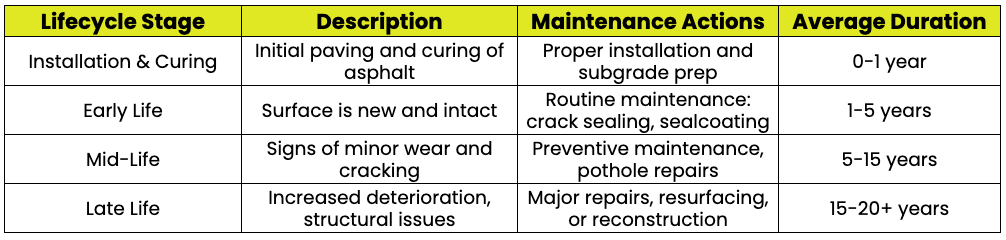
The lifecycle of asphalt pavement typically follows stages that begin with installation and initial curing, proceed to routine maintenance activities such as sealcoating and crack sealing, and eventually lead to significant repairs, full resurfacing, or reconstruction when the pavement’s structural integrity is compromised.
Various physical factors play a role in this, including the initial design, the strength and preparation of the subgrade, weather conditions like fluctuating temperatures and precipitation, and the effectiveness of drainage systems.
These elements together affect how long the parking lot will last and how well it withstands wear and tear. For example, according to the National Asphalt Pavement Association (NAPA), poor drainage can shorten pavement life by up to 30%, underscoring the need to address drainage early.
On average, asphalt pavements last around 15 to 20 years with proper care. Regular maintenance activities, such as sealcoating every 2 to 3 years, crack filling, pothole repairs, and professional inspections, are essential to protect the asphalt surface, prevent costly repairs, and sustain functionality and aesthetic appeal. Managing these maintenance intervals as one coordinated program is covered under sealcoating and crack sealing services.
Neglecting these steps can accelerate wear, lead to water infiltration, and cause damage from chemical spills or heavy traffic.
To help illustrate this concept clearly, here’s a simple table summarizing the asphalt pavement lifecycle stages and corresponding maintenance actions:
In summary, understanding your parking lot’s lifecycle and adopting a proactive maintenance plan that includes regular inspections, timely crack sealing, and sealcoating is the best way to extend your parking lot’s life, keep maintenance costs down, and ensure a durable, safe, and attractive surface that supports smooth traffic flow.
This approach benefits property managers and owners aiming to balance maintenance costs with preserving curb appeal and structural integrity, ensuring their commercial parking lots remain functional and aesthetically appealing for years to come.
Benefits of a Proactive Maintenance Approach
Taking a proactive maintenance approach to your parking lot isn’t just about keeping things looking neat; it’s a wise investment with measurable returns that can save you big in the long run.
Research by the Federal Highway Administration (FHWA) shows that regular preventive asphalt maintenance can extend pavement life by up to 50%. Imagine avoiding a costly $50,000 repave by sealing cracks early or scheduling sealcoating every few years. This isn’t just a theory; these are real-world savings that businesses experience.
For instance, a retail chain that embraced this maintenance method saved more than $100,000 annually by consistently sealing cracks, promptly patching potholes, and keeping the surface clean and properly sealed.
These smaller, routine maintenance actions cost a fraction of emergency repairs and reconstruction, which can easily escalate to tens or hundreds of thousands of dollars.
Here’s what that ROI looks like in practice:
- Without maintenance, a parking lot may require full reconstruction after 8-10 years, costing $100,000+ and risking lost customers due to poor appearance and liability issues.
- With a routine maintenance schedule including sealcoating every 2-4 years, crack filling annually, and striping refreshes, the total cost over 15 years is around $15,000 to $20,000.
This results in over $80,000 in savings, not to mention a better visitor experience due to enhanced safety, ADA compliance, and improved traffic flow. Preventive maintenance also keeps your parking lot’s curb appeal sharp, boosting overall commercial property value and reducing the liability risks posed by hazards such as potholes and uneven surfaces.
Visually, the cost split for parking lot upkeep often heavily favors preventive maintenance, which can represent 75% or more cost savings compared to reactive, emergency fixes.
Suppose you want to see how much you could save. In that case, Bart’s Asphalt even offers free ROI assessment tailored to your parking lot size and usage patterns, making this innovative approach more accessible than ever.
In summary, the benefits of preventive asphalt maintenance go far beyond aesthetics: they include extended pavement lifespan, significant cost savings, improved safety and compliance, and greater property value, all of which make proactive care a cornerstone of any savvy parking lot lifecycle strategy.
Key Preventive Maintenance Actions
Building on the benefits of proactive maintenance discussed earlier, here’s a detailed guide to the key preventive maintenance actions that help preserve a durable, visually appealing parking lot.
Regular Inspections and Cleaning
This measure helps identify early signs of wear and tear, such as minor cracks, oil stains, or drainage issues, while keeping the lot free of debris that can accelerate deterioration.
It involves sweeping or power-washing the surface monthly, more frequently in high-traffic areas or during leaf-fall seasons; promptly removing oil spills with absorbent materials to avoid pavement damage; and inspecting for standing water and drainage blockages, especially after heavy rains.
Crack Sealing (Cracks wider than 1/8 inch)
First, sealing cracks prevents moisture from seeping in, which could damage the base layer and worsen cracks.
Next, prepare the cracks by removing debris and vegetation. Use compressed air or wire brushes for best results.
Now, it’s time to fill the cracks. Depending on the crack size and your local climate, choose either a hot-pour rubberized sealant or a cold-applied filler.
Finally, don’t rush this last step: allow the sealant to cure for 24 hours before reopening the surface to traffic. This ensures a durable, long-lasting repair.
Sealcoating
First, understand why sealcoating your driveway or parking lot matters: it acts as a protective layer against UV rays, moisture, oil spills, and chemical damage, extending pavement life by up to 50%.
When should you schedule this important maintenance? Plan to sealcoat every 2-3 years for regular traffic, but if your lot gets heavy use, consider a biennial schedule since wear can be up to 20% faster.
But wait, don’t apply sealcoating just yet. Prepare the surface thoroughly by cleaning and repairing cracks before application.
Finally, choose quality for best results: use high-quality asphalt emulsion sealers, such as Armor Sillane or Latex-ite, to ensure lasting protection, and apply them evenly with a spray or brush, allowing sufficient drying time.
Pothole Repairs
Let’s break down pothole repair into key steps to keep your parking lot safe and durable:
First things first: Prevent further asphalt crumbling and address any safety hazards right away.
Next, what should you do before making any repairs? Remove all loose debris from the pothole to ensure a clean workspace.
But what about making the repair last? For a durable, long-term fix, use hot-mix asphalt. If you need a quick, temporary solution, cold patching will do the trick, but remember, it won’t hold up as long.
Finally, how do you ensure a smooth finish? Compact the patching material tightly and make sure it’s level with the surrounding pavement for optimal results.
Priority Maintenance Checklist for Quick Scanning

These steps, when followed within a tailored maintenance plan, can help property managers effectively combat the natural wear and tear caused primarily by traffic loads and weather fluctuations.
This proactive approach safeguards the structural integrity of your asphalt while maintaining the parking lot’s functionality and curb appeal for years to come.
Including before-and-after photos of sealed cracks or pothole repairs can visually reinforce the effectiveness of these maintenance actions. For instance, sealing a minor crack early prevents it from expanding and causing uneven surfaces and costly repairs.
The Role of Pavement Management Systems (PMS)
Pavement Management Systems (PMS) are essential digital tools that help property owners and managers monitor, plan, and optimize the maintenance of parking lot pavements. Think of PMS as innovative software that uses data collected through apps, sensors, and inspections to track the condition of your parking lot and predict when repairs are needed.
This monitoring style lets you schedule maintenance before minor issues become costly repairs, ultimately reducing maintenance costs by 15-20%.
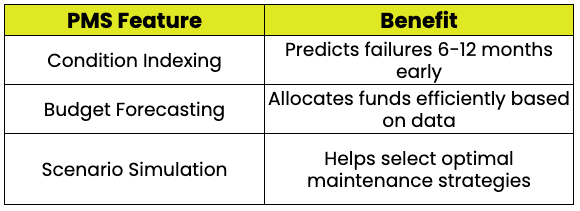
For example, popular pavement management software such as StreetSaver and Micro PAVER offers features such as condition indexing, which predicts pavement failures 6-12 months in advance, and budget forecasting, which helps allocate funds based on traffic loads and pavement conditions.
Small commercial lots benefit from tools like PAVER, which simulate different maintenance scenarios to help choose the most cost-effective plan.
Here’s a simple table highlighting key PMS features and their benefits:
Integrating a PMS into your parking lot management regimen helps extend pavement life, streamline maintenance scheduling, optimize your budget, and improve safety and the user experience. Modern PMS often includes user-friendly dashboards providing real-time condition updates, making complex data accessible at a glance.
If you’re looking to boost your parking lot’s lifespan and streamline upkeep, exploring PMS options and scheduling a demo with providers like Bart’s Asphalt could be your next smart move.
This practical strategy keeps your parking infrastructure durable and cost-effective by aligning maintenance efforts with your property’s unique requirements.
Schedule A Free Assessment Today
Seasonal Maintenance Tips
Seasonal maintenance is important for extending your parking lot’s lifespan and preventing costly repairs caused by changing weather and environmental conditions. Striking a balance across all four seasons ensures that your pavement withstands the test of time, traffic loads, and natural wear and tear.
Here’s a well-rounded year-round seasonal maintenance schedule to help guide your efforts:
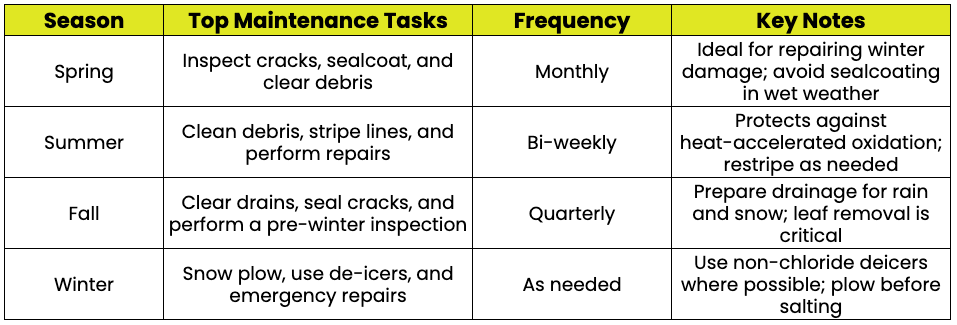
In humid regions like the Southeast, summer sealcoating can prevent up to 40% more oxidation damage, thanks to the combination of intense heat and moisture. In snowy areas, cleaning drains early in the fall prevents water from pooling and freezing, which can lead to potholes.
Winter de-icing requires care; excessive salt can permanently damage asphalt and pollute water, so consider eco-friendly alternatives.
If you’re struggling with winter ice, try liquid anti-icing agents that prevent ice from bonding, reducing the need for heavy salt use. Also, plowing snow promptly before applying any deicers preserves surface integrity.
This balanced maintenance plan, tailored specifically to your region, should help you optimize your parking lot’s performance, minimize repair costs, and extend its service life while maintaining a pristine, safe parking environment year-round.
Choosing Between Resurfacing and Reconstruction
Choosing between resurfacing and reconstruction is not a small decision in parking lot maintenance, as it directly impacts costs, pavement life, and long-term property value.
Resurfacing
This is the process of applying a new layer of asphalt over the existing surface. This option is generally best when the pavement base is still strong and intact, but the surface shows signs of wear, such as cracks or minor potholes.
It rejuvenates the lot’s appearance and extends life by 8-15 years without incurring high costs. Average costs range from $2 to $4 per square foot, depending on the condition and thickness of the overlay required. Bart’s Asphalt can give you a free quote for resurfacing your parking lot.
Reconstruction
On the other hand, this involves completely removing the existing pavement and repairing or rebuilding the base layer before laying down new asphalt. This is necessary when there are significant structural failures, such as major base damage, widespread alligator cracking, or drainage issues.
Reconstruction provides a fresh, durable start that can last 20-30 years but comes at a higher cost, typically $5-$10 per square foot due to the extensive prep and rebuild work.
Here’s a quick cost and lifespan comparison table:

To decide effectively, use this simplified approach:
If the base is intact → Resurface.
If the base is compromised → Reconstruct.
Signs to call professionals include: visible alligator cracking, uneven surfaces, persistent drainage problems, or when prior repairs no longer hold.
Including side-by-side images showing resurfacing versus reconstruction processes can visually clarify the difference for property owners.
If you’re unsure, at Bart’s Asphalt, we offer free assessment to help you choose the best path.
Ultimately, resurfacing is a cost-effective way to refresh your lot if the base is sound. At the same time, reconstruction is a more significant investment in long-term durability when structural issues are present. Balancing your budget, lot condition, and future usage plans will guide the right choice for your parking infrastructure.
Sustainability in Parking Lot Maintenance
Sustainability is becoming a crucial part of parking lot maintenance strategies, offering environmental benefits while enhancing pavement lifespan and reducing costs. Let’s dive into some of the most impactful sustainable practices and innovations.
Sustainability vs. Traditional Maintenance

Sustainable choices like these extend parking lot lifecycle strategies by integrating eco-materials and innovative technologies from the start. They also often qualify for LEED credits and green rebates, providing financial incentives alongside environmental gains.
In parallel, crafting a tailored maintenance plan with clear assessment factors (traffic load, climate, chemical spills, budget, etc.) and integrating technologies, such as maintenance-tracking apps, helps implement sustainable practices effectively.
A simple factors table can guide prioritization, while a downloadable checklist or maintenance plan template can empower property owners to confidently schedule essential activities.
At Bart’s Asphalt, we believe that both sustainability and tailored planning go hand in hand to ensure your parking lot is well-maintained and aligned with modern, eco-conscious standards and operational goals.
Creating a Tailored Maintenance Plan
Creating a tailored maintenance plan is essential for effective parking lot maintenance. Assessing a parking lot’s condition involves checking for:
- cracks
- potholes
- drainage issues
- sealcoating needs
- faded striping
- concrete maintenance
Core sampling and load-bearing assessments are key components of a comprehensive analysis of a parking lot’s condition.
Factors influencing the assessment include vehicle traffic frequency, paving materials, local weather, drainage efficiency, traffic volume in high traffic areas, and traffic flow. Setting aside 10-15% of the maintenance budget for emergencies is recommended to address unexpected issues without disrupting overall maintenance plans.
Evaluating the success of previous maintenance efforts helps refine future strategies, ensuring better results in maintaining the parking lot.
A dynamic maintenance plan adapts to changing conditions and usage patterns, incorporating new technologies. Regular sealcoating every 2-3 years is essential for protecting asphalt from weather damage and wear. Following these guidelines helps create a proactive maintenance plan tailored to your parking lot’s specific needs.
The Economic Advantages of Preventive Care
The economic advantages of preventive care in parking lot maintenance are clear and quantifiable, making a strong case for property managers and owners to invest in routine upkeep rather than waiting for costly repairs.
Regular preventive maintenance can save approximately $0.05 per square foot annually by addressing minor issues like cracks and oil stains early before they escalate.
Over a 10- to 15-year period, this adds up to significant cost reductions, routine sealcoating every 2 to 4 years, annual crack sealing, and regular cleaning and striping typically cost between $15,000 and $20,000 for a commercial-sized lot.
In stark contrast, neglecting maintenance often leads to full reconstruction or resurfacing after 8 to 10 years, with costs easily exceeding $100,000. Prevention extends pavement life by 10-15 years on average and helps maintain functionality, safety, and curb appeal.
Proper drainage and crack sealing prevent water infiltration and base erosion, major contributors to pavement failure. This act of care also reduces liability risks associated with trips, falls, and vehicle damage, while ensuring ADA compliance.
Image: A cost-comparison line graph over 10 years showing steeply rising reactive repair costs versus relatively flat preventive maintenance expenses, illustrating clear ROI within 2-3 years.
In sum, while preventive maintenance requires ongoing investment, the payoff is a safer, longer-lasting parking lot that protects property value and avoids unexpected, disruptive expenses, making it a financially smart strategy for any commercial property.
Professional Expertise in Parking Lot Maintenance
Engaging professional expertise is necessary for effective parking lot maintenance. Choosing experienced providers for parking lot repair offers several benefits:
- Safeguards your investment and extends the pavement life
- Enhances durability through professional asphalt repairs
- Focuses on safety and reduces liability risks
- Provides thorough evaluations that can uncover potential compliance issues with local regulations and ADA standards
Maintenance tasks such as repairing cracks and sealcoating should be performed by professionals to ensure compliance and safety.
Professional expertise ensures optimal surface treatments, materials, and drainage systems tailored to specific parking lot needs. Investing in professional expertise enhances functionality, safety, longevity, cost savings, and property value through crack filling and drainage maintenance.
Professionals provide insights and tailored solutions to enhance the functionality and curb appeal of commercial property value. They formulate balanced regimens aligned with operational and financial needs.
Engaging experts such as Bart’s Asphalt ensures that your pristine parking lot remains in pristine condition and serves its purpose effectively.
Summary
In summary, a well-executed parking lot lifecycle strategy is your best defense against costly repairs and premature pavement failure.
Equipping yourself with a good understanding of the factors that affect your parking lot’s lifespan and choosing effective, tailored maintenance plans, including regular inspections, crack sealing, sealcoating, and seasonal care, will not only extend the pavement’s durability but also enhance safety, curb appeal, and even property value.
Don’t wait for minor cracks to become major headaches. Start your lifecycle strategy today.
Schedule A Free Consultation And Protect Your Investment For Years.
Frequently Asked Questions About Parking Lot Maintenance
Knowing the answers to common questions makes it easier to protect your investment. Whether you’re curious about budgeting, sealcoating, or the lifecycle of your pavement, these FAQs cover the essentials.
1. What is the average lifespan of a parking lot?
Typically, a well-maintained asphalt parking lot lasts between 15 and 20 years. Routine preventive maintenance, such as sealcoating and crack sealing, can significantly extend this lifespan. For more details, see our section on parking lot lifecycle strategies.
2. How often should I sealcoat my parking lot?
Sealcoating every 2 to 3 years protects against UV damage, water penetration, and chemical spills. High-traffic lots may need more frequent applications. Learn more in our preventive maintenance guide.
3. How much does sealcoating cost?
Sealcoating generally costs between $0.10 and $0.30 per square foot, depending on lot size and condition. It’s an affordable investment to prevent costly repairs down the line.
4. What is the difference between resurfacing and reconstruction?
Resurfacing involves adding a new asphalt layer to an intact base and typically lasts 8-15 years; reconstruction replaces the entire base and surface, lasting 20-30 years. Check out our resurfacing vs. reconstruction guide for details.
5. Can I do parking lot maintenance myself, or should I hire professionals?
While minor tasks like cleaning debris can be DIY, expert services are recommended for crack sealing, sealcoating, and repairs to ensure safety, compliance, and quality.
6. How do I budget for parking lot maintenance?
Allocate about 5-10% of your parking lot’s value annually for maintenance to avoid unexpected costly repairs. Our tailored maintenance plan section offers budgeting tips.
7. What are common hazards that affect parking lots?
Oil spills, standing water, potholes, and heavy traffic pose safety risks and damage. Prompt attention to these can reduce liability and increase lifespan.
8. How do weather conditions impact parking lot maintenance?
UV rays, freeze-thaw cycles, and precipitation cause cracking and erosion. Seasonal maintenance tips explain how to adapt care throughout the year.
This comprehensive set addresses key concerns with sufficient detail to guide property managers and owners in producing a safe, durable, and cost-efficient parking lot.