

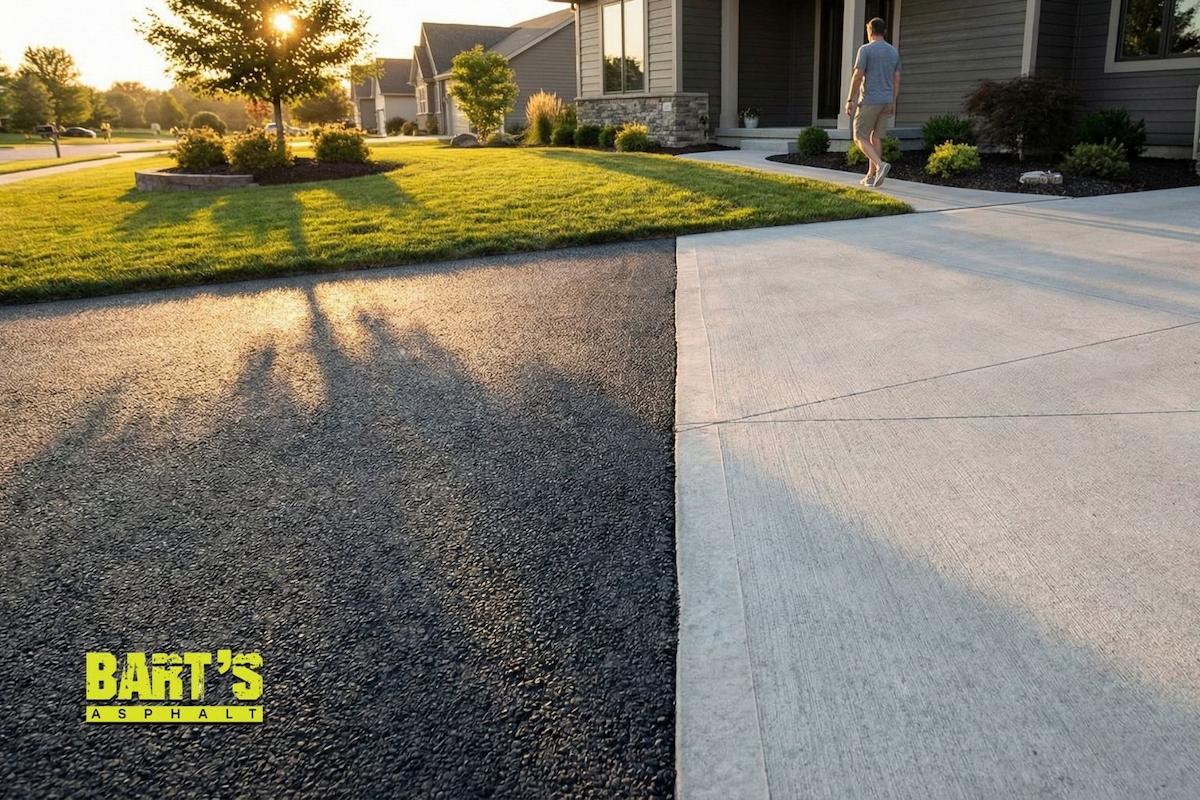
When comparing asphalt vs concrete cost, asphalt is typically cheaper upfront at $7 to $15 per square foot. On the other hand, concrete ranges from $8 to $20 per square foot but offers a longer lifespan and better long-term value.
In case you’ve also been wondering about which is the best value for a driveway in 2025, this article answers everything you need to know. It includes key questions about driveway installation costs, lifecycle expenses, maintenance requirements, and climate suitability — and if you’re focused on commercial projects, our breakdown of asphalt cost per square foot in Michigan can help you choose the right material for your 2025 project.
What Are the Upfront Installation Costs of Asphalt vs. Concrete?
Asphalt driveways are generally cheaper upfront, typically costing $7 to $15 per square foot, while concrete driveways cost range from $8 to $20 per square foot.
This price difference stems from asphalt materials being petroleum-based and less expensive, and from the installation process requiring fewer specialized tools and less labor — though ongoing maintenance like commercial sealcoating costs per square foot should also factor into your long-term budget.
For example, for a standard 600-square-foot driveway, asphalt might cost $4,200 to $9,000. At the same time, concrete could cost $4,800 to $12,000. The driveway size directly affects your overall cost, with larger installations offering slightly better per-square-foot pricing.
While the lower initial price makes asphalt a more affordable option for budget-conscious homeowners, you must weigh this against concrete’s potential for better long-term value.
Asphalt installation moves faster and costs less because the materials cure quickly, allowing contractors to complete the work efficiently. The petroleum-based composition of asphalt allows for rapid installation without the extended waiting periods required by cement products.
Labor costs remain lower since the process demands fewer specialized tools and less technical expertise than concrete finish work. However, the existing driveway condition and proper drainage requirements can increase installation costs for either material.
When you choose concrete, the higher upfront investment includes the cost of cement, sand, and aggregate, as well as the skilled labor required for proper installation and finishing.
Which Material Has Better Long-Term Value and Lower Lifecycle Costs?
Concrete proves more cost-effective over time, despite its higher initial price, with a 600-square-foot concrete driveway costing $6,500 to $8,000 over 30 years compared to $8,000 to $10,000 for asphalt. This advantage comes from concrete’s superior durability and lower maintenance requirements throughout its lifespan, according to a study.
The overall cost calculation must include regular resealing expenses for asphalt every 3 to 5 years at $300 to $800 per treatment, which accumulates significantly over decades. Concrete requires occasional degreasing and less frequent sealing, reducing maintenance requirements over its lifetime.
In our analysis of total ownership costs across hundreds of driveway projects, we find that concrete’s high initial cost is often recouped by year 15. This makes it the better investment for homeowners planning to stay in their homes for 20+ years.
Repair costs vary substantially by material: asphalt repairs ranged from $250 to $800 per project, while concrete repairs cost $3 to $25 per square foot, depending on the severity of the damage. Asphalt is more DIY-friendly for minor crack repairs, allowing homeowners to handle small fixes without a contractor.
However, asphalt requires more maintenance overall, with frequent attention to prevent water infiltration and surface deterioration. Concrete repairs present greater challenges and typically require a contractor for significant damage, like major cracks or surface spalling.
Despite higher individual repair costs, concrete needs fewer repairs over its lifespan, which contributes to its lower overall cost. The right material for long-term value depends on whether you prioritize lower upfront expenses or reduced lifetime costs.
How Do Maintenance Requirements Compare for Asphalt vs. Concrete?
Asphalt demands more maintenance than concrete, requiring resealing every 3 to 5 years and prompt crack repairs to maintain durability and prevent water damage. Industry bodies like the Asphalt Institute recommend this resealing schedule to protect the petroleum-based surface from UV degradation and moisture infiltration.
Regular maintenance includes filling cracks as they appear, applying sealant to prevent oxidation, and occasionally patching damaged areas. The flexibility of asphalt makes crack repair relatively diy friendly, allowing homeowners to handle minor fixes with basic tools and materials.
However, neglecting proper maintenance accelerates deterioration and can lead to costly full replacements much sooner than the material’s typical lifespan. Concrete requires less frequent maintenance, primarily occasional degreasing to remove oil stains and resealing every 5 to 10 years to protect the surface.
The cement-based material resists everyday wear better than asphalt, reducing the maintenance required for routine upkeep. Homeowners should clean concrete driveways regularly to prevent stains from setting, especially oil and grease that can penetrate the porous surface.
When damage occurs, concrete repairs prove more challenging and often require a contractor with specialized tools to match the existing surface texture and color. Proper drainage around the driveway helps both materials last longer by preventing water pooling that can cause cracks during freeze-thaw cycles.
The lower maintenance demands of concrete make it attractive for homeowners seeking a more hands-off solution.
Bart’s Asphalt offers professional sealcoating, crack repair, and maintenance services to protect your investment.
Learn More About Our Maintenance Services.
Does Asphalt or Concrete Last Longer for Driveways?
Concrete significantly outlasts asphalt, with an average lifespan of 27.5 years and the potential to reach 40 years with proper maintenance, compared to asphalt’s 15 to 20-year lifespan, averaging 15.5 years.
Data from the Michigan Department of Transportation, cited in a 2020 analysis by the Michigan Concrete Association, confirms these longevity figures for both materials. This durability gap means concrete requires fewer major repairs and replacements over its lifetime, directly impacting long-term costs.
The cement composition provides superior structural integrity that resists wear from heavier vehicles and daily traffic better than petroleum-based asphalt. Proper installation with a solid base and correct curing time proves critical to achieving this longevity for either material.
The shorter lifespan of asphalt stems from its softer composition and vulnerability to oxidation, UV damage, and temperature extremes. While proper maintenance extends asphalt’s usable life, the material degrades faster than concrete and requires more frequent complete replacement.
An existing driveway in poor condition may need to be removed and replaced sooner if the base has deteriorated or extensive cracking has compromised its structural integrity. Concrete’s extended durability makes it more durable overall and a primary driver of its lower long-term cost, as it can last nearly twice as long as an asphalt installation.
Homeowners who choose concrete benefit from decades of reliable service, while those selecting asphalt accept a shorter lifespan in exchange for lower upfront costs.
Which Is Better for Cold vs. Hot Climates, Asphalt or Concrete?
Asphalt is the preferred material for cold climates due to its flexibility, which allows the pavement to bend and adapt during freeze-thaw cycles without cracking. This flexibility prevents the rigid fracturing that commonly affects more brittle materials in regions with freezing temperatures.
The darker color of asphalt absorbs sunlight, helping snow and ice melt faster and reducing the need for extensive winter maintenance. Asphalt can bend during snowy winters and withstand the expansion and contraction from temperature swings throughout the season.
For homeowners in regions with harsh winters, this flexibility and faster melting make asphalt a more reliable, lower-maintenance option, despite its shorter lifespan compared to concrete.
Concrete is the superior choice for hot and warm climates because of its exceptional heat resistance and ability to maintain structural integrity. Unlike asphalt, which can soften and become tacky in high heat, the cement-based material remains solid and stable even during extended periods of hot weather.
The lighter color of a concrete finish reflects sunlight rather than absorbing it, contributing to a cooler surface temperature that’s more comfortable to walk on during hot temperatures. In regions with intense summer heat and consistently warm conditions, concrete’s ability to withstand hot-weather challenges makes it the more durable option.
The material doesn’t release oils or develop the sticky texture that plagues asphalt in a hot climate, maintaining its appearance and functionality year-round.
How Long Does Each Material Take to Install and Cure?
Asphalt can be installed more quickly than concrete and becomes ready for light use within 48 to 72 hours, making it the faster option for homeowners who need swift project completion. The installation process involves heating and laying the petroleum-based material, which then cools and hardens relatively rapidly.
Contractors can complete most residential asphalt driveway installations in one to two days, depending on the driveway size and site preparation requirements. This quick turnaround minimizes disruption to your daily routine and allows you to resume parking and normal activities almost immediately.
However, you should avoid heavy loads and heavier vehicles for at least one week to allow the surface to cure and achieve maximum strength fully.
Concrete installation requires a longer curing time, with the material needing up to seven days to cure sufficiently for regular vehicle traffic. The cement-based mixture must hydrate and harden gradually, a process that is significantly affected by weather conditions and temperature.
Installing concrete typically involves a single pouring process, but the extended curing time means homeowners must plan for a longer period without driveway access. Proper drainage during installation and curing prevents water from compromising the concrete, thereby preserving its strength and durability.
While this waiting period may be inconvenient, it ensures the driveway develops the structural integrity needed for decades of service. Rushing the curing process by using the driveway too soon can cause surface damage and compromise long-term durability.
Bart’s Asphalt typically completes residential asphalt installations in 1 to 2 days, providing professional paving services that minimize disruption to your routine.
Get A Free Professional Paving Quote
What Are the Aesthetic and Customization Options for Each Material?
Concrete offers extensive customization through several decorative techniques that can dramatically enhance curb appeal and property value. Homeowners are moving away from traditional gray concrete and selecting bold colors, custom finishes, and contrasting borders to create distinctive designs.
Concrete can mimic natural materials such as stone, brick, or wood through stamping techniques, delivering a high-end look without the maintenance challenges of those materials. Popular customization options include:
- Stamped Concrete: Pressing patterns into the surface to replicate the appearance of brick pavers, natural stone, or wood planks
- Exposed Aggregate: Removing the top cement layer to reveal decorative stone and sand beneath for a unique texture
- Custom Finishes: Adding bold colors, contrasting borders, or scoring custom patterns like chevron and herringbone designs
- Textured Surfaces: Creating non-slip finishes that combine safety with visual appeal
These customizations not only enhance the surface appearance but also increase property value by attracting potential buyers who appreciate quality craftsmanship.
Asphalt provides limited aesthetic options compared to concrete and other materials like brick pavers, brick, or gravel driveways, but remains a visually acceptable and affordable option.
The material naturally produces a dark, uniform surface that some homeowners find attractive for its clean, professional appearance. While you cannot stamp or color asphalt as easily as concrete, the material can receive basic sealcoat tints for slight color variation.
For those prioritizing functionality and cost over aesthetics, asphalt delivers a traditional look that suits most residential settings without the premium price of decorative alternatives. The material works well in settings where visual appeal takes secondary importance to budget considerations and practical performance.
How Does Driveway Material Affect Home Resale Value?
A concrete driveway can enhance home value by adding $3,000 to $10,000, offering a 50% to 80% return on investment, depending on the installation quality and market conditions.
The superior curb appeal of a well-maintained concrete driveway attracts potential buyers who recognize the material’s durability and longevity. Decorative concrete finishes with custom patterns or colors create even stronger first impressions that can justify higher asking prices.
Real estate professionals consistently note that concrete and asphalt driveways in excellent condition positively affect property valuations, with concrete commanding a premium due to its longer lifespan and lower maintenance requirements. A contractor installed a concrete driveway with professional finishing, signaling quality construction that buyers value.
Well-maintained asphalt driveways can also increase home value, particularly appealing to cost-conscious buyers who appreciate the lower installation expenses and proven performance. The boost typically proves more modest than concrete but still contributes positively to overall property appeal.
An asphalt vs concrete driveway comparison in real estate contexts generally favors concrete for maximum value-addition, but freshly sealed asphalt looks well during showings.
The key factor for either material is condition; neglected driveways with extensive cracks, stains, or surface deterioration can actually detract from home value, regardless of the base material.
Regular maintenance and timely repairs ensure your driveway investment protects and enhances property value when you’re ready to sell. Working with an experienced contractor like Bart’s Asphalt ensures professional driveway installation that maximizes your property’s value.
Get A Free Driveway Installation Quote
Is Asphalt or Concrete More Environmentally Friendly?
Asphalt offers significant environmental benefits as it is 100% recyclable, with old pavement being repurposed directly into new installations. The National Asphalt Pavement Association (NAPA) states that asphalt is America’s most recycled material, with reclaimed asphalt pavement (RAP) reducing the need for virgin petroleum-based materials.
This recycling process conserves natural resources and reduces landfill waste from driveway replacements. However, traditional asphalt surfaces contribute to higher water runoff since the material is not naturally permeable.
Newer permeable asphalt options address this limitation by allowing water to filter through the surface, improving drainage and reducing environmental impact. The petroleum-based composition does raise concerns about resource depletion and extraction impacts.
According to research, concrete has a greater environmental impact due to substantial CO2 emissions from cement production, which contribute significantly to global carbon output.
The manufacturing process for cement, a primary ingredient of concrete along with sand and aggregate, requires high temperatures and emits considerable greenhouse gases.
However, concrete’s exceptional durability partially offsets this impact by eliminating the need for frequent replacements that asphalt requires. Concrete surfaces can be designed as permeable installations, allowing better water management and reducing runoff that can overwhelm storm systems.
Both materials continue evolving toward more environmentally friendly formulations, with innovations in recycled content, permeable designs, and lower-carbon production methods making each option increasingly sustainable for conscious homeowners.
Frequently Asked Questions
Below you’ll find answers to the most common questions about choosing between asphalt and concrete for your driveway in 2025. These FAQs address costs, maintenance, installation, and more to help you make an informed decision.
How much more does stamped concrete cost than plain asphalt?
Stamped concrete typically costs $12 to $20 per square foot compared to asphalt’s $7 to $15 per square foot, representing a 40% to 70% premium. This price difference reflects the specialized tools, skilled labor, and additional materials required to create decorative patterns and textures.
The investment delivers superior curb appeal and customization options that plain asphalt cannot match. Homeowners who select stamped concrete benefit from a distinctive appearance that mimics brick pavers or stone while retaining concrete’s durability.
Many contractors offer payment plan options to help manage the higher upfront cost of decorative installations.
Can an old asphalt driveway be overlaid, or does it need complete replacement?
An existing driveway in reasonable condition, with minor cracks and minimal deterioration, can receive an asphalt overlay at $3 to $7 per square foot, significantly less than the cost of full replacement.
This approach works when the base remains stable and proper drainage is in place to prevent future problems. However, driveways with extensive cracking, significant settling, or base failure require complete removal and replacement to ensure long-term performance.
A contractor can assess whether an overlay makes sense or if the existing driveway’s condition demands starting fresh. Overlaying adds 1.5 to 2 inches of new material and can extend the lifespan by 10 to 15 years when properly executed over a sound foundation.
How do asphalt vs. concrete costs compare for a large parking lot versus a residential driveway?
Large commercial parking lots typically favor asphalt due to lower material and installation costs at scale, with expenses ranging from $3 to $7 per square foot, compared to residential rates. The price per square foot decreases as project size increases because contractors can achieve efficiencies with equipment and bulk material purchasing.
Concrete becomes more competitive for commercial applications requiring heavier vehicles or extended durability, though installation costs remain higher at $6 to $15 per square foot.
Residential driveways incur higher per-square-foot costs for both materials due to a smaller project scale and increased setup expenses relative to the total area. The right material for commercial versus residential applications often differs based on traffic loads, maintenance budgets, and expected service life requirements.
What are the first signs that a driveway needs replacement instead of just repair?
Several warning signs indicate your driveway requires replacement rather than repair: widespread cracking covering more than 25% of the surface, significant settling creating drainage problems, crumbling edges showing base failure, and large potholes that reappear after patching.
For asphalt, extensive alligator cracking patterns and a faded, oxidized surface that no longer responds to sealing suggest the material has reached the end of its useful life.
Concrete driveways with multiple large cracks, pieces breaking away at the edges, or significant surface spalling need replacement when repairs would cost more than 50% of the cost of new installation.
Poor drainage, causing standing water, also indicates base problems that require complete reconstruction.
Make the Right Choice for Your 2025 Driveway Project
Whether you choose asphalt or concrete, Bart’s Asphalt delivers quality installation, transparent pricing, and expert craftsmanship. Serving Jackson, Lansing, Ann Arbor, and surrounding Michigan communities. For projects in Washtenaw County, learn more about our asphalt paving in Ann Arbor services.
- Free on-site quotes within 24 hours
- Experienced contractors who understand Michigan’s climate
- Flexible payment plans available