
In Michigan, the best time to seal driveway surfaces is generally late spring through early fall, but October isn’t automatically too late. Air and pavement temperatures should be at least 50°F and rising, and the selected coating’s instructions may require more. The asphalt also needs to be dry, with enough suitable weather ahead for drying and curing.
That matters when you’re looking at a fading driveway in Jackson, Ann Arbor, or Saline and wondering whether to protect it before another Michigan winter. A good finish depends on the pavement, the weather, and enough time before vehicles return. The calendar helps you plan; the actual conditions decide whether the job can proceed.
Key Takeaways
- Fall has no fixed statewide cutoff. Weather and the coating’s instructions determine whether application is suitable.
- Check air and pavement temperatures. A warm afternoon alone doesn’t establish a suitable curing window.
- Look beyond the daytime high. Overnight temperatures, dew, rain, and shade matter too.
- Check the surface first. A sound driveway may be worth sealing now; damaged or newly paved asphalt may need a different plan.
- Confirm scheduling directly. Ask about remaining fall availability and whether spring reservations are open.
When Is the Best Time to Seal a Driveway in Michigan?
Late spring through early fall generally offers the most dependable mix of warmth, daylight, and dry weather. The fall cutoff isn’t a date like October 15 or November 1. It arrives when the forecast no longer supports application and curing under the chosen product’s requirements.
In Michigan, a sunny October afternoon can follow a cold night and end with damp pavement by dusk. That shorter working window makes scheduling less forgiving than in summer. A mild stretch may keep suitable conditions around longer, while an early cold snap can close the window sooner.
Why October and November Need a Closer Look
The National Weather Service lists Detroit’s normal overnight low at 44.0°F in October’s climate records and 33.9°F in November’s climate records. Those regional figures help explain why a warm afternoon can be misleading: the coating still needs suitable conditions after sunset.
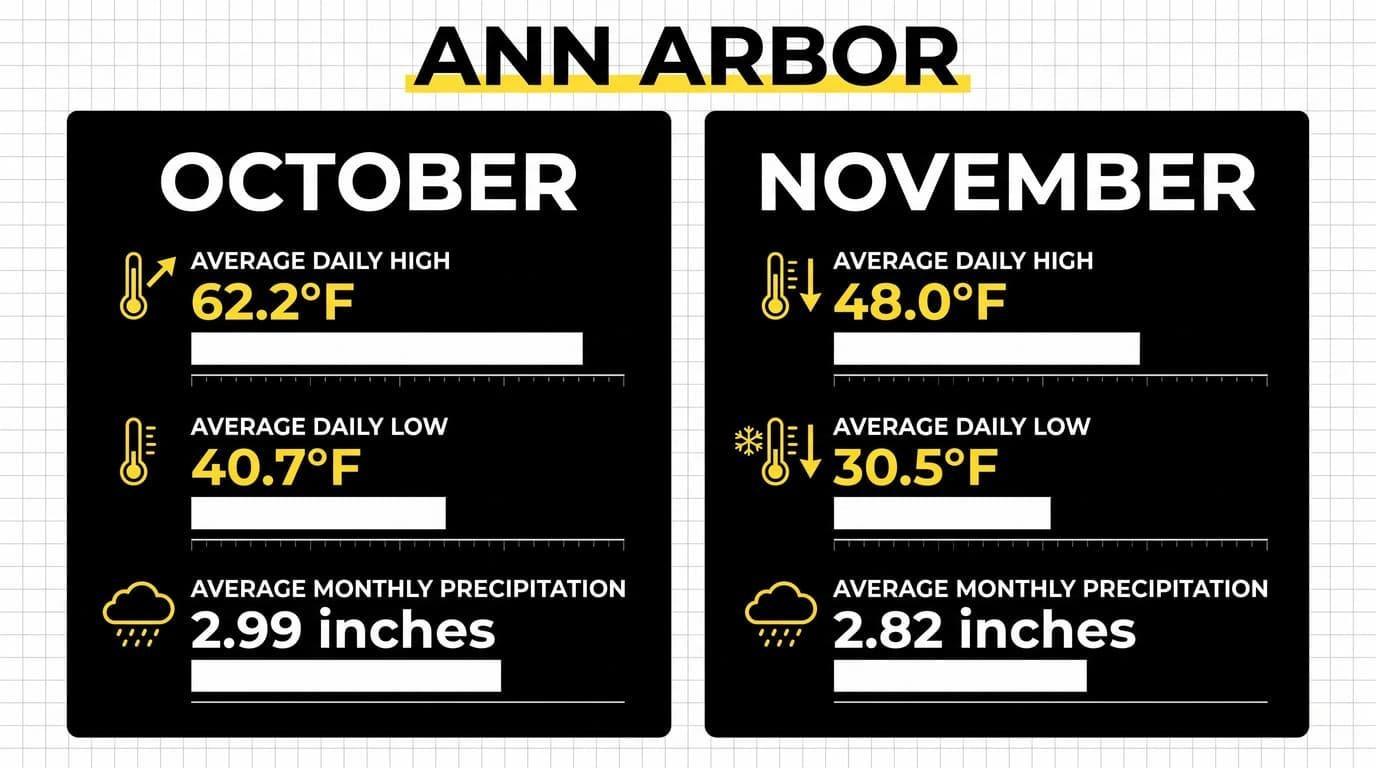
Closer to Washtenaw County homeowners, NOAA’s Ann Arbor climate normals show how quickly the season changes. The figures below are 1991–2020 averages for the Ann Arbor University of Michigan station.
| Ann Arbor Climate Measure | October | November |
| Average daily high | 62.2°F | 48.0°F |
| Average daily low | 40.7°F | 30.5°F |
| Average monthly precipitation | 2.99 inches | 2.82 inches |
By November, even the normal daytime high is below 50°F. October offers more daytime warmth, but its average low is already well below that threshold. Nearly three inches of precipitation each month also reinforces the need to check for a dry application window; monthly totals don’t tell you which days will be usable.
These station averages help homeowners around Ann Arbor and Saline plan ahead, but they don’t set a deadline for an individual driveway. In Jackson, Chelsea, or elsewhere in the service area, use the local hourly forecast and actual pavement conditions. A shaded driveway that stays damp needs a different assessment than dry asphalt in afternoon sun, even when both homes share the same forecast high.
What Weather Conditions Make Fall Sealcoating Suitable?
Start with air and pavement temperatures between 50°F and 80°F, with 85°F as a practical upper limit, then check the full application and curing requirements for ideal conditions. A day that briefly reaches 50°F may still be unsuitable if temperatures later drop below 50°F or fall overnight, and you should not apply seal coating at night. The selected driveway sealer may require warmer temperatures, drier conditions, or a longer protected window.
| Check | What It Means for Your Driveway |
| Air and pavement | Both meet the application temperature requirements; pavement can remain cold even as air warms. |
| Overnight lows | Conditions remain suitable through the product’s required post-application period. |
| Rain and dew | The entire surface is dry, with sufficient rain-free time afterward. |
| Daylight and humidity | Shorter days, shade, and lower humidity help the sealer bond and dry more evenly. |
| Vehicle access | You can keep cars off the driveway until the coating is ready for traffic. |
For example, a 65°F afternoon followed by a cold, wet night may be a poor choice even if the temperature looks ideal at noon. The coating also needs suitable conditions after it goes down.
SealMaster’s application guidance illustrates the point: It calls for temperatures of 50°F or higher over a 24-hour period and advises against application when rain is imminent within 24 hours. These are the manufacturer’s instructions, not confirmation that Bart’s uses its products. Ask which requirements apply to the coating proposed for your driveway.
Always check weather forecasts before sealing, and confirm a dry 24- to 48-hour window with no rain expected for at least the first 24 hours after application. A weather app can show the forecast, but it cannot assess your asphalt. Bart’s Asphalt evaluates the existing surface, defines the sealcoating scope in writing, and provides return-to-use instructions. Our residential service is driveway sealcoating only, so we need to identify pavement problems that require a separate repair assessment before planning a coating.
Explore Our Driveway Sealcoating
How Can Cold or Wet Weather Affect a New Sealcoat?
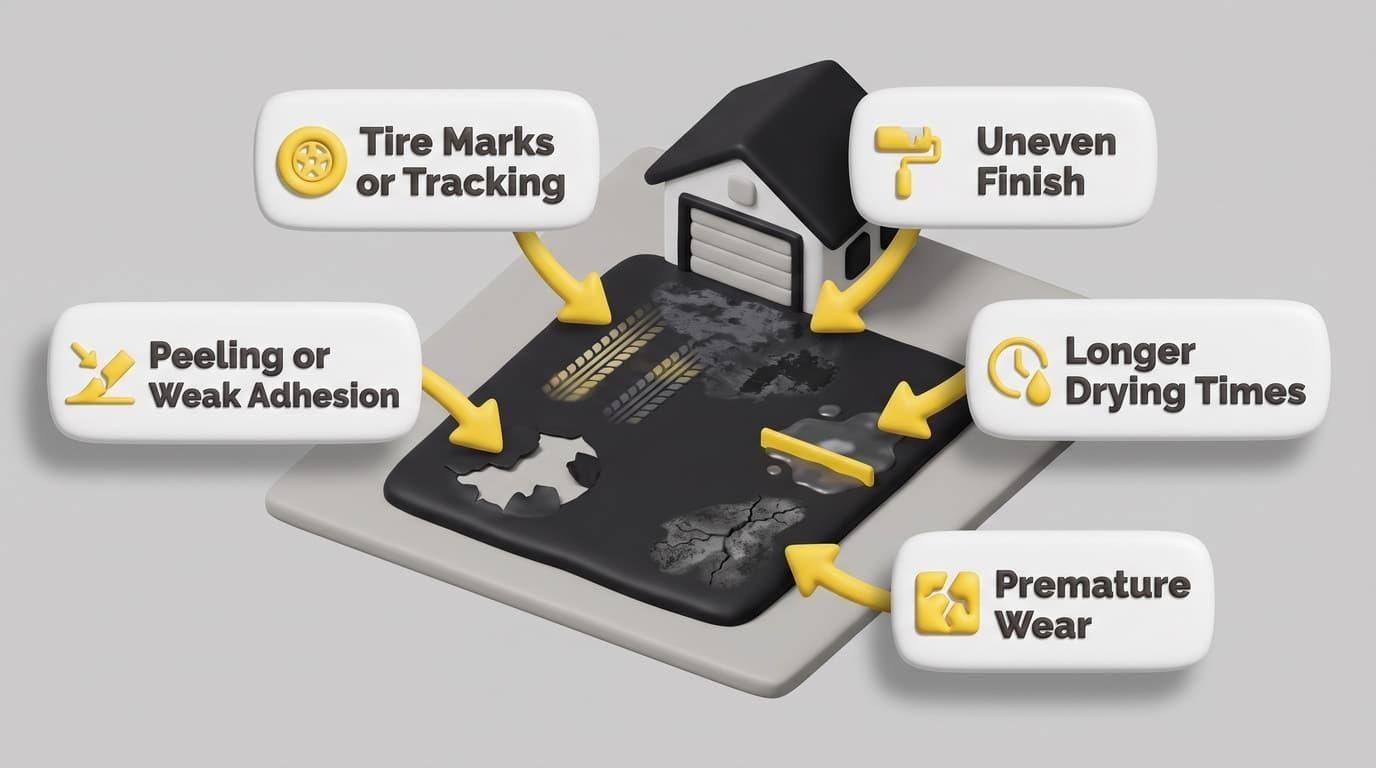
Driveway seal coating forms a protective barrier over sound asphalt pavement that helps block oxidation and water intrusion, but cold or damp conditions can interfere with drying and adhesion. When a coating doesn’t set as intended, this protection may also fall short against freeze-thaw stress, the damage caused by moisture, oil, or chemical spills when the sealer does not cure properly, and uv rays, so you may see:
- Tire marks or tracking when vehicles return too soon.
- An uneven finish where dew or rain disturbs uncured sealer.
- Peeling or weak adhesion where moisture prevents a good bond.
- Longer drying times that disrupt parking and driveway access.
- Premature wear from exposure and traffic.
These aren’t guaranteed outcomes of every cool-weather job. They’re reasons to follow the product instructions rather than rush an application before winter, since proper seal coating extends asphalt life and reduces costly repairs.
When Can You Park on It Again?
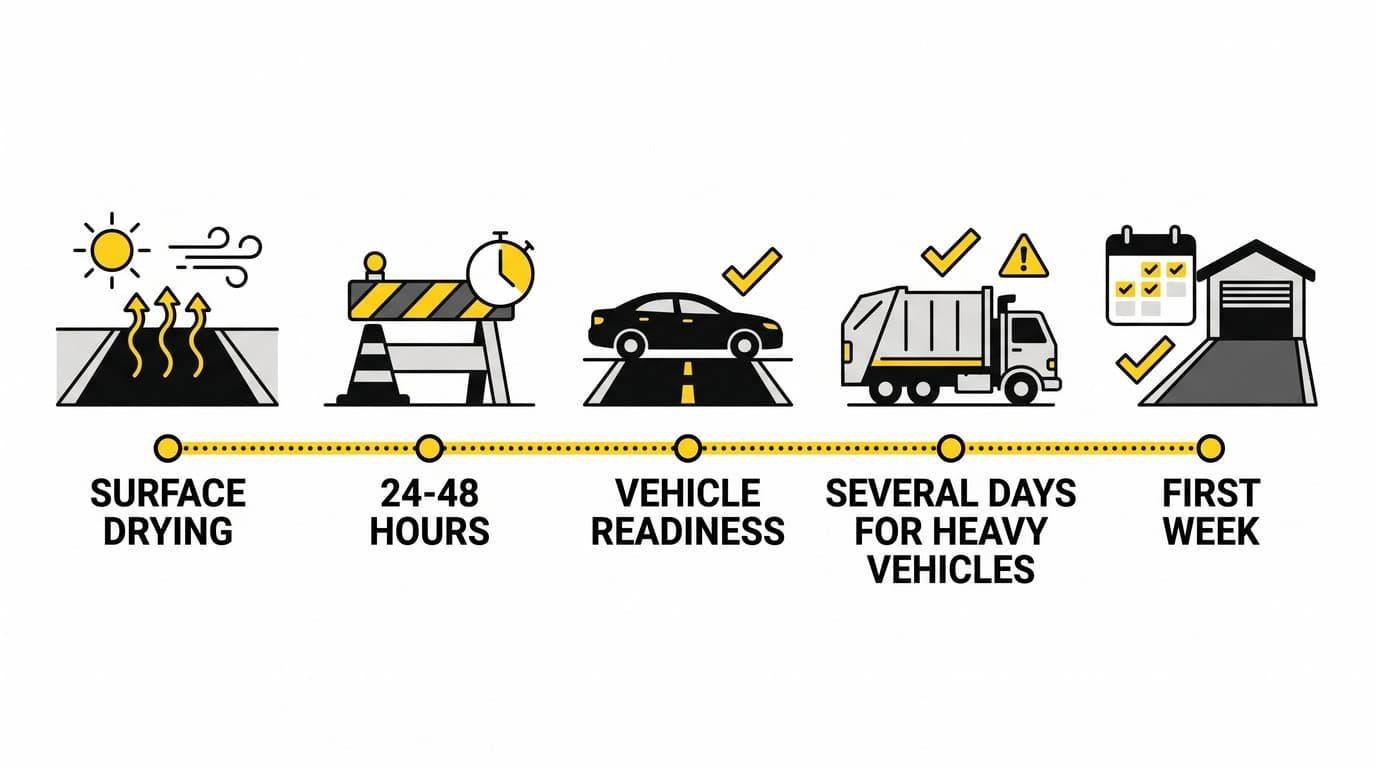
Surface drying and vehicle readiness are different milestones, and a driveway that looks dry is not yet fully cured or ready for use. As a general rule, wait at least 24-48 hours before normal use, and keep vehicles off the surface for 24-48 hours, though timing varies with weather and site conditions. A coating that looks dry may still mark under tires, especially in cool or shaded conditions, and heavy trucks or other heavy vehicles should stay off for several days if your contractor says the surface is not fully cured, particularly during the first week. The sealcoating drying-time guide explains why vehicle-readiness times vary; follow the instructions for your particular job rather than assuming one waiting period fits every fall application.
Should You Seal Your Driveway Now or Wait Until Spring?
Weather is only half the decision. The driveway also needs to be a suitable candidate for sealcoating. A protective surface treatment can help limit weathering, but it won’t correct a failing base or repair potholes.
| Your Situation | Practical Next Step |
| Stable asphalt with surface fading or ordinary wear, plus a suitable forecast | Ask whether a fall appointment is available. |
| Open cracks, soft spots, potholes, or standing water | Have the pavement assessed before deciding on sealcoating. |
| Newly paved asphalt driveways that haven’t met first-coating requirements | Wait at least 6 months before sealing, and closer to 12 months if the product guidance or site conditions require it. |
| Cold or wet weather through the required curing window | Postpone rather than force a late-season application. |
| An existing coating that remains sound | Check whether another application is needed at all. |
Regular maintenance matters, but more coats don’t automatically mean better performance. Applying sealer too frequently can create unnecessary buildup. If your existing coating remains sound, you may not need another application this year.
What Should You Do If Fall Sealcoating Season Has Ended?
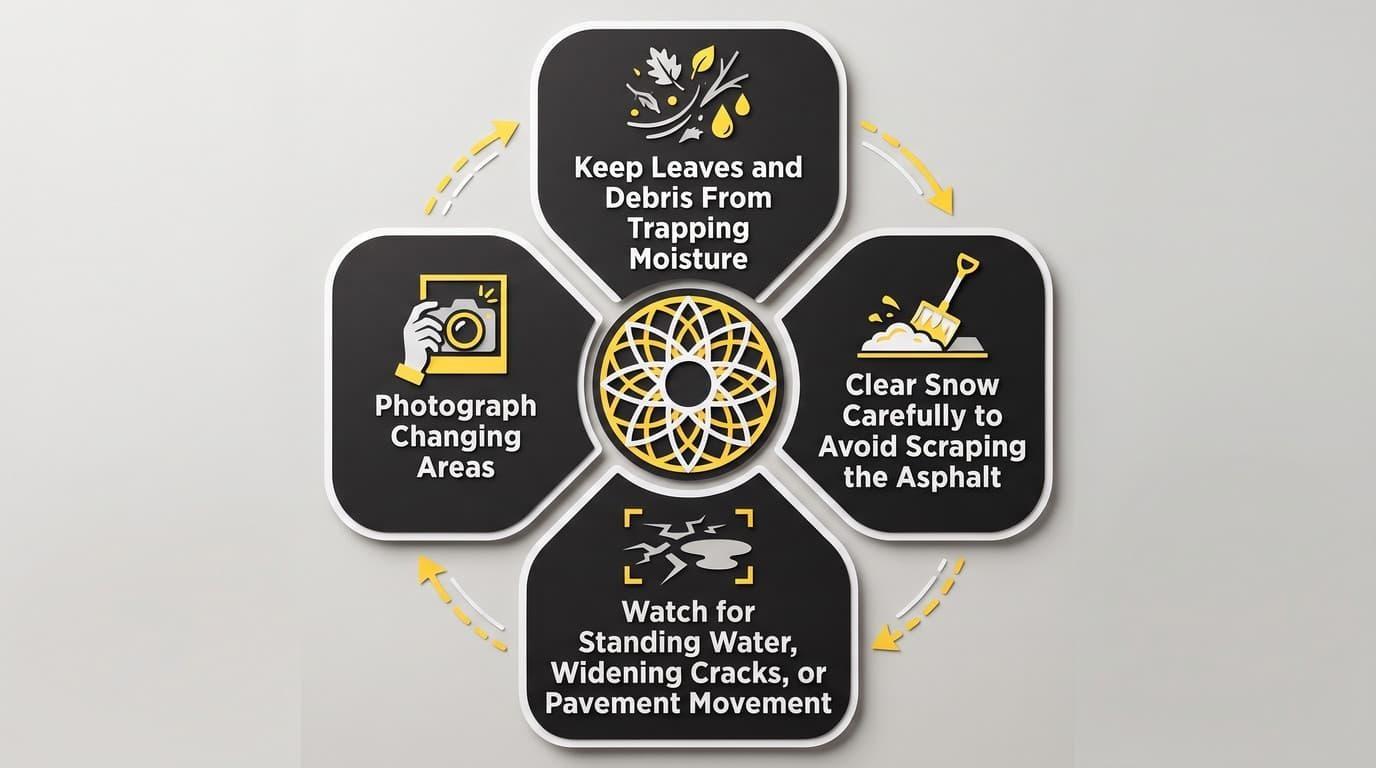
Missing the fall window doesn’t make a sound driveway an emergency. Through winter:
- Keep leaves and debris from trapping moisture.
- Clear snow carefully to avoid scraping the asphalt.
- Watch for standing water, widening cracks, or pavement movement.
- Photograph changing areas so you can explain the problem during an assessment.
Those changes deserve evaluation before you plan any spring coating. When temperatures rise again, check that the pavement is dry and stable before booking, rather than relying on the first warm afternoon. Waiting for suitable conditions is more useful than paying for a coating that cannot cure as intended.
Still Time to Sealcoat? Check Your Next Step
The best time to seal driveway pavement is when the surface is ready for a new coat, and the forecast supports the work. If conditions are suitable, the next question is whether you can schedule an appointment. If the weather window has closed, ask about planning for the next season.
For a clear answer on scheduling, contact Bart’s Asphalt about your location and driveway condition. Ask for this year’s last planned sealcoating date and whether you can reserve a spring appointment. Our published residential minimum is $1,000 per project; confirm the proposed scope and current availability before making plans.
Fall Driveway Sealcoating FAQs
Can I Sealcoat a Driveway After the First Frost?
Possibly, but only if the pavement has dried and warmed enough and you can meet the product’s full application and curing requirements. Frost earlier in the week doesn’t automatically rule out a later day that works. Check the forecast and surface conditions again before proceeding.
Can I Sealcoat in the Morning If Rain Is Expected Tomorrow?
Check the full forecast against the selected product’s requirements before starting. A dry morning may not leave enough protected drying time if rain is due the next day. Postpone if the required window isn’t available.
Does a Driveway Need a Second Coat Before Winter?
You may need a second coat, depending on the product and application specifications. Winter’s arrival alone doesn’t mean you need another coat; follow the product specifications and apply sealant in a thin, even layer instead of building it up heavily before winter. Follow the coating system and avoid adding unnecessary thickness.
Can I Park Heavy Vehicles on a Newly Sealed Driveway Sooner in Cool Weather?
No. Cooler conditions may extend drying time, and heavy vehicles or sharp tire turns can mark a coating before it’s ready. Follow the product and contractor’s reopening instructions rather than assuming the driveway can handle heavy traffic as soon as the surface looks dry.
Should I Clean Oil Stains Before a Fall Sealcoating Appointment?
Yes, clean the asphalt thoroughly before applying sealant, and address stained areas because automotive fluids can interfere with adhesion. Tell your sealcoating contractor about them before the appointment so they can advise on the sealing process, including how to remove dirt and debris so the sealant can adhere properly. Avoid applying a household cleaner right before the job without checking whether it needs rinsing or additional drying time, and make sure the area is completely dry.