

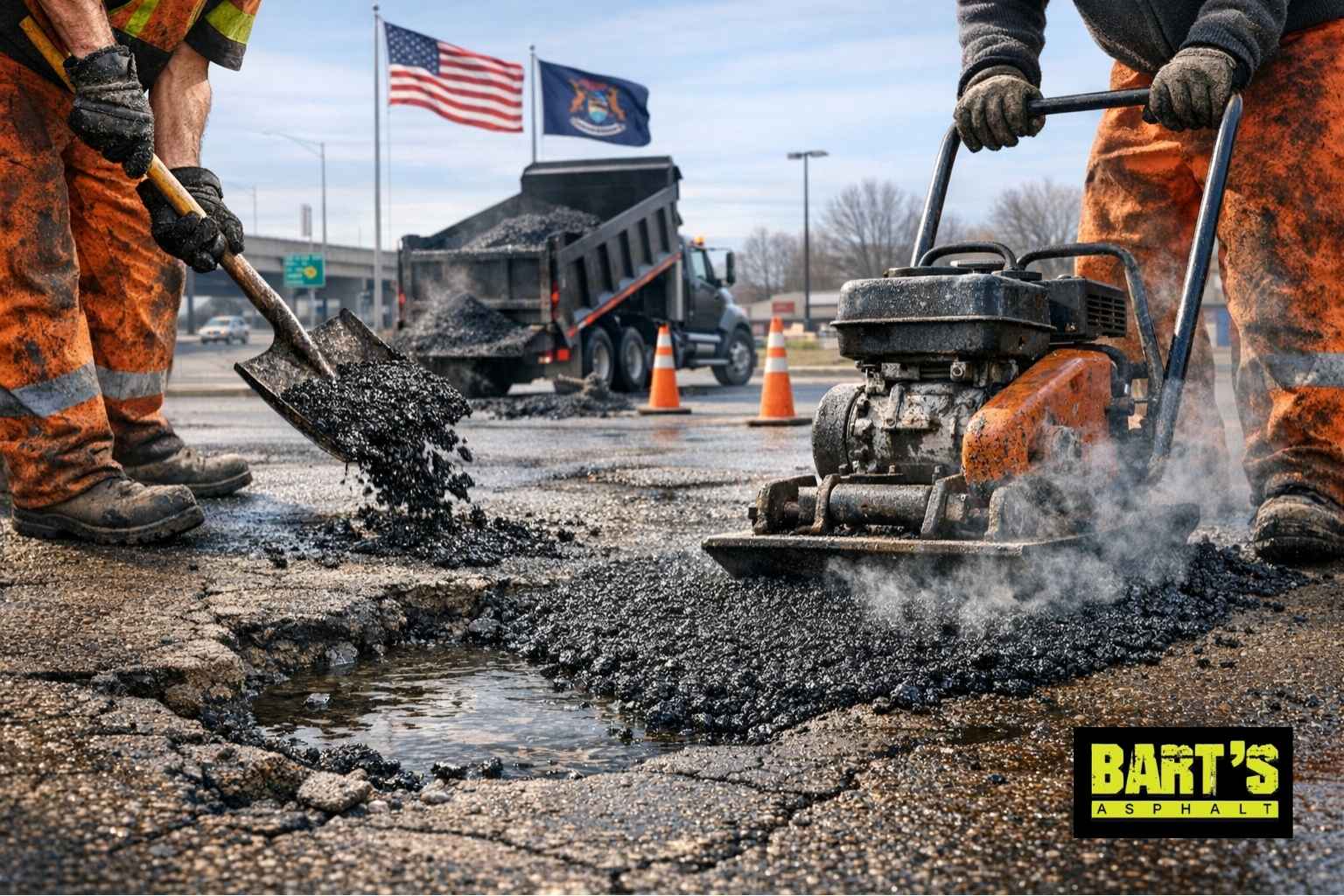
Patching potholes in asphalt on commercial properties requires more than filling the hole — it demands base assessment, method selection matched to damage severity, and materials engineered for local climate.
FHWA research shows 80% of patches over compromised bases fail within one year in northern freeze-thaw climates, which is why surface-only repairs waste budget on Michigan parking lots, loading docks, and drive lanes.
This guide covers why commercial patches fail in Michigan’s 40–60 annual freeze-thaw cycles, the five repair methods from cold patch to full-depth removal, how to evaluate base condition before committing to a repair strategy, contractor questions that separate permanent fixes from temporary band-aids, and the liability exposure property managers face from deferred repairs.
Key Takeaways
- Most commercial pothole patches fail because Michigan’s 40–60 annual freeze-thaw cycles destroy repairs that don’t account for base condition and moisture infiltration.
- DIY-style cold patch is rarely appropriate for commercial parking lots; lasting asphalt repairs require professional methods, such as infrared repair or full-depth removal, depending on the extent of the damage.
- A proper assessment should probe the base for saturation and instability—not just measure the hole and quote a price per square foot.
- Ask contractors specific questions about base verification, Michigan-specific mix designs, compaction specs, and warranty terms to distinguish real repairs from temporary band-aids.
- Unresolved potholes increase slip-and-fall claims by up to 300% and create ADA exposure. Treating repairs as both a safety initiative and cost-control measure protects your property long-term.
Why Your Asphalt Pothole Patch Keeps Failing
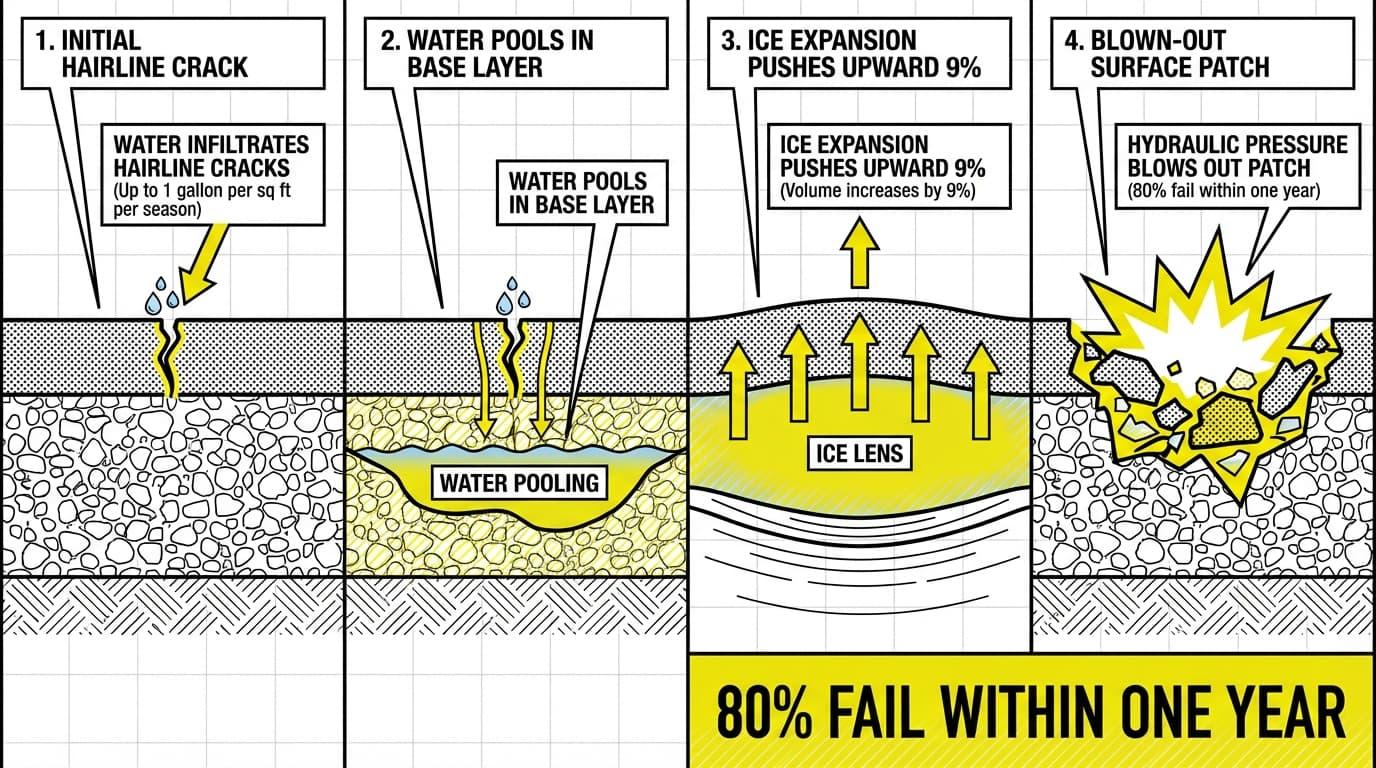
Imagine an apartment parking lot in Metro Detroit patched in October. The cold mix looked fine going into winter, but by March, after 40-plus freeze-thaw events, the patch has crumbled under snowplow blades and the hole is now 20–50% larger than before.
Premature patch failure happens because water infiltrates hairline cracks at rates up to one gallon per square foot each season. When temperatures swing above and below 32°F — which happens dozens of times every winter in Michigan — that water expands by roughly 9% when it freezes. The resulting hydraulic pressure is enough to blow out any patch that wasn’t properly bonded or seated on a stable base.
AAA’s research pegs annual US pothole damage at $26 billion, with the average vehicle repair costing around $600. Consumer Reports estimates degraded roads cost each driver approximately $725 per year. For commercial property owners, the consequences go beyond vehicle damage.
For commercial property owners, the consequences go beyond vehicle damage:
- Tenant complaints and trip hazards at apartment entrances
- Damaged forklift tires at industrial sites ($500–$2,000 each)
- ADA-noncompliant surfaces at schools, churches, and retail centers
- Delivery delays from vehicle undercarriage failures
The visible hole in your asphalt is just the symptom. The real issue is moisture trapped in the base, which loses a substantial portion of its load-bearing capacity under repeated freeze-thaw cycles — Michigan DOT research documents accelerated failure rates in exactly these conditions.
That means any surface-only patch is sitting on material too weak to support traffic loads — budgeting for base repair upfront costs less than re-patching the same spot annually.
How Potholes Form in Commercial Asphalt (and Why Michigan Makes It Worse)
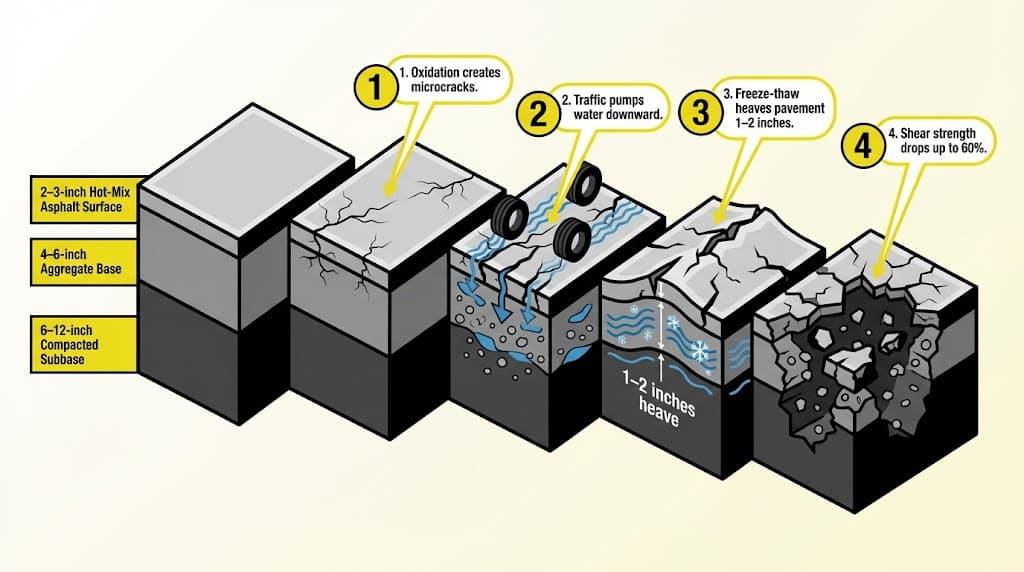
Understanding why potholes form starts with what’s under the surface. Commercial asphalt pavement has three layers — a 2–3-inch hot-mix surface that takes direct traffic wear, a 4–6-inch aggregate base that distributes load, and a 6–12-inch compacted subbase that prevents settling. When any layer fails, the ones above it follow.
Here’s how potholes form:
- Oxidation creates microcracks in the surface, admitting water
- Traffic pumps water downward, eroding fines and creating voids in the base
- Freeze-thaw cycles expand that water, heaving the pavement 1–2 inches
- Thaw weakens the base’s shear strength by up to 60%, and the surface punches through
Southeast Michigan’s clay-rich subgrades accelerate pothole formation by retaining moisture longer than sandy soils.
High-traffic areas like entrances, loading docks, and main drive lanes experience accelerated deterioration when the aggregate base is underbuilt or insufficiently compacted.
Michigan DOT research shows surface patching fails 50% faster on rutted or alligator-cracked areas — and these high-traffic zones are where that damage concentrates first.
Once base support drops below critical levels, any surface-only patch is essentially riding on a moving foundation. FHWA data shows 80% recurrence within one year for patches over compromised bases in northern climates.
For property managers, that means budgeting for base repair upfront costs less than re-patching annually — a single full-depth repair typically pays for itself within two winter cycles.
Common Pothole Patching Methods: From Temporary Fixes to Long-Term Repairs
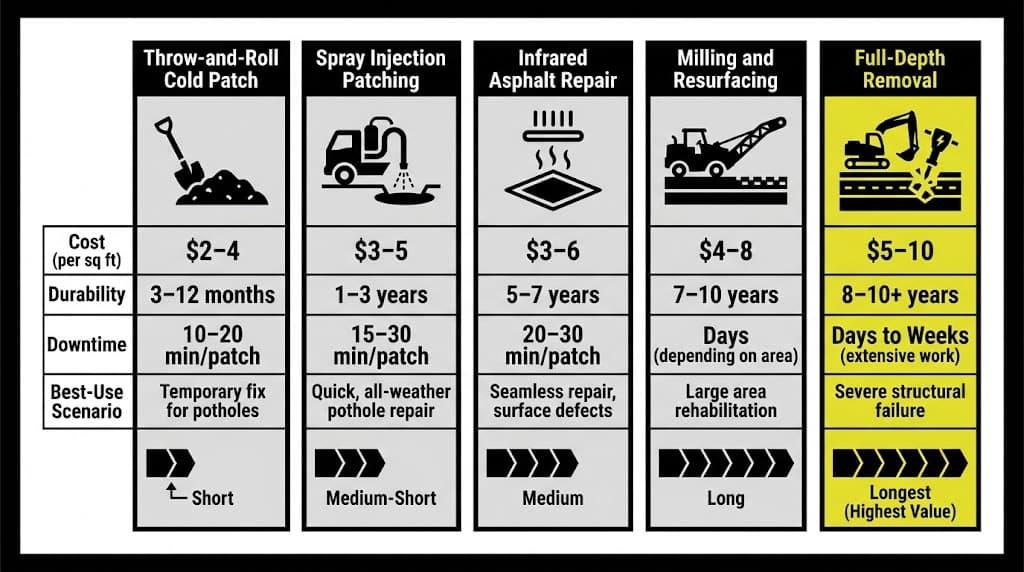
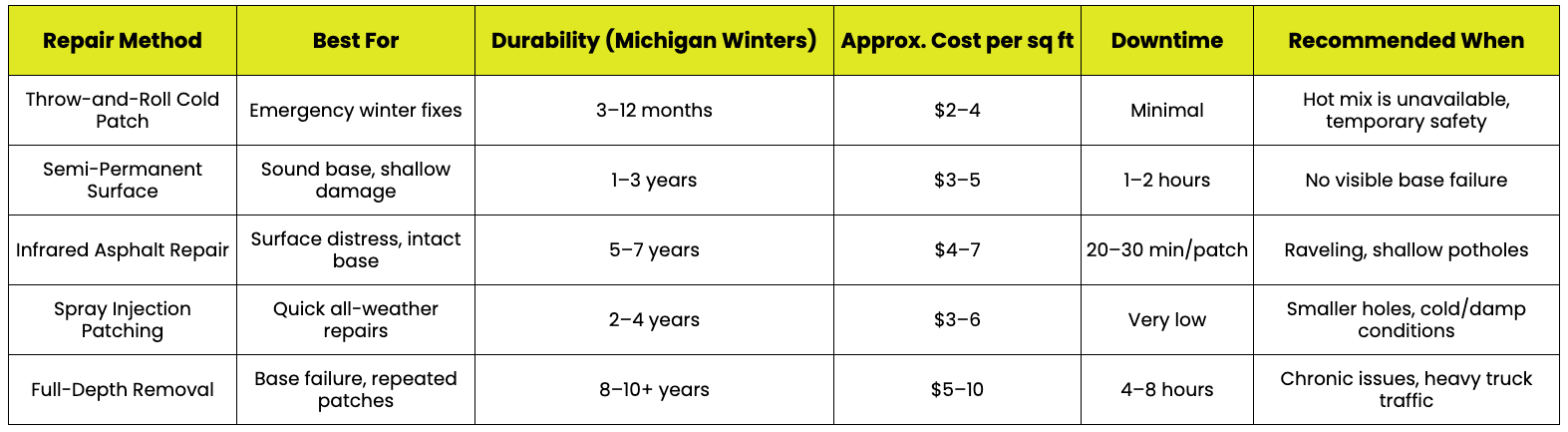
Michigan commercial properties typically choose from five repair approaches — throw-and-roll cold patch, semi-permanent surface patching, infrared repair, spray injection, and full-depth removal — ranging from $2 per square foot for temporary fixes lasting 3–12 months to $10 per square foot for permanent repairs lasting a decade or more.
Throw-and-Roll Cold Patch (Bag or Bulk Cold Mix)
This is the quick method of throwing cold mix asphalt into the hole and letting traffic compact it. While polymer-modified cold mixes offer improved cohesion over traditional formulations, NJDOT and FHWA studies still classify throw-and-roll as temporary, with 3–12 month durability in freeze-thaw climates.
For commercial parking lots in Metro Detroit, this approach is generally appropriate only for winter hazard mitigation when hot mix plants are closed. If you’re using throw-and-roll on the same spot repeatedly, you’re ignoring a base problem that will only worsen.
Semi-Permanent Surface Patching
Semi-permanent patching involves cutting neat, squared edges, thoroughly cleaning the hole, applying a tack coat, and installing hot-mix asphalt or high-quality cold mix with proper compaction.
FHWA classifies this as permanent when done correctly on a sound basis. However, in Michigan’s climate, surface patching fails 50% faster on rutted or alligator-cracked areas. If a contractor proposes a simple surface patch where you’ve seen repeated failures, the repair is unlikely to survive winter.
Infrared Asphalt Repair
Infrared asphalt repair heats the existing asphalt surface to 300–350°F, scarifies the material, blends in fresh hot mix, and compacts everything for a seamless bond. This eliminates the cold joints and feathered edges that typically open up during freeze-thaw cycles.
Infrared is highly effective for surface-level distress—raveling, shallow potholes, and settled utility cuts where the base remains intact. For commercial properties, this asphalt repair method offers quick turnaround (often 20 minutes per patch) and minimal downtime, with repairs lasting 5–7 years in Michigan conditions.
Full-Depth Removal and Replacement
Full-depth repair means saw-cutting around the failed area, removing all broken asphalt and unstable base material, rebuilding with properly graded aggregate in compacted lifts, and installing new hot mix asphalt to full depth.
This is the only permanent asphalt repair option when there’s base failure, chronic rutting, or repeatedly failed patches. While the upfront cost is higher ($5–10 per square foot versus $2–4 for surface work), full-depth repairs can save 40–60% over the lifecycle compared to annual repatching, and they can upgrade weak pavement sections to current Michigan commercial specs.
Evaluating the Damage: What a Proper Commercial Pothole Assessment Should Include
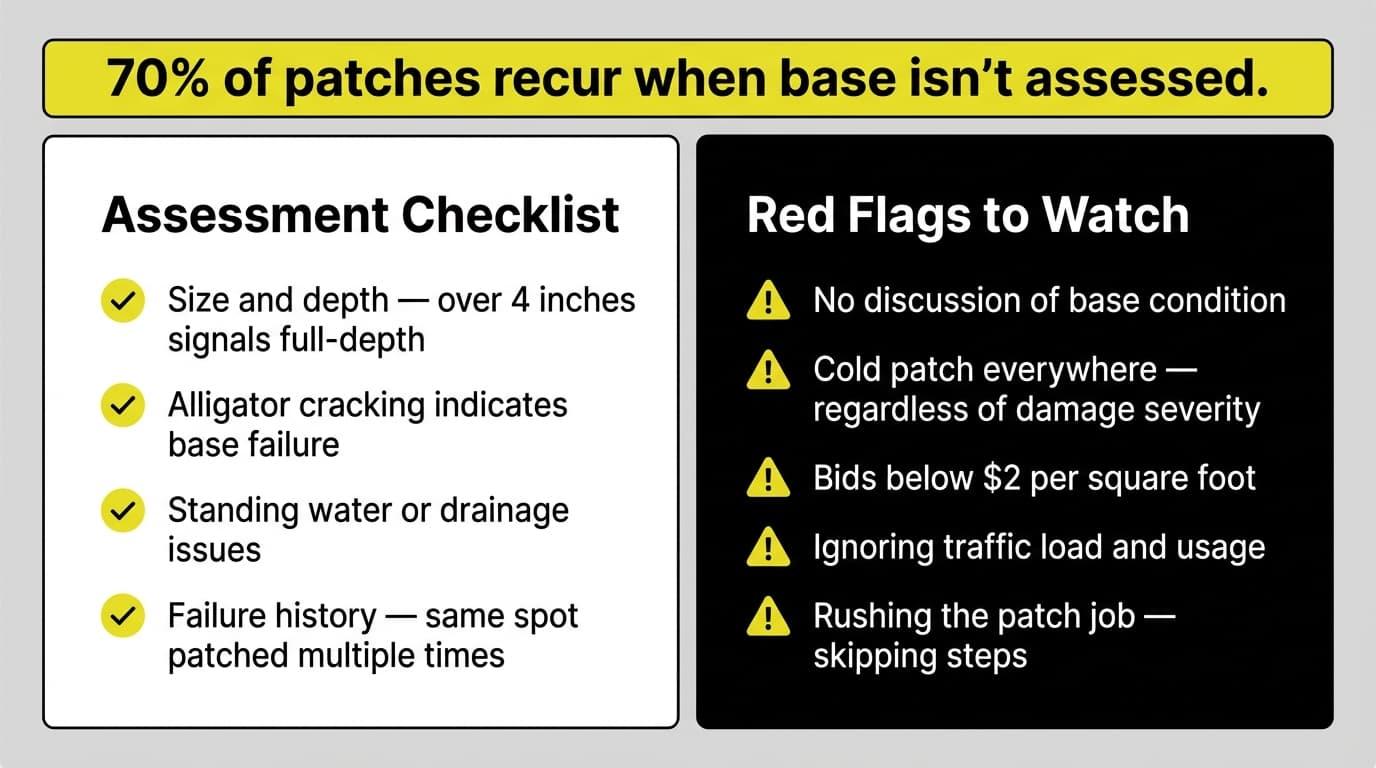
Illinois DOT surveys found 70% of asphalt patches recur when the underlying base isn’t assessed before repair — making on-site evaluation the single most important step in commercial pothole patching. A reliable assessment requires physical inspection, not a drive-by estimate or phone quote based on square footage.
Before calling a contractor, note:
- The size and depth of potholes (anything over 4 inches deep signals full-depth territory)
- Nearby cracking patterns (alligator cracking indicates base failure)
- Standing water or drainage issues
- Failure history (same spot patched multiple times)
A professional assessment must evaluate pavement age, traffic patterns, and proximity to catch basins or downspouts — especially on Michigan’s clay-rich subgrades where poor drainage accelerates base saturation.
The contractor should physically probe the base to check for saturated or “pumpable” aggregate that moves underfoot, then recommend whether a surface repair, infrared, or full-depth removal is appropriate based on what they find.
Request proposals that include diagrams showing where full-depth work is recommended versus where patching or crack sealing will suffice.
Red Flags During an Assessment
Watch out for these warning signs that a contractor may be offering a band-aid solution:
- No discussion of base condition or how they’ll verify stability
- No mention of drainage improvements for chronically wet areas
- A one-size-fits-all “cold patch everywhere” plan, regardless of damage severity
- Inability to explain how Michigan’s freeze-thaw cycle affects their recommended method
- Bids that skip saw-cutting, compaction specs, or base repair (often priced below $2 per square foot)
Illinois DOT surveys found 70% recurrence for asphalt patches that didn’t address the underlying base. If the same area has been patched two or more times in three years, any proposal for a repair that ignores the base should be questioned.
Commercial-Grade Patching Process: Step-by-Step for Long-Lasting Results
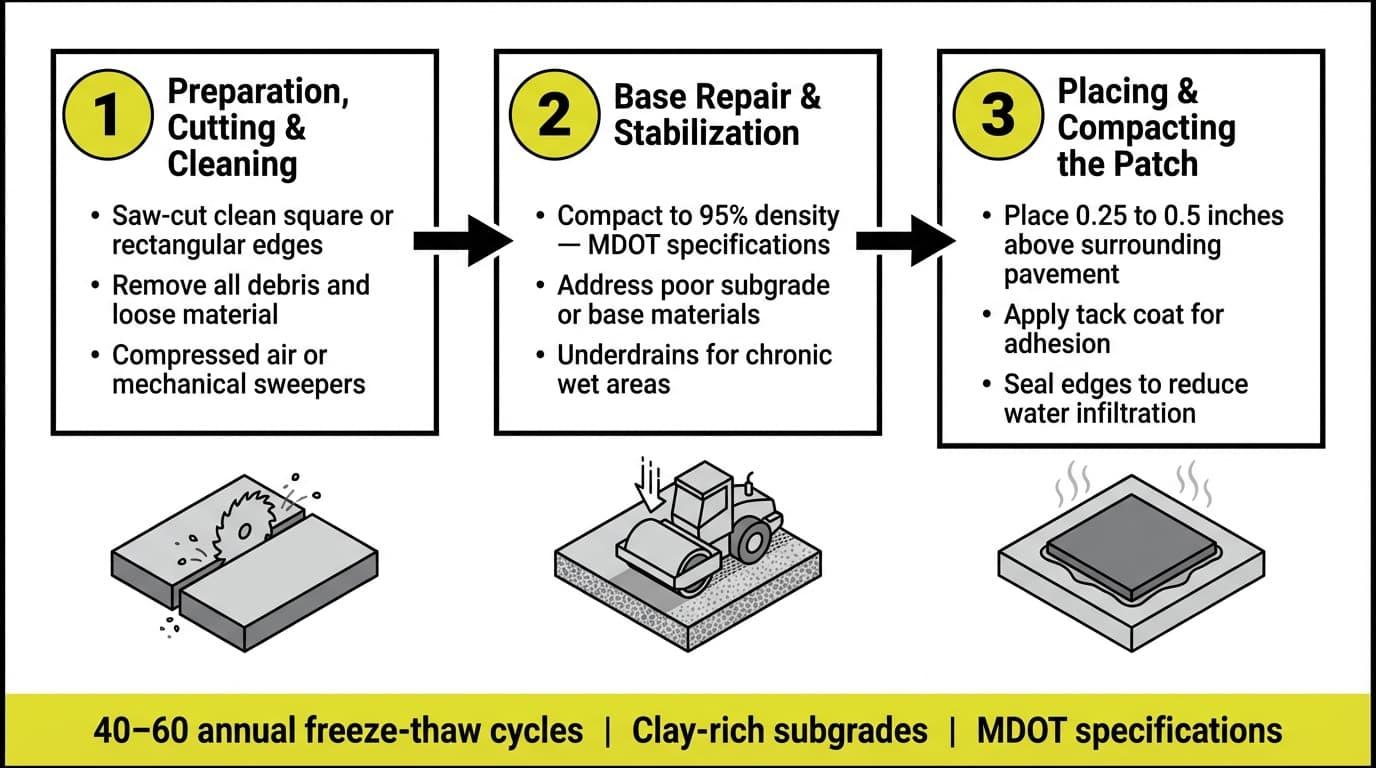
A Michigan-grade commercial repair process accounts for three factors most regions don’t face simultaneously: 40–60 annual freeze-thaw cycles, clay-rich subgrades that trap moisture, and MDOT material specifications designed for heavy commercial traffic. The steps vary by method, but every stage below addresses these conditions.
Preparation, Cutting, and Cleaning
Before any cutting begins, crews redirect vehicles and pedestrians with cones or barricades to minimize business disruption.
The repair area is then saw-cut into clean square or rectangular edges — giving the new patch vertical faces to bond against, which is critical in high-traffic drive lanes where feathered edges would break apart within weeks.
Thorough cleaning removes all loose debris, loose material, vegetation, and moisture. Commercial asphalt repair projects typically use compressed air or mechanical sweepers, as any mud or standing water left in the hole will severely shorten patch life.
Base Repair and Stabilization
If the aggregate base is soft, saturated, or pumping when stepped on, it must be removed and replaced. New base material—properly graded crushed limestone or MDOT-specified aggregate—is placed in lifts and compacted to 95% density.
For chronic wet areas, underdrains or regrading toward a catch basin prevents the saturated base conditions that cause repeat failures. A solid, well-compacted base — compacted to 95% density per MDOT specifications — is the single biggest difference between a patch that survives five winters and one that fails after the first thaw.
Placing and Compacting the Asphalt Patch
For hot mix or infrared repairs, crews place material slightly overfilled — 0.25 to 0.5 inches above the surrounding pavement — to account for compaction settlement. Plate compactors or rollers then compress the material to a dense, uniform surface with no visible seams or segregation.
Edges should be sealed to reduce water infiltration at the interface between old and new asphalt. In busy Southeast Michigan lots, contractors can often reopen the repair area to traffic the same day.
Choosing the Right Repair Strategy for a Michigan Commercial Property
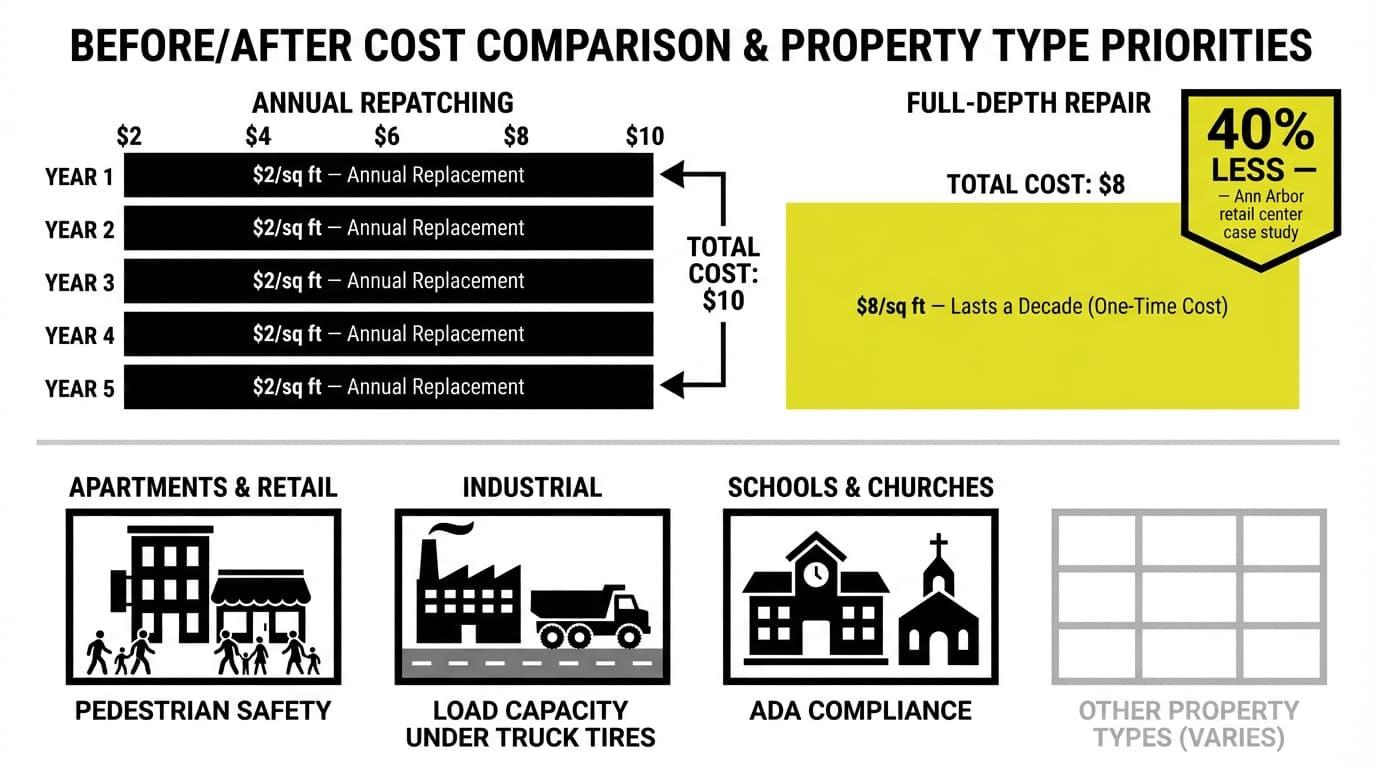
Evaluating pothole repairs on life-cycle cost rather than lowest bid changes the math entirely. A $2-per-square-foot throw-and-roll patch that needs annual replacement costs more over five years than an $8 full-depth repair that lasts a decade.
Property type matters, too. For example:
- Apartments and retail centers prioritize pedestrian safety and appearance
- Industrial sites prioritize load capacity under truck tires
- Schools and churches face heightened ADA compliance scrutiny
Short-term patches are acceptable for emergency winter hazard mitigation or when full resurfacing is planned within 2–3 years. Otherwise, infrared or full-depth repairs deliver better value.
At Bart’s Asphalt, we align individual pothole repairs with a broader pavement management plan rather than treating each hole in isolation.
For example, a retail center in Ann Arbor came to us after three consecutive winters of cold-patch failures across their main entrance lane.
We performed full-depth removal of the chronic failure zones, infrared repair of the surrounding surface distress, and regraded drainage toward the existing catch basins.
The total investment was approximately 40% less than what the property had spent on annual repatching over the previous three years, and the repairs have held through two full Michigan winters with zero callbacks.
Questions to Ask Your Paving Contractor
Use these questions to evaluate any paving proposal:
- How will you verify the base condition under this pothole?
- What repair method are you recommending, and why is it appropriate for Michigan freeze-thaw cycles?
- What compaction and density specs will you achieve?
- How many winters should this repair last under our traffic loads?
- Do you offer a written warranty on patch performance? What does it cover?
- Can you provide references or photos from similar Southeast Michigan commercial projects that have gone through multiple winters?
- Are drainage improvements included if this area holds water?
Safety, Liability, and Operational Impacts of Delayed Pothole Repairs
See Issue 15 for the rewritten version. This issue serves as a writer priority flag — source the 300% statistic or use the softened language before publishing. Wheelchair users and customers with mobility devices can catch casters in holes that meet ADA non-compliance thresholds.
In busy parking areas like a shopping center in Ann Arbor or a church in Livonia, potholes near entrances quickly become premises liability claims. Vehicle suspension damage, flat tires, and undercarriage failures increase exposure.
Poorly timed repairs create hazards, too. Professional traffic control, signage, and phased work minimize disruption and prevent accidents during the repair process.
Timely, correctly specified repairs reduce emergency shutdowns by preventing sudden worsening. Treat pothole repair as both a safety initiative and cost-control measure—not just a cosmetic fix.
Final Thoughts: Hiring the Right Pothole Patching Contractor Counts
Patching potholes in asphalt, especially in challenging climates like Southeast Michigan, requires more than quick fixes. Understanding the underlying causes, such as freeze-thaw cycles and base instability, is essential for achieving durable, long-lasting repairs.
While cold patch methods can be convenient temporary solutions, especially during winter, commercial properties benefit most from professional asphalt repair techniques, such as infrared repair and full-depth removal, that address both surface and foundation issues.
A thorough assessment of the pavement structure, including base condition and drainage, sets the foundation for selecting the right repair method. Proper preparation, including cutting clean edges, cleaning the repair area, restoring the base with appropriate materials, and ensuring proper compaction, is critical to prevent premature failure.
Additionally, sealing repaired areas protects the patch from moisture and temperature changes, extending its lifespan.
Quality pothole repairs are a key part of maintaining your pavement. When they’re done right and on time, you’ll deal with fewer problems, less downtime for your property, and lower repair costs over the life of your asphalt.
For commercial pothole patching services you can truly rely on, turn to Bart’s Asphalt. We deliver precision asphalt repair services for commercial properties, having completed over 576 projects across Southeast Michigan with a 4.9-star Google rating across 62 reviews.
As a Pavement Maintenance Association of Michigan (PMAMM) member and recipient of the 2024 Best Asphalt Contractors in Michigan award, every crew member is trained in OSHA safety standards and backed by full liability insurance. We know what it takes to make sure your parking lot is ready to handle heavy traffic and tough Midwest weather.
FAQ: Patching Potholes in Commercial Asphalt
How long should a properly patched pothole last in a Michigan commercial parking lot?
A correctly executed full-depth or infrared repair over a sound base should typically last 5–10 winters in Southeast Michigan. If a patch fails during the first freeze-thaw season, it usually indicates that base issues weren’t addressed or that compaction was inadequate. Service life depends on traffic volume and proper drainage around the repair area.
Is there ever a place for a bagged cold patch on a commercial property?
A bagged cold patch can serve as an emergency, short-term fix to eliminate immediate tripping hazards or vehicle damage risk during the winter months when hot mix plants are closed. However, property managers should view it as a temporary safety measure only, with plans for permanent repair using infrared or full-depth methods once conditions allow.
Can I schedule pothole repairs in cold weather, or should I wait until spring?
Some methods work in cold temperatures—specialized cold-weather mixes and spray injection can be applied below 32°F for short-term results. However, the best long-term performance comes from work done in moderate, dry conditions (above 45°F). Address severe hazards immediately with temporary measures, then schedule permanent repairs for late spring or early fall.
Will sealcoating alone fix or prevent potholes in my parking lot?
Sealcoating is a protective surface treatment that slows oxidation and blocks surface moisture, but it cannot repair structural failures or fix a failing base. Address existing potholes and major cracks first with appropriate patching methods, then apply sealcoat as part of ongoing maintenance to extend the life of your asphalt driveway or parking area.
How do I budget for pothole repairs versus full resurfacing or reconstruction?
Work with a paving contractor to develop a 3–5-year pavement plan that inventories current defects, estimates remaining pavement life, and prioritizes repairs strategically. Patching structurally sound areas while planning resurfacing for widespread distress typically delivers better value than reacting to each new pothole individually. This approach helps property managers control costs while maintaining safe, functional pavement that requires fewer repairs over time.