Infrared Asphalt Repair for Commercial Properties in Michigan
Potholes, utility-cut patches, and localized surface failures can disrupt traffic and create safety concerns on active commercial properties. Infrared asphalt repair can restore surface damage without automatically removing a larger section of pavement.
Bart’s Asphalt inspects the pavement before recommending a repair method. Infrared treatment may be appropriate when the damage is localized, and the supporting structure remains sound. It cannot correct base failure, serious drainage problems, or widespread deterioration.
- Same-Day Quotes Available
- Long-Lasting Repair Solutions
- Commercial & Industrial Experience
- Safety-First Workmanship
What Your Neighbors Say About Our Infrared Repair Services
4.9★ Rating from 62+ Reviews
At Bart’s Asphalt, we are dedicated to customer satisfaction and take pride in providing commercial infrared asphalt repair that exceeds the expectations of property managers and business owners. Here is what our clients have to say about working with us:
Posted on Google
 Raymond Kirk
Trustindex verifies that the original source of the review is Google.
Dave ONeill did an outstanding job on our old worn down driveway. It turned out perfect and way better than we expected! We highly recommend Bart’s.Posted on Google jamey nicholsVery impressed by this man and the business he has created. Always responsive and professional. I highly recommend.Posted on Google
 Payton DewildtIf you need asphalt work, make sure to call Bart's Asphalt. They are the best in the business. Their quality of work is top notach and they have great pricing.Posted on Google
 Brian WillsExcellent work!! They are professional, fast and reliable. Highly recommended.Posted on Google
 Kaden BoucherBart's Asphalt did an outstanding job doing the parking lot at our business! First class quality and exhibited excellent communication and professionalism throughout the process! Would highly recommend to anyone looking for this line of work at the commercial level!Posted on Google
 Austin MiedemaWe used Bart’s asphalt and were not only pleased with the outstanding work but also with the communication and professionalism. We worked with Drew who was able to answer any questions I had in a timely manner and made the entire process extremely easy.Posted on Google
 Kristina FoxBart's did a great job on our parking lot. Very professional, on time, worked us in. All in all a great experience!Posted on Google
 Lori LudwickThe team was very professional. They had great attention to detail really took pride in their work. Would definately recommend them to others.Posted on Google
 Spring Arbor DentalBart's Asphalt did a great job in repairing our upper parking lot area. Definitely will keep them for future needs. Thank you so much. You guys did an awesome job. Hope you have an extremely busy year in 2021.
When Small Pavement Damage Becomes a Bigger Problem
Small pavement failures rarely improve on their own. Water enters openings, traffic breaks down weakened material, and Michigan’s freeze-thaw cycles can turn an isolated defect into a larger repair need.
Commercial and industrial properties commonly deal with:
- Potholes that expand under repeated vehicle traffic
- Deteriorated utility-cut patches with a stable base
- Localized surface failures in parking and drive areas
- Small areas of light raveling or loose surface material
- Surface damage around loading zones and traffic lanes
- Uneven patches that affect vehicle movement
Cold patching can be useful for temporary, urgent, or cold-weather work because it does not require heating the surrounding pavement. Infrared repair reheats and reworks suitable existing asphalt, while saw-cut replacement removes damaged material before new hot mix is placed.
The correct choice depends on the cause and depth of failure. Infrared treatment fits certain localized surface defects, while more serious damage, unstable base material, or drainage-related failure requires a different repair scope.
Looking to get a quote?
How Infrared Asphalt Repair Works
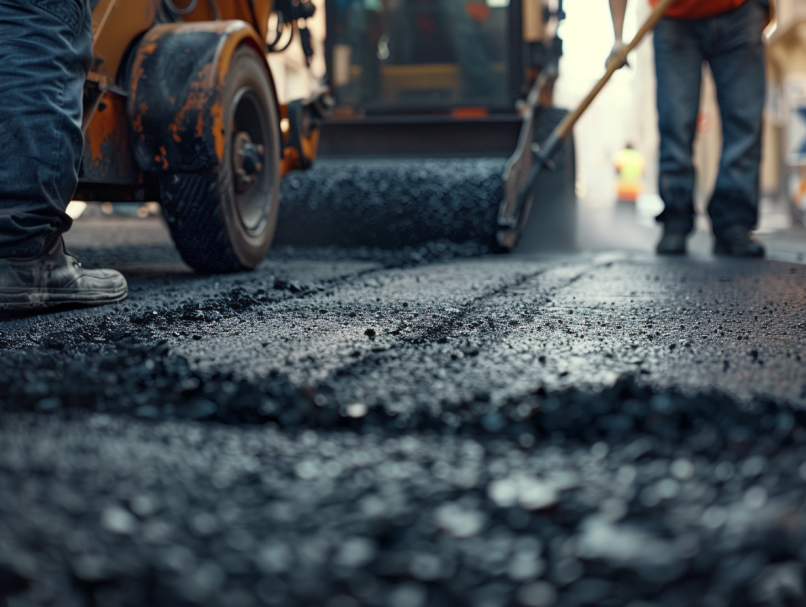
Infrared repair uses controlled heat to make the upper layer of existing asphalt workable. Crews loosen the heated material, remove unsuitable debris, add fresh hot-mix asphalt when needed, reshape the area, and compact it to the surrounding grade.
An infrared heating unit is positioned over the repair area, gradually warming the asphalt. The material must become workable without overheating or damaging the binder.
Crews loosen and rework the softened asphalt, remove unsuitable material, and add fresh hot mix where needed. Heating the surrounding edges helps create a thermally blended transition rather than placing a separate cold patch against unheated pavement.
The repair is shaped to match the surrounding grade and compacted. Traffic returns only after the asphalt has cooled enough for the site’s vehicle loads and operating conditions; suitable repairs may reopen the same day, but timing varies by project.
What Infrared Repair Can Address
Infrared repair is intended for localized surface-level pavement problems where the underlying structure remains stable.
After an inspection, it may be a good fit for:
- Isolated potholes that do not extend into failed base material
- Suitable utility-cut patches with stable support
- Localized surface failures in drive lanes or parking areas
- Small deteriorated asphalt sections
- Light, localized raveling or material loss
- Surface-level damage in commercial parking and traffic areas
Similar-looking defects can have different causes. Bart’s Asphalt checks the depth of damage, surrounding cracking, grade, drainage, moisture, traffic demands, and signs of base movement before selecting a repair method.
The Bart's Asphalt Repair Process
We’ve made our asphalt repair process straightforward from the initial evaluation through project completion.
01
Site inspection
Bart’s Asphalt reviews the failed area, nearby cracking, grade, water patterns, traffic demands, and signs of base instability. This inspection helps determine whether the damage is limited to a workable surface layer.
02
Repair Preparation
The crew clears and prepares the work zone, removes loose debris, and confirms the area can be heated safely. If the inspection indicates a structural or drainage-related failure, another repair method is recommended.
03
Infrared Treatment
The existing asphalt is gradually heated and scarified. Unsuitable material is removed, and fresh hot-mix asphalt is blended in where needed to restore the damaged area and grade.
04
Compaction and Reopening
The reworked material is shaped and compacted to create a stable surface and a smooth transition to the surrounding pavement.
05
Final Inspection and Reopening
The completed repair is checked against the agreed scope. The work area reopens only after the asphalt has cooled sufficiently for the expected traffic.

Looking to get a quote?
Why Commercial Property Owners Trust Bart's Asphalt
Bart’s Asphalt brings commercial pavement experience, clear project communication, and established safety practices to infrared repair work across Southeast Michigan. The company has completed more than 576 projects across the region; that figure reflects Bart’s Asphalt’s overall project history, not 576 infrared repairs or asphalt milling projects.
Bart’s Asphalt is licensed and insured, and its crews are OSHA-trained for work on active commercial properties. Recommendations are based on the inspected pavement condition, operating needs, and the agreed scope, rather than a one-size-fits-all approach.
Built for Michigan Pavement Conditions
Michigan’s freeze-thaw cycles contribute to pothole formation when moisture enters pavement, freezes, expands, and leaves weakened material that traffic continues to load. Infrared repair can restore a suitable localized surface failure after the damaged area and its cause have been evaluated.
Infrared treatment does not correct water movement below the pavement, unstable subgrade, or drainage that repeatedly sends moisture into the same area. Those underlying conditions require a different repair or site-correction plan.
Routine maintenance helps address small issues before they become major asphalt repair problems. This reduces long-term expenses and helps maximize pavement lifespan.
Damaged pavement and missing markings can create safety and compliance concerns. Well-maintained surfaces help lower the risk of accidents and potential claims.
Proper planning allows projects to be completed with minimal impact on daily operations. Flexible scheduling helps keep businesses accessible during construction and maintenance work.
Quality materials and proper installation practices help pavement withstand Michigan weather conditions. The result is fewer repairs and better long-term value for your investment.
Your parking lot is often the first thing visitors notice about your property. A clean and professional surface improves curb appeal and creates a positive impression from the moment they arrive.
Why Active Commercial Properties Use Infrared Repair
For busy commercial and industrial properties, the repair process can be almost as important as the repair itself. Work-zone planning must account for customers, employees, tenants, deliveries, trucks, and emergency access.
When the pavement is suitable, infrared repair can help limit disruption by:
- Focusing the work zone on the localized defect
- Reducing excavation and removed material compared with a larger cut-out repair
- Avoiding unnecessary saw cutting when surface treatment is appropriate
- Creating a blended transition with the heated surrounding asphalt
- Allowing multiple isolated repairs to be phased across an active site
- Potentially reopening suitable repairs within the same day after sufficient cooling
Bart’s Asphalt can coordinate work around access requirements and lower-traffic periods when the site, service, weather, and schedule allow. Actual downtime depends on repair size, number of work areas, pavement temperature, vehicle loads, and traffic-control needs.

Looking to get a quote?
Frequently Asked Questions
Have questions? We’re happy to help.
What damage is infrared asphalt repair best for?
Infrared repair is best suited to localized surface-level damage, including certain potholes, suitable utility-cut patches, light raveling, and small deteriorated areas where the pavement base remains stable.
Can infrared asphalt repair be done during Michigan winters?
Temperature, moisture, snow or ice, pavement condition, and site access affect whether infrared repair can be completed properly. Bart’s Asphalt evaluates the repair area and weather conditions before scheduling cold-weather work.
How is infrared repair different from a standard pothole patch?
Infrared repair heats and reworks the existing asphalt before fresh hot mix is blended in where needed. Cold patch material is placed without heating the surrounding pavement and is often used for temporary, urgent, or cold-weather repairs.
How soon can traffic return after infrared repair?
A suitable infrared repair may reopen the same day after compaction and sufficient cooling. Actual timing depends on repair size, pavement temperature, weather, vehicle loads, number of work areas, and site conditions.
Can infrared repair fix alligator cracking?
No. Widespread alligator cracking often indicates failure below the surface. Infrared treatment cannot rebuild failed base or subgrade material, so full-depth repair or reconstruction may be necessary.
Is infrared repair better than saw-cut replacement?
Neither method is universally better. Infrared repair is suited to certain localized surface defects, while saw-cut replacement removes damaged material and is generally more appropriate when deterioration extends deeper or the existing asphalt cannot be effectively reworked.
Get Your Damaged Pavement Inspected
A pothole, utility patch, or deteriorated section does not automatically require a large paving project. It also should not be assigned a repair method until the depth, cause, and surrounding pavement have been checked.
Bart’s Asphalt provides infrared asphalt repair for suitable commercial and industrial pavement problems across Southeast Michigan. The team inspects the area, explains the findings, and recommends infrared repair, saw-cut replacement, full-depth work, or another approach based on the pavement condition.
Call (517) 888-3208 to request a free, no-obligation estimate.