
After months of pushing it off, the asphalt surface of your commercial parking lot can no longer handle the daily crush of cars, trucks, and winter plowing.
Now that you’ve scheduled a crew for repaving, new questions arise: How long does asphalt take to dry, and when can customers, deliveries, and tenants safely return?
The straightforward answer is that new asphalt typically dries enough for light vehicle traffic in 48 to 72 hours under ideal conditions. However, this can stretch to a full week depending on the weather and other factors. In Michigan’s variable climate, planning around this window is crucial to avoid costly damage and operational disruptions.
At Bart’s Asphalt, our job goes beyond laying a smooth, black surface. We help commercial property owners and managers understand the asphalt drying and curing process and exactly what to do to protect their pavement through the critical early weeks.
In this article, you’ll discover answers to key questions like:
- When can customers and employees safely park on a new asphalt parking lot?
- How does Michigan’s unique climate affect asphalt drying and curing times?
- What’s the difference between asphalt drying and curing, and why does it matter?
- When is the best time to schedule sealcoating for your parking lot?
- How can you protect your investment by planning around traffic and weather conditions?
Want to know how soon your lot can reopen safely? Read on to learn how to manage your paving project with confidence and avoid costly mistakes.
Key Takeaways
- New asphalt dries enough for light traffic in 48–72 hours in ideal conditions.
- Michigan’s cold nights and humidity often extend drying to 2–7 days for heavy trucks.
- Drying is thermal hardening from cooling, while curing is a 6–12‑month oxidation process.
- Southeast Michigan’s freeze‑thaw cycles require extra caution in the first weeks after paving.
- Sealcoating should wait at least 30 days, with the first coat commonly at 60–90 days.
How Soon Can You Use New Asphalt Pavement
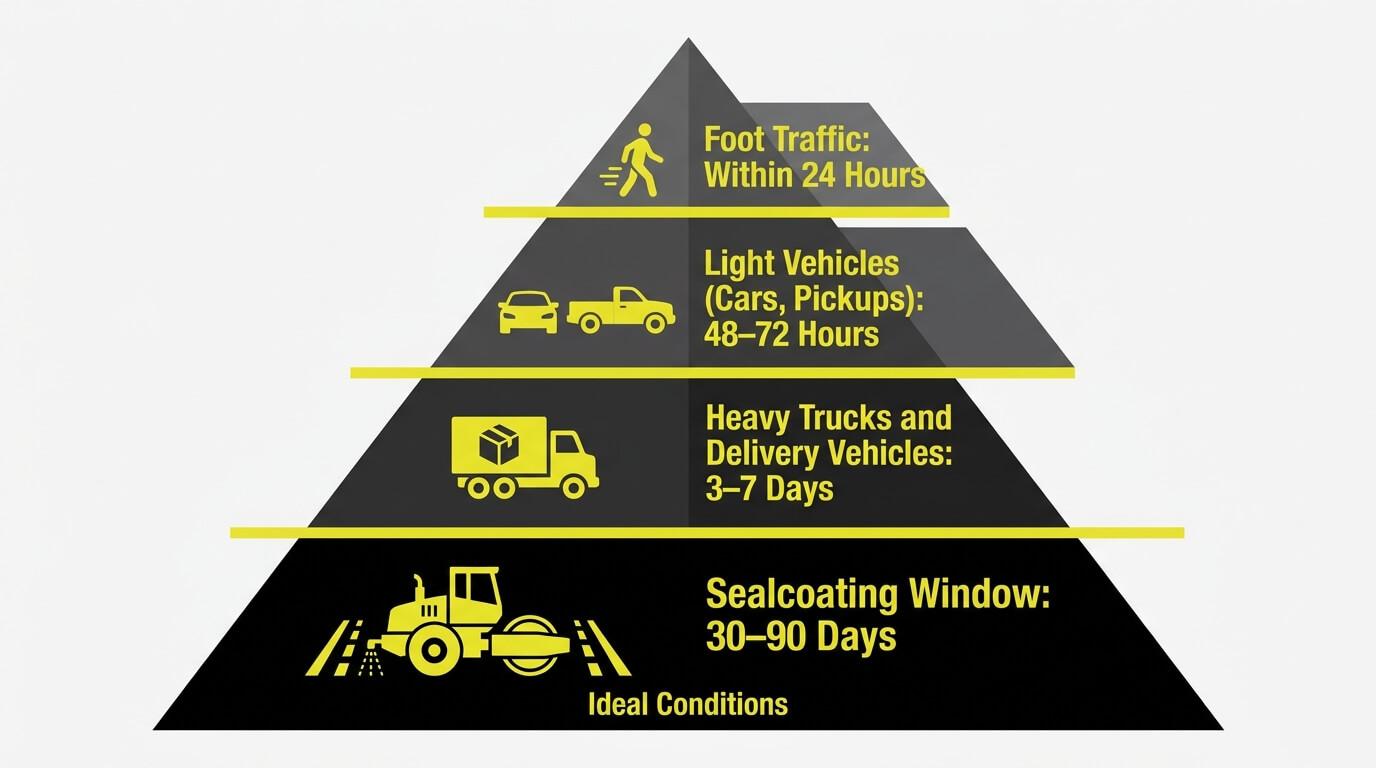
Under ideal weather conditions, new hot mix asphalt is typically traffic-ready in 48–72 hours. In cold or humid weather, that window can extend to 2–7 days before the asphalt surface is stable enough for normal use.
Here’s the distinction that matters: “Dry enough for use” happens at two to three days, but the asphalt curing process continues for six to twelve months as the binder oxidizes and the pavement reaches maximum strength. You don’t need to wait a year to reopen, but you do need to manage loads carefully during those first weeks.
For a typical Michigan commercial parking lot, plan around these benchmarks:
- Foot traffic: Often same day or within 24 hours in good weather.
- Light vehicles (cars, pickups): 48–72 hours in normal spring–fall conditions.
- Heavy trucks and delivery vehicles: 3–7 days, depending on thickness and ambient temperature.
- Sealcoating window: First suitable at around 30 days; first sealcoat commonly applied at 60–90 days after installation.
Southeast Michigan’s freeze‑thaw cycles, cold nights, and summer humidity can shift these windows. Treat 48–72 hours as a best‑case estimate, not a guarantee. The sections below unpack exactly what affects your timeline and how to adjust your schedule for your specific site and traffic.
Drying vs. Curing: What’s Really Happening to New Asphalt?
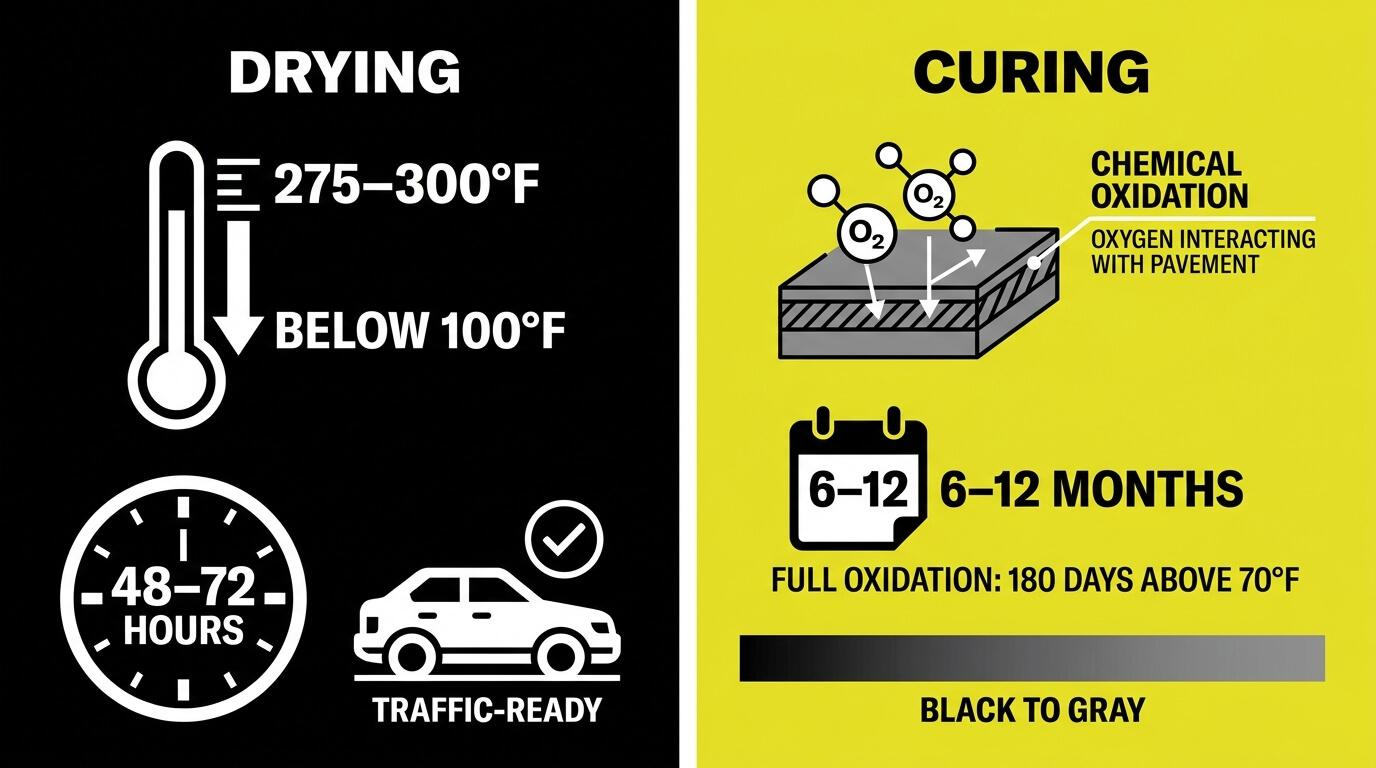
Fresh asphalt doesn’t dry like paint or concrete. The drying process is thermal. Hot mix asphalt hardens as it cools, then slowly cures as the binder reacts with oxygen over months.
The typical sequence involves the following:
- The asphalt mix is placed at roughly 275–300°F.
- As it cools below about 100°F at the surface, it becomes firm enough for careful use.
- The internal temperature and binder chemistry continue changing.
- Full oxidation requires about 180 days of weather above 70°F.
Key Asphalt Timelines and What They Mean
- Drying (traffic‑ready): 48–72 hours under ideal conditions; up to a week in poor weather.
- Full cure: 6–12 months, with the asphalt pavement gradually lightening from black to gray as oxidation completes.
This distinction affects your decisions directly. The lot can be reopened to vehicle traffic long before full cure, but sharp turns, heavy loads, and repeated parking in the same spots need extra caution during the first several weeks. The industry consensus is that asphalt hardens as it cools, and while you can usually drive on it after 2–3 days, it takes about a year to reach full strength.
Phase-by-Phase Asphalt Drying Time for New Commercial Parking Lots
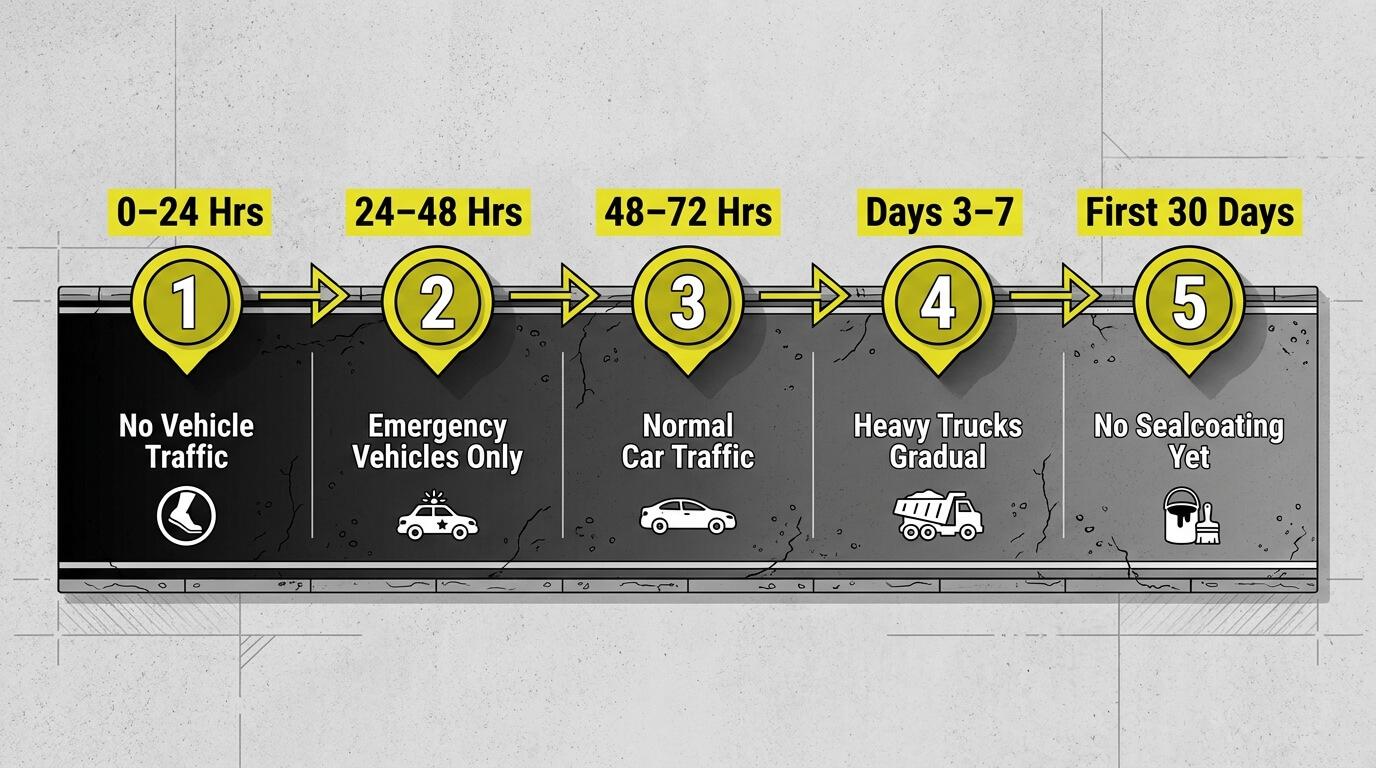
This schedule gives property managers a practical framework for tenant notices, delivery reroutes, and staff parking plans as the asphalt dries and cures.
First 0–24 Hours
The new pavement is very soft and pliable, so it hasn’t dried completely and isn’t ready for any vehicle traffic. Keep all vehicles off the surface and limit access to essential foot traffic only, using designated walk paths.
You may notice a strong tar odor during this period; this is normal and part of the asphalt curing process. Remember that even though the surface feels firm to the touch, the internal temperature is still high, and it can take several weeks to months for the asphalt to cure fully.
24–48 Hours
The surface is cooling and beginning to stiffen, but it’s still in the early stages of drying. In warm, dry weather, very limited foot and emergency vehicle traffic may be acceptable, but you should avoid regular parking during this period.
The asphalt isn’t yet dry enough to handle repeated turning or braking, so keep loads light and movements gentle. This is also the time when proper airflow and exposure to sunlight help the top layer dry completely while the internal binder continues to harden.
48–72 hours
In dry weather between 50–85°F, the asphalt parking lot is usually ready for normal car traffic and light service vehicles. The surface is firm enough for regular use, though the full curing process still needs several months.
Avoid tight turns, parking heavy trucks, or placing dumpsters or equipment directly on the surface. These actions can create depressions and scuffing before the mat is fully hardened. This 48–72 hour window is when the surface has mostly dried, but the pavement is still in its early‑life, more vulnerable stage.
Days 3–7
Gradually introduce heavier loads such as box trucks, delivery vehicles, and trash trucks, but only if the surface shows no rutting, scuffing, or soft spots. The asphalt is now stable enough to carry heavier loads, but it’s still in the early curing phase and hasn’t fully dried throughout the full depth.
Avoid repeatedly parking in the same spots, as this can accelerate wear and cause localized damage. Proper load distribution and limiting sharp turns will help the asphalt cure evenly and maintain a smooth, long‑lasting surface.
First 30 days
The first 30 days are critical for helping the asphalt dry completely and progress through the early curing phase while remaining strong enough for normal commercial use. During this period, follow these best practices to protect your pavement:
- Clean up fuel or oil spills immediately, as fresh asphalt is more susceptible to chemical penetration, which can weaken the binder and inhibit the curing process.
- Discourage oversized loads and constant tight turns where possible, since these put extra stress on areas that are still firming up.
- Don’t schedule sealcoating for at least 30 days of cure time, because the asphalt is still outgassing volatiles and needs time to dry completely before a sealer is applied.
After 30 days, new asphalt is generally stable for routine commercial use. The color gradually shifts from deep black to gray over 6–12 months, which is a sign of proper curing, not a problem.
Key Factors That Change How Long Asphalt Takes to Dry
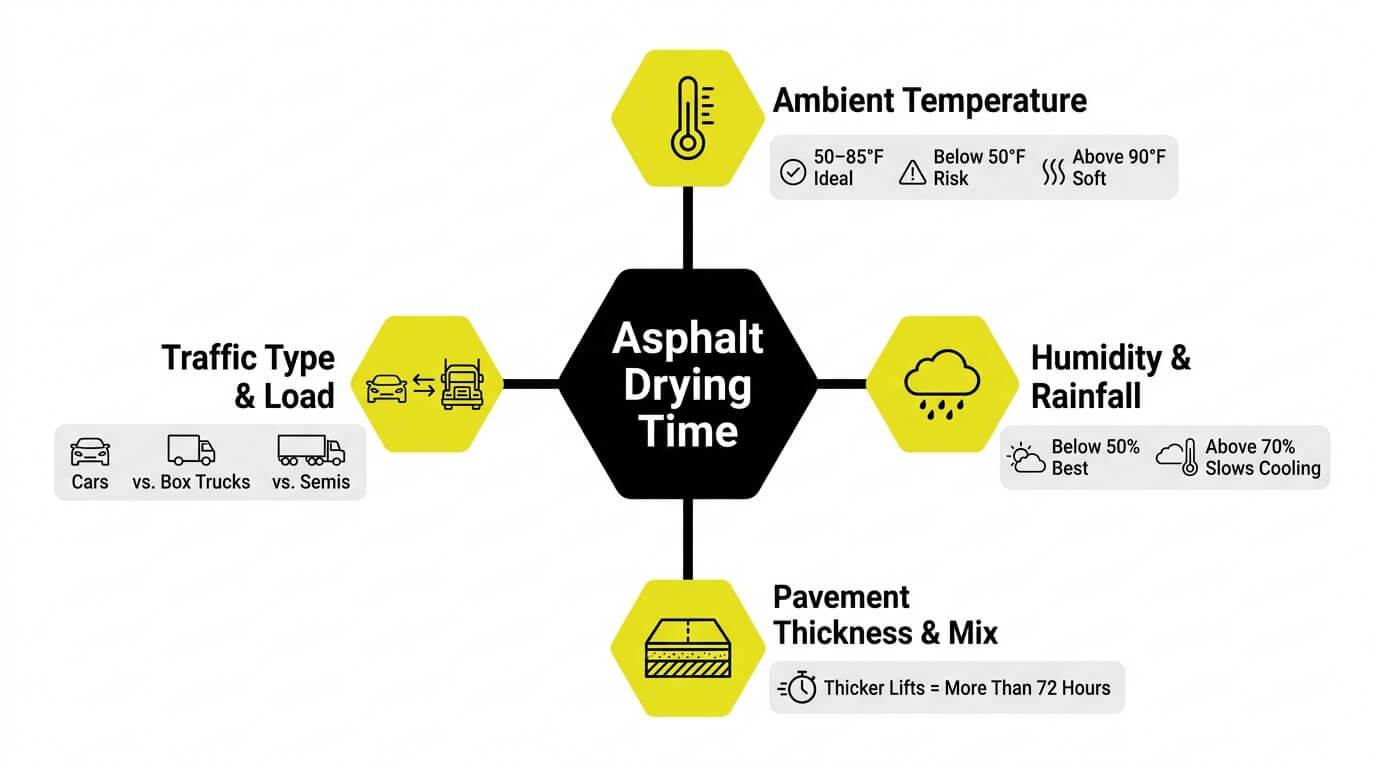
Actual asphalt drying time in Michigan depends on weather, mix, thickness, and your traffic expectations. Together, these variables shape how quickly the surface can safely handle foot and vehicle traffic.
Ambient Temperature and Drying
Temperature plays a major role in how fast asphalt hardens.
- Ideal Ambient Range: 50–85°F and rising during placement and the first 24–48 hours.
- Below 50°F: The mat cools too fast, risking poor compaction and extended time before heavy loads are safe.
- Above 90–100°F: The surface can stay soft longer, especially in direct sun, extending the practical cool time.
Humidity and Rainfall Effects
Humidity and precipitation directly affect how long the asphalt needs to dry.
- Best to pave when the humidity is below 50% and no rain is forecast.
- High humidity, like over 70%+ slows cooling and can keep the mat softer for longer.
- Rain in the first 24 hours can mark or weaken the surface, creating ruts and uneven curing.
- Moisture trapped in the material extends drying and can delay when foot and vehicle traffic can safely return.
Pavement Thickness and Mix Design
The way the asphalt is engineered impacts how long it takes to dry.
- Thicker lifts and dense commercial mixes hold heat longer; expect more than 72 hours before heavy traffic.
- High‑RAP (reclaimed asphalt pavement) blends may respond differently. Your contractor should set expectations based on the specific design.
Traffic Type and Load Patterns
The expected traffic on the lot determines how conservatively you must manage the drying window. For example:
- Light employee and customer cars differ dramatically from box trucks or fully loaded semis.
- Tight turning zones (loading docks, drive‑thrus, entry radii) need more caution than straight‑through aisles.
A local contractor familiar with your site and Michigan’s climate will provide better guidance than any generic timeline. At Bart’s Asphalt, we factor in all these variables so your lot handles foot and vehicle traffic safely from day one.
Why Michigan Weather Changes Asphalt Drying Timelines
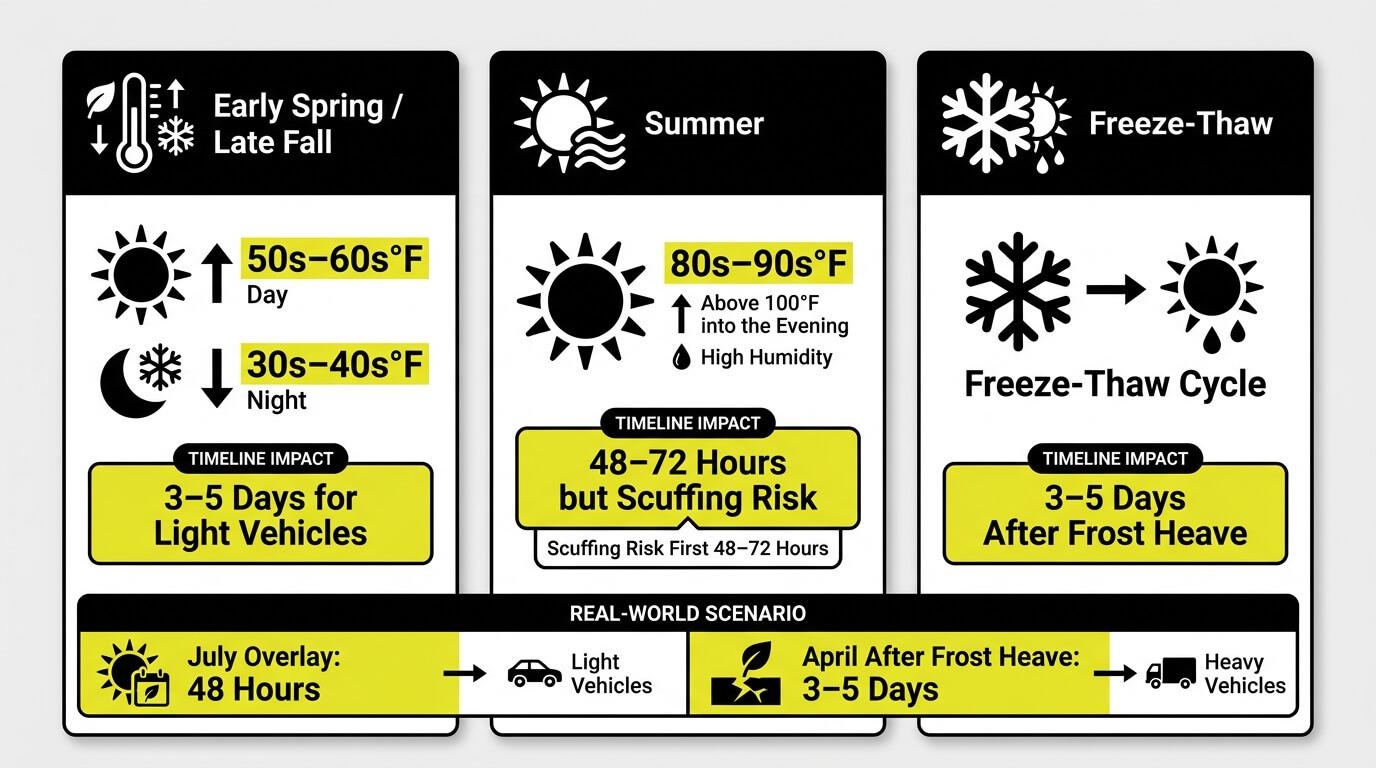
Southeast Michigan’s freeze‑thaw cycles, cold weather nights, and humid summers complicate national “48–72 hour” rules. These conditions mean the pavement surface can feel firm at midday but still be vulnerable to softening or shifting overnight.
Early Spring And Late Fall
Early spring and late fall are tricky seasons for asphalt drying. This is because:
- Daytime highs in the 50s–60s°F, but overnight lows in the 30s–40s°F.
- Asphalt dries unevenly; mornings may still feel soft even if afternoon temperatures seem favorable.
Cautious contractors extend light‑vehicle timelines toward 3–5 days in these shoulder seasons.
Summer Conditions
Summer brings its own set of drying challenges for asphalt:
- Daytime temps in the 80s–90s°F with high humidity, slow heat loss from the surface.
- Direct sun on dark pavement can keep the mat above 100°F well into the evening.
- Scuffing risks increase in the first 48–72 hours under these conditions.
Freeze‑Thaw And Subbase Concerns
How the subbase and surrounding conditions behave greatly affects drying and early‑use safety:
- If paving follows a wet or freeze‑heavy winter, subbase moisture affects how the mat supports loads during early use.
- Proper ground preparation, base compaction, and proper installation are critical to achieving realistic drying timelines.
Real-world scenario: A July overlay on a well‑drained commercial lot is often ready for cars in 48 hours. For an April reconstruction after frost heave, plan for 3–5 days before normal traffic or longer for heavy vehicles.
Sealcoating and “Dry Time” for Existing Lots
Many managers searching “how long does asphalt take to dry” actually want to know when a sealcoat is ready for use. Understanding this timing helps protect your investment and ensures the protective layer bonds properly to the compacted asphalt surface.
For Brand New Asphalt Driveway or Parking Lot Projects
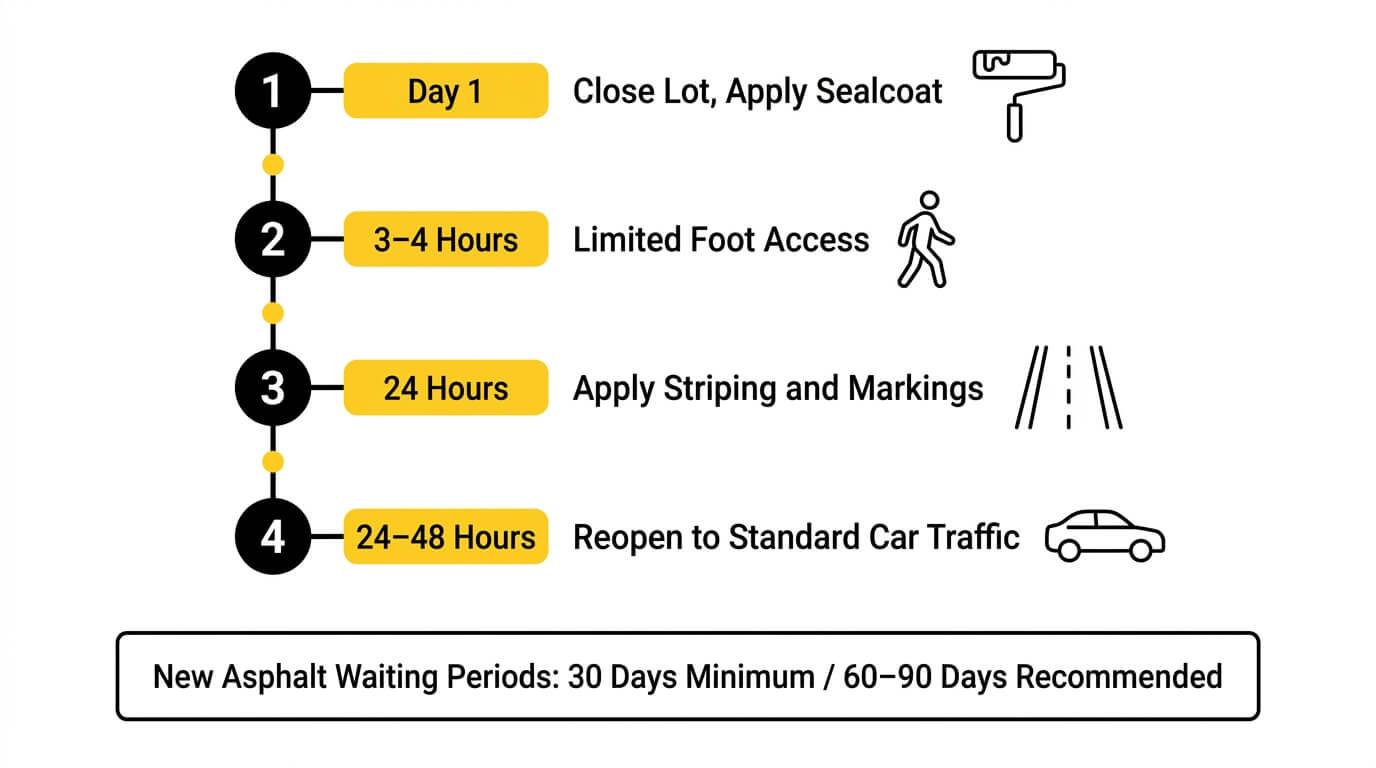
Wait at least 30 days after new asphalt installation before considering sealcoating. Most commercial projects target the first seal at 60–90 days in Michigan’s season. Applying the sealer too early traps volatile compounds, causing blistering and adhesion failure.
Sealcoat and Curing Time
Sealcoating adds a protective layer that also needs time to dry and cure before traffic returns.
- Asphalt-based sealers: Typically walkable in 3–4 hours in warm, dry weather. Vehicle-ready in 24–48 hours.
- Coal tar emulsions or heavier coats: Getting the asphalt surface dry may take up to 24 hours; thus, make sure to wait for 48 hours or more before commercial traffic.
Operational Schedule for a Typical Sealcoating Project
A well‑planned schedule keeps foot traffic and vehicle traffic safely off the sand‑topped, coated surface until it cures. Here’s what a good operational schedule looks like:
- Day 1: Close the lot or phase work into sections and apply the first sealcoat over the compacted asphalt surface.
- 3–4 hours: Limited foot access may be possible only if the weather is warm, dry, and the surface feels firm.
- 24 hours: Apply striping and markings after the sealer has fully cured and the surface is stable.
- 24–48 hours: Reopen to standard car traffic, but delay heavy trucks as advised to avoid premature wear.
Humidity, shade, and cool temperatures extend all of these times. A Michigan asphalt contractor will typically build an extra weather buffer day into the schedule.
Risks of Using Asphalt Before It’s Truly Dry
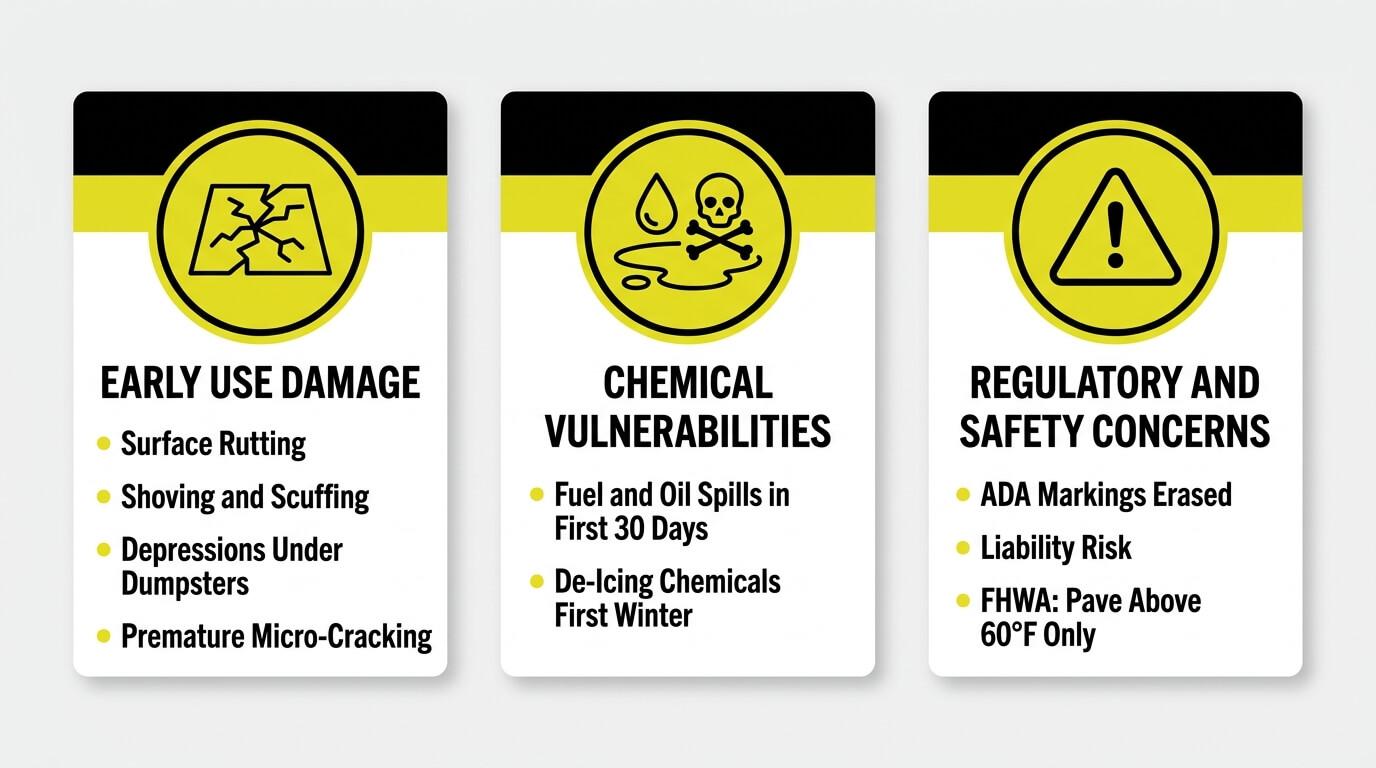
Using a new asphalt surface too soon can turn a major capital investment into an immediate repair project, especially under heavy commercial traffic. The risk is documented in commercial pavement failure analyses.
Waiting for the asphalt to dry and cure properly protects both your pavement and your budget.
Early Use Damage
Early loading can cause visible damage, shortening the pavement’s lifespan. This damage includes:
- Surface rutting where tires sit or turn while the mat is still soft.
- Shoving and scuffing at stop bars, drive‑thrus, loading docks, and tight corners.
- Depressions under dumpsters or pallet stacks placed too soon.
- Premature micro‑cracking from concentrated weight when the internal temperature has not stabilized.
Chemical Vulnerabilities
Fresh asphalt is more susceptible to chemical attack until the binder has fully oxidized. Look out for:
- Fuel and oil spills in the first 30 days penetrate more deeply and weaken the binder. Clean spills immediately.
- De‑icing chemicals and solvents during the first winter are harder on uncured surfaces and can accelerate wear.
Regulatory and Safety Concerns
Improper early asphalt use raises safety and compliance risks that can affect your entire property:
- Poor early performance can erase new striping, ADA markings, and traffic signs, creating liability.
- FHWA guidelines recommend paving only when ambient temperatures are 60°F or above to ensure proper compaction.
If you see tire tracks, depressions, or scuffing in the first week, contact your contractor immediately. These are not normal asphalt wear patterns; they are signs that the surface was loaded too early or that construction operations were not completed properly
Turning Asphalt Drying Times Into a Practical Schedule
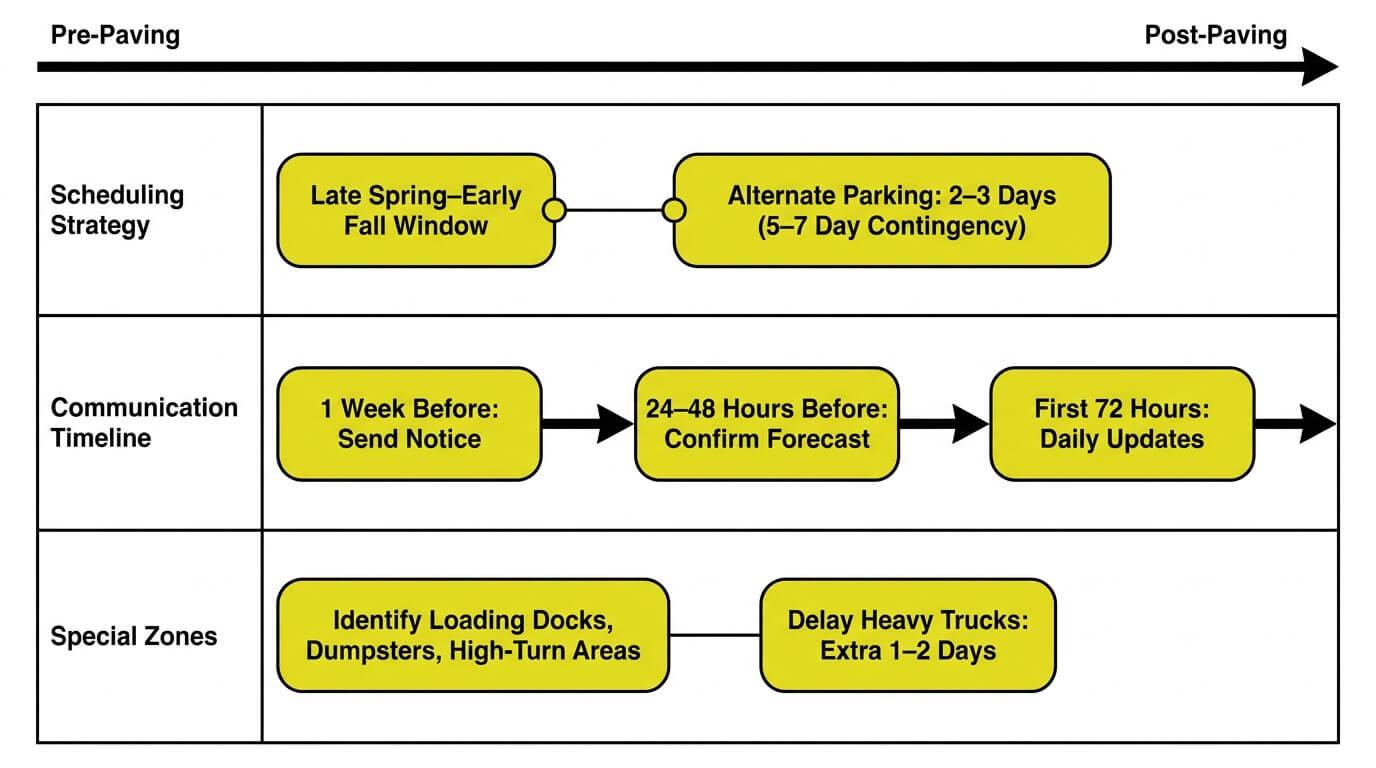
Drying and curing timelines only matter if they translate into a workable schedule for tenants, customers, and suppliers. Here’s how to build a practical plan that keeps your business running while the new asphalt mixture compacts and stabilizes.
Scheduling Strategy
A smart paving schedule aligns with Michigan’s weather and your traffic needs.
- Choose a paving window in late spring through early fall for statistically stable Michigan weather.
- Coordinate with tenants and staff on alternate parking for at least 2–3 days, with a contingency of 5–7 days if conditions are marginal.
- Phase work on larger sites to keep some parking and access open where feasible.
Communication Timeline
Clear, early communication prevents frustration and keeps all stakeholders informed.
- One week before: Send a notice outlining the dates, expected closures, and rough reopening targets for cars and trucks.
- 24–48 hours before: Confirm schedule based on updated forecast and any changes in drying time.
- During work and the first 72 hours: Provide daily updates about which areas are open, where to park, and when heavy vehicles can return.
Document Special Zones
High‑impact areas need extra protection during the curing phase.
- Identify loading docks, dumpsters, and high‑turn areas in advance.
- Plan to delay reintroducing heavy truck traffic and container moves in those zones by an extra 1–2 days beyond general reopening.
The best protection for your investment is working with a local Michigan commercial paving contractor who sets site‑specific drying and reopening targets and keeps you informed throughout construction. Generic internet timelines don’t account for your weather, your mix, or your traffic. A contractor who does will help you protect both your pavement and your operations.
Bart’s Asphalt is a trusted member of the Michigan community, providing reliable commercial paving solutions for parking lots, loading docks, and other high-traffic surfaces. Our technicians bring local experience, responsive service, and careful project planning to every job.
Frequently Asked Questions About Asphalt Drying Times
How Long Does It Take For New Asphalt To Dry Enough For Vehicle Traffic?
New asphalt typically dries enough for light vehicle traffic within 48 to 72 hours under ideal conditions. However, in Michigan’s variable climate, this period can extend to two to seven days, especially for heavy trucks.
What Is The Difference Between Asphalt Drying And Curing?
Drying is the thermal hardening process in which asphalt cools and becomes firm enough for traffic, usually within a few days. Curing is a longer chemical oxidation process lasting 6 to 12 months that strengthens the asphalt pavement over time.
When Can Sealcoating Be Applied To New Asphalt?
Sealcoating should be delayed until at least 30 days after asphalt installation to ensure sufficient curing. In Michigan, the first sealcoat is commonly applied between 60 and 90 days.
How Does Michigan’s Climate Affect Asphalt Drying Times?
Michigan’s freeze-thaw cycles, cold nights, and humid summers can extend drying and curing times beyond the standard 48–72 hour window. Contractors often adjust timelines to accommodate these local weather conditions.
What Risks Are Associated With Using Asphalt Before It Is Fully Dry?
Premature use can cause surface rutting, tire marks, scuffing, and premature cracking. Early exposure to fuel or oil spills can penetrate the binder, weakening the pavement.
What Is The Ideal Temperature Range For Asphalt Installation?
Asphalt should be installed when ambient temperatures are between 50°F and 85°F and rising to ensure proper compaction and drying.
Does Cold Weather Slow Asphalt Curing?
Yes, cold weather can slow asphalt curing and extend the time before the surface is ready for normal use. Lower temperatures make it harder for the pavement to firm up and stabilize.
How Long Does Asphalt Curing Take In Cold Weather?
Asphalt curing in cold weather can take longer than usual, especially in Michigan’s freeze-thaw season. Expect extra time before heavy traffic is allowed, and follow your contractor’s guidance.