
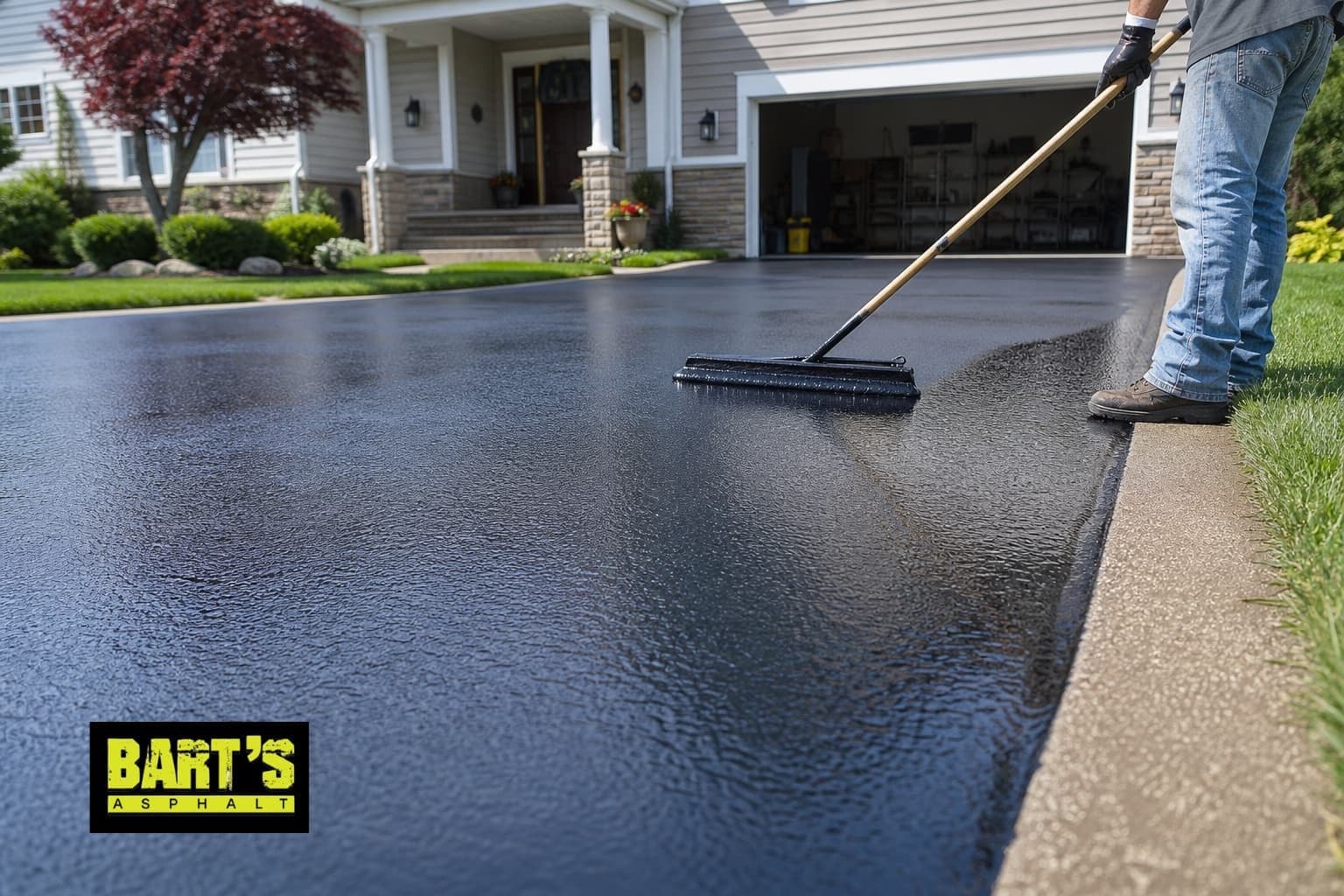
How long does sealcoating take to dry? For commercial properties, the answer isn’t a simple number. Typically, foot traffic can resume after 3–4 hours, light vehicles after 24 hours, and heavy trucks after 48 to 72 hours if the weather permits the sealcoat to cure properly.
In Michigan, however, cooler temperatures and high humidity often extend these timelines. Variable weather requires careful planning and communication to ensure your asphalt paving investment stays protected.
Bart’s Asphalt specializes in helping Michigan property managers apply sealcoating at precise times, accounting for local weather patterns to deliver durable protection without business disruption.
In this article, you’ll learn:
- How a tiered reopening schedule protects your asphalt and tenants
- How Michigan’s climate affects drying and curing times
- Why rushed reopening and traffic risks cause costly damage and poor protection
- How to coordinate with your contractor for accurate timing
- What to do if the weather disrupts your sealcoating project
Stay ahead of your sealcoating schedule. Read on for expert guidance and practical tips.
Key Takeaways
- On a sealcoated driveway, foot traffic can return after 3-4 hours under ideal conditions. For light vehicles, wait 24 hours minimum.
- Michigan’s cool temperatures, high humidity, and variable weather patterns often significantly extend sealcoating drying timelines.
- Tiered reopening plans strategically phase traffic types to protect fresh sealcoat from premature vehicle damage, allowing it to cure completely.
- A surface-dry appearance does not indicate vehicle readiness, as curing continues beneath the hardened top layer.
- Always check the weather forecast 48 hours before sealcoating application to prevent costly rework from rain or cold.
- Choose contractors who provide project-specific timelines and proactive communication throughout the entire sealcoating process.
When Can You Reopen Your Lot After Sealcoating?
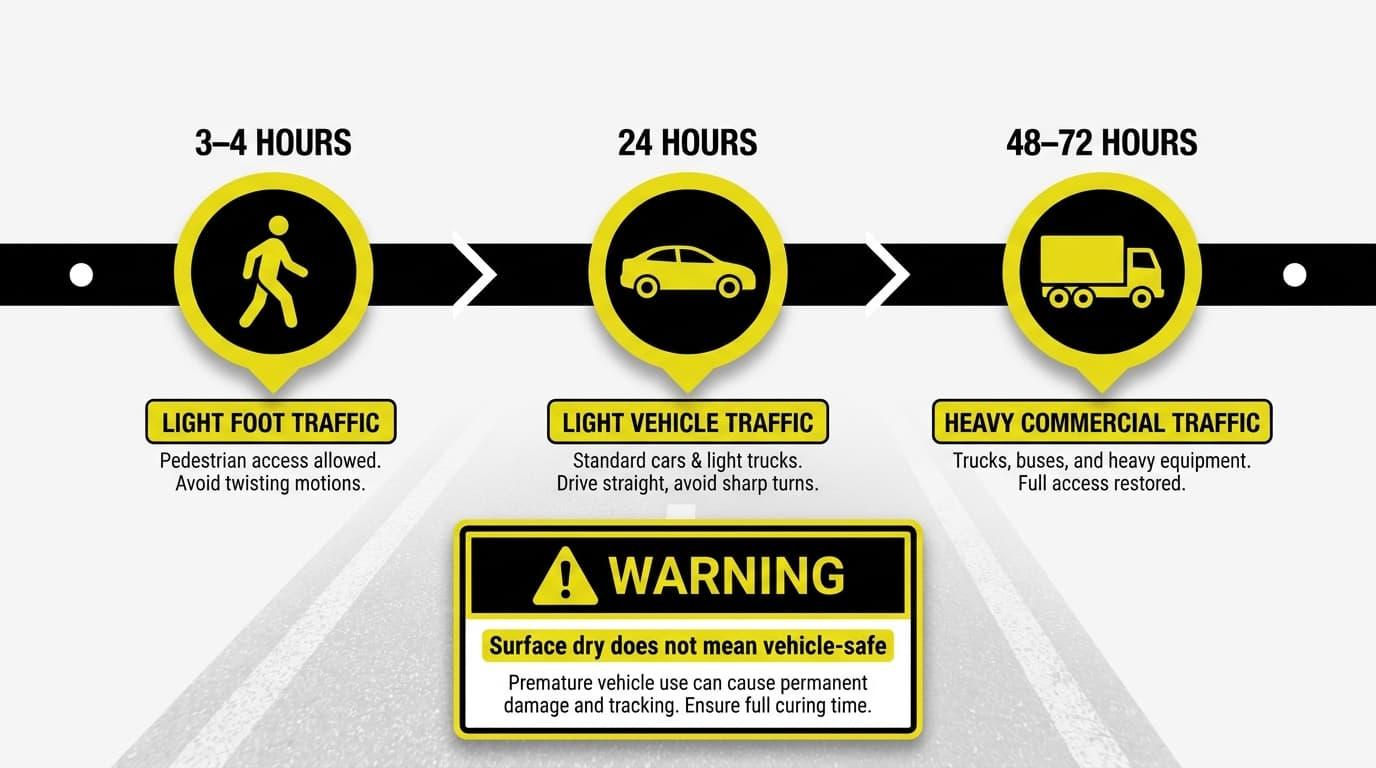
For a typical commercial parking lot under ideal conditions (70–85°F, low humidity, sunny), here’s what you’re working with:
- Light Foot Traffic: 3–4 hours after application.
- Light Vehicle Traffic: 24 hours recommended, but 12–24 hours possible in hot, dry conditions above 80°F for cars and light pickups.
- Heavy Commercial Traffic: 48–72 hours for delivery trucks, dumpsters, buses.
The crucial distinction is to remember that if the sealcoat feels “dry to the touch,” it doesn’t necessarily mean it’s now safe for vehicles. When an asphalt sealer feels dry on the surface, the drying and curing process underneath is still active. Driving on it too early causes tire marks, rutting, and adhesion failure, shortening the job’s lifespan.
Michigan’s cooler nights and higher humidity can easily extend these ranges, especially during spring and fall. For planning purposes, most commercial properties should assume at least one full business day without vehicles, and often two days before allowing heavy truck traffic.
The Three Stages You Need to Plan Around for the Drying and Curing Process
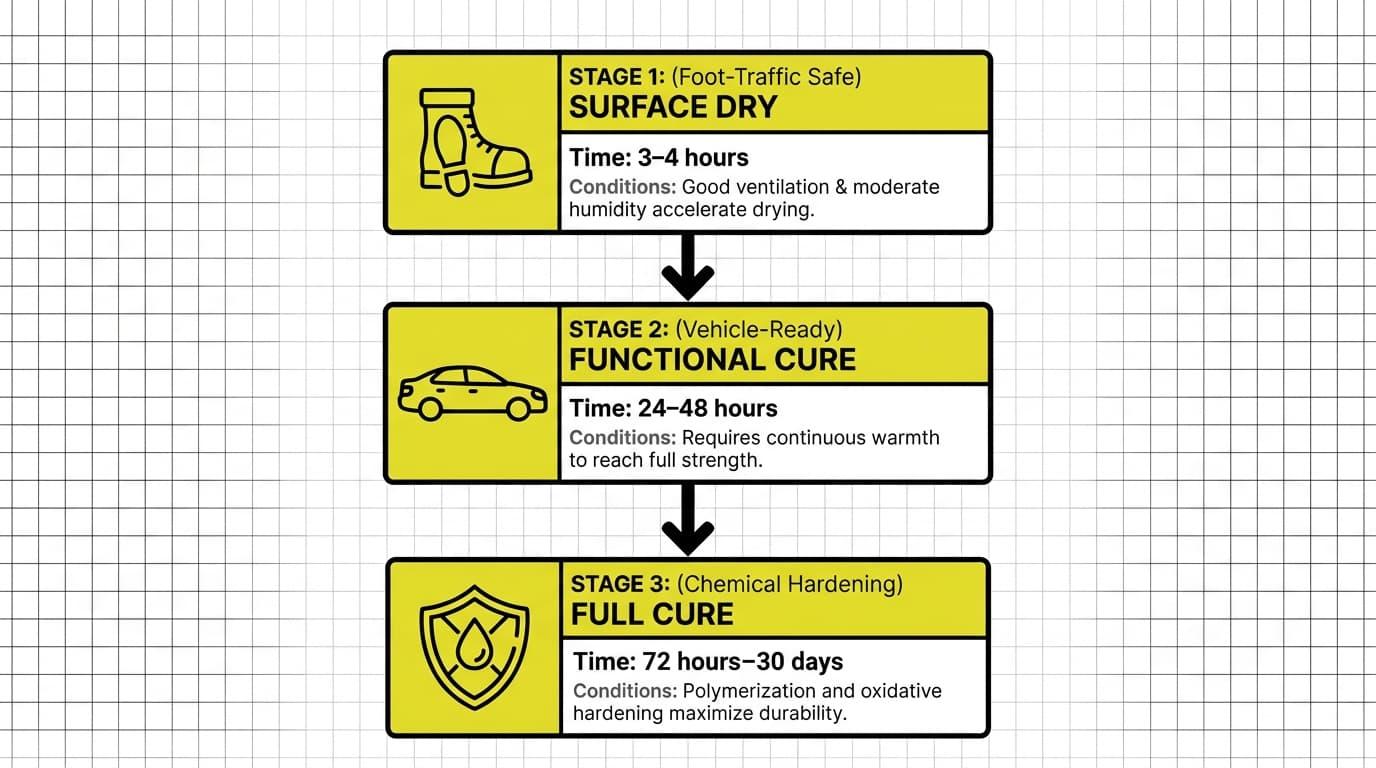
Sealcoating goes through three distinct stages. Understanding them helps you communicate realistic timelines to tenants and delivery partners.
Stage 1: Surface Dry (Foot-Traffic Safe)
The asphalt surface hardens enough to walk on, but internal chemical bonding isn’t yet complete. This stage takes about 3–4 hours in ideal weather, but can stretch to 12 hours in cool or humid conditions. Do not allow vehicles at this stage as premature traffic can leave tire marks, cause rutting, and weaken the sealcoat’s long-term durability.
Stage 2: Functional Cure (Vehicle-Ready)
At this stage, the sealer bonds to the asphalt pavement and resists tire distortion under normal loads. This requires 24–48 hours for standard conditions, and up to 72 hours for heavy traffic or poor weather. Light vehicles are acceptable, but keep out all heavy trucks until Stage 3.
Stage 3: Full Cure (Chemical Hardening)
Complete polymerization and oxidative hardening occur during this stage. The sealer reaches structural hardness around 72 hours, but full resistance to fuel and harsh chemicals takes up to 30 days.
During the first month, even though the lot is open, avoid the spillage of fuel and other fluids that can penetrate and degrade the driveway sealer, tight power steering marks, and parking heavy loads in one spot for extended periods.
Key Factors That Change Sealcoat Drying Time
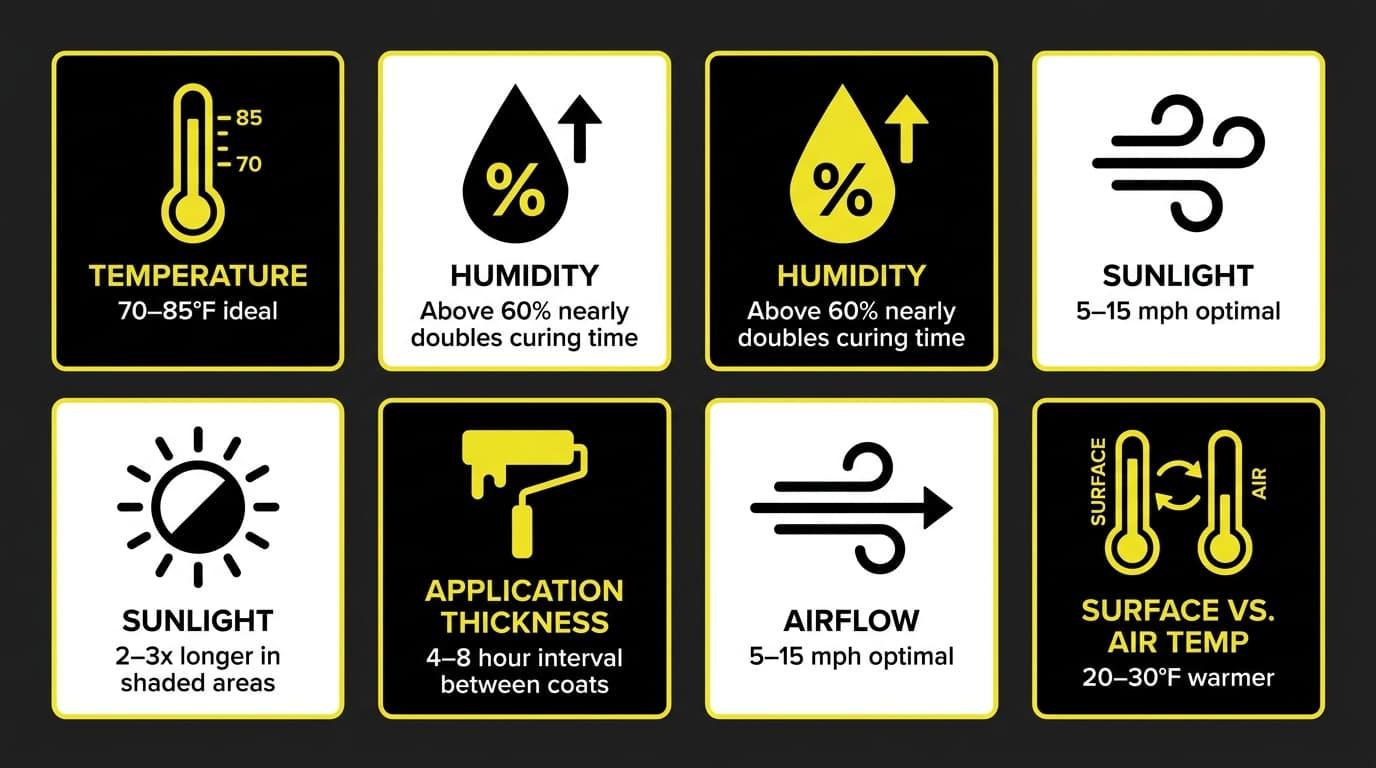
The “24–48 hours” every contractor quotes only applies when several factors align. Here’s what actually affects drying time:
- Temperature: Sealcoat dries fastest between 70–85°F. Below 60°F surface temperatures, curing slows dramatically, potentially pushing drying time to 36 hours or more.
- Humidity Levels: Above 60% humidity can nearly double curing time by slowing moisture escape from the sealer.
- Sunlight: Full sun significantly speeds up evaporation compared to shaded areas. North-facing sections near buildings may stay tacky 2–3 times longer.
- Airflow: A light breeze (5–15 mph) helps moisture evaporate. Stagnant air prolongs drying, while extreme wind causes debris contamination.
- Application Thickness: Thicker coats or multiple coats slow dry time. Most manufacturers recommend a 4–8-hour interval between coats to prevent moisture entrapment.
- Surface vs. Air Temperature: Black asphalt can run 20–30°F warmer than ambient air in direct sun, but it cools rapidly at night, potentially dropping below 50°F and stalling the curing process.
Shaded sections near tree lines or building facades may require more time before reopening, affecting partial reopening decisions for large properties.
How Michigan Weather Changes the Timeline
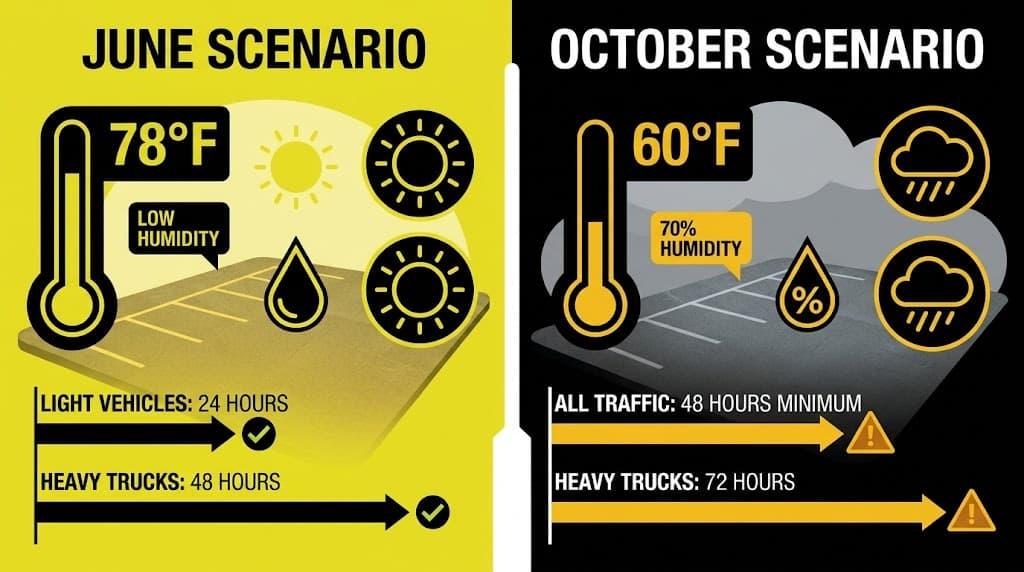
Here’s where Michigan breaks the generic internet rules, especially for Southeast Michigan commercial properties.
Shoulder Season Risks (April–May, September–October)
Spring and fall bring the biggest curing headaches for property managers.
- Daytime highs of 65–70°F can drop into the 40s overnight
- Surface temperatures below 50°F slow or completely stall curing
- Morning dew can re-wet the pavement before work begins or after application
Summer Humidity Challenges
Even summer creates sealcoating complications beyond just heat.
- Humidity often runs over 60% even on sunny days in Southeast Michigan
- A 24-hour cure can extend to 36–48 hours due to trapped moisture
- Pop-up thunderstorms require a 24–48 hour dry weather window before and after application
Real-World Examples
- June scenario: 78°F, low humidity, sunny with a breeze. Light vehicles can return the next morning (24 hours). Heavy trucks at 48 hours.
- October scenario: 60°F overcast, 70% humidity. Keep all traffic off for at least 48 hours. Heavy trucks should wait 72 hours.
For Michigan properties, check the weather forecast within 48 hours of the application rather than locking in a date months in advance. Flexible scheduling prevents expensive rework.
Trust Bart’s Asphalt for Michigan-specific sealcoating schedules that account for these exact weather challenges. Contact us today for precise timelines that protect your pavement investment.
Tiered Reopening Plan for Commercial Properties
Here’s a practical playbook for communicating with tenants, employees, and vendors. This assumes ideal conditions (70–85°F, sun, humidity under 60%) with a Friday application:
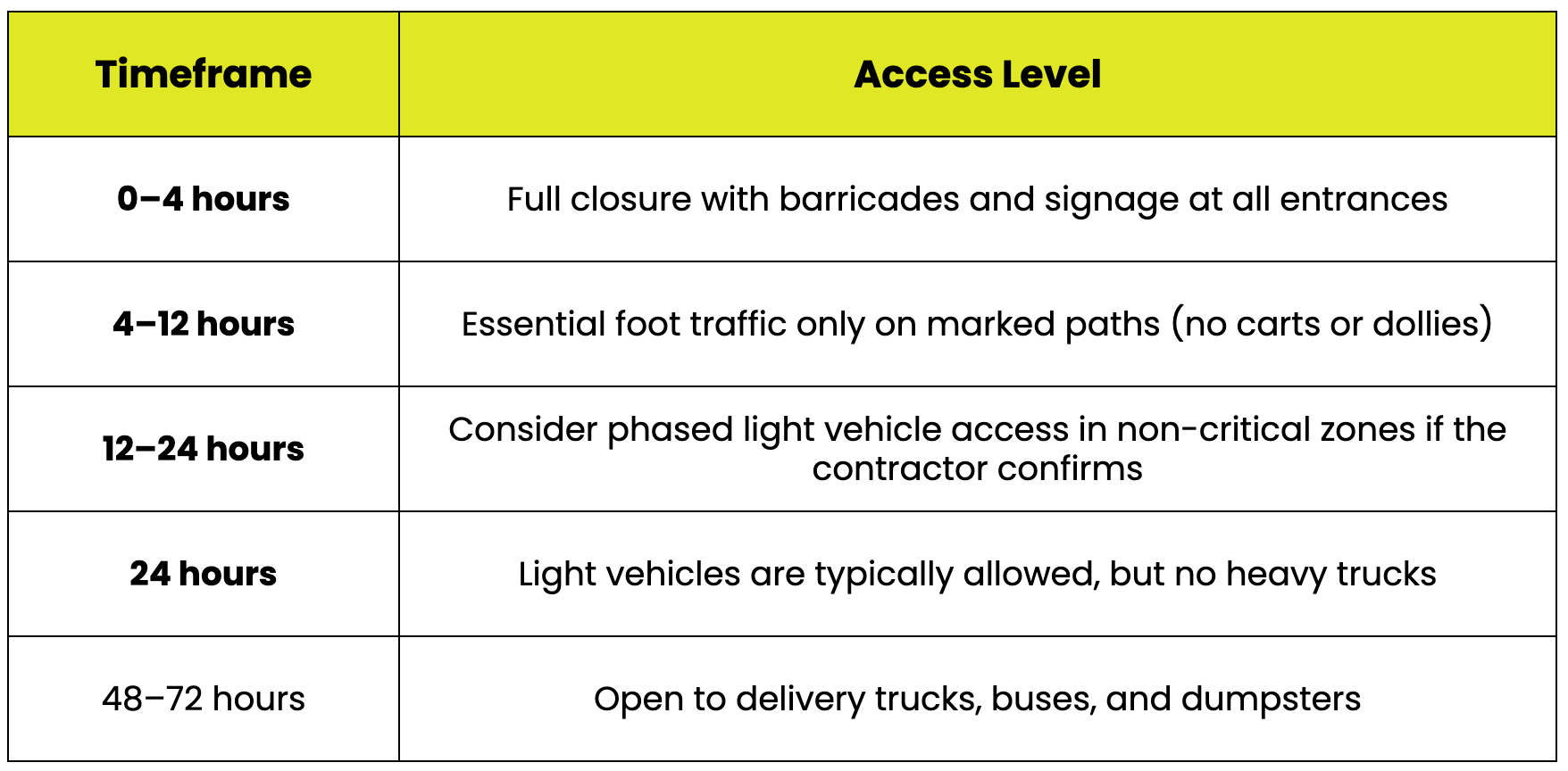
For large properties:
- Phase work so customers always have access to parking.
- Keep ADA parking, accessible routes, and main entrances available by sealing in stages across multiple evenings or weekends.
- Coordinate with your security service to monitor barricades overnight.
The final call on reopening should come from your contractor on the day of work. They will provide a recommendation based on the condition of your asphalt surface and local weather, not generic internet timelines.
Asphalt Sealer Types and Their Typical Dry Times
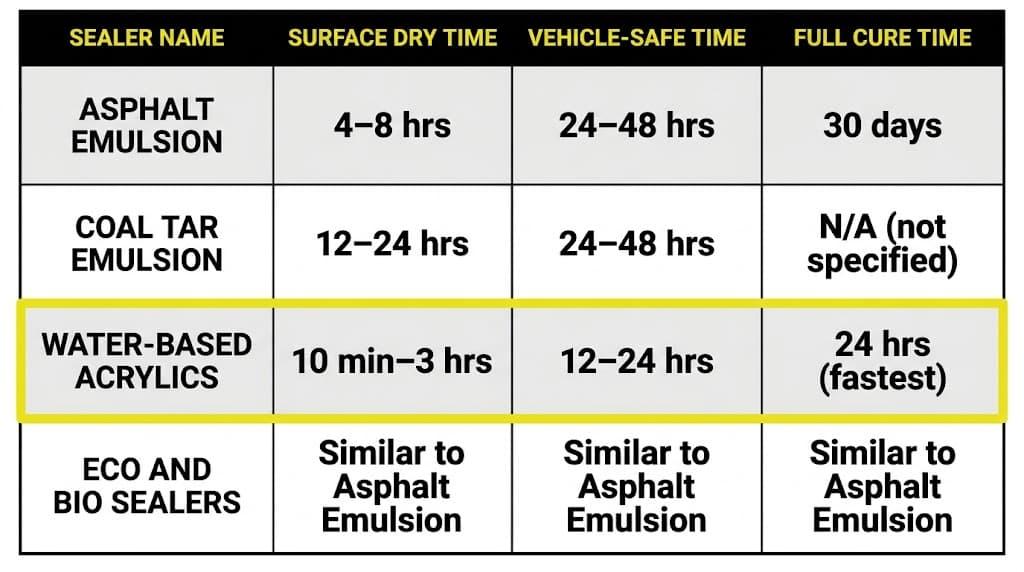
Different sealcoating products have different drying behaviors:
- Asphalt Emulsion: Achieves surface dryness in 4–8 hours, vehicle safety in 24–48 hours, and complete chemical curing in around 30 days while showing moderate humidity tolerance.
- Coal Tar Emulsion: Thicker consistency means 12–24 hours to feel surface dry. Vehicle-safe in 24–48 hours. Higher Polycyclic Aromatic Hydrocarbon (PAH) emissions require ventilation away from building air intakes.
- Water-Based Acrylics: Tack-free in 10 minutes–3 hours in full sun. Often vehicle-ready within 12–24 hours. Good for fast commercial reopenings.
- Eco and Bio Sealers: They are similar to asphalt emulsion in dry and cure times while using sustainable plant oils or recycled asphalt binders for environmentally friendly protection.
High-performance additives can shorten Stage 1 to 1–2 hours in temperatures above 80°F, but they don’t override poor weather conditions or heavy truck restrictions.
Risks of Reopening Too Soon (and How to Avoid Them)
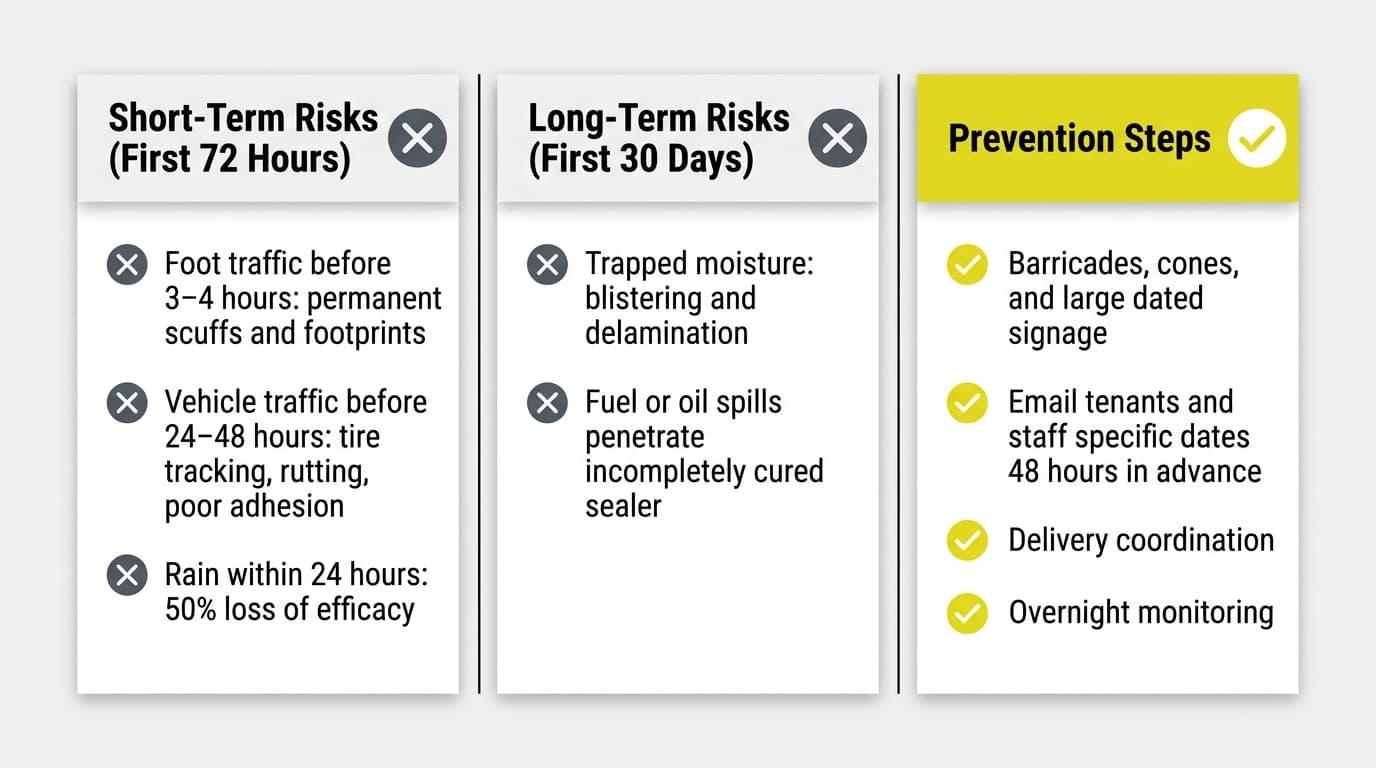
Premature traffic is the #1 cause of sealcoating failure and costly rework. Property managers lose thousands when tenants or vendors ignore drying timelines.
Short-Term Risks (First 72 Hours)
The first three days create visible damage that undermines the entire project.
- Foot traffic before 3–4 hours leaves permanent scuffs and footprints.
- Vehicle traffic before 24–48 hours causes tire tracking, rutting, and poor adhesion.
- Rain within 24 hours can wash away or streak the sealer, resulting in a 50% loss of efficacy and requiring major rework.
Long-Term Risks (First 30 Days)
Incomplete curing creates hidden weaknesses that surface months later.
- Applying a second coat before the first is fully cured traps moisture, causing blistering and delamination.
- Fuel or oil spills penetrate incompletely cured sealer and degrade the asphalt binder beneath.
Prevention Steps
- Use clear barricades, cones, and large, dated signage stating expected reopen times.
- Email tenants and staff specific dates 48 hours in advance.
- Coordinate trash pickup and deliveries so heavy trucks stay off until it’s safe.
- Have your security team or maintenance staff monitor the sealed driveway the first night.
Working With Your Sealcoating Contractor on a Custom Timeline
“How long does sealcoating take to dry?” is ultimately a project-specific question, not one that can be answered solely by generic internet averages.
A good contractor should provide:
- A project-specific reopening plan distinguishing foot traffic, light vehicles, and heavy trucks.
- Evening or weekend scheduling options to minimize business disruption.
- A clear weather policy for rescheduling if temperatures, humidity, or rain forecasts change.
You, as a commercial property manager, also have a role to play. Ensure to ask for:
- Written dry-time expectations in the proposal.
- Day-of updates when the crew finishes and recommends reopening each section.
- Guidance on how to communicate closure to tenants and customers.
The property managers who avoid reopening disasters are the ones who have contractors who provide project-specific timelines, check weather conditions before applying sealer, and communicate proactively throughout.
If you’re managing a commercial property in Southeast Michigan and want a sealcoating partner who takes the guesswork out of reopening schedules, contact Bart’s Asphalt today.
At Bart’s Asphalt, proactive communication and realistic dry-time planning is always part of our service, not an afterthought.
Final Thoughts: Your Asphalt Sealcoating Action Plan
Sealcoating drying occurs in stages under ideal weather conditions, with each stage determining the traffic readiness of your asphalt driveway. But what happens when Michigan’s cool temps and high humidity hit?
Timelines extend, requiring flexible scheduling. A tiered reopening plan that strategically phases access by traffic type protects your asphalt driveway while minimizing tenant disruption.
Choose a contractor that offers project-specific schedules and proactive communication to prevent premature traffic damage, weather delays, and costly rework.
Bottom line: Online “24–48 hour” estimates aren’t reliable in Michigan, even under ideal weather conditions. By partnering with local experts who understand our regional climate, you can reliably schedule your project and execute a plan that protects your pavement investment.
Bart’s Asphalt delivers Michigan-specific sealcoating schedules with guaranteed timelines. We provide customized Michigan schedules for sealcoating projects, backed by decades of local asphalt maintenance experience.
FAQ: Essential Sealcoat Drying and Curing Questions for Property Managers
Can we keep the building open while the lot is closed?
Yes, but plan pedestrian routes in advance. Maintain ADA access and mark clear walking paths away from the wet surface.
What if it rains 6–12 hours after application?
Light rain after the sealer is surface-dry (4+ hours) may cause minor cosmetic issues. Heavy rain within the first 24 hours can wash away the sealer, requiring rework on affected sections.
Do fast-dry additives mean we can reopen the same evening?
Additives help in hot, dry conditions, but don’t override cold weather, high humidity, or heavy truck restrictions. Light foot traffic may be possible, but vehicles still need enough time.
How do we handle tenants who ignore the barricades?
Post clear signage with towing language, notify tenants in writing before the job, and consider extra on-site monitoring on the first night.
Will delivery trucks leave permanent marks on day two?
Light marks may appear, but these typically fade as the protective layer continues to cure. Waiting 48–72 hours minimizes this risk for heavy commercial traffic.