
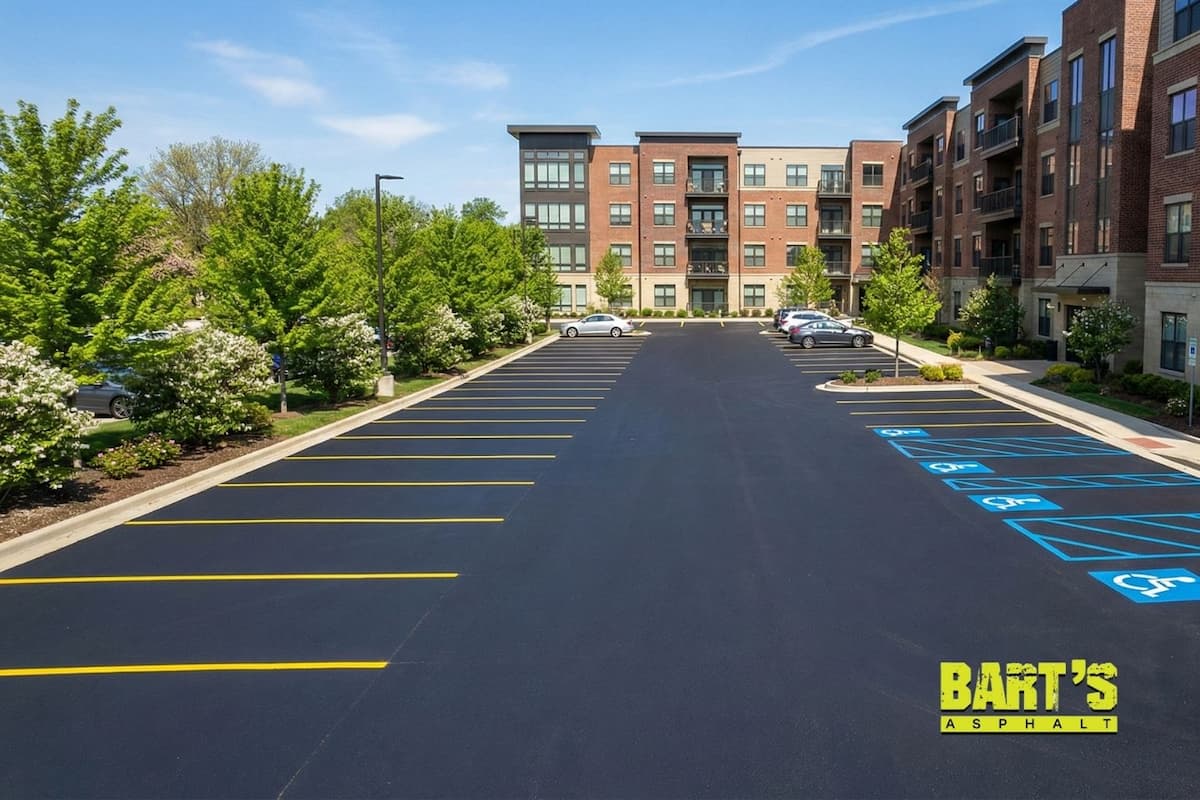
To maintain pavement in Michigan apartment complexes, you need a pavement maintenance plan that includes assessments, regular inspections, and preventive measures. This guide will show you how to do it effectively, whether you manage properties in Detroit, Grand Rapids, or Ann Arbor, considering Michigan’s unique climate and regulations.
Key Takeaways
- Assess pavement conditions using the Pavement Condition Index (PCI) and schedule routine inspections to identify and document damage types early.
- Develop a comprehensive multi-year maintenance plan that prioritizes seasonal tasks and ensures compliance with ADA and stormwater management regulations.
- Budget effectively for maintenance tasks, utilize various funding strategies, and engage qualified contractors to provide high-quality repairs and maximize pavement lifespan.
Assessing the Condition of Your Pavement
The first step in maintaining your pavement’s life is to evaluate its current condition. Utilizing the Pavement Condition Index (PCI) is a standardized method that provides a reliable way to assess pavement conditions and guide maintenance decisions.
This index scores pavement on a scale from 0 to 100, with higher scores indicating better pavement condition. In Michigan, the Pavement Surface Evaluation and Rating (PASER) system can also be used for simpler screenings.
Accurate assessment involves compiling authoritative manuals and standards, such as ASTM D6433 and the Michigan Department of Transportation guidelines; addressing compliance obligations; selecting preventive maintenance solutions; and considering cost and time factors.
These steps help property managers create a strong foundation for their pavement maintenance plan.
Identifying Damage Types
Identifying different types of damage is essential for ensuring the longevity and safety of your parking lot. Common damage types include cracks, potholes, surface wear, drainage issues, and structural failures.
Spring tasks should consist of thorough inspections for new damage, applying patching sealant to protect against water infiltration, and cleaning drains to prevent water pooling. Fall preparations should focus on crack sealing to prevent freeze-thaw damage.
Documenting Findings
Routine inspections can identify minor issues before they escalate into costly repairs or safety hazards. Regular assessments help maintain optimal pavement conditions, extending the lifespan of asphalt surfaces.
Documentation should maintain survey records to track deterioration rates and determine preservation timing. Frequent inspections help identify potential issues early, thereby preventing costly repairs.
Developing a Maintenance Schedule
Creating a multi-year maintenance plan helps prioritize tasks based on pavement condition data and seasonal trends. Utilizing a lifecycle model can predict future roadway conditions, enabling more accurate budgeting.
In Michigan, a pavement maintenance plan should combine PCI-based inspections, timely preservation treatments, ADA compliance, stormwater compliance, winter operations protocols, and lifecycle budgeting aligned with Michigan Department of Transportation and Federal Highway Administration guidance.
Inspecting pavement before winter helps identify cracks and other damage that could worsen with water infiltration and freezing. A detailed maintenance plan typically includes annual inspections and different maintenance tasks scheduled at specific intervals to ensure optimal pavement performance.
This approach ensures pavements are well-maintained year-round, protecting them from the wear and tear of seasonal changes.
Year-by-Year Plan
A year-by-year maintenance plan provides a clear roadmap for maintaining the pavement over time. In the first year, focus on addressing critical repairs and implementing preventive measures, such as crack sealing.
For years one through two, conduct spring and fall inspections, perform crack sealing and filling as needed, and restripe accessible spaces to confirmed slopes. Setting clear timelines for maintenance projects helps residents understand the duration and extent of disruptions, fostering a cooperative community environment.
Seasonal Tasks
Seasonal maintenance tasks are essential for protecting pavement and extending its life through proactive care. In the spring, tasks include sweeping and cleaning drains, mapping distresses, computing PCI, and prioritizing segments based on PCI thresholds, which guide treatment selection and future needs.
In the fall, re-inspect critical areas and schedule crack treatments before the freeze-thaw cycle to reduce water infiltration. This proactive approach ensures the pavement is well-prepared to withstand the challenges each season brings.
Budgeting and Cost Management
Budgeting for asphalt maintenance requires careful consideration of factors such as project scope, materials, and labor costs. Using the Michigan Department of Transportation’s Weighted Average Item Price Report can provide accurate pricing for pavement maintenance tasks.
Thorough assessments of quotes and contracts ensure alignment with budgetary constraints and the community’s maintenance needs. A comprehensive review of paving proposals should focus on specifications, allowances, and warranties to provide clarity and prevent unexpected costs.
Reserve planning should link PCI targets to multi-year budgets, including annual crack treatments, periodic sealcoating, and programmed thin overlays when PCI and distress patterns justify such actions.
Following the Michigan Department of Transportation Capital Preventive Maintenance criteria helps property managers effectively manage costs while maintaining high pavement quality standards.
Funding Strategies
Securing funding is an important part of ensuring the longevity and quality of pavement maintenance projects. Exploring grants, loans, and state funding programs can help secure the financial support needed.
Long-term maintenance projects can be funded through a combination of local government grants, community development funds, and special assessment districts. Practical strategies for utilizing funding include thorough application processes and alignment with community development plans.
Reviewing Quotes and Contracts
Selecting a licensed and insured asphalt contractor is essential for ensuring accountability and protection during the repair process. When choosing a reputable contractor, the contractor should provide a detailed estimate that reflects the actual cost of materials and labor, minimizing unexpected expenses.
Thoroughly evaluate quotes by comparing the services offered, reviewing warranty terms carefully, and considering the contractor’s reputation to ensure informed decisions. Checking the contractor’s credentials, including licensing and insurance, is important for selecting a reliable paving contractor.
Contact multiple providers or reach out to us to compare pricing and request a quote from each before making your decision.
Prioritizing Safety and Compliance
Prioritizing safety and compliance is an important part of any pavement maintenance plan. The methodology includes extracting pavement life-extension, timing, and treatment-selection criteria, while identifying compliance triggers for the Americans with Disabilities Act (ADA) and stormwater management in resurfacing contexts.
Ensuring that all maintenance activities comply with safety regulations and other compliance requirements is essential to the well-being of residents and the longevity of the pavement.
Both ADA and stormwater management regulations must be adhered to during pavement maintenance to ensure safety and environmental protection. Incorporating Low Impact Development techniques can help manage stormwater and enhance the quality of runoff water.
Green infrastructure approaches can significantly reduce stormwater runoff from asphalt surfaces, thereby improving local water quality.
ADA Compliance
Adherence to ADA regulations is essential for all asphalt paving projects and affects accessibility for individuals with disabilities.
Key ADA compliance requirements include ensuring asphalt surfaces are stable and slip-resistant; surfaces should not have significant level changes; accessible routes should maintain a minimum width of 36 inches; and areas designed for two wheelchairs require at least 44 inches of width.
The layout of accessible spaces should provide compliant widths and access aisles; slopes must be verified after overlays, and striping should occur according to standards to maintain accessibility.
Beyond accessible spaces and curb ramps, this compliance also extends to maintaining clearly marked fire lane striping, as required by local Michigan municipal codes, to ensure emergency vehicle access at all times.
Need ADA-compliant striping or accessible space markings? Our line striping services ensure your lot meets all federal requirements.
Stormwater Management
Implementing green infrastructure techniques, such as bioretention areas and permeable pavements, can help manage stormwater effectively on asphalt surfaces. Utilizing Low Impact Development strategies can minimize runoff and improve overall water quality in urban areas.
Opportunities at resurfacing include enabling bioretention islands or other green infrastructure retrofits to reduce runoff and improve water quality during parking lot rehabilitation. Incorporating these techniques ensures compliance with the Michigan Department of Environment, Great Lakes, and Energy expectations.
Implementing Preventive Maintenance Techniques
Implementing preventive maintenance techniques is essential for maximizing the life of your pavement. Surface distress in pavements can include various forms of cracking, potholes, and raveling, which indicate underlying structural issues.
Common signs of pavement damage include alligator cracking, fatigue failure, and potholes, which can cause severe vehicular damage if left unrepaired. Utilizing preventive maintenance techniques, such as crack sealing, can significantly prolong the lifespan of asphalt pavements.
Engaging professional asphalt contractors guarantees high-quality repairs and long-lasting pavement solutions. Professional assessments by qualified contractors can help identify specific pavement issues and plan appropriate maintenance strategies.
Establishing a maintenance schedule can add up to 10 years to the life of asphalt pavement, helping avoid costly emergency repairs.
Pothole Repair and Patching
Immediate pothole repair is a critical reactive measure to prevent rapid deterioration and safety hazards. For Michigan apartment complexes, this work is especially vital after winter freeze-thaw cycles.
Methods include cut-and-replace patching, which provides a durable, long-term fix, or infrared asphalt patching, which heats the existing asphalt to create a seamless bond. This makes infrared repair an ideal option for fixing potholes quickly with minimal disruption to tenants and their vehicles.
Need potholes repaired before they become a liability? Contact Bart’s Asphalt for same-day estimates on infrared and cut-and-replace patching
Crack Sealing and Filling
Crack sealing and filling are essential techniques for maintaining asphalt pavement. Effective crack sealing requires cleaning and drying the cracks to ensure proper adhesion of the sealant.
Choosing the proper sealant is important, as it should depend on the climate and the extent of pavement movement. Routed sealing should be used for working cracks, and overband or mastic for wider joints. Typical pavement life extension ranges from 2 to 5 years when timed well.
Don’t wait for freeze-thaw season to cause costly damage. Schedule crack sealing with Bart’s Asphalt before winter arrives.
Sealcoating and Resurfacing Options
The most common preventive maintenance is sealcoating, which involves applying a protective emulsion sealer. This is vital in Michigan as it shields the asphalt from UV rays, de-icing salts, and water infiltration, and is typically recommended every 2 to 3 years to extend pavement life and improve appearance.
For more advanced surface damage, thin overlays through resurfacing can restore the pavement’s smoothness and performance. Fog seals, a lighter application, can rejuvenate aging pavements by improving flexibility. Thin-lift asphalt overlays can typically last about 9 years when applied to sound structures using good practices.
Protect your investment with professional sealcoating. Request a quote from Michigan’s trusted asphalt experts, here at Bart’s Asphalt.
Communicating With Residents
Maintaining clear communication with residents about maintenance activities is essential for overall property satisfaction and minimizes disruptions. Utilize various communication channels such as emails and newsletters to keep residents informed about ongoing maintenance and expected disruptions.
A community website or resident portal can centralize important information regarding maintenance, events, and policies. Using multiple formats, such as newsletters and text alerts, accommodates different resident communication preferences.
Proactively sharing information about project impacts can reduce misunderstandings and resident complaints. Setting clear timelines for project completion helps reduce anxiety about ongoing work. Explaining the reasons behind delays helps residents understand and be more patient.
Effective Communication Methods
Email is often the preferred method for community updates due to its trackability and popularity among residents. Using multiple communication channels, such as emails and newsletters, can improve engagement and ensure residents are aware of maintenance updates.
Incorporating platforms such as social media and community boards can effectively reach a broader audience. This approach ensures that all residents are kept in the loop, regardless of their preferred communication method.
Managing Resident Expectations
Clearly communicating project timelines and potential impacts can help manage residents’ expectations and minimize complaints. Temporary signage can guide residents around construction zones and through adjusted parking and traffic patterns, minimizing confusion and frustration while minimizing disruption.
When expectations are managed effectively, property managers help create a positive community atmosphere and ensure maintenance work proceeds smoothly.
Winter Maintenance Strategies
Winter in Lansing or Kalamazoo presents unique challenges for maintaining pavement, from snowplow damage to de-icing salt impacts.
Implementing the following measures can help protect pavement and reduce environmental impact and costs: implement a plow-first policy, optimize salt use, and inspect pavement before winter to identify cracks and other damage that could worsen with water infiltration and freezing.
These proactive measures protect the pavement better against harsh winter conditions, extending its lifespan for years to come.
Protecting islands, curbs, and speed bumps from snow removal equipment is important. Damage prevention measures should include staking islands, curbs, and speed bumps; keeping blades straight when stacking; and avoiding catching edges and over-scraping on overlays and seals.
These steps help ensure that snow removal activities do not inadvertently cause pavement damage, which can be costly to repair.
Plowing and Salting Procedures
Implementing a plow-first policy can enhance efficiency and safety during winter weather conditions. Plowing before salting can reduce the amount of salt needed by more than a factor of six compared to salting 2 cm of snow, thereby cutting costs and environmental load.
Using plastic shovels or snow blowers with rubber blades can help reduce surface damage to asphalt during snow removal. Sealing cracks before winter helps avoid water freezing inside the pavement, which can worsen the condition of existing cracks.
Protecting Pavement During Winter
Snow removal equipment can pose risks to pavement features, so protective measures should be taken to mitigate damage. Utilizing protective barriers around sensitive pavement areas can minimize damage from snow removal and prolong pavement life.
Implementing these strategies can significantly extend the life of your pavement, even in harsh winter conditions, keeping your parking lot ready for residents year-round.
Leveraging Professional Services
Engaging experienced asphalt contractors can ensure high-quality pavement repair and maintenance. Professional assessments by qualified contractors help identify specific pavement issues and determine appropriate maintenance strategies.
Leveraging professional services guarantees that repairs meet industry standards and enhance pavement durability.
Milling and resurfacing are effective techniques that can rejuvenate aged asphalt surfaces while maintaining structural integrity. Professional contractors bring expertise and precision to the maintenance process, ensuring that the pavement remains in optimal condition.
Choosing the Right Contractor
Contractors with a strong history of completed projects similar to yours are more likely to deliver satisfactory results. Reading reviews and testimonials from previous clients can provide insight into a contractor’s reliability and work quality.
Selecting a contractor with a strong history in asphalt maintenance can help better manage complex pavement needs for your apartment complex.
Scheduling Regular Inspections
Conducting regular inspections helps assess your pavement’s current condition using metrics such as the Pavement Condition Index (PCI).
Seasonal tasks should be incorporated into the maintenance schedule, such as scheduling crack treatments before freeze-thaw cycles. At Bart’s Asphaalt, we conduct inspections and perform high-quality repair work.
Summary
A comprehensive pavement maintenance plan is essential for ensuring the longevity and safety of your apartment complex’s asphalt surfaces. From assessing the condition of your pavement and identifying damage types to developing a maintenance schedule and securing funding, each step is important.
Prioritizing safety and compliance, implementing preventive maintenance techniques, and leveraging professional services further enhance the effectiveness of your maintenance efforts.
With this roadmap, you’ll be well-equipped to manage your apartment complex’s pavement, ensuring it remains in top condition for years to come.
Frequently Asked Questions
What is the Pavement Condition Index (PCI)?
The Pavement Condition Index (PCI) is a standardized rating system that evaluates pavement conditions on a scale from 0 to 100, helping to inform maintenance decisions effectively. A higher PCI score indicates better pavement quality, ensuring efficient resource allocation for repairs.
Why is it important to document findings during pavement inspections?
It is essential to document findings during pavement inspections as it enables tracking deterioration rates and allows for timely preservation, ultimately preventing minor issues from turning into expensive repairs.
How can property managers secure funding for pavement maintenance projects?
Property managers can secure funding for pavement maintenance projects by exploring grants, loans, state funding programs, and community development funds. These financial resources can provide the necessary support for such initiatives.
What is the difference between crack sealing and crack filling?
While often used together, they serve different purposes based on the type of crack. Crack sealing is a preventive measure for active, narrower cracks (typically 1/4″ to 3/4″ wide) using flexible, rubberized material that expands and contracts with the pavement during Michigan’s freeze-thaw cycles.
Crack filling is generally a more temporary fix for larger, less active “alligator” cracks, using asphalt emulsion to stop immediate water infiltration. Still, it doesn’t offer the same long-term flexibility as sealing.
What preventive maintenance techniques are essential for asphalt pavements?
Crack sealing, sealcoating, pothole repair, thin overlays, and routine cleaning and inspections are essential preventive maintenance techniques for asphalt pavements. Implementing these measures helps prevent water infiltration and prolongs pavement lifespan.
How should property managers communicate maintenance activities to residents?
Property managers should communicate maintenance activities to residents through multiple channels, including emails, newsletters, and resident portals, to ensure everyone is well-informed about ongoing maintenance and any expected disruptions. Contact residents well in advance of major work to allow adequate preparation time.
Ready to Protect Your Apartment Complex’s Pavement?
Bart’s Asphalt provides comprehensive pavement maintenance services for apartment complexes throughout Michigan—from Ann Arbor to Kalamazoo and everywhere in between. Our experienced team can assess your parking lot’s condition and develop a customized maintenance plan that fits your budget.