
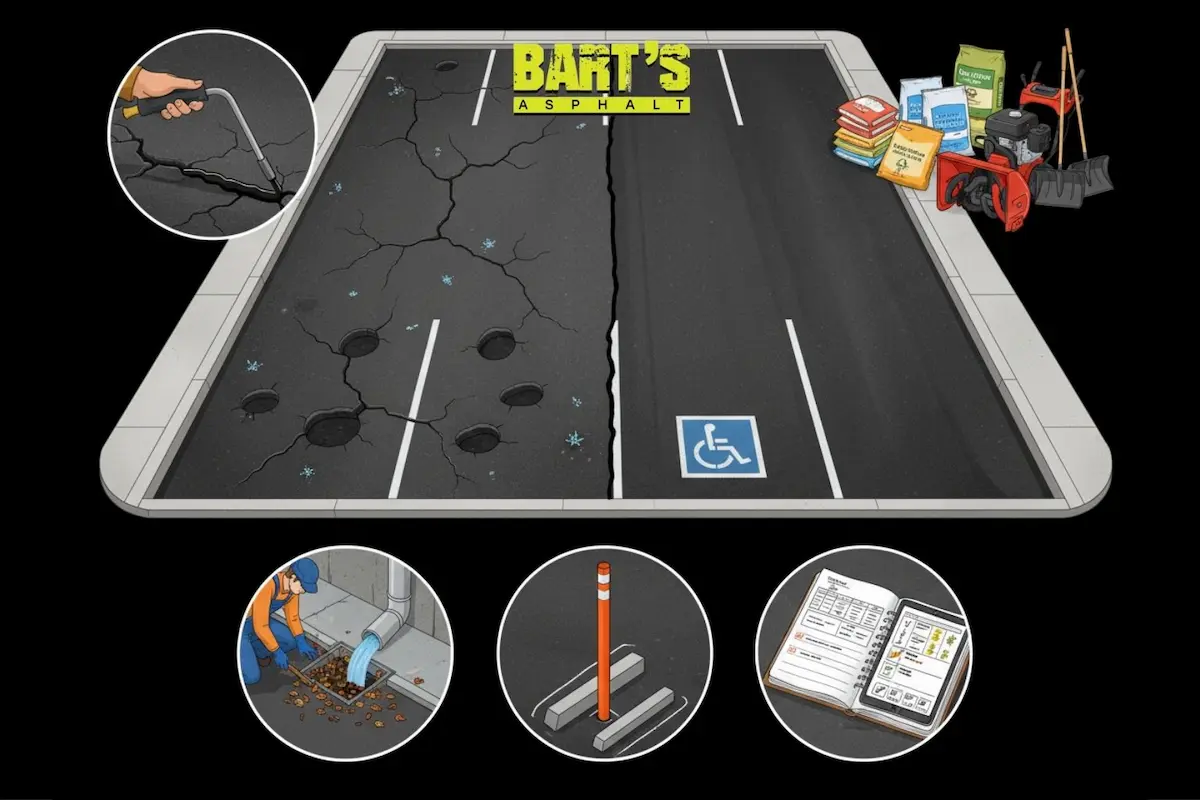
Pre-winter lot prep is a preventative maintenance plan to protect property, which involves inspecting and repairing pavement, sealcoating, clearing drainage systems, staking for plows, and securing snow removal contracts.
This guide explains why it’s critical to repair pavement first, how seal coating protects asphalt, and what to include in a snow removal contract to ensure your property is safe and functional all winter.
Why Is It Critical to Inspect and Repair Pavement Before Winter?
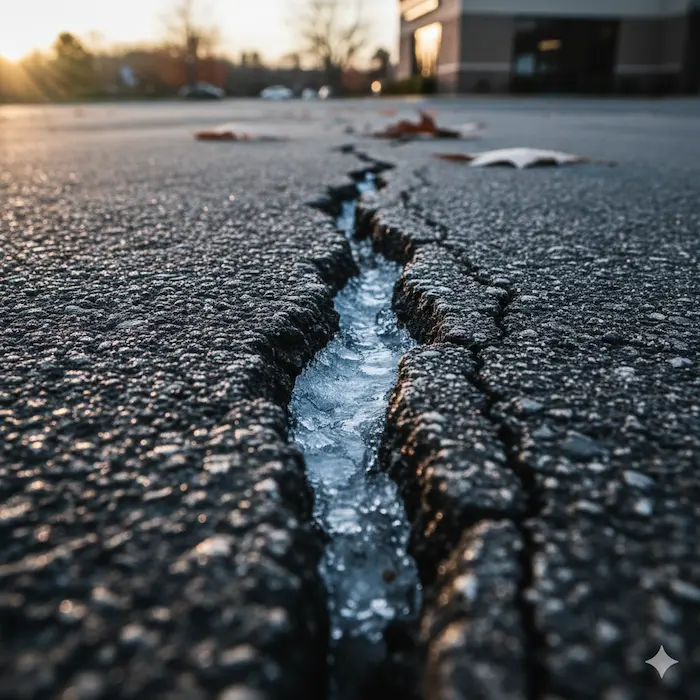
It is critical to inspect and repair pavement before winter to prevent the ‘freeze-thaw cycle’ from turning minor flaws into major structural failures.
When water penetrates cracks—especially those 1/4 inch or wider—it freezes, expands, and breaks the pavement apart from within. This repeated process all winter expands small cracks into large potholes and causes widespread alligator cracking.
Addressing these vulnerabilities in the fall stops water infiltration and is the most cost-effective way to prevent expensive, large-scale repairs in the spring.
The most common pre-winter repairs involve crack sealing and pothole patching. Using a high-quality, flexible crack filler to seal cracks prevents the initial water infiltration. For existing potholes or extensively worn areas, infrared asphalt restoration can be used to heat and seamlessly repair the damaged surface, ensuring it remains intact.
Budgeting for sealcoating your commercial parking lot as part of your seasonal maintenance plan can help you anticipate these costs before winter sets in.
These preventative repairs are essential for maintaining the pavement’s integrity and safety, as even small potholes can become hazardous liabilities once hidden by snow.
Don’t wait for winter damage to happen. Schedule your pre-winter pavement inspection with Bart’s Asphalt today and prevent costly spring repairs.
How Does Seal Coating Protect Pavement During Winter?
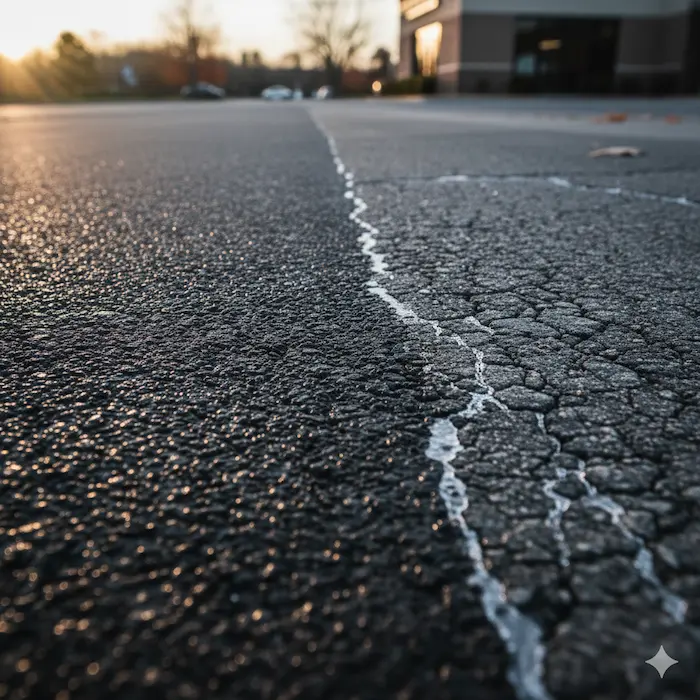
Sealcoating protects asphalt pavement by providing a flexible, protective barrier that shields it from harsh winter elements and de-icing chemicals.
Asphalt is a petroleum-based material that becomes brittle in cold weather; a high-quality seal coat maintains its flexibility. It also blocks UV rays and, most importantly, prevents water and corrosive de-icing salts from penetrating the surface and degrading the asphalt binder.
This preventative layer is essential for reducing long-term maintenance costs, as it mitigates chemical damage and stops the freeze-thaw cycle before it starts
Timing is critical for this protection, as seal coat must be applied in early fall. The material requires ambient temperatures to be consistently above 50°F (10°C) to cure properly and form a durable bond. If applied too late, it will not cure and will quickly fail. Scheduling this service well before the first freeze ensures the barrier is fully set and provides the intended season-long protection.
Why Must Drainage Systems Be Cleared Before Winter?
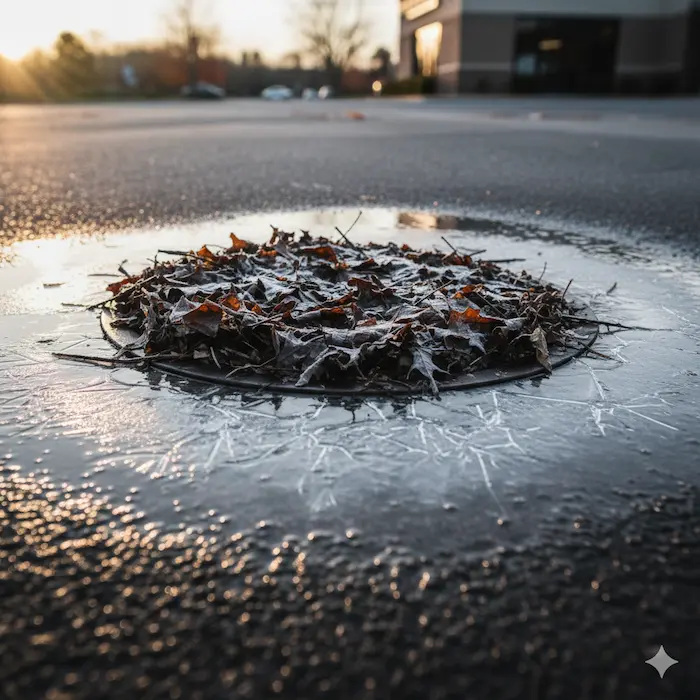
Property managers must clear drainage systems before winter to prevent standing water from freezing into large ice slicks and forming ice dams that can cause water damage and structural failure. When drainage systems become clogged with dirt, leaves, and debris, water cannot flow away from the surface.
This standing water then freezes during cold weather, creating hazardous ice patches and exerting pressure against pavement, curbs, and building foundations. According to the American Society of Civil Engineers, freeze-thaw cycles in standing water are one of the primary causes of pavement deterioration and foundation damage in cold climates.
Clearing obstructions from drains and catch basins is essential because these clogs lead to standing water, which then freezes into ice and causes moisture damage to adjacent structures.
Check and clear all dirt, leaves, and debris from drains, catch basins, and storm drains to channel excess water away from high traffic areas and prevent surface flooding.
Remove debris from gutters and downspouts to prevent ice dams and flooding, which can cause severe water damage to buildings and compromise the water supply to proper drainage systems.
In our facility management experience, properties that maintain clear drainage systems throughout fall experience 60% fewer ice-related incidents and water damage claims than those that wait until winter preparation activities begin.
Prevent ice dams and water damage this winter. Contact Bart’s Asphalt for comprehensive drainage system inspection and clearing services.
How Does Staking Help Guide Snow Removal Operations?
Staking helps guide snow removal operations by providing visible markers that i
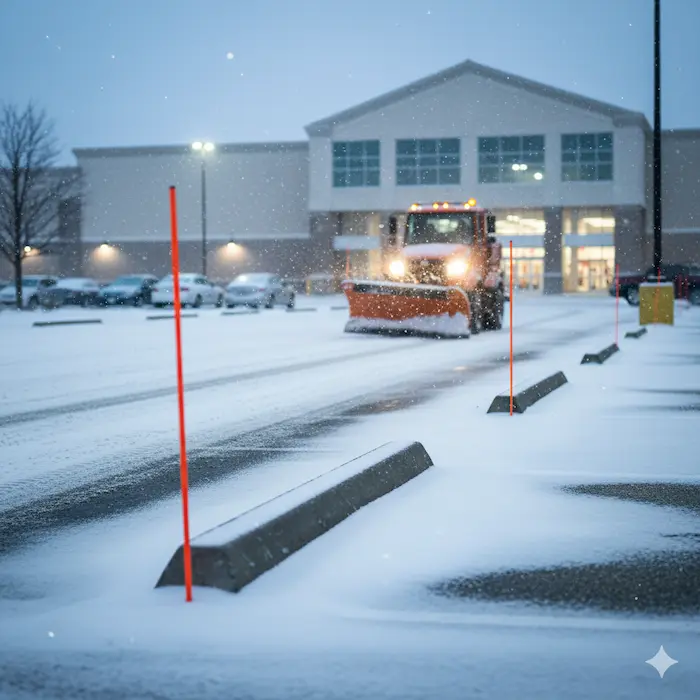
dentify critical boundaries, curbs, and hidden obstacles under snow.
Installing fiberglass, reflective snow stakes creates a clear visual guide for plow drivers to navigate safely through parking lots, driveways, and service areas during storms when landmarks disappear.
These markers prevent costly property damage by ensuring plow equipment stays within designated areas and avoids striking curbs, drainage structures, catch basins, fire hydrants, and landscaping features obscured by snow.
Property managers should place stakes approximately 12 inches from boundaries and fixed obstacles to provide plow operators with adequate clearance while maintaining visibility throughout winter.
Space markers at regular intervals, typically every 15 to 20 feet along curbs and edges, to create a continuous visual guide that remains effective even during heavy snowfall and low-light conditions.
The Snow & Ice Management Association (SIMA) recommends using brightly colored, reflective stakes at least 48 inches tall to ensure they remain visible above typical snow accumulation depths, an important step that significantly improves snow removal efficiency and reduces the risk of equipment damage and liability claims in spring.
What Should Be Included in a Snow Removal Contract?
A snow removal contract must include specific performance triggers, liability protections, and service frequency definitions to ensure commercial properties receive timely, effective winter maintenance.
In our 25 years of facility management, we have found that a vague contract is the single greatest source of winter liability and operational disruption.
Our analysis of client contracts shows that the most effective ones must include explicit service triggers (e.g., plow activation at 2-inch snow accumulation, de-icing at 1/4-inch ice formation), liability and insurance requirements with minimum coverage amounts, and performance guarantees specifying response times for high-traffic areas.
The contract should clearly define which de-icing materials will be used, such as rock salt, calcium chloride, or ice melt products, and specify application rates per the manufacturer’s guidelines to avoid environmental damage while ensuring effectiveness.
Include weather-related clauses that address service expectations during severe storms and clarify equipment requirements, including shovels, snow blowers, and commercial spreaders that the provider will use.
For commercial properties with heavy foot traffic, performance guarantees are essential due to slip-and-fall liability concerns. Specify that walkways, entrances, and handicapped spaces must be cleared within a defined timeframe after each storm.
Having a signed contract with a professional, insured snow removal provider before the first freeze ensures your property remains safe and accessible, and having this plan in place serves as an ideal time to prepare your winter operations to do list.
Need help preparing your property for winter? Bart’s Asphalt provides complete pre-winter preparation services, from pavement repairs to staking and contractor coordination.
What De-Icing Supplies Should Be Stockpiled?
Property managers should stockpile key de-icing supplies and equipment before the first freeze to avoid shortages and ensure readiness when freezing temperatures hit:
- De-icing Agents: Bulk rock salt (sodium chloride) for parking lots and driveways, and calcium chloride or magnesium chloride for sidewalks and high traffic areas where temperatures drop below 15°F. Ice melt products should be ordered early from suppliers to secure inventory before storm season begins.
- Application Equipment: Commercial-grade push spreaders for sidewalks and pedestrian areas, and truck-mounted spreaders for large parking lots. Having backup equipment reduces the risk of operational delays during critical winter events.
- Snow Removal Equipment: A supply of ergonomic snow shovels for detailed work, snow blowers for medium-sized areas, and ice choppers for breaking up stubborn ice formations that resist chemical treatment.
To effectively manage snow and ice during harsh winter conditions, clear snow before applying de-icers, as snow can insulate ice and hinder the melting agents’ effectiveness. Wait to apply de-icer until after initial snow removal for maximum efficiency.
Apply de-icer evenly according to the manufacturer’s guidelines to avoid environmental damage and ensure effectiveness. Over-application wastes product and can damage vegetation, while under-application leaves surfaces hazardous.
Document the application of de-icing agents in your winter operations logbook to track effectiveness and compliance with safety standards, which is crucial for liability protection if slip-and-fall incidents occur.
The Snow & Ice Management Association recommends maintaining detailed application records, including timestamps, product types, quantities used, and weather conditions to establish due diligence in winter maintenance.
Why Is Updating Line Striping Important for Winter Safety?
Updating line striping before winter is important for maintaining visibility and preventing accidents when snow, ice, and cold weather obscure pavement markings.
Property managers must inspect all line striping and pavement markings to ensure they have high-contrast visibility, which is necessary for guiding drivers and pedestrians safely through parking lots during snowy or low-light conditions.
Faded or worn markings become completely invisible under even light snow cover, creating confusion about traffic flow, parking boundaries, and pedestrian walkways that increases the risk of collisions and liability claims.
High-visibility, reflective paint is recommended for winter conditions in high traffic areas, particularly for critical zones including handicapped spaces, fire lanes, loading zones, and pedestrian crosswalks.
According to Federal Highway Administration standards, pavement markings must maintain a minimum retroreflectivity level to be effective in all weather conditions; markings that fall below this threshold should be refreshed in the fall before winter sets in.
Clear and visible markings help prevent accidents, keep your parking lot organized, and demonstrate due diligence in property maintenance, which can protect against negligence claims if incidents occur during the winter months.
What Is the Purpose of a Winter Operations Logbook?
The purpose of a winter operations logbook is to document all snow removal activities, application of de-icing agents, and maintenance performed during winter events to establish accountability and mitigate slip-and-fall liability.
This practice is a best-in-class standard recommended by the Snow & Ice Management Association (SIMA) as the primary method for tracking a contractor’s effectiveness and demonstrating due diligence in the event of legal claims arising from weather-related incidents.
Maintaining a detailed record that includes timestamps, weather conditions, specific actions taken, materials used, and equipment deployed creates a comprehensive defense against allegations of inadequate winter preparation or negligent property maintenance.
A winter operations logbook allows property managers to evaluate the effectiveness of their winter preparation plan and make informed decisions about future activities and contract adjustments.
Track when freezing temperatures occurred, when snow removal was triggered, how drainage systems performed during freeze-thaw cycles, and whether sealcoating and crack sealing investments prevented pavement damage.
This documentation helps identify patterns, such as recurring drainage issues in specific areas or inadequate coverage in high-traffic zones, that indicate where to implement additional protective measures.
The logbook serves as both a risk management tool and a continuous improvement resource, ensuring that your property remains safe and well-maintained throughout winter while building institutional knowledge that improves operations season after season.
In our experience managing commercial properties, clients who maintain comprehensive winter logbooks resolve liability claims 80% faster and experience significantly lower insurance premiums due to demonstrated risk mitigation practices.
Frequently Asked Questions
What is the ideal temperature to apply asphalt seal coat in the fall?
The ideal temperature to apply asphalt seal coat is when ambient air and pavement surface temperatures are consistently above 50°F (10°C) during the day and not expected to drop below 50°F at night for at least 48 hours after application.
This temperature threshold ensures proper curing and bonding before cold weather arrives.
Most sealcoating should be completed by mid-October in northern climates before the first freeze occurs, as applying seal coat when temps drop below this range will result in inadequate curing and premature failure of the protective barrier.
Can I use infrared asphalt repair in cold weather?
Infrared asphalt repair can be performed in cold weather, but its effectiveness decreases significantly when temperatures drop below 40°F.
The infrared heating process requires the existing asphalt to reach approximately 300°F to become pliable and bond with new material, which becomes increasingly difficult as ambient temperatures fall.
Most professional pavement contractors recommend completing infrared repairs in fall before winter sets in, as cold-weather repairs take longer, require more energy to heat the asphalt properly, and may not achieve the seamless bond necessary to prevent water penetration during freeze-thaw cycles.
What’s the difference between rock salt (sodium chloride) and calcium chloride for de-icing?
Rock salt (sodium chloride) is effective and economical for de-icing parking lots and driveways when temperatures remain above 15°F, but it stops working as temps drop below this threshold and can damage vegetation and concrete surfaces.
Calcium chloride works effectively at much lower temperatures, down to -25°F, making it the preferred choice for extreme cold weather conditions. It generates heat as it dissolves, which accelerates ice melt.
While calcium chloride costs more than rock salt, property managers should stock both: use rock salt for routine applications in moderate cold, and reserve calcium chloride for high-traffic areas, extreme cold snaps, and situations where rapid ice melt is critical for safety.
How far apart should snow stakes be placed?
Snow stakes should be placed approximately 15 to 20 feet apart along curbs, edges, and boundaries to create a continuous visual guide for plow operators during storms. In areas with complex layouts, such as islands, catch basins, or transitions between parking lot sections and driveways, reduce spacing to 10 feet to provide additional guidance.
Stakes must be positioned about 12 inches away from the actual boundary or obstacle to give plow equipment adequate clearance while remaining visible, and they should extend at least 48 inches above ground level to remain visible above typical snow accumulation depths throughout the winter months.
Does sealcoating make surfaces more slippery in winter?
Correctly applied and fully cured sealcoating does not make surfaces more slippery in winter; in fact, it can improve traction compared to worn, polished asphalt surfaces.
However, seal coat applied too late in the fall and that does not cure completely before the first freeze can remain tacky and become slippery when wet or when ice forms on the surface.
This is why timing is critical: sealcoating must be applied in early fall when temperatures will remain above 50°F for at least 48 hours to cure properly.
Once cured, the seal coat creates a protective barrier that maintains the asphalt’s texture and prevents the surface deterioration that actually causes slippery conditions during freeze-thaw cycles, making proper pre-winter lot prep essential for season-long safety.
Winter is coming. Is your property ready? Partner with Bart’s Asphalt for comprehensive pre-winter lot preparation that protects your investment and keeps your property safe all season long.