

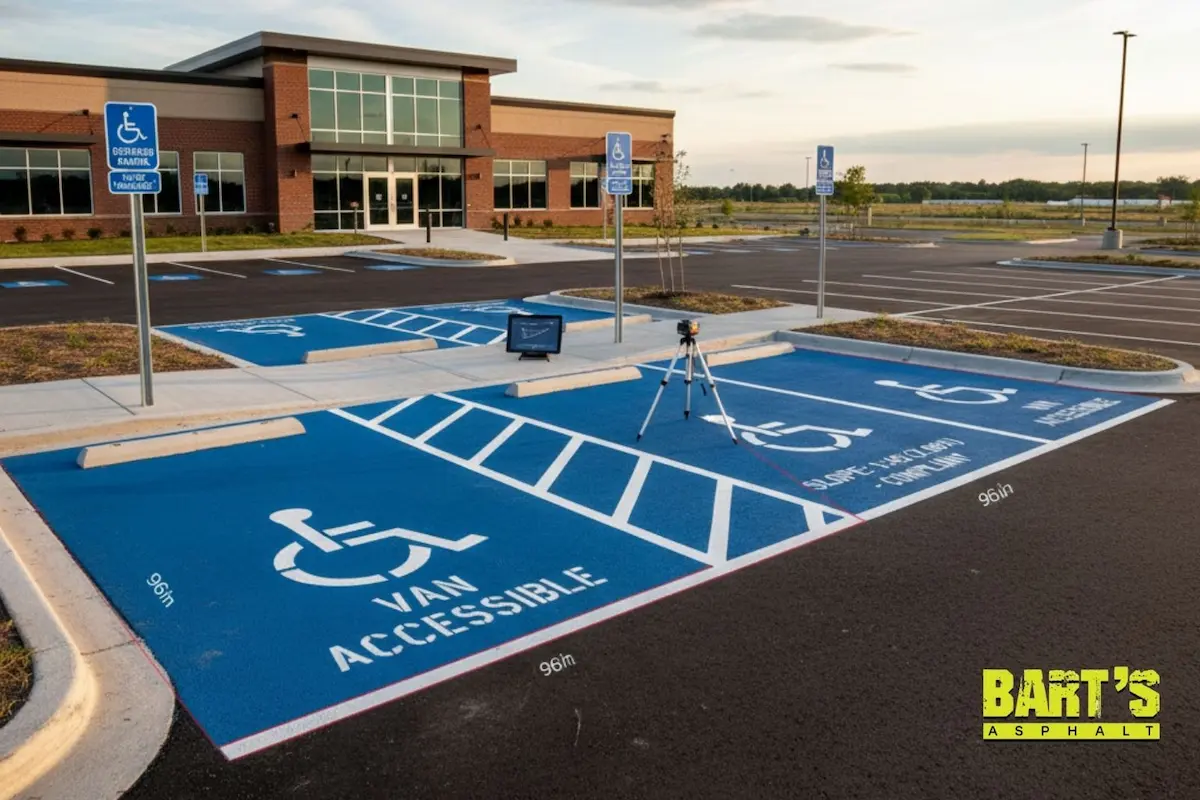
Many property owners assume repainting accessible parking spaces is as simple as refreshing faded lines. In reality, ADA handicap parking painting requires far more than applying new paint.
Federal accessibility standards establish strict requirements for parking space dimensions, access aisle markings, pavement symbols, signage, colors, and the number of accessible spaces a property must provide.
Failing to meet these standards can create safety concerns, accessibility barriers, and costly compliance issues for commercial property owners and facility managers. Proper parking lot striping requires careful planning, accurate measurements, and a thorough understanding of current ADA regulations.
In this guide, we’ll explain the essential ADA handicap parking painting requirements, clarify common compliance misconceptions, and outline the standards every property owner should understand before restriping an accessible parking lot.
Key Takeaways
- ADA parking spaces must meet specific requirements for dimensions, striping, signage, and accessibility.
- White pavement markings are required, while blue serves only as a supplemental color.
- Every accessible parking space must include a properly marked, unobstructed access aisle.
- The required number of accessible spaces depends on each parking lot’s total capacity.
- Pavement slope, surface condition, and accessible routes all affect ADA compliance.
- Regular inspections and timely restriping help prevent compliance issues and improve safety.
- Professional ADA parking painting helps ensure your parking lot meets current federal standards.
ADA Parking Space Dimensions You Need to Know
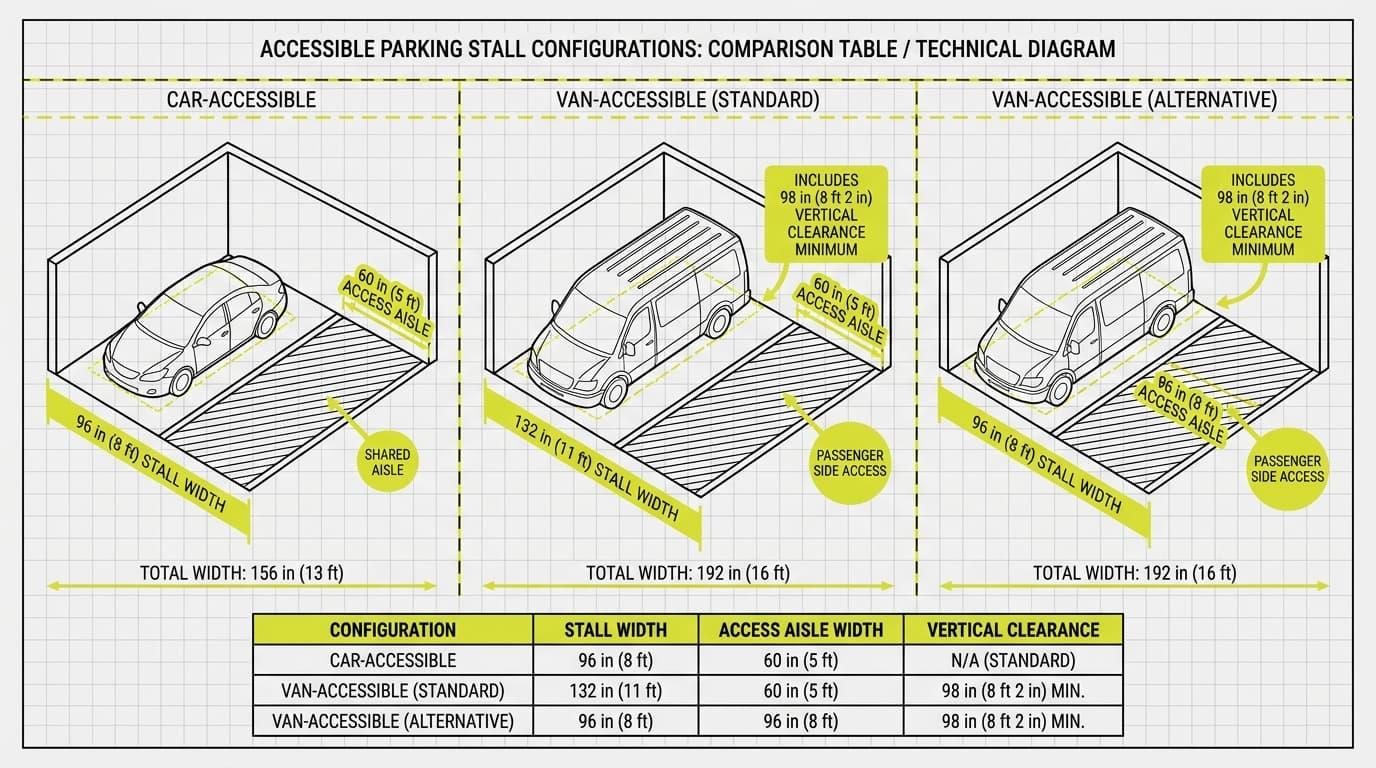
Before you restripe your parking lot, it’s important to understand Section 502 of the 2010 ADA Standards for Accessible Design, which establishes the federal minimum dimensions for accessible parking spaces and access aisles.
Car-Accessible vs. Van-Accessible Stall Widths
Accessible parking spaces are not all the same size. The ADA sets different minimum dimensions for standard car-accessible and van-accessible spaces to provide enough room for people to enter, exit, and safely use mobility devices.
A standard accessible space must be at least 96 inches (8 feet) wide. Van-accessible spaces require additional clearance and can follow one of two approved layouts under ADA Standards for Accessible Design. Each van accessible parking space also needs a minimum vertical clearance of 98 inches where overhead obstructions may apply.
The table below compares the required stall widths and access aisle widths for each configuration.
| Space Type | Stall Width | Access Aisle Width |
|---|---|---|
| Car-Accessible | 96 in (8 ft) | 60 in (5 ft) |
| Van-Accessible (standard) | 132 in (11 ft) | 60 in (5 ft) |
| Van-Accessible (alternative) | 96 in (8 ft) | 96 in (8 ft) |
Access Aisle Requirements
Access aisles are just as important as the parking spaces themselves. Every accessible parking spot must include an adjacent access aisle that provides enough room for wheelchair users and others with mobility devices to enter and exit safely. According to accessibility standards from the US Access Board, access aisles must be clearly marked and cannot be used as parking spaces.
Two accessible spaces may share a single access aisle when the aisle is located between them. This layout helps make efficient use of available parking while still meeting ADA striping guidelines. No matter the layout, markings and boundaries should discourage parking in the aisle area. The access aisle must remain unobstructed and provide a clear path between the parking space and the accessible route.
Layout Requirements
Clear, visible striping that remains easy to see against the parking surface is just as important as the layout itself. Faded or missing aisle markings can leave an otherwise compliant parking space out of compliance.
Pavement markings must provide strong contrast so accessible markings stay easy to identify. Regular inspections and restriping help keep markings easy to see and ensure your parking lot continues to meet ADA standards.
Choosing the Correct Colors for ADA Handicap Parking Painting
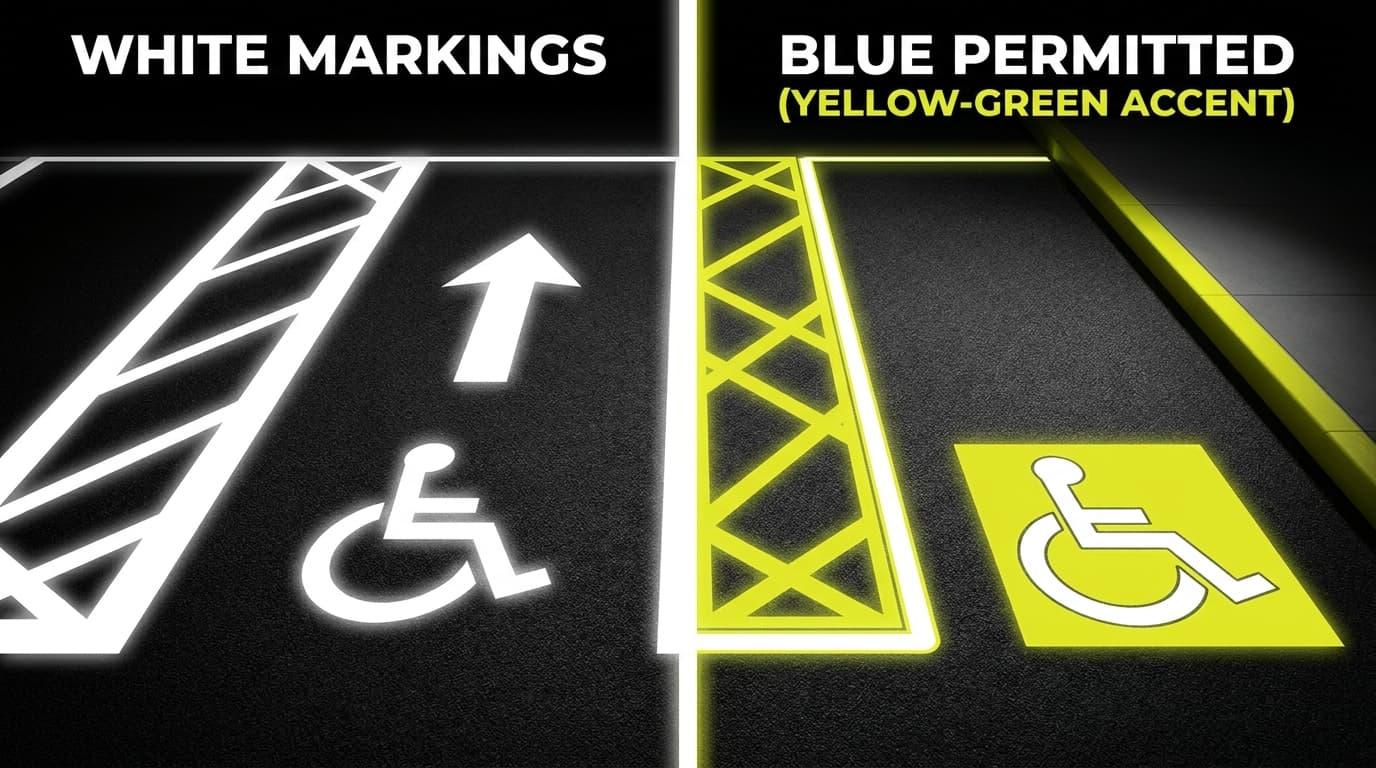
Choosing the correct pavement marking colors is essential for ADA compliance. The Manual on Uniform Traffic Control Devices (MUTCD) establishes the federal standards for pavement markings, including accessible parking spaces. Understanding these requirements helps you create a parking lot that is both compliant and easy to navigate.
White Is the Required Color, Blue Is Optional
One of the most common ADA handicap parking painting mistakes is using blue paint as the primary marking color. According to the Federal Highway Administration, white is the required color for accessible parking pavement markings. Blue is optional and may only be used to supplement the required white markings.
Following the correct color requirements helps keep your parking lot compliant with federal standards. While some states publish their own striping guidance, many—including Michigan—follow the MUTCD as the primary standard for pavement marking colors.
Here’s how the colors are typically used:
White is required for:
- Parking stall boundary lines
- Access aisle border lines
- Directional arrows along accessible routes
- The outline of the International Symbol of Accessibility (ISA)
Blue may be used for:
- Crosshatch markings inside access aisles
- The background behind the ISA symbol
- Curbs next to accessible parking spaces
Using the correct colors is only one part of ADA compliance, but it helps ensure your parking lot meets current standards and remains easy for visitors to navigate.
Bart’s Asphalt provides ADA-compliant parking lot striping using industry-approved layouts, colors, and materials for commercial properties throughout Michigan. Every project is completed with careful attention to ADA requirements, helping you keep your parking lot safe, accessible, and easy to navigate.
Painting the International Symbol of Accessibility (ISA) Correctly
The ISA is required both on the pavement and on posted signage. Together, these markings help drivers quickly identify accessible parking spaces while ensuring the parking lot meets ADA requirements.
Pavement Symbol Dimensions
The ISA must be painted inside every accessible parking space. According to the MUTCD ISA pavement symbol dimensions, the minimum pavement symbol size is 28 inches high by 24 inches wide. Using a smaller symbol may leave the space out of compliance, even if the rest of the striping meets ADA requirements.
Sign Placement Requirements
Accessible parking signs are just as important as the pavement markings. Markings on the parking surface alone are not enough and do not replace the required above-ground sign. To remain compliant:
- Mount the ISA sign at least 60 inches from the ground to the bottom of the sign.
- Install a “Van Accessible” supplemental sign directly beneath the ISA sign for every van-accessible space, as outlined in the MUTCD Chapter 2B van accessible regulatory signs.
- Keep signs outside the access aisle so they remain visible, do not obstruct wheelchair users, and can still be identified along the route to the accessible entrance.
These placement requirements help ensure the signs remain visible even when vehicles are parked.
Correct symbol sizes, sign heights, and placement all work together to create a compliant accessible parking space. Verifying these details before restriping helps avoid costly corrections and reduces the risk of ADA compliance issues later.
How Many Accessible Spaces Does Your Parking Lot Need?
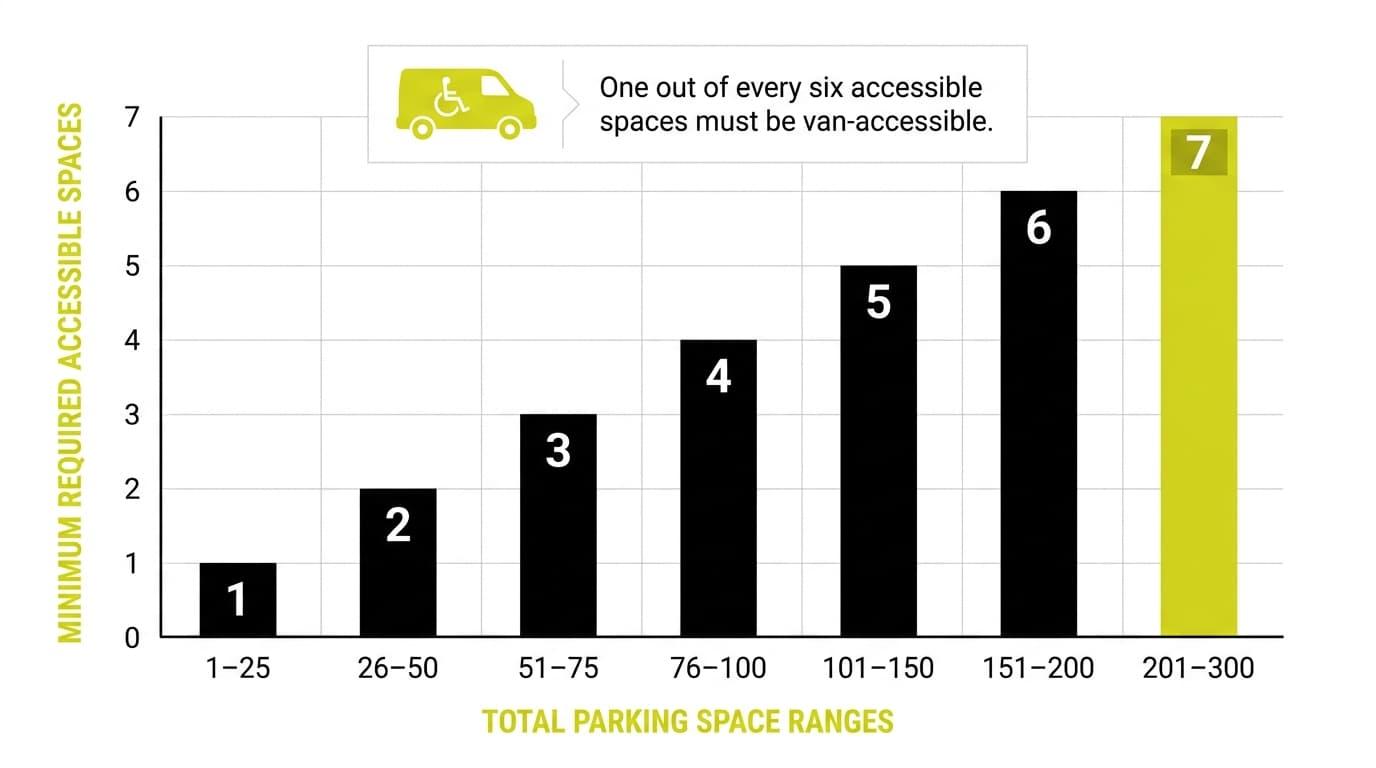
The number of accessible parking spaces your property needs depends on the total number of parking spaces in each parking facility, not across your entire property. The accessible parking spaces provided are calculated for each parking facility separately, not site-wide. For example, if you have two separate parking lots with 40 spaces and 30 spaces, each lot must meet the ADA requirements independently because they are treated as separate parking facilities for compliance purposes. You can’t combine the totals to determine compliance.
If you’re unsure how many accessible parking spaces your lot needs, the answer comes directly from Table 208.2 in the U.S. Access Board ADA scoping requirements.
The table below shows the minimum number of accessible spaces required based on the total number of parking spaces in a lot.
| Total Parking Spaces | Minimum Accessible Spaces |
|---|---|
| 1–25 | 1 |
| 26–50 | 2 |
| 51–75 | 3 |
| 76–100 | 4 |
| 101–150 | 5 |
| 151–200 | 6 |
| 201–300 | 7 |
Within the required total, at least one out of every six accessible spaces must be van-accessible. For example, a parking lot requiring six accessible spaces must include at least one van-accessible space, while a lot requiring 12 accessible spaces must include at least two.
Keep in mind that outpatient medical facilities and rehabilitation facilities follow different scoping requirements under the ADA because they serve people with greater mobility needs. That includes hospital outpatient facilities and outpatient physical therapy facilities, which can require higher accessible-space ratios depending on the use. These rules apply to patient and visitor parking, not just general visitor parking.
Beyond the Paint: Surface and Slope Requirements for ADA Compliance

Fresh striping alone doesn’t make an accessible parking space ADA compliant. The pavement underneath must also meet federal requirements.
According to the U.S. Access Board’s parking slope and surface requirements, accessible parking spaces must have the proper slope, a stable surface, and a continuous accessible route along the shortest accessible route to the accessible building entrance.
Over time, asphalt can settle, crack, or heave, causing a once-compliant parking space to fall outside ADA standards. In these cases, repainting the lines without addressing the pavement only masks the problem. If your parking lot has significant surface damage, it’s often best to repair or replace your parking lot before restriping.
Before repainting accessible parking spaces, make sure your lot meets these requirements:
- The slope across the parking stall and access aisle must not exceed 2% (1:48) in any direction.
- The pavement surface must be firm, stable, and slip-resistant, without significant cracks, potholes, or heaving.
- Every accessible parking space must connect to an accessible route that follows the shortest accessible route to the building entrance without crossing active traffic lanes when possible.
- Curb ramps or blended transitions must be provided wherever the accessible route crosses a curb.
- The accessible route must be kept clear of snow, ice, and debris.
At Bart’s Asphalt, we evaluate more than just your parking lot markings during every ADA striping project. We inspect pavement condition, slope, and layout to help ensure your accessible parking spaces are ready for compliant restriping and that your parking lot remains compliant after weather and pavement changes.
Schedule an ADA Parking Assessment
Michigan-Specific Requirements for Accessible Parking
Michigan State Housing Development Authority
Federal ADA standards apply throughout Michigan, but they aren’t always the only rules you need to follow. The state also enforces additional accessibility requirements through the Michigan Barrier Free Design Board, which oversees barrier-free design standards for many public and commercial properties. Depending on your project, these state requirements may be more restrictive than the federal ADA.
For some properties, additional guidance also comes from the Michigan State Housing Development Authority (MSHDA) Standards of Design, particularly for multifamily developments, state-funded housing projects, and some housing-related residential facilities.
The Michigan Barrier Free Design Board generally applies to:
- Commercial properties open to the public
- State-funded construction and renovation projects
- Public accommodations and government-owned buildings
Some properties are primarily subject to federal ADA requirements, including:
- Private employers whose facilities are not open to the public
- Certain federally regulated transportation facilities
Before starting a restriping or parking lot improvement project, it’s a good idea to verify which requirements apply to your property. Local municipalities may adopt additional accessibility standards, and the authority having jurisdiction (AHJ) has the final say on which codes must be followed.
4 Common Misconceptions About ADA Handicap Parking Painting
ADA parking requirements are often misunderstood, and even small misconceptions can leave your property out of compliance.
Below are four of the most common mistakes property owners and facility managers make when planning or maintaining accessible parking spaces.
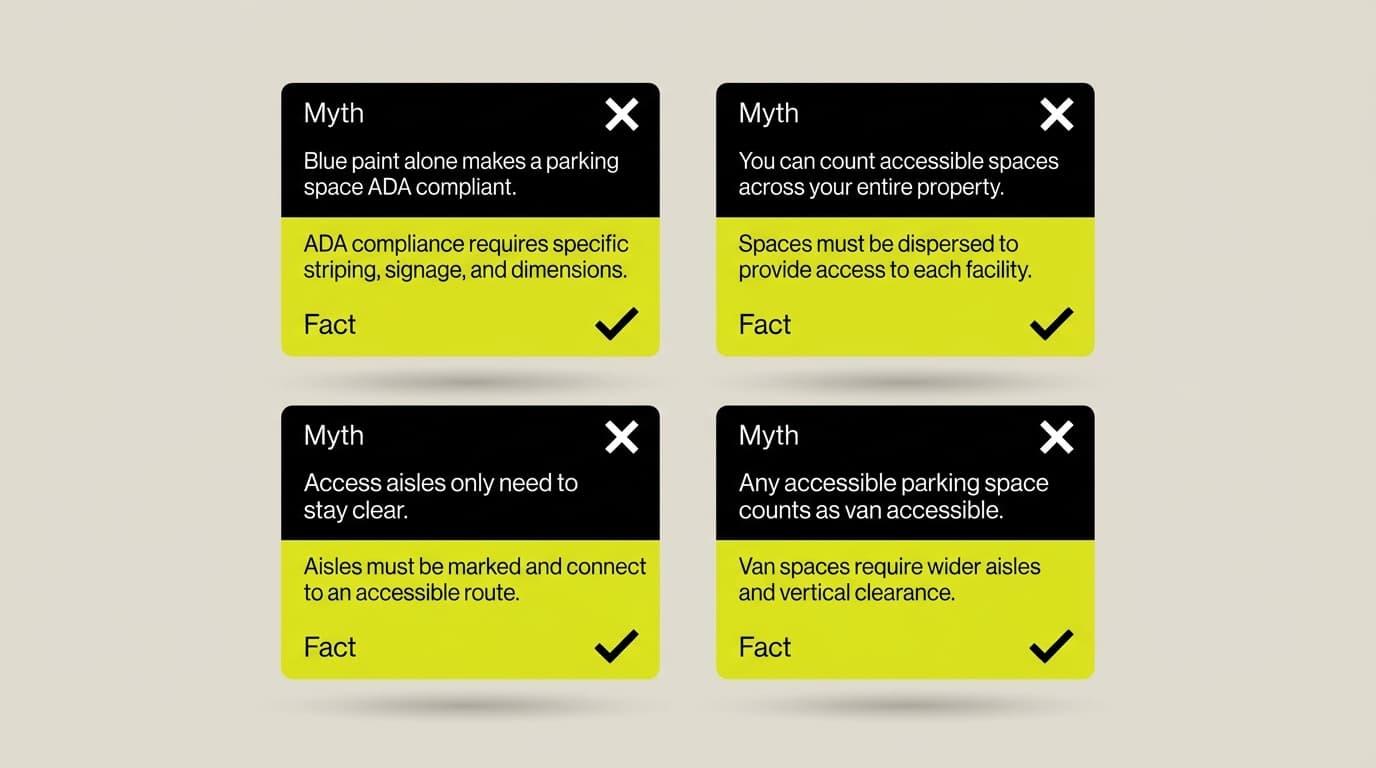
Myth #1: Blue paint alone makes a parking space ADA compliant.
Fact: It doesn’t. Under FHWA MUTCD standards, white is the required color for accessible parking pavement markings. Blue may be used as a supplemental color, but it cannot replace the required white stall lines, access aisle markings, or ISA outlines.
Myth #2: You can count accessible spaces across your entire property.
Fact: Accessible parking requirements apply to each parking facility, not the property as a whole. According to the accessible parking requirements fact sheet, separate parking lots on the same property must each provide the required number of accessible spaces.
Myth #3: Access aisles only need to stay clear.
Fact: They also need to be properly marked. Every access aisle must be clearly striped and kept free of parked vehicles or other obstructions. Missing or faded aisle markings can make an otherwise compliant parking space fail ADA requirements.
Myth #4: Any accessible parking space counts as van accessible.
Fact: Van parking spaces have their own width, access aisle, signage, and vertical clearance requirements, which become especially important in a parking structure. At least one out of every six accessible parking spaces must meet these standards. If your parking lot was striped years ago, it’s worth reviewing how ADA changes affect existing parking spaces to determine whether your current layout still complies with today’s requirements.
The Benefits of Professional ADA Parking Painting
Professional ada parking lot compliance is about more than creating clean, straight lines. The entire ada parking lot must have a compliant layout, markings, signage, and accessible features that meet federal requirements for dimensions, colors, and access. A small mistake during striping can leave your parking lot out of compliance, even if it looks correct at first glance.
Hiring an experienced contractor helps reduce those risks by ensuring every detail is measured, marked, and painted according to current standards. It also gives you longer-lasting markings that stand up better to Michigan’s weather and everyday traffic.
What a Professional Checks Before ADA Parking Painting
Before any accessible parking striping begins, a qualified contractor inspects the parking lot to confirm it can be restriped so ada spaces meet current ADA standards. According to the ADA technical guidance on restriping parking lots, restriping is considered an alteration, which means the accessible parking layout must comply with today’s requirements, not the standards that existed when the lot was first painted.
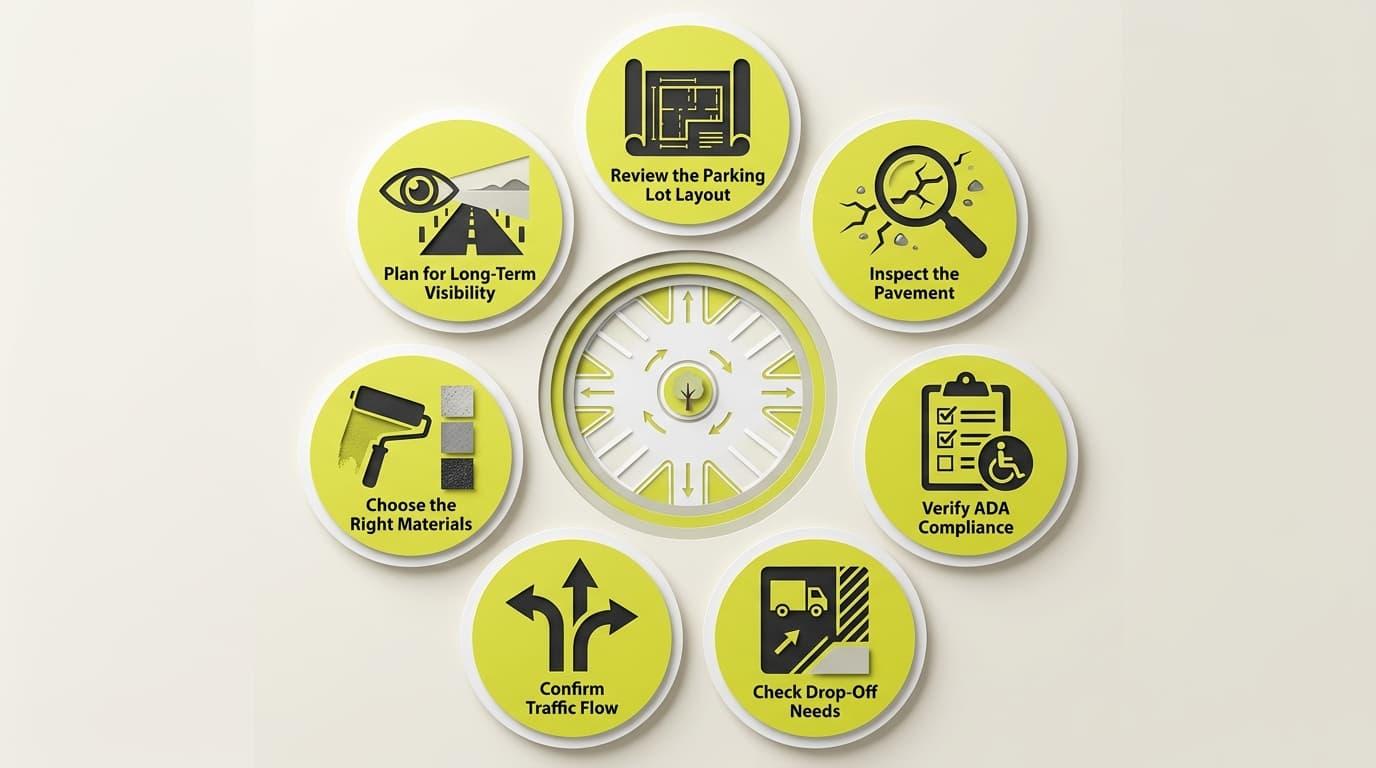
A professional pre-painting checklist includes:
- Review the Parking Lot Layout: Confirm the accessible spaces are positioned correctly for the property, including near multiple accessible entrances where applicable.
- Inspect the Pavement: Look for cracks, settlement, or other damage before restriping.
- Verify ADA Compliance: Confirm the layout, signage, and accessible space count meet applicable ada parking lot requirements.
- Check Drop-Off Needs: Determine whether the site also needs an accessible passenger loading zone connected to the accessible route.
- Confirm Traffic Flow: Ensure accessible routes and vehicle circulation work safely together in parking areas, especially where angled parking spaces are used and van spaces may require the access aisle on the passenger side.
- Choose the Right Materials: Select durable striping materials suited to traffic levels and Michigan weather.
- Plan for Long-Term Visibility: Recommend materials and layouts that help markings remain visible and compliant.
When to Repaint ADA Parking Spaces
Parking lot markings don’t last forever. Traffic, weather, snow removal, and routine pavement maintenance gradually reduce their visibility. Once accessible parking markings become difficult to see, it’s time to evaluate whether restriping is needed.
Some maintenance projects also remove existing striping completely, making new ADA markings part of the job. For example, every sealcoating application covers existing parking lot markings, so it’s important to understand sealcoating dry time before scheduling restriping.
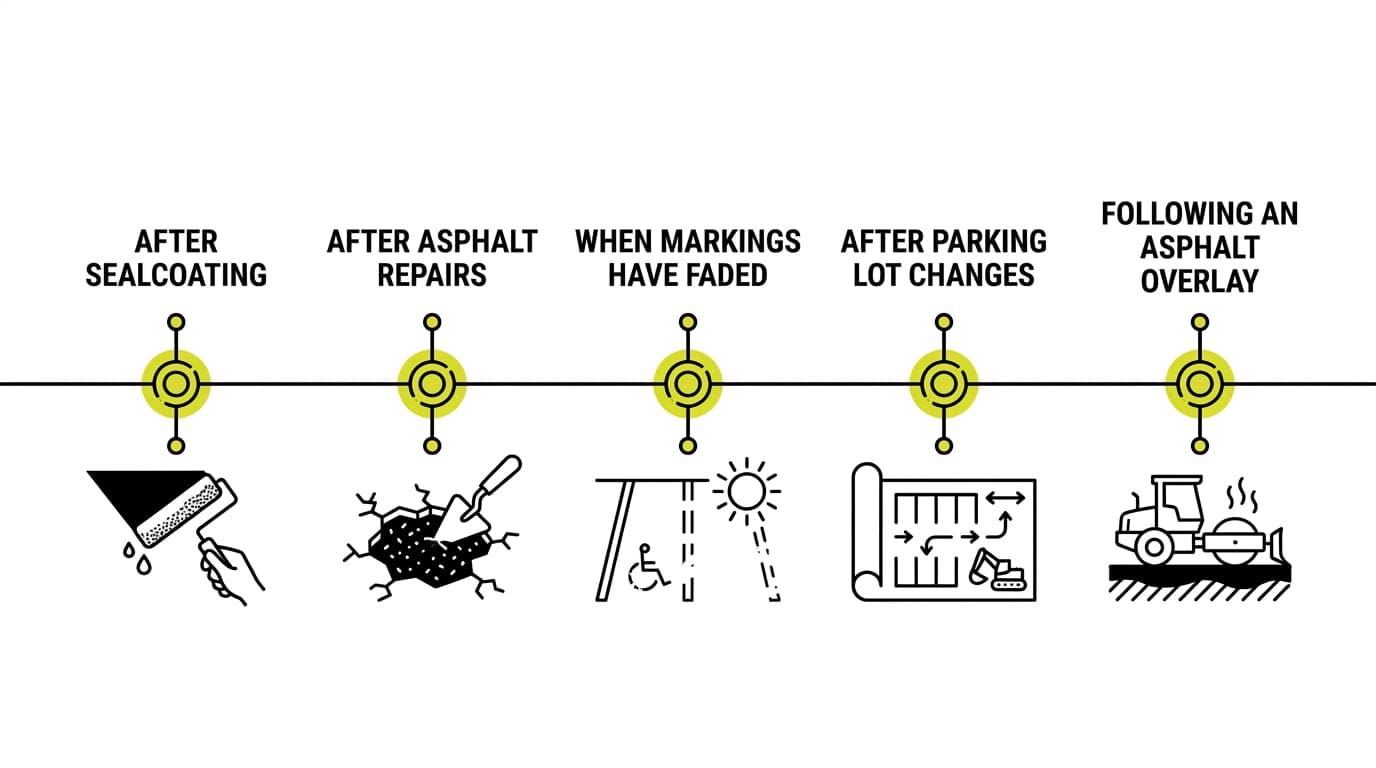
The most common situations that warrant repainting include:
- After Sealcoating: Fresh sealcoat completely covers existing parking lot markings, so the lot must be restriped after the surface has cured.
- After Asphalt Repairs: Crack filling, patching, and resurfacing can remove or distort existing markings.
- When Markings Have Faded: Worn lines and symbols become harder to see and may no longer meet visibility requirements.
- After Parking Lot Changes: Reconfigured parking layouts, new traffic patterns, or added spaces require updated striping.
- Following an Asphalt Overlay: A new pavement surface requires a complete restripe using the current parking layout. The ADA guidance on restriping parking spaces explains how restriping after alterations can trigger compliance with current accessibility standards.
Protect Your Property With ADA-Compliant Striping
ADA handicap parking painting involves much more than repainting faded lines under the Americans with Disabilities Act (ADA).
From proper dimensions and pavement markings to signage and accessible routes required by the Americans with Disabilities Act, every detail plays a role in keeping your parking lot compliant, safe, and easy to navigate.
Taking the time to get it right can help reduce liability, improve accessibility, and create a better experience for everyone who visits your property.
At Bart’s Asphalt, we provide ADA-compliant parking lot striping for commercial properties across Michigan. Whether you need a complete restripe or want to verify your current layout, our team is here to help you complete the job with confidence.
Frequently Asked Questions
These quick answers clarify common planning questions before an accessible parking restripe.
Does repainting existing accessible spaces require them to meet current ADA standards?
In most cases, yes. The ADA generally treats restriping as an alteration, meaning accessible parking spaces should comply with current standards rather than the requirements that were in place when the lot was originally striped.
Can accessible parking spaces be located on a different level than the building entrance?
Yes, but only if they connect to an accessible route. In multi-story parking garages, that typically means providing an elevator or compliant ramp so users can safely reach the accessible building entrance.
Do temporary accessible parking spaces during construction have to meet ADA requirements?
Yes. Temporary accessible parking must still provide compliant dimensions, accessible routes, and clear signage. Property owners are expected to maintain accessible parking throughout construction whenever parking remains available to the public.
Does ADA parking compliance change when a property changes ownership?
No. ADA responsibilities stay with the property, not the owner. If ownership changes, the new owner becomes responsible for addressing any existing accessibility issues and maintaining compliance going forward.
Do private parking lots need ADA-compliant accessible parking spaces?
It depends on how the property is used. Parking lots serving places of public accommodation generally must comply with ADA requirements, while private employee-only facilities may be subject to different accessibility obligations. Some lots used exclusively by delivery vehicles or law enforcement vehicles may be treated differently from lots serving the public.
Can you restripe ADA parking spaces after sealcoating?
Yes, but only after the sealcoat has fully cured. Applying parking lot markings too soon can reduce paint adhesion and shorten the life of the striping, leading to premature fading and additional maintenance.