

Have you noticed cracks spreading across your parking lot while potholes keep returning, despite repeated patches?
Your asphalt surface may be looking far older than it is after three repairs in two years, forcing the tough question, “Should I keep repairing, resurface, or replace entirely?”
The direct answer is that if the damage is isolated and the base is sound, repairs can suffice. This means that if 25–35% of the surface is failing but the base holds, resurfacing is cost-effective, but widespread structural damage or recurring repairs usually mean it’s time for a full replacement.
Bart’s Asphalt provides on-site assessments that reveal whether your base is sound or structurally compromised. Property managers receive clear recommendations with specific costs for repairs, resurfacing, or replacement.
In this article, you’ll discover:
- How to tell if your parking lot needs repair, resurfacing, or full replacement.
- What signs indicate base layer integrity or failure, especially in freeze-thaw climates like Michigan.
- The true costs and lifespan extensions of each option.
- How ADA compliance and liability risks factor into your decision.
- Why an on-site professional assessment is essential before committing to a solution.
Don’t guess when it comes to your parking lot investment. Read on to gain the confidence and clarity you need to make the right call for your property’s safety, budget, and longevity.
Key Takeaways
- Parking lot decisions involve three options: Repair for minor issues, resurface for moderate wear, or replace entirely based on base condition.
- Michigan freeze-thaw cycles erode base layers beneath the surface, so professional on-site assessments prevent expensive future repairs and failures.
- Repairs suit isolated surface damage under 25% on lots with stable bases, extending usability without unnecessary resurfacing or replacement costs.
- Resurfacing works best when 25–35% of the surface shows wear, but the base holds firm, restoring appearance and function cost-effectively.
- Full replacement becomes essential for widespread structural failures, repeated repairs in the same spots, or costs nearing 29% of the total rebuild.
- Prioritize base integrity checks to ensure safety of the lot and that it meets ADA standards.
Should You Repair, Resurface, or Fully Replace Your Pavement?
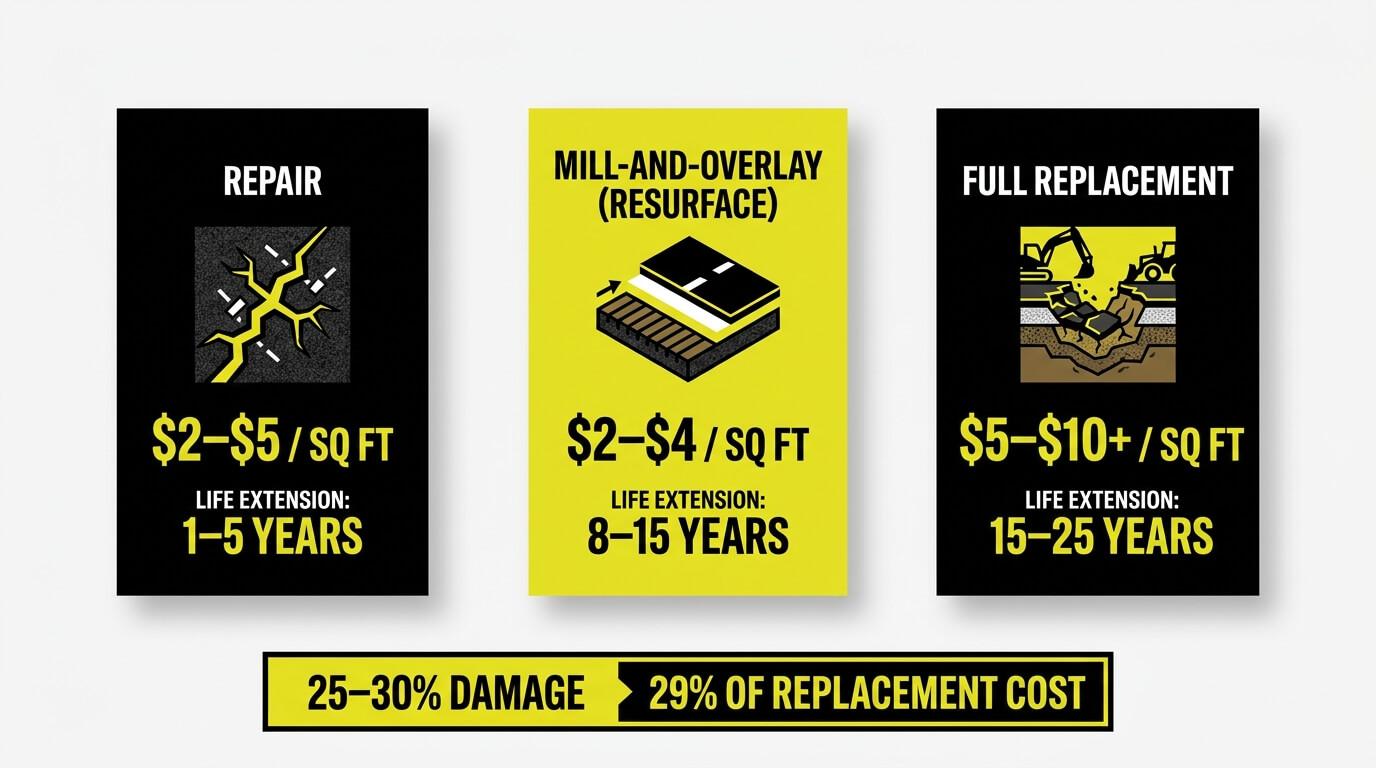
Most Michigan commercial property owners don’t realize there are actually three options, not two, for addressing failing asphalt parking lots. The three options are:
- Repair if damage is isolated, under 25–30% of the existing surface, and the base is structurally sound.
- Resurface (mill-and-overlay) if 25–35% of the asphalt surface is failing, but the base still passes inspection.
- Replace if structural damage is widespread, repairs keep failing in the same spots, or repair cost hits approximately 29% of full replacement.
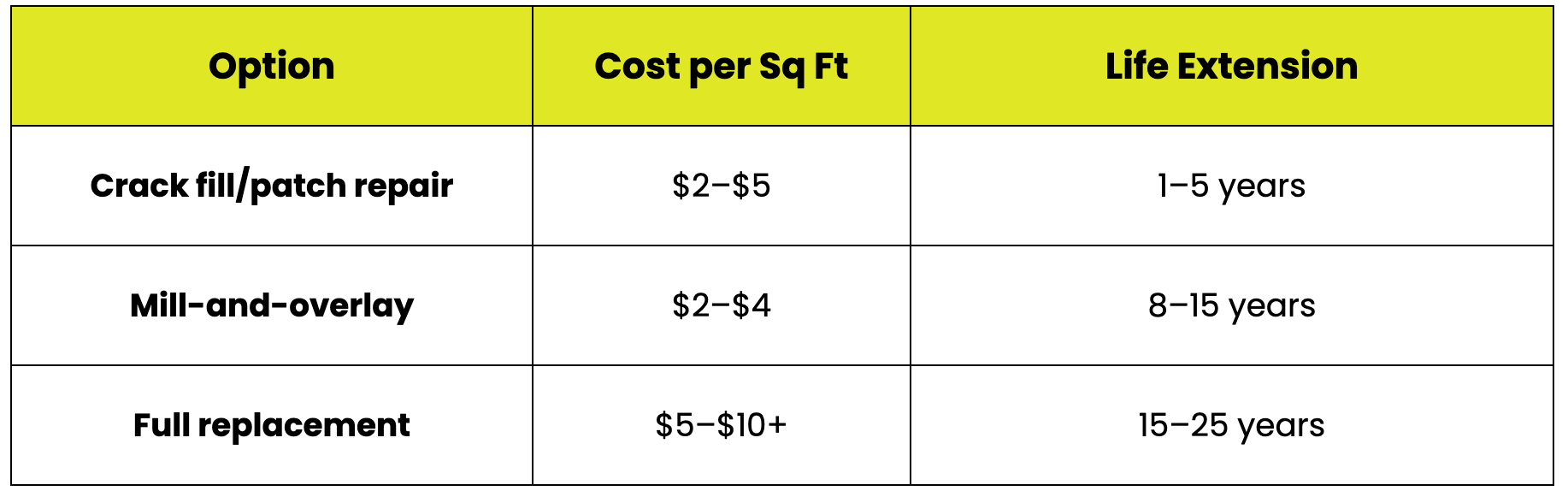
Here are Southeast Michigan commercial cost benchmarks for 2024–2026:
The rest of this guide gives you a decision framework you can use before calling a contractor.
How Long Should a Commercial Asphalt Parking Lot Last?
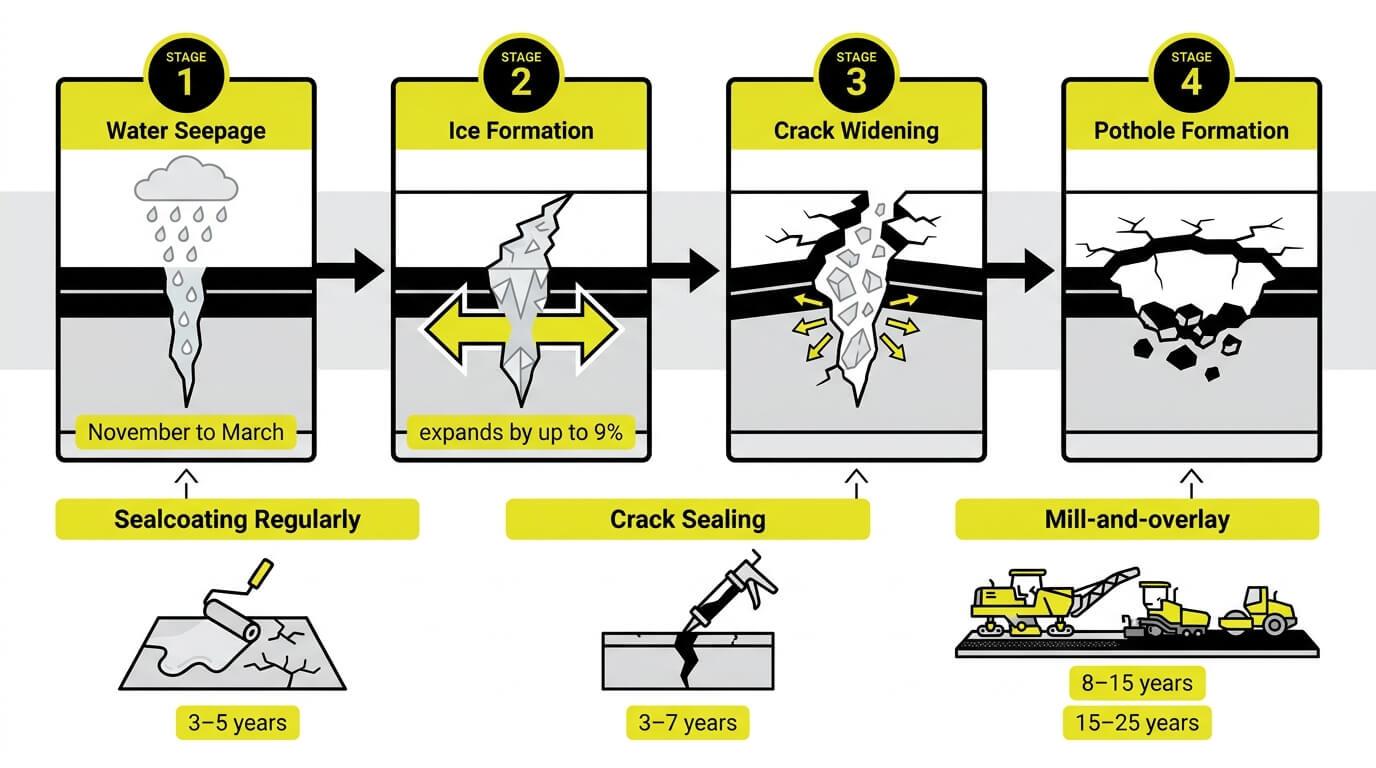
Most asphalt parking lots in Michigan last 15–25 years before needing reconstruction. This lifespan is achieved only with professional asphalt paving, assuming proper maintenance and moderate traffic volume.
Here’s how different asphalt paving interventions extend service life:
- Sealcoating Regularly: Adds 3–5 years per application.
- Crack Sealing: Extends local life by 3–7 years when done early.
- Mill-and-overlay: Adds 8–15 years if the base is sound.
In Michigan, the year-round freeze-thaw cycles accelerate asphalt deterioration. Here’s how it happens: water seeps into small cracks from November to March, freezes, expands by up to 9%, and pushes apart asphalt pavement layers. This compromises even lots that look repairable on the surface.
Neglected lots typically show signs of aging between years 12 and 20. Common visual warnings include faded gray surface, raveling aggregate, frequent potholes, and soft spots near drainage issues.
Option 1: When Parking Lot Repairs Still Make Sense
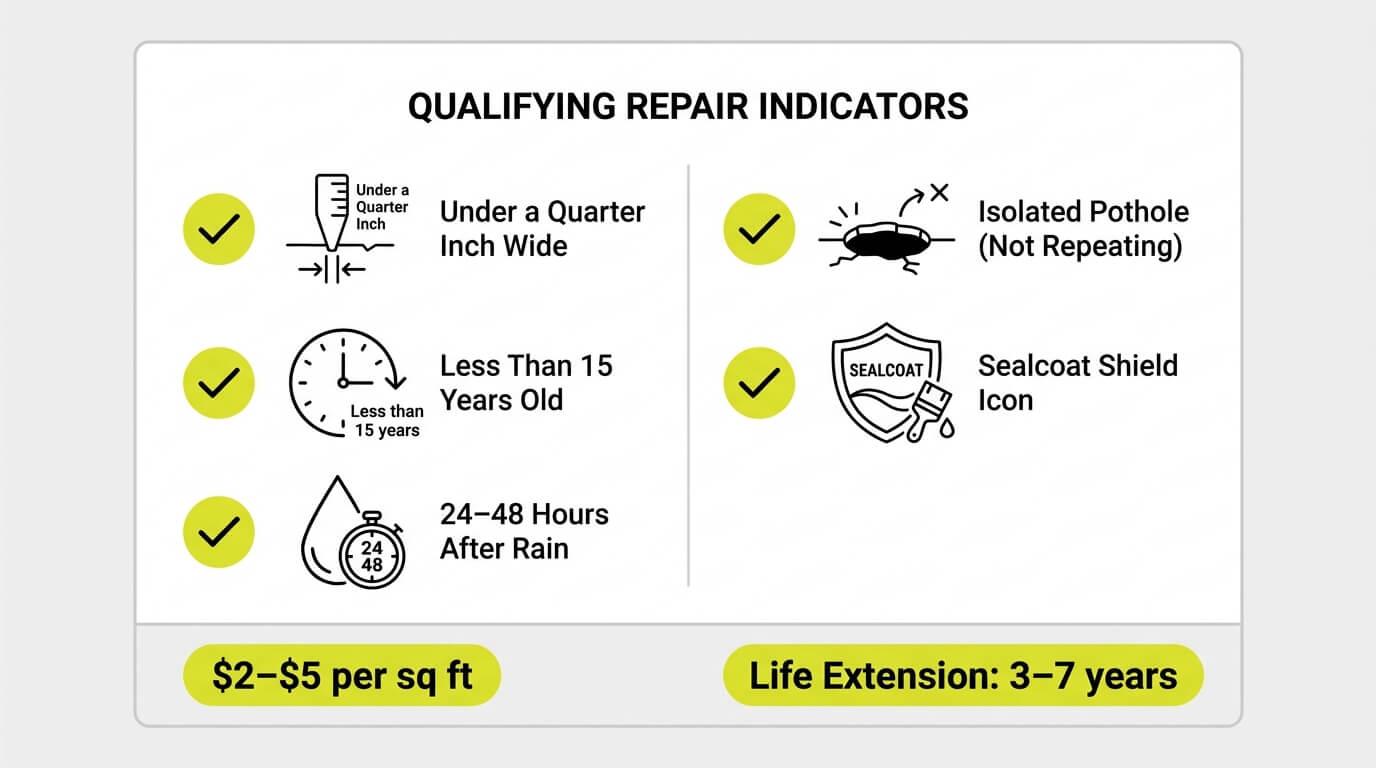
Repair work means crack filling, pothole patching, and localized infrared repairs on lots where the base remains intact.
Clear Signs Repairs Remain a Viable Option
- Less than 25% of the lot shows minor cracks, isolated potholes, or raveling.
- Cracks are narrow (under a quarter inch wide), not interconnected alligator patterns.
- Potholes don’t reappear in the same areas within a few years.
- No pooling water remains 24–48 hours after rain.
- The lot is less than 15 years old and has prior sealcoating.
Common Repair Methods
- Hot rubber crack filling to prevent water infiltration
- Infrared asphalt repair (~$4/sq ft) for seamless patches at entrances and ADA stalls
- Full-depth patching for localized base failures at truck docks
Cost guidance: Small repair visits run $100–$1,000 per mobilization. Targeted surface repairs run $2–$5 per square foot.
Repairs extend life by 3–7 years and protect sound bases. Although they cannot address deeper structural failures or widespread pavement issues.
Option 2: Resurfacing (Mill-and-Overlay) as the Middle Ground
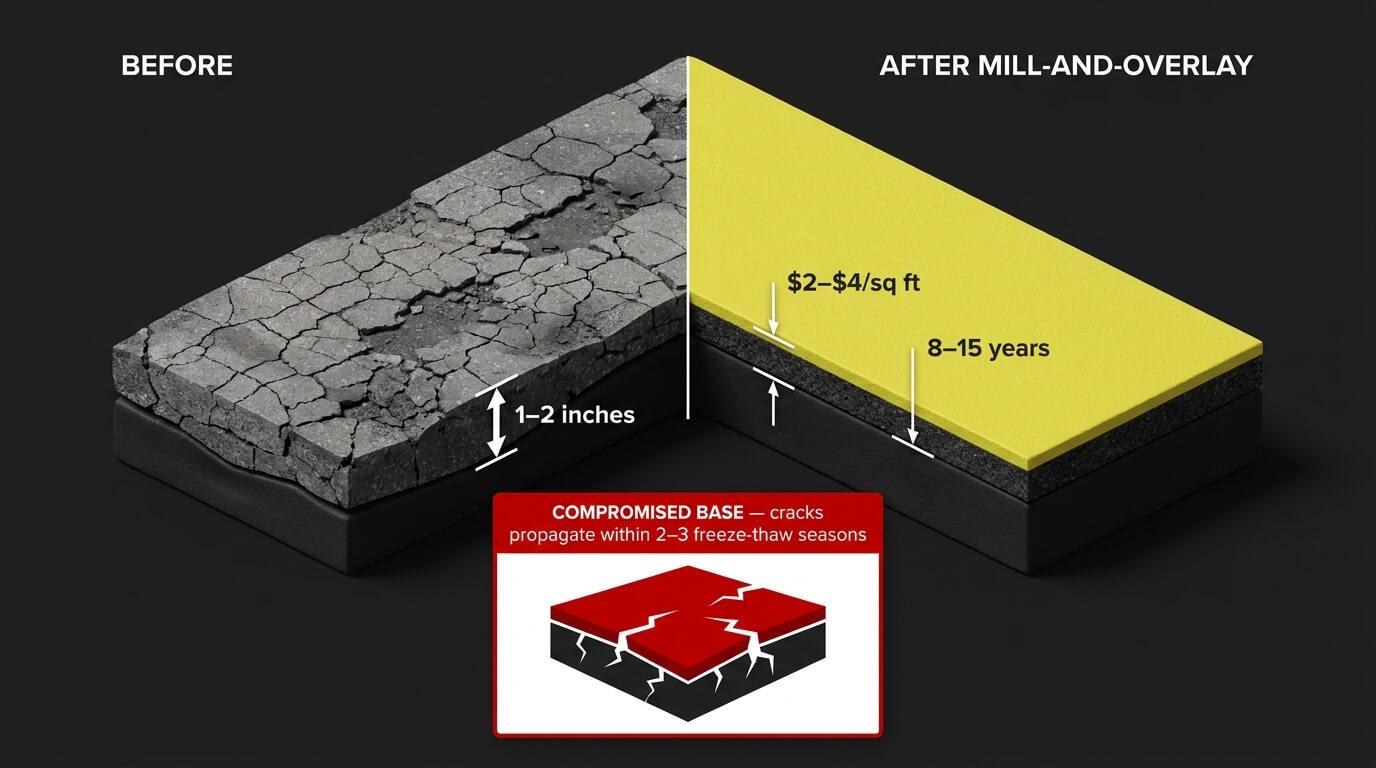
Resurfacing removes 1–2 inches of existing asphalt and applies a new hot-mix asphalt layer over the existing base. This works when the foundation is still stable.
When Resurfacing Is the Right Choice
- About 25–35% of the surface shows deep cracks or wear.
- Alligator cracks appear in the top layer without pumping or severe rutting.
- Potholes are scattered but not constantly returning in the same spots.
- No standing water after clearing drainage structures.
- Lot age is 12–20 years with increasingly frequent repairs.
Cost and life extension: $2–$4/sq ft for commercial mill-and-overlay, with 8–15 years of additional life. If base repair is needed, add $1–$ 3 per sq ft.
Resurfacing over a compromised base fails early, as cracks propagate through the new layer within 2–3 freeze-thaw seasons, wasting your investment. However, it also restores curb appeal with a smooth surface and fresh striping at lower long-term costs than complete replacement.
Option 3: When Full Parking Lot Replacement Is the Smart Move
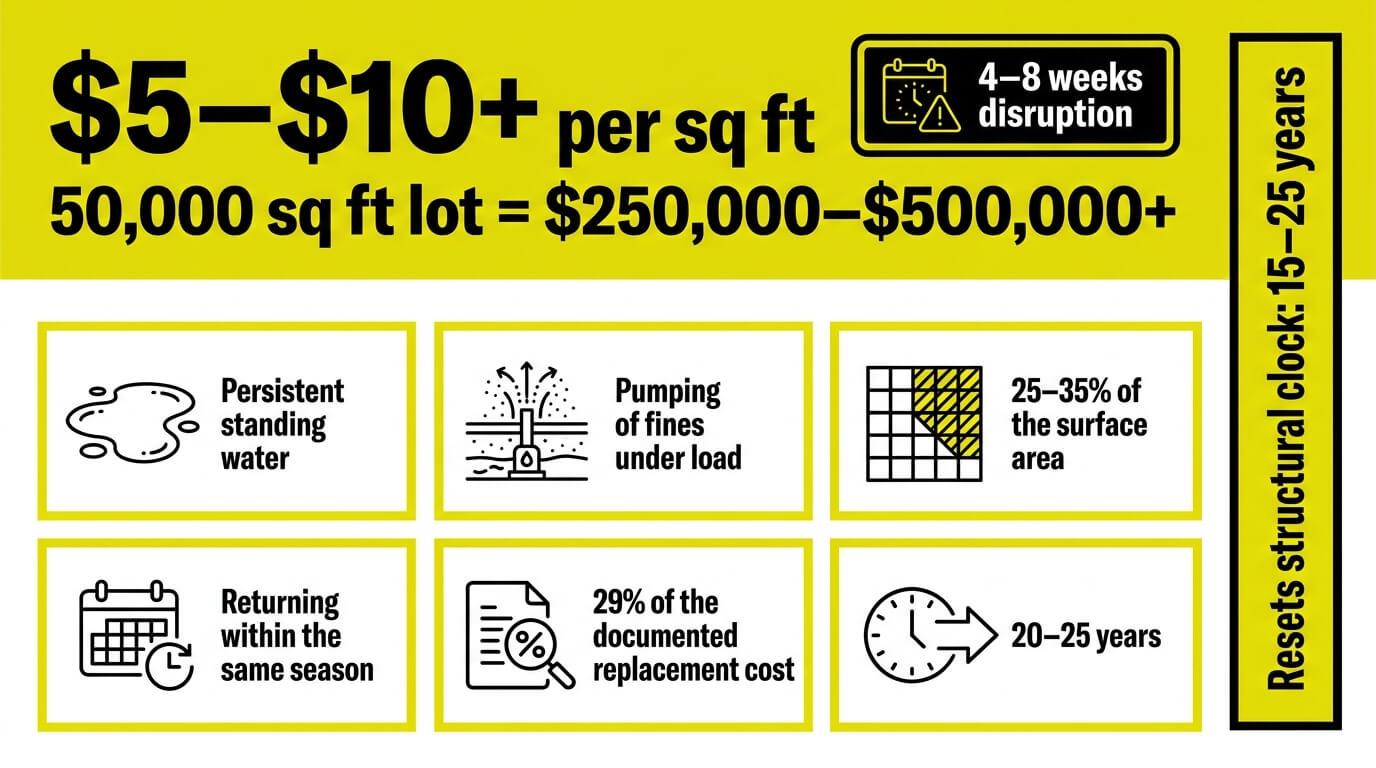
Full lot replacement means removing old pavement down to the base (and often the base itself), correcting drainage problems, and building a new pavement structure designed for heavy trucks and current traffic flow.
Signs Your Asphalt Lot Is Due for Replacement
- Widespread cracking and major cracks across more than 25–35% of the surface area.
- Large potholes or small potholes returning within the same season.
- Persistent standing water in drive lanes or at accessibility routes.
- Depressions, soft spots, or “pumping” of fines under load.
- Lot age of 20–25 years with a history of constant repairs.
- Repair estimates are reaching over 29% of the documented replacement cost.
Cost reality: $5–$10 (or more) per sq ft for commercial reconstruction. A 50,000 sq ft lot runs $250,000–$500,000+, with 4–8 weeks of disruption.
The main benefit of a full lot replacement is that it resets the structural clock for 15–25 years. The replacement job also gives you the opportunity to fix chronic poor drainage, regrade slopes, and redesign for accessibility and fire-lane compliance.
Repair, Resurface, or Replace? A Practical Decision Framework
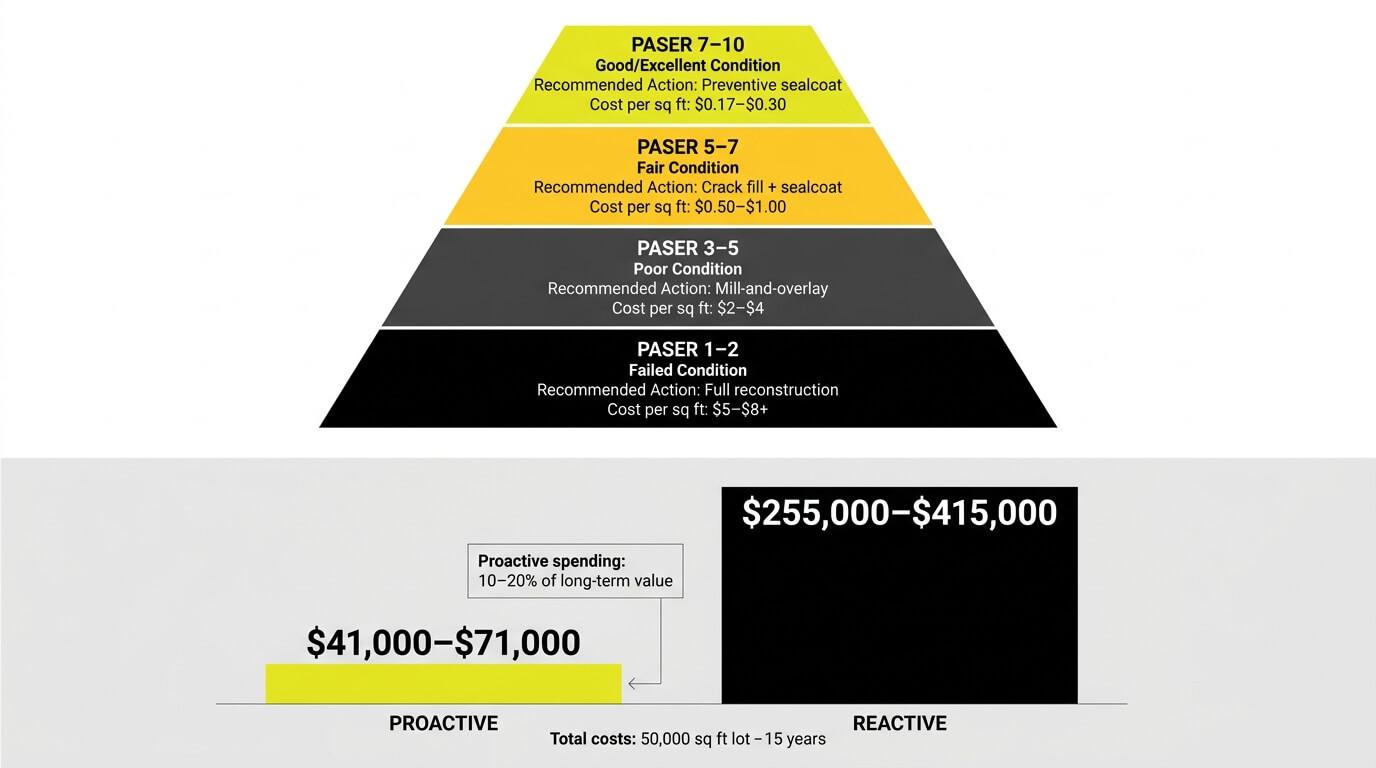
This framework converts signs and numbers into actionable guidance based on the PASER rating system.
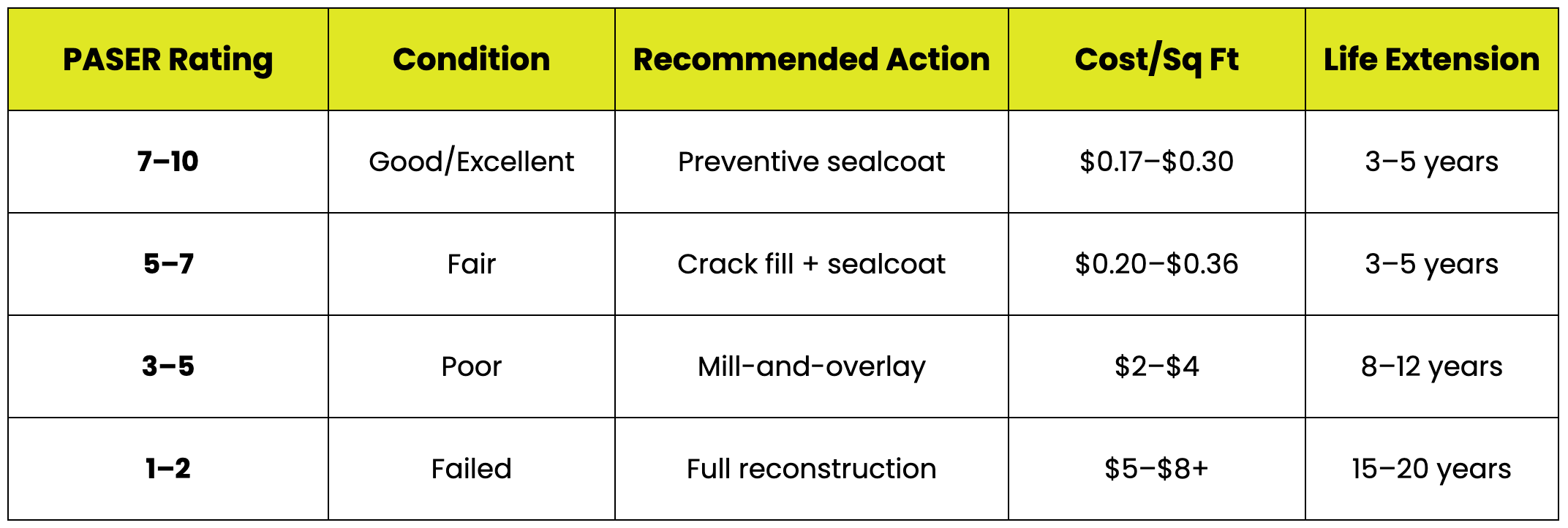
The 25–35% Damage Rule
- Under one-quarter damaged with sound base calls for frequent repairs and maintenance.
- One-quarter to one-third failing with a sound base warrants resurfacing consideration.
- Over one-third with confirmed structural issues require planning for full replacement.
Cost of Waiting
Delaying decisions dramatically increases total pavement costs. Property managers who wait face emergency repairs that exceed planned budgets.
Proactive 15-year maintenance on a 50,000 sq ft lot totals roughly $41,000–$71,000.
Reactive emergency repairs plus eventual reconstruction cost $255,000–$415,000 over the same period. Proactive spending runs 10–20% of the total long-term value.
Hidden Risks of Choosing the Wrong Option
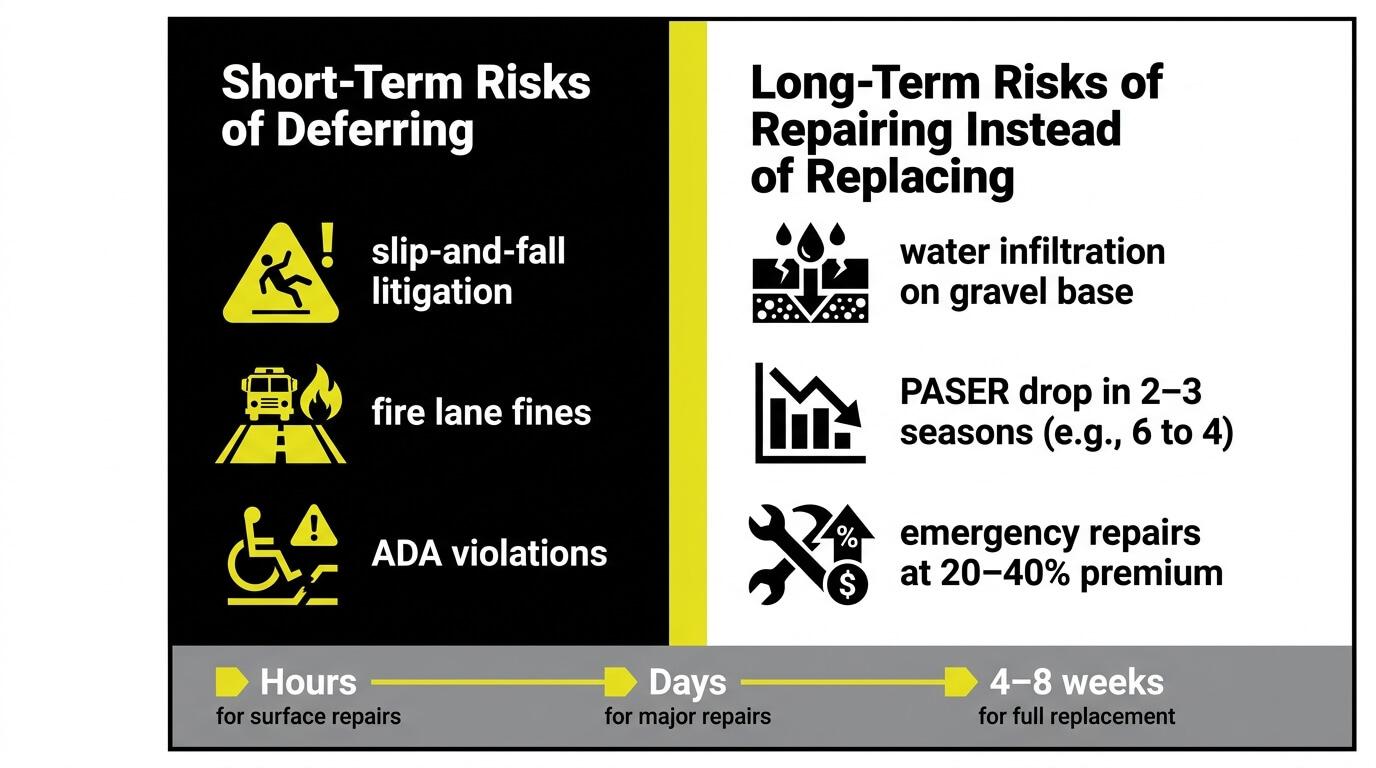
Safety, liability, and accessibility compliance risks extend far beyond property value when you select the wrong pavement solution. The repair-or-replace decision directly impacts tenant safety, legal exposure, and business continuity for commercial properties.
Short-Term Risks of Deferring Needed Work
- Uneven surfaces and large potholes invite vehicle damage claims and slip-and-fall litigation.
- Faded striping obscures fire lanes, risking emergency fines.
- Cracked ADA routes with ponding violate disabilities act requirements.
Long-Term Risks of Repairing When Replacement Is Needed
- Water infiltration through existing damage attacks the gravel base.
- Freeze-thaw cycles weaponize trapped moisture, dropping PASER from 6 to 4 in 2–3 seasons.
- Emergency repairs cost 20–40% more than planned maintenance requirements.
Downtime trade-off: Surface repairs close sections for hours. Major repairs take days. Full replacement shuts down significant portions for 4–8 weeks, potentially costing the tenant revenue that exceeds years of maintenance budgets.
Planning Your Next Step
For most property managers, the real question isn’t “repair or replace?” What you should be asking instead is “Is my base still sound?” Answering that requires an on-site assessment by qualified professionals to uncover deeper issues.
Before contacting a contractor, gather:
- Approximate age and size of the lot.
- A map of recurring trouble spots (entrances, loading docks, ADA stalls).
- Any repair or overlay history from the last 5–10 years.
A professional evaluation documents the base condition and surface distress and provides clear options with Michigan-specific costs. The goal is to safeguard your lot’s longevity, safety, and budget for 15+ years.
Contact Bart’s Asphalt today for a no-obligation assessment of your lot’s life and base condition. Our expert team delivers precise evaluations, uncovering hidden issues beneath the surface before adding any new layer of asphalt, saving you thousands in the long term.
Frequently Asked Questions About Repair vs. Replacement
What warning signs indicate parking lot base failure?
Look for pumping (water/fines ejecting under load), repeated potholes in the same spots, and rapid-onset further damage. Professional core sampling or test pits confirm base integrity when visual inspection is inconclusive.
Is resurfacing always cheaper than full replacement?
Mill-and-overlay has a lower initial cost, but only pays off if the base is structurally sound. If applied over a compromised base, the new asphalt layer fails within a few years, resulting in a wasted investment.
When do repeated repairs stop making financial sense?
The red flags for repeated repairs include major repairs to the same issues within 5 years, or repair bids exceeding 29% of the replacement cost. At that point, you’re spreading repairs across years while the structural problem worsens.
Will sealcoating fix my structural problems and curb appeal?
No. Sealcoating creates a protective layer against UV rays and oxidation, but cannot address base failure, significant damage, or drainage issues. It’s maintenance for lots in fair-to-good condition, not a cure for widespread cracking.
What season is best for an upcoming project in Michigan?
Late spring through early fall for structural work. Plan around tenant schedules to minimize business disruption.
How Can Property Owners Maximize Long-Term Value?
Strategic base assessments and timely resurfacing or replacement preserve lot integrity, avoiding reactive costs that can exceed proactive budgets by 5–10x over 15 years.
Why Choose Bart’s Asphalt for My Parking Lot Project?
Bart’s Asphalt delivers Michigan-specific expertise with no-obligation on-site evaluations, precise cost breakdowns, and proven solutions that protect your investment for decades.