
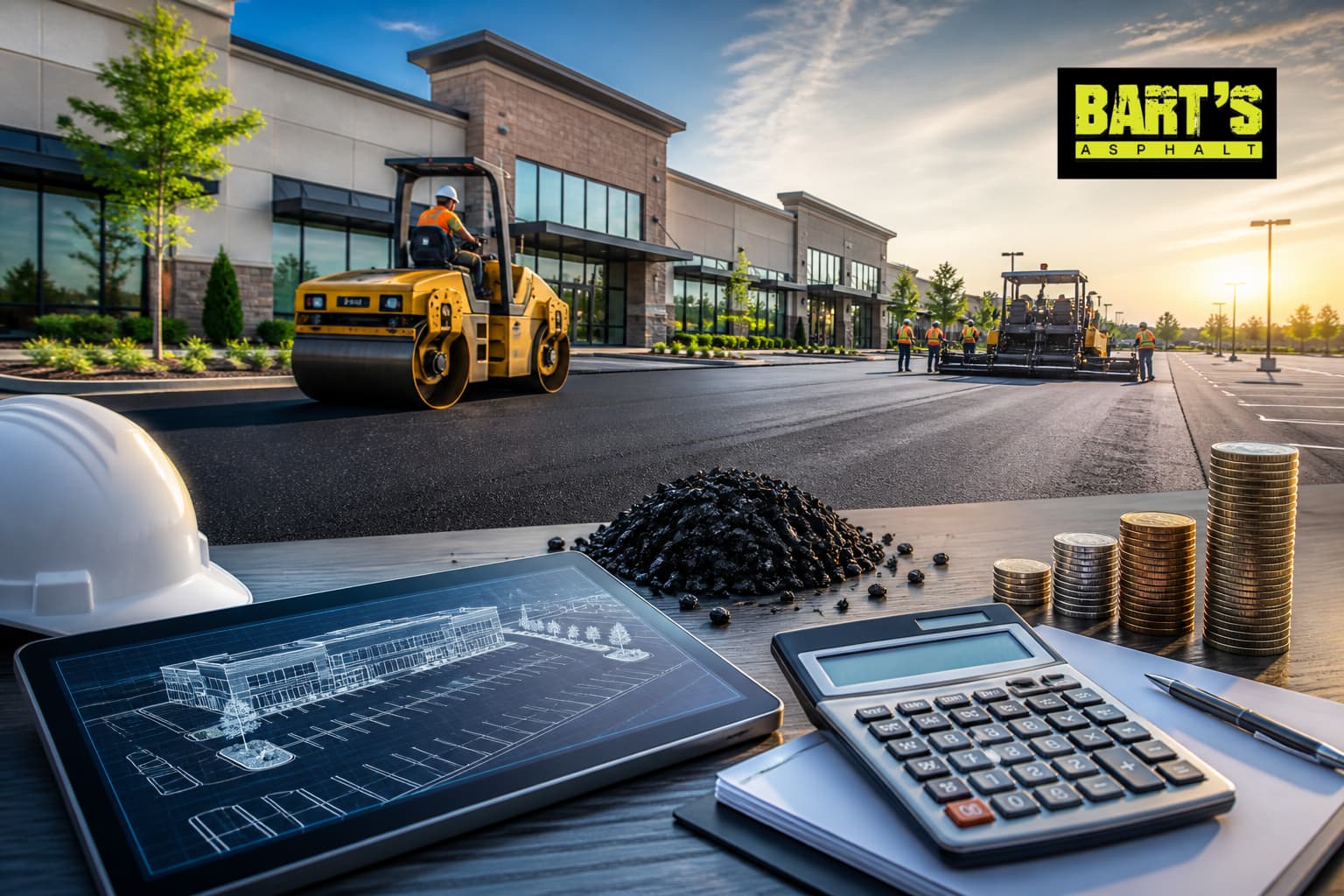
As a commercial property owner or manager, you’ll eventually have to budget for asphalt resurfacing costs. Parking lots don’t last forever, and Southeast Michigan’s freeze-thaw cycles can speed up surface wear.
The challenge is knowing when resurfacing is the right investment and what factors will influence the final price.
A resurfacing project is about more than installing a new layer of asphalt. The condition of the existing pavement, the amount of preparation required, traffic demands, and drainage all play a role in what you’ll pay and how long the new surface will last.
In this guide, we’ll explain what asphalt resurfacing typically costs, what affects pricing, when resurfacing makes sense, and how to decide if it’s the right alternative to full replacement.
Key Takeaways
- Commercial asphalt resurfacing costs typically range from $1.50 to $4.00 per square foot across Southeast Michigan.
- The biggest cost drivers include base condition, project size, overlay thickness, surface preparation, drainage repairs, and site access.
- Resurfacing is only recommended when the existing base remains structurally sound. If the foundation has failed, full replacement is usually the better long-term solution.
- Heavy truck traffic, industrial use, and phased construction schedules can increase both project costs and installation time.
- Proper preparation, including milling, repairs, tack coat application, and compaction, significantly affects how long a resurfaced parking lot lasts.
- A professionally resurfaced commercial parking lot typically provides 8 to 15 years of service, especially when supported by routine maintenance such as crack sealing and sealcoating.
- A professional pavement inspection is the best way to determine whether resurfacing is the right investment and to receive an accurate, line-item project estimate before budgeting begins.
How Much Does Asphalt Resurfacing Cost per Square Foot?
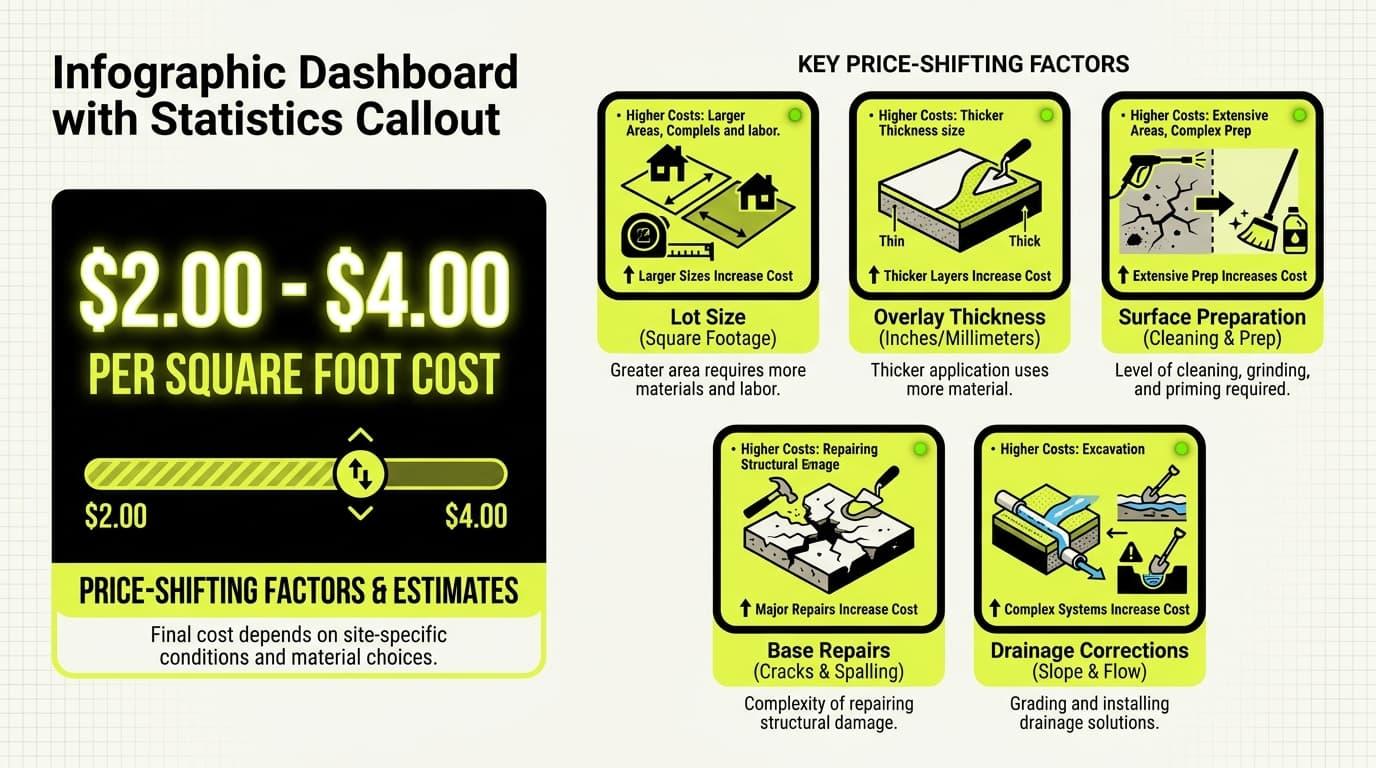
Commercial asphalt resurfacing typically costs between $2.00 and $4.00 per square foot in Michigan. For a 20,000-square-foot parking lot, that works out to roughly $40,000 to $80,000 before extensive base repairs, drainage work, striping, or other site-specific needs.
Larger commercial properties often fall toward the lower end of the per-square-foot range because equipment and labor costs are spread across more pavement, though labor rates also vary by location and contractor experience, which can shift pricing even for similar-sized lots.
A new asphalt overlay only performs as well as the pavement underneath it. That’s why resurfacing is only recommended when the existing base is still structurally sound. If your parking lot has widespread alligator cracking, soft spots, or standing water after rain, those are often signs of deeper structural problems that resurfacing alone won’t fix.
The following factors can move your cost toward the lower or higher end of the price range:
- Lot Size: Larger parking lots generally have a lower cost per square foot because labor and equipment costs are spread across more pavement.
- Overlay Thickness: Parking lots that support delivery trucks or heavy vehicles often require a thicker asphalt overlay, increasing material costs.
- Surface Preparation: Milling, cleaning, edge work, and other preparation steps add labor and equipment costs before paving begins.
- Base Repairs: Areas with structural damage may require full-depth patching before resurfacing can begin.
- Drainage Corrections: Regrading low areas or adjusting catch basins helps prevent future water damage but also increases the project cost.
Material prices can also change throughout the year. Since asphalt is petroleum-based, fluctuations in oil prices and seasonal demand can affect project costs. Recent pavement overlay cost data also shows pricing can vary considerably between projects based on material, labor, and site conditions.
In the next section, we’ll look at each of these cost drivers in more detail so you can better understand what influences your final resurfacing estimate.
What Affects Asphalt Resurfacing Cost?
If you’re comparing resurfacing estimates, you’ll quickly notice that no two quotes are exactly alike. Factors like your pavement’s condition, project size, required preparation, and site accessibility all influence the final price. Understanding these cost drivers helps you know what you’re paying for and why.
Pavement Condition
The condition of your existing pavement is one of the biggest factors affecting resurfacing cost, and its existing condition helps determine how much prep work is needed.
Parking lots with only minor oxidation and hairline cracks are usually the best candidates, since resurfacing is most effective when less than 30% of the surface is damaged.
However, soft spots or structural damage often require full-depth patching before resurfacing, increasing the overall project cost.
Project Size and Thickness
Larger parking lots generally have a lower cost per square foot because labor and equipment costs are spread across more pavement. Overlay thickness also affects pricing. Parking lots that support delivery trucks or heavy vehicles often require thicker asphalt than those serving mainly passenger cars.
Surface Preparation
Proper preparation is essential for a long-lasting overlay and accounts for an important part of the overall project cost. When milling is needed, it commonly adds about $1 to $3 per square foot because it removes the worn old surface before the overlay is placed.
Milling, surface cleaning, adjusting catch basins, correcting drainage issues, and other prep work all require additional labor and equipment. Skipping these steps may reduce upfront costs but can significantly shorten the life of the new asphalt.
Site Accessibility
Project logistics also influence resurfacing costs, and site accessibility and project location can affect haul distance, local conditions, and scheduling constraints.
Haul distance from the asphalt plant, limited access, and the need to complete work in multiple phases can all increase labor and equipment time. For occupied commercial properties, phased scheduling can minimize disruption while keeping the project moving efficiently.
To learn more about what influences commercial paving pricing, see our guide toasphalt paving cost factors.
Resurfacing vs. Other Asphalt Repair Methods
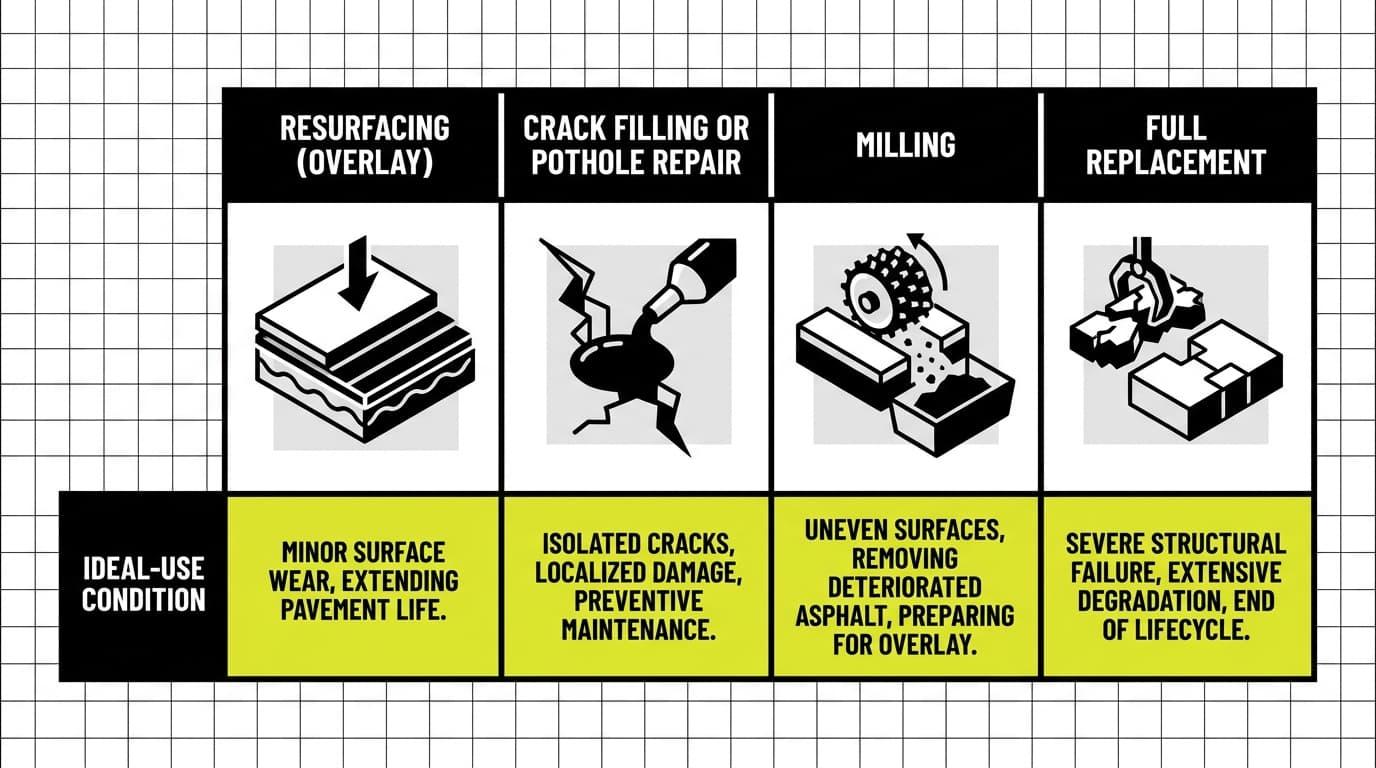
Asphalt resurfacing isn’t the only way to restore a commercial parking lot. Depending on your pavement’s condition, an overlay, spot repairs, milling, or full replacement may be the better solution.
Understanding the differences helps you compare contractor recommendations and make a more informed investment.
Resurfacing vs. Overlay
Asphalt resurfacing and asphalt overlay refer to the same process. They both involve placing a new layer of hot-mix asphalt over an existing, structurally sound surface. Contractors may use either term in their estimates, so focus on the specified thickness, surface preparation, and what’s included in the scope.
Resurfacing vs. Crack and Pothole Repairs
Crack filling, crack repair, and pothole repairs address isolated pavement damage without resurfacing the entire lot. They’re a practical choice when most of your pavement remains in good condition.
But when deeper pavement issues remain, these spot treatments are often a temporary fix. Once cracking and deterioration become widespread, however, spot repairs may no longer provide the value or lasting results you need.
Resurfacing vs. Asphalt Milling
Milling removes the worn top layer, or old surface, of asphalt before a new surface is installed. It’s useful when you need to correct surface problems, and this partial removal helps preserve existing grades, drainage, and curb heights.
Milling may be included as part of a resurfacing project when the existing surface requires more preparation.
Full Replacement
Full replacement goes much deeper than resurfacing. When the base is still sound, resurfacing often costs 30% to 50% less than full replacement, which can significantly reduce the total cost of the project.
The existing pavement is removed, and the underlying base is repaired or rebuilt before new asphalt is installed. This approach makes sense when the pavement has significant structural failures that an overlay cannot correct.
Here’s how the four services line up side by side:
| Service | What It Involves | Best Used When |
|---|---|---|
| Resurfacing (overlay) | New hot mix asphalt layer bonded over the existing surface | The base and sub-base are structurally sound |
| Crack filling or pothole repair | Spot treatment of isolated cracks or holes | Damage is limited to a few small areas |
| Milling | Grinding off the top one to two inches before repaving | Grades, drainage, and curb heights need to stay put |
| Full replacement | Excavating down to the base and rebuilding it | The base itself has failed |
When Does Resurfacing Beat Full Replacement for a Commercial Parking Lot?
The biggest question isn’t how worn your parking lot looks; it’s what’s happening underneath the surface. If the existing pavement base is still strong, resurfacing can restore the lot without the cost of a full rebuild. When structural problems run deeper, replacement may be the better investment.
When Resurfacing Makes Sense
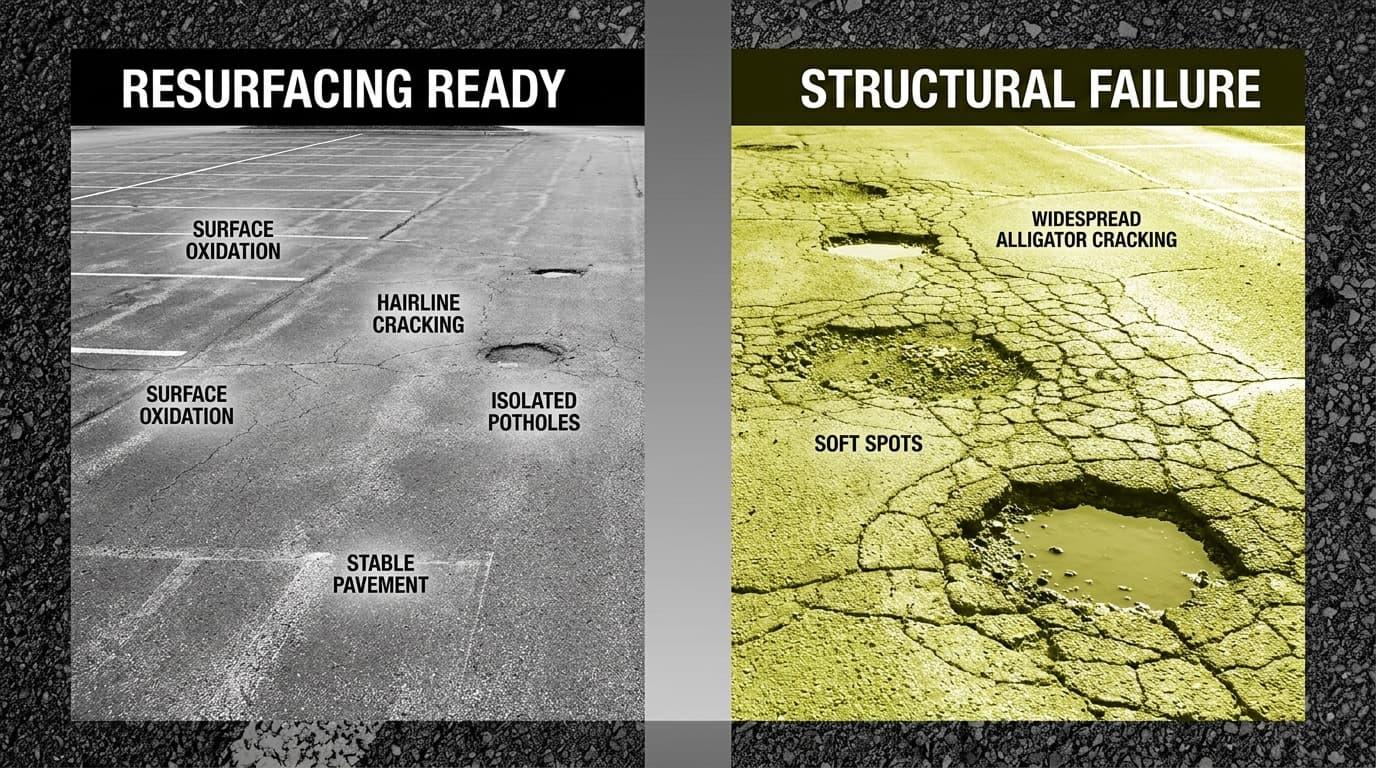
Resurfacing works best when the existing pavement has surface-level wear, but the underlying structure remains strong; in residential driveway resurfacing, contractors often consider pavement under about 20 years old a better candidate when the base is still sound. Your lot may be a good candidate for resurfacing when you see:
- Surface Oxidation: Aging pavement with fading but no major structural failure.
- Hairline Cracking: Minor cracks that haven’t spread throughout the pavement.
- Isolated Potholes: Small damaged areas that don’t indicate widespread base failure.
- Stable Pavement: Areas that remain firm under regular vehicle and truck traffic.
Problems such as widespread alligator cracking, persistent standing water, or soft spots that rut under vehicle weight can indicate deeper structural issues. In those cases, placing an overlay over the existing pavement may only lead to premature cracking and another expensive repair.
When Replacement Makes Sense
When the pavement base has failed, resurfacing is no longer the right solution because it cannot rebuild a failed base layer.
Even full resurfacing will not correct structural failure below the surface, so full-depth reclamation or reconstruction addresses the underlying structure before a new asphalt surface is installed.
The right approach depends on what an inspection reveals beneath the surface. Our guide to asphalt overlay versus replacement explains how these options compare and when each one makes sense.
How Traffic Affects Resurfacing Costs
Not every commercial parking lot is resurfaced the same way. The types of vehicles using your property and how your business operates can both influence your project scope, schedule, and overall investment.
Traffic Loading and Phased Access Affect More Than Price
Heavy trucks and loaded delivery vehicles put significantly more stress on pavement than passenger cars. That additional loading can require a thicker overlay, increasing your material costs.
Traffic volume also affects how resurfacing should be scheduled, especially when your property remains open during construction.
For busy commercial properties, phased resurfacing keeps tenants, employees, and customers moving while the work is underway.
Instead of closing the entire lot, crews work in sections while keeping key areas such as storefronts, loading areas, and ADA spaces accessible.
Phased projects can also add:
- Tenant notifications and temporary signage for each work phase.
- Evening or weekend work to minimize disruption during business hours.
- Additional mobilization as crews and equipment return for each section.
These added steps can increase project costs, but they help keep your property operational throughout the resurfacing process.
At Bart’s Asphalt, we understand the importance of planning resurfacing around your property’s traffic, access needs, and daily operations. Our team can help you choose the right resurfacing approach and schedule the work to minimize disruption.
Get a Free Resurfacing Estimate
What Happens During Asphalt Resurfacing?
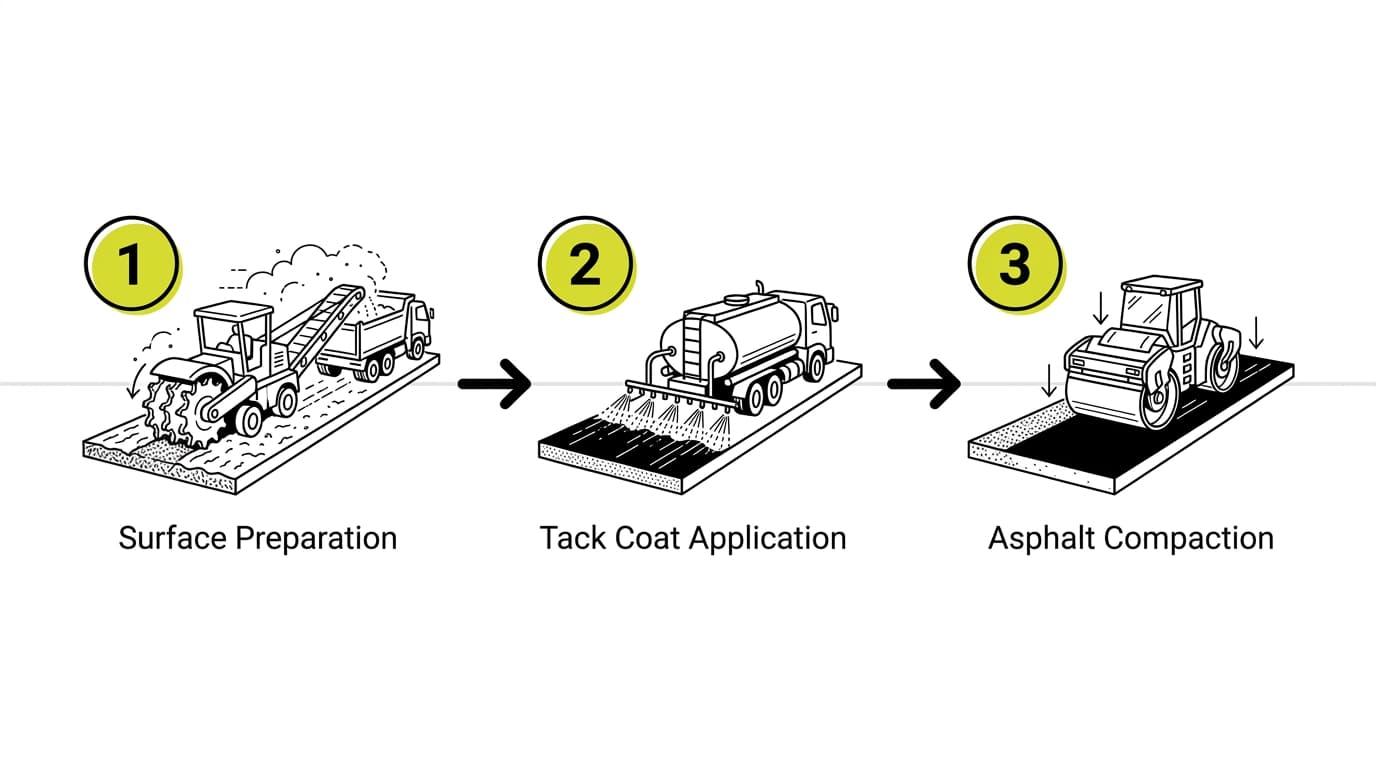
A commercial asphalt resurfacing project follows a carefully planned sequence, from preparing the existing surface to placing and compacting the new asphalt. Each step plays an important role in creating a smooth, durable overlay that performs well under everyday traffic.
Surface Preparation
Milling removes the worn top layer of asphalt before the new overlay goes down. It can also help preserve existing grades, curb heights, and door thresholds while creating a clean, consistent surface for the new pavement.
The amount of milling needed depends on the condition and size of the lot, which can directly affect your project cost, as shown in the FHWA’s milling and asphalt overlay cost analysis.
Tack Coat Application
A tack coat is a thin asphalt emulsion applied between the existing pavement and the new asphalt. Before it is applied, prep can include cleaning debris and completing crack repair so the overlay bonds properly. Proper surface preparation is essential, since dust, debris, or standing water can weaken that bond and lead to premature pavement failure.
Asphalt Compaction
Once the new asphalt is placed, rollers compact it while the material is still at the right temperature. New asphalt also needs a curing period, so vehicle and foot traffic may need to be limited right after paving to help it cure properly.
Proper compaction creates the density and strength the pavement needs to handle everyday traffic, heavy vehicles, and Michigan’s changing weather. At Bart’s Asphalt, our crews monitor the paving process to help ensure the new surface performs as intended.
How Long Does Asphalt Resurfacing Last?
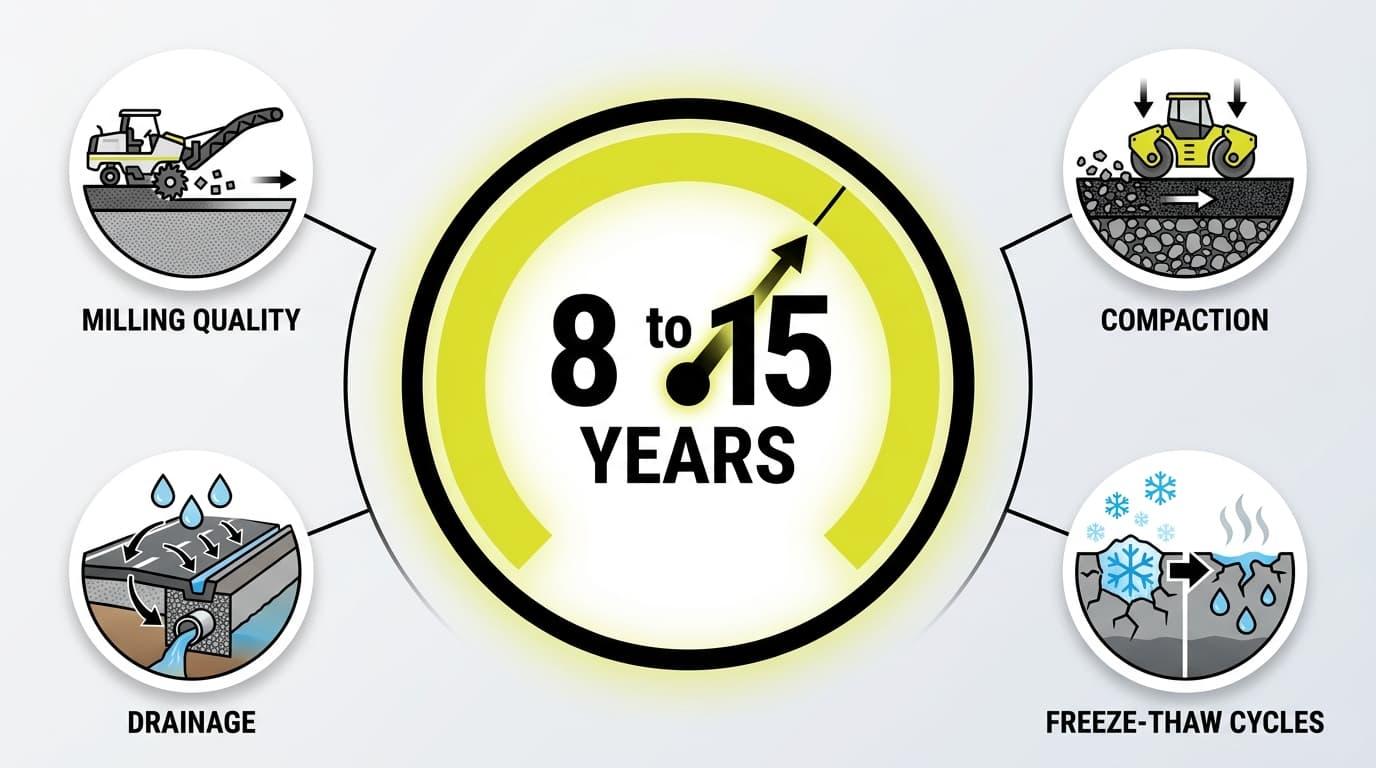
A good asphalt overlay should give you years of reliable service. In many commercial settings, a properly prepared resurfaced lot can last 8 to 15 years. That makes the upfront cost easier to evaluate.
You’re not just paying for new pavement today. You’re investing in years of usable pavement and fewer major repairs.
However, it’s important to note that an overlay’s lifespan can vary widely based on how the pavement is prepared, installed, and maintained.
Milling quality, compaction, and drainage all affect how long your resurfaced pavement lasts. Michigan’s freeze-thaw cycles can also shorten its lifespan. Water can enter small cracks, freeze, expand, and gradually damage the pavement. Regular sealcoating and hot-applied crack sealing can help protect the surface and extend its useful life.
Think Beyond the Initial Cost
Choosing the lowest upfront cost doesn’t always save money over the long term. If the existing pavement structure is already failing, repeated overlays may only delay a larger repair while increasing your total maintenance costs over time.
That’s why it’s important to look at the pavement’s full life cycle instead of focusing only on today’s invoice. The Federal Highway Administration’s life-cycle cost analysis guidance explains why evaluating long-term performance often leads to better investment decisions.
At Bart’s Asphalt, we help you compare your options based on your pavement’s condition, expected lifespan, and overall cost of ownership.
If resurfacing makes financial sense, we’ll recommend it. If a more permanent solution offers better long-term value, we’ll explain why so you can make an informed decision with confidence.
Factors That Can Increase Your Asphalt Resurfacing Costs
Unexpected costs usually come from work that wasn’t identified during the initial inspection. A detailed estimate helps you understand exactly what’s included, reducing the risk of surprise charges once the project begins.
Compliance Costs
Some costs are easy to overlook if they aren’t clearly itemized in your estimate. Ask your contractor whether the following are included:
- ADA parking spaces and accessible pavement markings.
- Fire lane striping and required pavement markings.
- Curb ramp or accessibility improvements.
- Curb painting, signage, or other code-related work.
Breaking these items out separately makes it easier to compare bids and budget accurately.
Surface Repairs
Preparing the pavement before resurfacing is just as important as installing the new asphalt. Drainage issues, deteriorated areas, existing pavement damage, and deep cracks should be addressed first to help the new overlay perform as expected.
Skipping repairs such as crack sealing, pothole patching, or drainage corrections may lower the initial quote, but it can shorten the life of your new pavement and increase maintenance costs later.
Spending a little more on proper preparation today often saves significantly more over the pavement’s lifespan, a principle also highlighted in the FHWA’s life-cycle cost primer. Cutting corners on prep can shorten overlay life and raise repair costs later.
The Value of a Professional Pavement Inspection
A professional pavement inspection provides the information you need to budget with confidence. Before approving resurfacing work, request detailed quotes from at least three contractors.
While online measurements and aerial images can estimate square footage, they can’t reveal what’s happening beneath the surface or identify repairs that could affect your final cost.
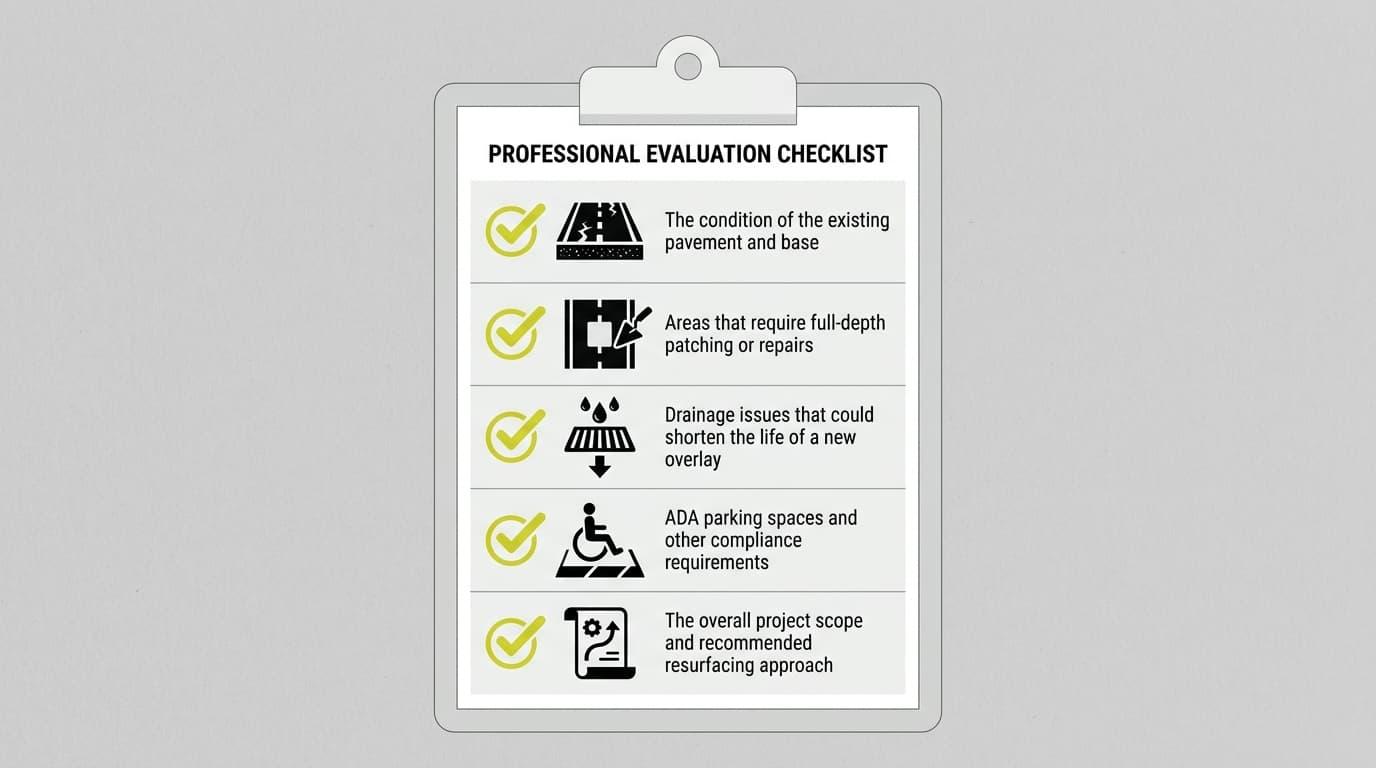
A thorough inspection evaluates factors such as:
- The condition of the existing pavement and base.
- Areas that require full-depth patching or repairs.
- Drainage issues that could shorten the life of a new overlay.
- ADA parking spaces and other compliance requirements.
- The overall project scope and recommended resurfacing approach.
With that information, your contractor can replace broad pricing ranges with a detailed, line-item estimate.
It also helps identify potential repairs before work begins, reducing the likelihood of unexpected change orders and making it easier to plan your resurfacing budget, with the selected proposal carried into a detailed contract that clearly defines the scope.
Plan Your Asphalt Resurfacing Budget With Confidence
Asphalt resurfacing costs depend on more than just square footage. The condition of your pavement, the amount of preparation required, traffic demands, and the overall project scope all influence the final price.
Understanding these factors helps you budget more accurately and choose the right solution for your property.
If you’re planning a resurfacing project, the best place to start is with a professional pavement evaluation.
At Bart’s Asphalt, we’ll assess your parking lot, explain your options, and provide a clear, detailed estimate, along with free estimates for commercial resurfacing projects, so you can move forward with confidence.
Frequently Asked Questions About Asphalt Resurfacing Costs
Is sealcoating the same as asphalt resurfacing?
No. Sealcoating adds a thin protective coating to pavement that is still serviceable, while resurfacing installs a new hot-mix asphalt layer over a structurally sound base. Sealcoating cannot correct widespread deterioration or structural failure.
What is the best time of year for asphalt resurfacing in Michigan?
Late spring through early fall usually provides the most dependable conditions for commercial resurfacing in Southeast Michigan. Asphalt must be placed and compacted while it is hot, so contractors consider air and surface temperatures, weather, lift thickness, and haul time when scheduling the work.
How long does asphalt resurfacing typically last?
A properly installed asphalt overlay typically lasts 8 to 15 years. Actual lifespan depends on pavement condition, traffic levels, drainage, routine maintenance, and Southeast Michigan’s freeze-thaw cycles.
Is asphalt resurfacing less expensive than full replacement?
Yes, resurfacing usually costs significantly less because it reuses the existing pavement structure. However, it’s only a cost-effective option when the underlying base remains stable and doesn’t require full reconstruction.
Can businesses stay open during asphalt resurfacing?
In many cases, yes. Commercial resurfacing projects are often completed in phases, allowing portions of the parking lot to remain accessible while work progresses and minimizing disruption to daily business operations.