
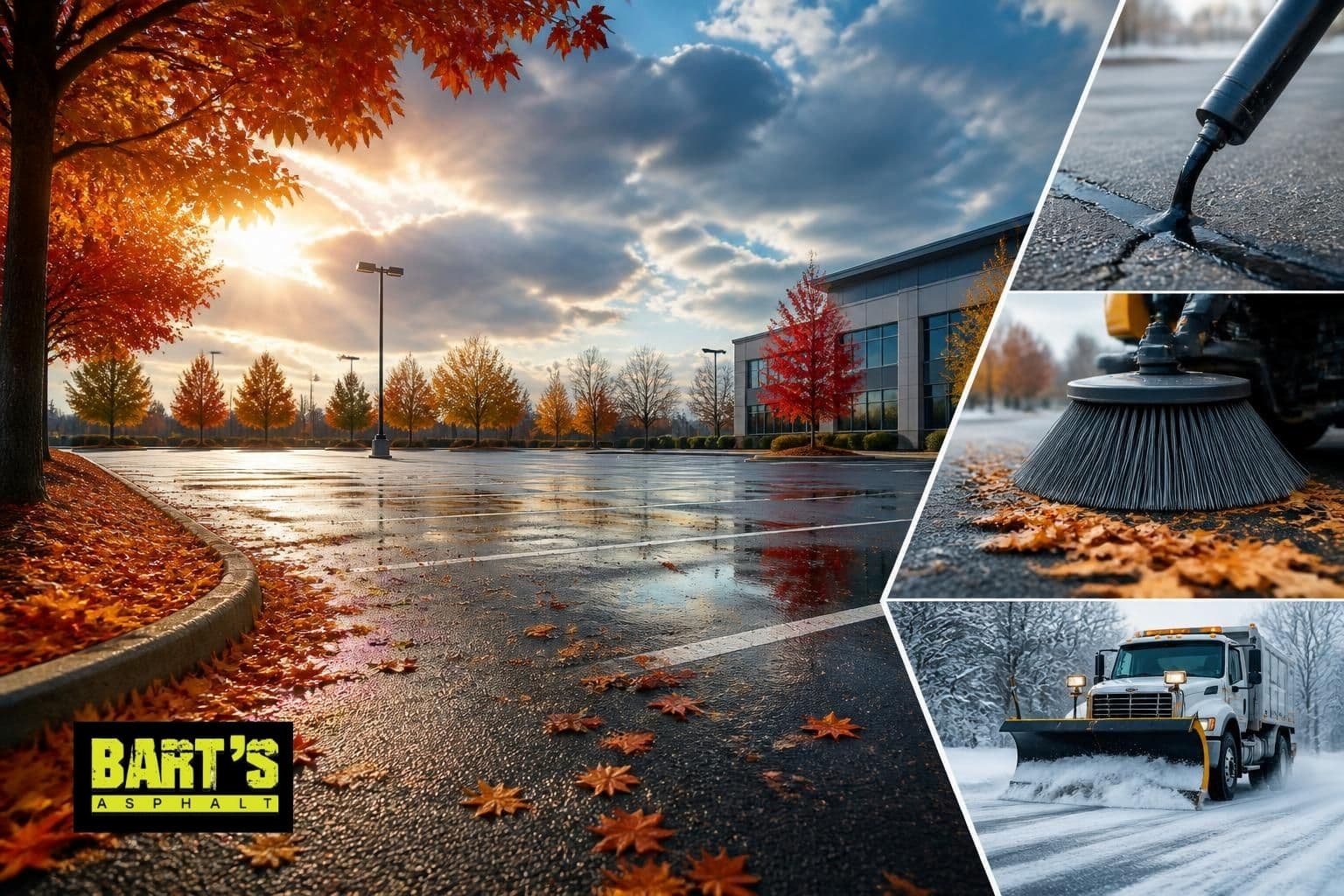
Fall parking lot maintenance can make all the difference for Michigan property managers. That’s because the right maintenance strategy gives them a practical window to find and prioritize pavement problems before snow and repeated freezing make them harder to see and manage. Cracks, potholes, standing water, faded markings, and worn transitions don’t all need the same response, and the goal isn’t to make every parking lot look new by November. It’s to decide what needs attention now, what can be protected, and what should be documented for spring.
The best way to prepare is to work through the lot in order: inspect the property, rank the risks, address the work that fits the pavement condition and weather, then prepare the site for snow operations. The steps below turn that process into a practical fall parking lot maintenance checklist, from the first walkthrough to a prioritized winter plan.
Key Takeaways
- Inspect the entire parking lot before snow cover hides cracks, potholes, drainage problems, pavement markings, and concrete trip points.
- Prioritize safety, accessible routes, high-traffic areas, and defects that allow water into the pavement before cosmetic issues.
- Crack sealing and sealcoating are preventive treatments for appropriate pavement conditions. They don’t rebuild failed asphalt or a weakened base.
- Clear catch basins and low areas so rain and snowmelt have somewhere to go instead of becoming standing water and refreezing on the lot.
- Coordinate repairs, striping, access, snow stacking, and plow routes as one winter parking lot preparation plan rather than separate last-minute jobs.
Before You Start: Why Fall Matters in Michigan
Michigan winter changes the consequences of small pavement defects. Water can enter open cracks and joints, move toward the supporting layers, then freeze and thaw as temperatures fluctuate.
That repeated moisture exposure can widen existing defects and contribute to further deterioration, especially where drainage is already poor.
Fall maintenance is less about racing the calendar and more about matching each treatment to the pavement condition while workable weather remains.
The weather window also matters because asphalt repair materials, crack sealants, sealcoating, concrete work, and pavement-marking products all have application and curing requirements.
Those requirements vary by material and site conditions, and weather, traffic, and other factors can affect both timing and product choice.
If the forecast turns cold or wet, postponing a preventive treatment can be smarter than forcing it onto a surface that isn’t ready.
For property managers, that makes autumn a decision window to protect the parking lot as an investment and reduce costs in the long run.
Identify what could become a winter safety or pavement problem, confirm what can still be completed properly, and move the lower-priority work into a documented spring plan.
If you’re scheduling asphalt work late in the season, review the asphalt repair cure and dry times before planning closures or reopening traffic.
Step 1: Walk the Entire Parking Lot
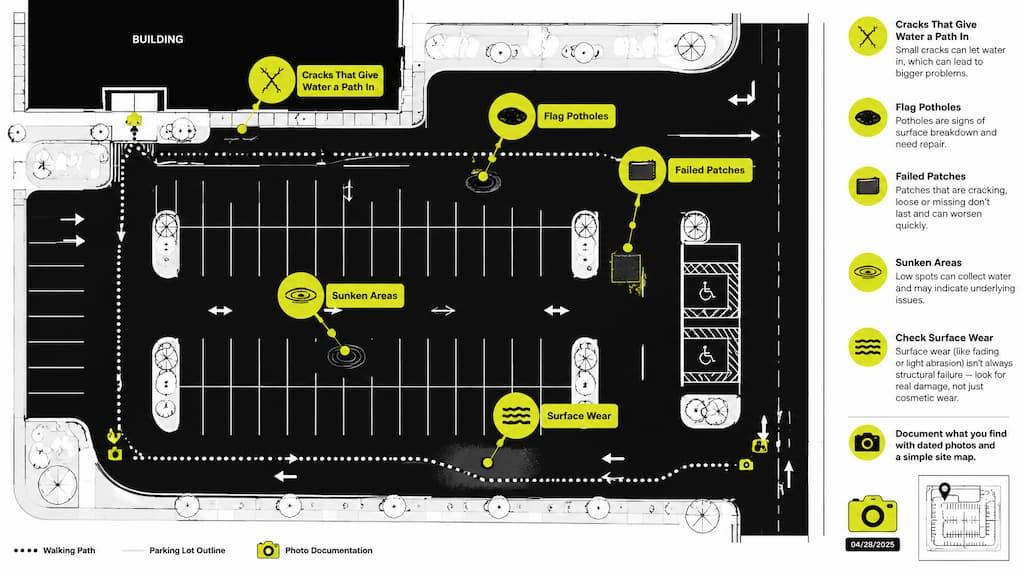
A good commercial parking lot maintenance plan starts on foot. Walk the property when the pavement is visible and reasonably dry, then look at more than the center of the parking field.
Entrances, loading areas, and drive lanes often show the first wear from heavy traffic, while accessible routes, catch basins, curbs, sidewalks, and pavement edges often tell you more about winter risk than a quick windshield inspection.
Document what you find with dated photos and a simple site map. One wide photo can show where the defect sits in the lot, while a closer photo records the actual condition. That gives contractors a clearer starting point and gives property owners a record for budgeting and spring follow-up.
Look for Cracks That Give Water a Path In
Not every crack means the pavement has failed, but even small cracks deserve attention before winter because they create openings where water seeps in.
Long, isolated cracks may be candidates for crack sealing, with crack filling used for suitable openings as part of preventive maintenance when the surrounding asphalt is still stable. Interconnected cracking that resembles reptile skin is different. Alligator cracking can indicate deeper failure, so filling it with sealer won’t restore the pavement structure.
Flag Potholes, Failed Patches, and Sunken Areas
Potholes and broken pavement should be evaluated before snow makes them harder to see and harder for drivers to avoid, since small potholes and minor damage can become expensive repairs if ignored through winter.
Prioritize parking lot repairs first in active traffic lanes and entrances, while also paying particular attention to damage around loading areas and beside accessible parking spaces. A small back-lot defect and a deep hole in a primary drive aisle may look like the same maintenance category on paper, but they don’t carry the same operational priority.
Check Surface Wear Without Confusing It With Structural Failure
Faded color, raveling, loose aggregate, and worn surface texture can point to aging at the top of an asphalt parking lot. These conditions may still fall within a pavement-preservation window if the underlying structure remains sound. Preservation targets serviceable pavement, not pavement that needs structural repair.
Step 2: Rank Problems by Winter Risk
Once the inspection is complete, rank each item by what happens if it waits through winter. Keeping the lot in good shape means prioritizing issues by safety, access, traffic, and pavement condition rather than appearance alone.
| Priority | Examples | Fall decision |
|---|---|---|
| Highest | Deep potholes, unstable pavement, trip points, blocked accessible routes, drainage failures | Evaluate and address before winter when conditions and scope allow. |
| High | Open cracks, worn high-traffic areas, faded ADA/fire-lane markings, vulnerable transitions | Schedule preventive or corrective work based on pavement condition and weather. |
| Lower | Cosmetic staining, minor fading, low-risk appearance issues | Document for spring if they don’t affect safety, drainage, access, or pavement stability. |
That ranking gives property managers a clearer fall scope: urgent access or pavement failures first, preventive work where conditions still allow it, and lower-risk items documented for the next maintenance cycle.
Step 3: Seal Suitable Cracks Before Winter
Crack sealing is one of the more targeted forms of asphalt maintenance because it treats the opening itself rather than coating the entire parking area.
Hot-applied crack sealant is used on suitable cracks to reduce water infiltration while allowing for normal pavement movement.
Sealing or filling appropriate cracks is also a cost-effective step that helps prevent more severe winter damage. Crack sealing is a preservation treatment when applied to appropriate distress.
The important word is appropriate. Crack sealing can help protect sound pavement around a crack, but it won’t correct alligator cracking, settlement, potholes, or a failed base.
Those conditions need a repair method that addresses the damaged pavement and, when necessary, the support underneath it. This is where an inspection matters more than a generic “fill every crack” checklist, because proactive crack work helps avoid more expensive repairs later.
For busy commercial properties, crack work can also be planned by area so parking and traffic flow remain manageable. The exact closure and reopening plan depends on the material, weather, site layout, and scope, so build access into the maintenance plan rather than treating it as an afterthought.
Step 4: Decide Whether Sealcoating Fits
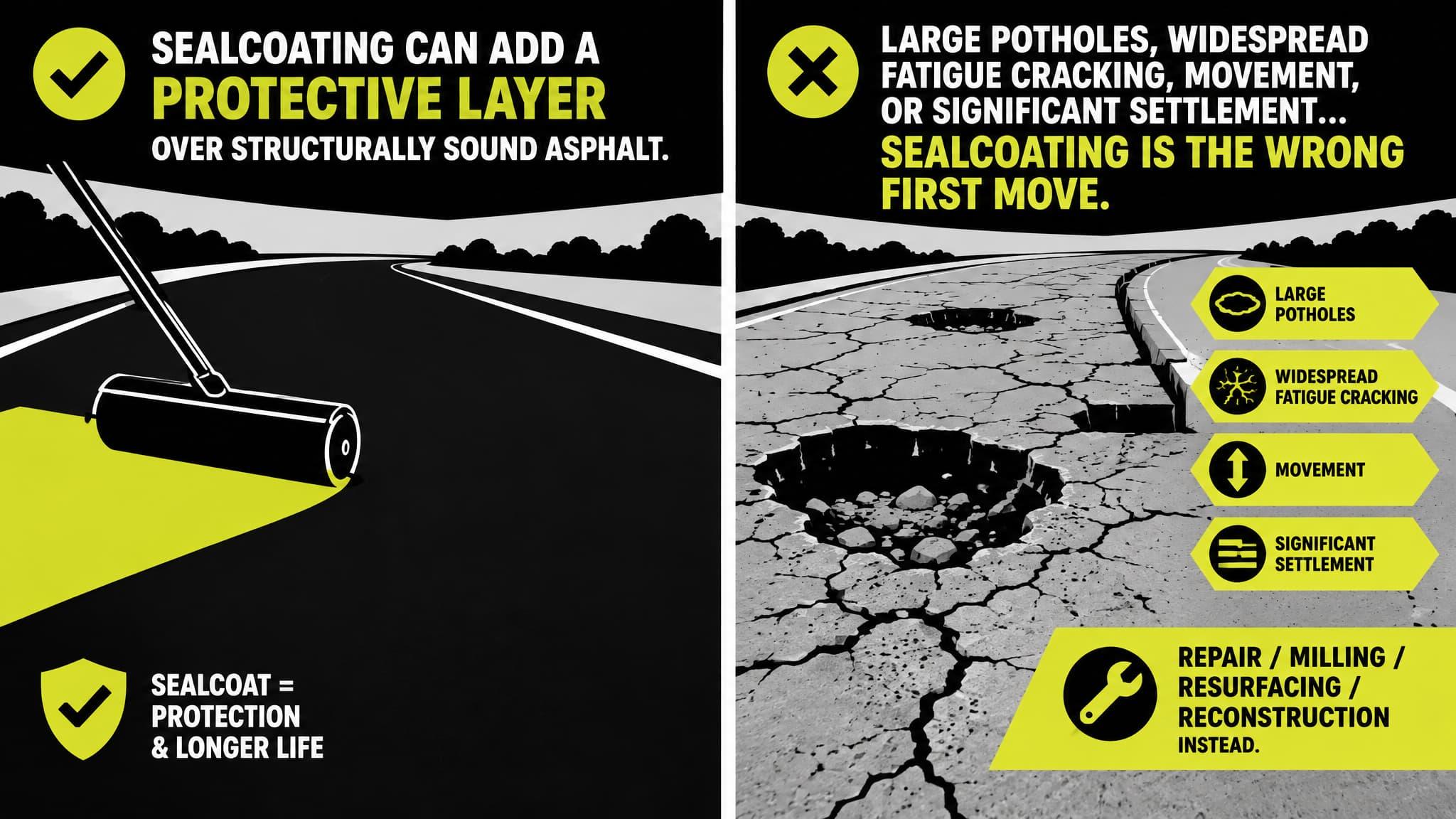
Parking lot sealcoating can add a protective layer over structurally sound asphalt, and seal coating helps shield the surface from water, oil spills, and harmful chemicals while restoring a darker, more uniform appearance. It can support regular maintenance, but it isn’t a repair for pavement that has already lost structural support.
When applied correctly, sealcoating can extend pavement life significantly.
Fall makes the timing decision more important. The pavement needs to be properly prepared, weather conditions have to meet the product and application requirements, and the coating needs enough time to cure before traffic returns. Rather than using one universal temperature or reopening promise, property managers should confirm the actual conditions for the planned product and site.
Sealcoating is typically recommended every three to five years, while properly designed new parking lots may not need it for 2–5 years.
If the asphalt is already showing large potholes, widespread fatigue cracking, movement, or significant settlement, sealcoating is the wrong first move.
Those areas may need asphalt repair, milling, resurfacing, or reconstruction depending on the condition below the surface. When the choice isn’t obvious, an on-site assessment can separate preventive maintenance like sealcoating from structural repair work before money is spent on the wrong layer.
Step 5: Clear Drainage Before Snow and Ice
Proper drainage is part of pavement maintenance, not just housekeeping. Leaves, dirt, sediment, and trash can collect around catch basins and low points during fall. Wet leaves can trap moisture on asphalt and damage binders if they are not removed.
When runoff can’t move away from the parking lot, standing water can spread across traffic areas, seep into pavement openings, and later refreeze where customers and tenants walk or drive. Parking-lot drainage maintenance supports stormwater control.
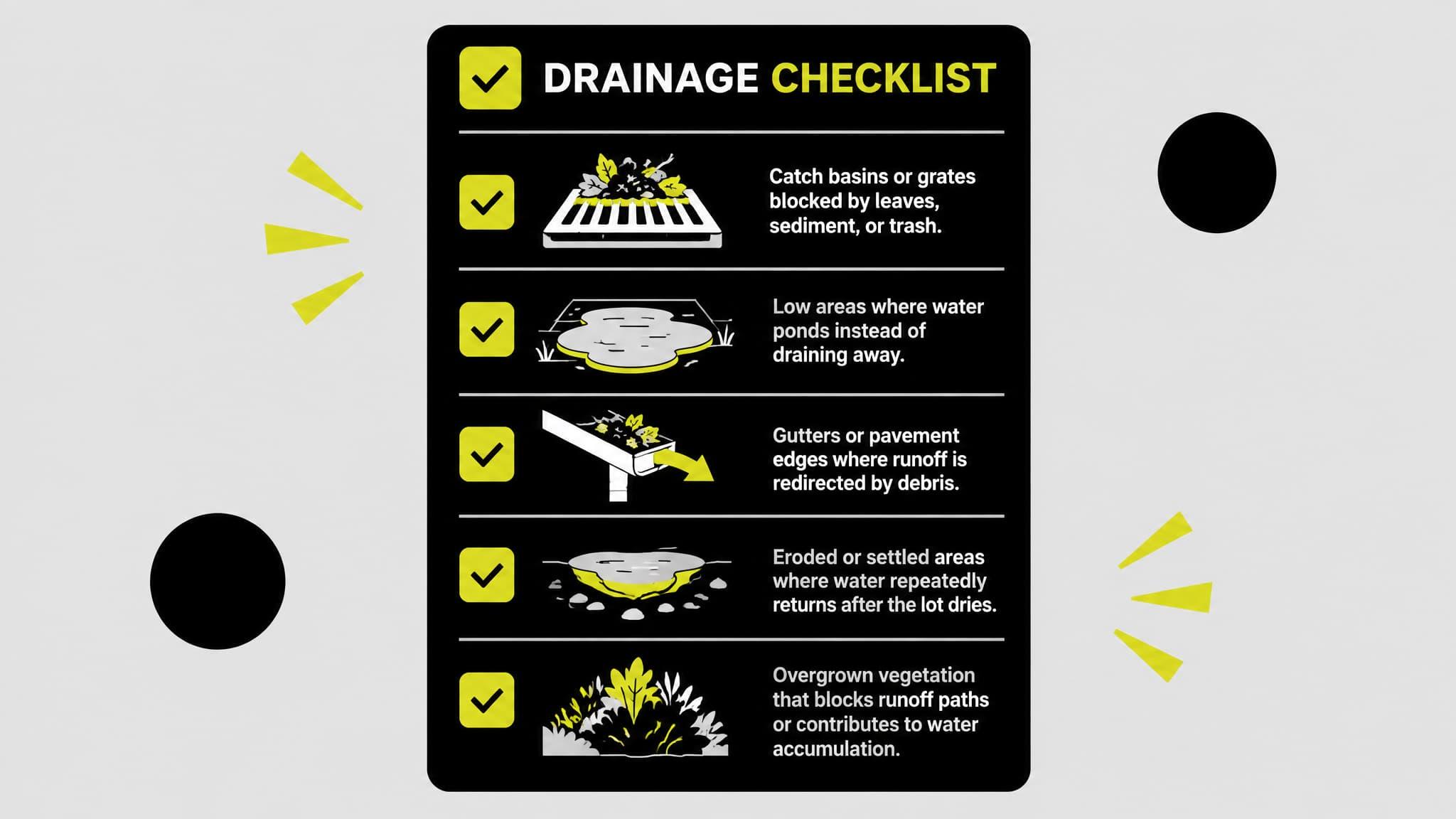
Regular sweeping and leaf removal help prevent moisture retention, debris damage, and surface degradation. After leaf drop or meaningful rain, walk the drainage path and look for:
- Catch basins or grates blocked by leaves, sediment, or trash.
- Low areas where water ponds instead of draining away.
- Gutters or pavement edges where runoff is redirected by debris.
- Eroded or settled areas where water repeatedly returns after the lot dries.
- Overgrown vegetation that blocks runoff paths or contributes to water accumulation.
After significant rain, daily inspections of problem areas help identify standing water before the winter season.
If water keeps returning to the same location even after debris is cleared, treat it as a drainage problem rather than a sweeping problem.
The fix may involve grading, catch-basin work, pavement repair, or another site-specific correction. Stormwater good-housekeeping practices also reinforce the value of keeping debris and pollutants out of drainage systems, and cleaning drainage systems is critical to prevent meltwater pooling on asphalt during the winter season.
Step 6: Inspect Concrete and Accessible Routes
Commercial pavement maintenance doesn’t stop where asphalt meets concrete parking lots, including concrete elements such as curbs, sidewalks, ramps, aprons, and transitions. These areas can develop cracks, settlement, spalling, or uneven edges that become harder to see under snow. They can also affect how water moves along the edge of the parking lot.
Walk the pedestrian routes separately from the drive lanes. Check the path from accessible parking spaces to entrances for ADA compliance, along with the edges around curb ramps and any point where concrete surfaces meet asphalt pavement.
If a transition is uneven or a concrete section is failing, determine whether it needs repair before winter or should be clearly documented and controlled until permanent work can be scheduled.
Step 7: Refresh Critical Markings and Signage
Pavement markings help organize traffic flow when the lot is clear, and well-marked parking areas also support safety and curb appeal.
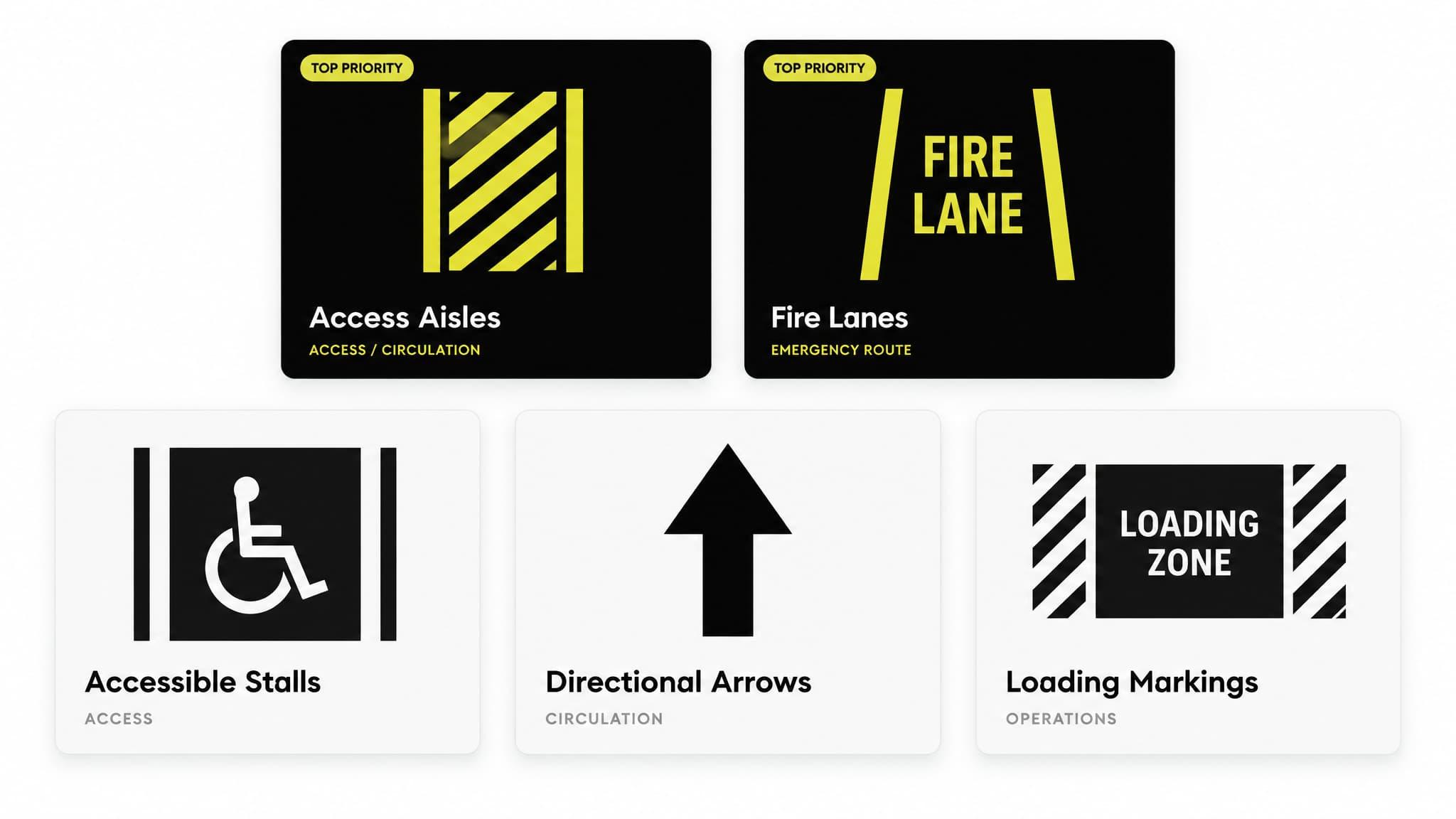
Faded accessible stalls, access aisles, directional arrows, fire lanes, and loading markings can become even harder to read once slush, snow piles, and shortened daylight enter the picture. The ADA accessible parking requirements are a useful reference when restriping or checking whether an existing layout still works.
Prioritize markings that affect access, circulation, and emergency routes first, since they are central to a well-maintained parking lot rather than just its appearance. Also inspect signs and posts that support accessible parking or traffic control. If sealcoating is part of the fall scope, coordinate restriping after the coating has cured rather than scheduling the two jobs independently.
Step 8: Coordinate Snowplow Routes
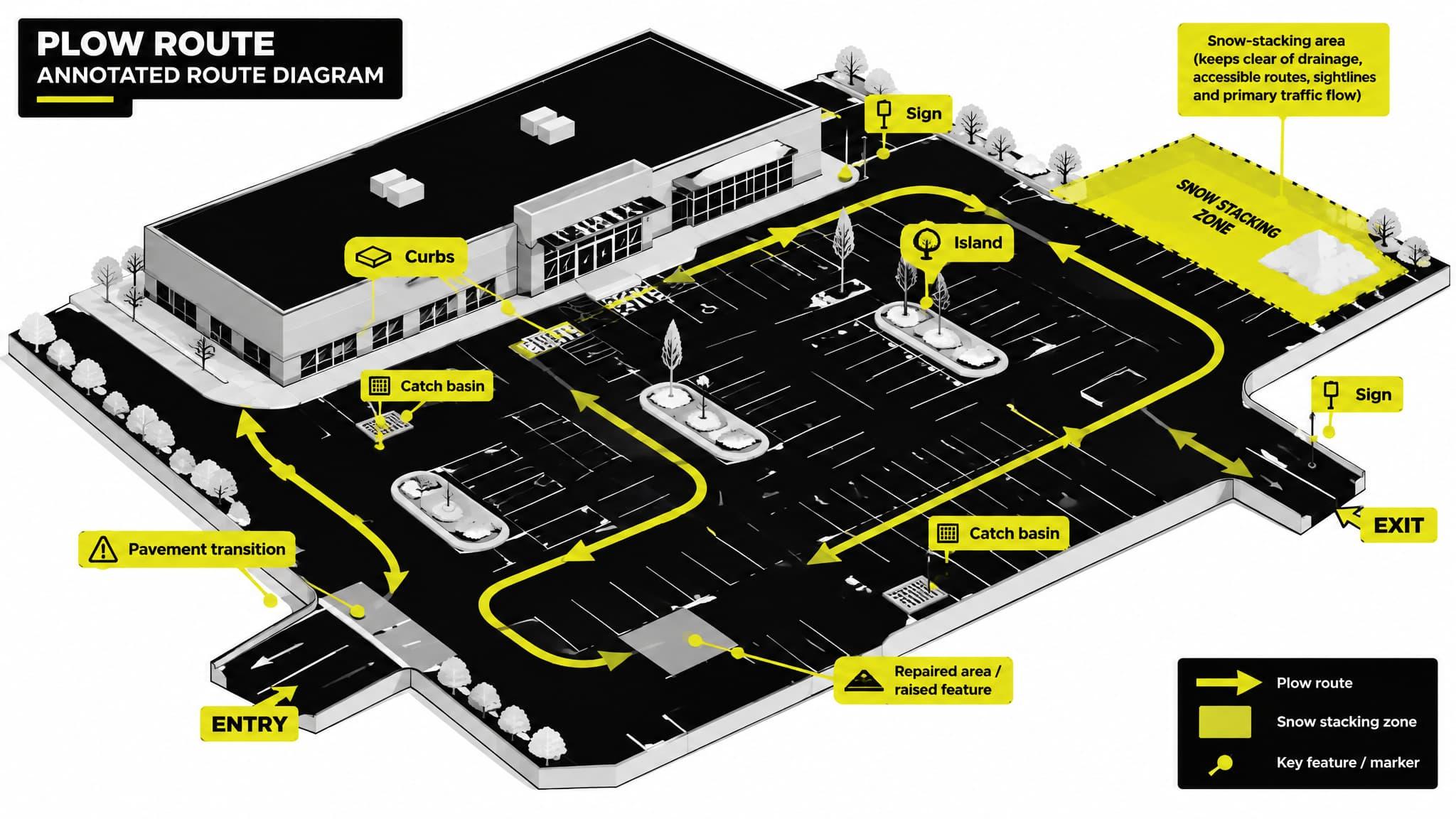
Seasonal parking lot preparation should include the people who’ll be working on the property after the snow starts. Walk the site with the snow contractor while the lot is still visible, then agree on the features and routes that need special attention:
- Mark curbs, catch basins, islands, signs, and vulnerable pavement transitions where needed.
- Identify repaired areas or raised features a plow operator could miss under snow.
- Choose snow-stacking areas that don’t block drainage, accessible routes, sightlines, or primary traffic flow.
This is also the time to confirm service expectations, access points, and any areas that need special handling. A newly repaired section, a raised catch-basin grate, or a narrow curb return is easier to explain on bare pavement than during a storm. Clear communication in fall can prevent winter crews from having to guess at the site layout under fresh snow.
Step 9: Build the Maintenance Plan
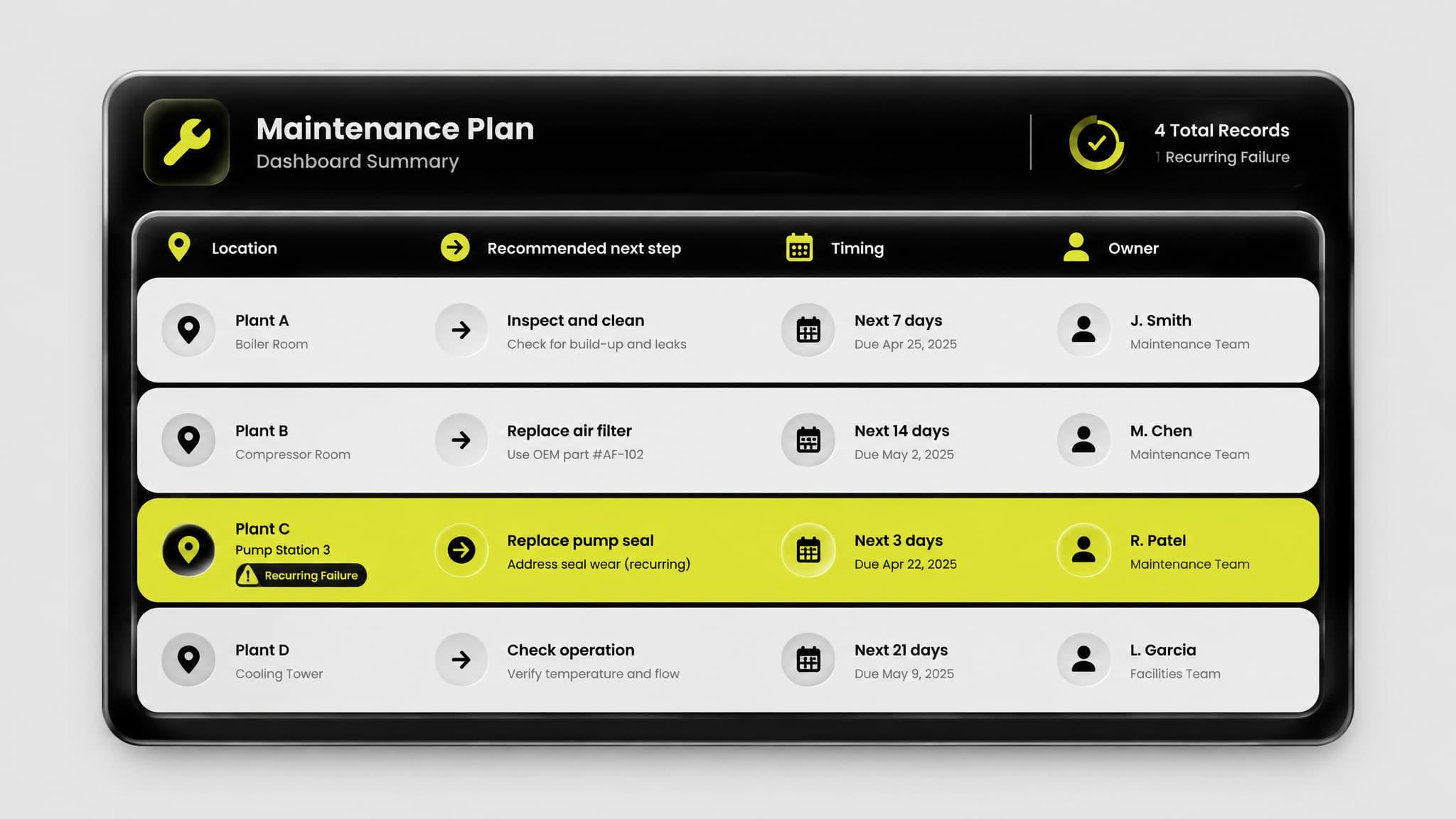
The most useful fall inspection ends with a working parking lot maintenance plan for property owners and managers, not just a folder of photos.
Assign each item a location, recommended next step, timing, and owner so repairs can be coordinated with tenants, customers, deliveries, and budget approvals.
Keep recurring failures visible in that record. Documenting repeat failures helps define future maintenance services or broader parking lot maintenance services. A pothole or settlement that returns in the same area can point to a deeper problem, while a structurally sound section with surface wear may still be a preservation candidate.
When damage is beyond routine maintenance, the scope depends on how far the deterioration extends and what’s happening below the surface. That distinction is what separates a targeted repair or resurfacing from full-depth reconstruction targeted repair or resurfacing,
Step 10: Schedule Work Around Weather and Operations
Fall maintenance has two calendars: the weather calendar and the property calendar. A repair may be technically appropriate but still need phasing around business hours, tenant access, school traffic, loading schedules, or customer parking. Likewise, a quiet weekend doesn’t help if the surface is wet or the planned material can’t be applied under the forecast conditions.
Bart’s Asphalt works with commercial properties across Southeast Michigan to evaluate asphalt and concrete conditions, identify the work that makes sense before winter, and coordinate the scope around site access.
Those parking lot services may include commercial asphalt repair, hot-applied crack sealing, sealcoating, concrete work, and line striping when each fits the site conditions, while parking lot paving may be the better option when repairs are no longer sufficient.
The best fall plan is sometimes a shorter one. If a preventive treatment can’t be completed properly before the weather changes, it’s better to protect the urgent areas, document the rest, and schedule the next step for spring than to force work into the wrong conditions.
Finish Fall Maintenance With a Winter-Ready Plan
Once you’ve worked through the fall parking lot maintenance steps, the property should be ready for winter operations, not simply left with a list of completed services.
A proactive plan also helps protect the property from harsh weather and reduce the chance of expensive seasonal deterioration.
By the time snow arrives, urgent pavement and access issues should be identified, drainage paths should be clear, snow crews should know the site, and anything deferred should already have a place in the spring plan.
For Michigan property managers, that’s the real value of the fall window: you can still see what the pavement is telling you and act on the problems that matter before winter changes the conditions. If the walkthrough leaves you unsure which repairs or preventive treatments belong in this season’s scope, Bart’s Asphalt can assess the lot and help prioritize the next steps.
Schedule a Fall Parking Lot Assessment
Fall Parking Lot Maintenance FAQs
These quick answers cover a few planning questions that often come up when Michigan properties move from fall maintenance into winter preparation.
Who Is Responsible for Parking Lot Maintenance?
Responsibility depends on the ownership and lease arrangement. A property owner or management company may handle commercial parking lot maintenance directly, while some leases assign specific maintenance costs or duties to a tenant. Review the lease and property-management agreement before approving work, especially when multiple parties share the site or budget.
What Parking Lot Problems Shouldn’t Wait Until Spring?
Problems that affect safe access, drainage, or pavement stability deserve the closest look before winter. That includes deep potholes in active traffic areas, blocked accessible routes, standing water caused by drainage issues, unstable or sunken pavement, and open defects that are already worsening. Not every issue can or should be repaired late in the season, but urgent areas should be evaluated, controlled, or scheduled while the pavement is still visible.
How Often Should a Parking Lot Be Repaved?
There isn’t one repaving interval that fits every commercial parking lot. Traffic loads, pavement thickness, drainage, base condition, construction quality, maintenance history, and Michigan weather all influence when resurfacing or reconstruction becomes necessary. Regular inspections are more useful than a fixed calendar because they show whether the pavement is still a maintenance candidate or has moved into structural repair.
How Much Does It Cost to Repave a Commercial Parking Lot?
There isn’t one reliable per-square-foot price for repaving a commercial parking lot because resurfacing and full-depth reconstruction are very different scopes. Lot size, milling or removal, base repairs, drainage, asphalt thickness, site access, phasing, and striping can all change the total. Bart’s Asphalt prices commercial repaving based on the actual site conditions and approved scope, so a free on-site estimate is the best way to get a useful number for your property rather than relying on a generic rate.