

Published 2026 cost guides do not use a universal price. HomeGuide lists material-only millings at about $10 to $20 per ton and installed projects at roughly $2 to $5 per square foot, while Angi reports installed costs closer to $3 to $8 per square foot. Treat $2 to $8 per square foot as a broad planning range, not a Michigan quote.
For Michigan homeowners, the material price is only one part of the total. Driveway size, haul distance, access, grading, drainage, base repair, and compaction can move a project toward either end of the range.
Millings can cost less than new hot-mix asphalt, but they produce a rougher surface, and their performance depends heavily on material quality, base support, drainage, and installation.
Key Takeaways
- Published 2026 guides place material-only millings near $10 to $20 per ton and installed projects within a broad $2 to $8 per square foot range.
- At a four-inch compacted depth, one ton may cover roughly 48 to 60 square feet; actual yield depends on density, gradation, moisture, and compaction.
- The main cost drivers are driveway size, delivery distance, site access, grading, drainage, base preparation, and compaction.
- Millings usually cost less than new asphalt but remain more textured and less uniform than a paved hot-mix surface.
- A stable, well-drained base matters more in Michigan because moisture trapped during spring thaw can weaken the supporting soil.
How Much Do Asphalt Millings Cost per Ton and per Square Foot?
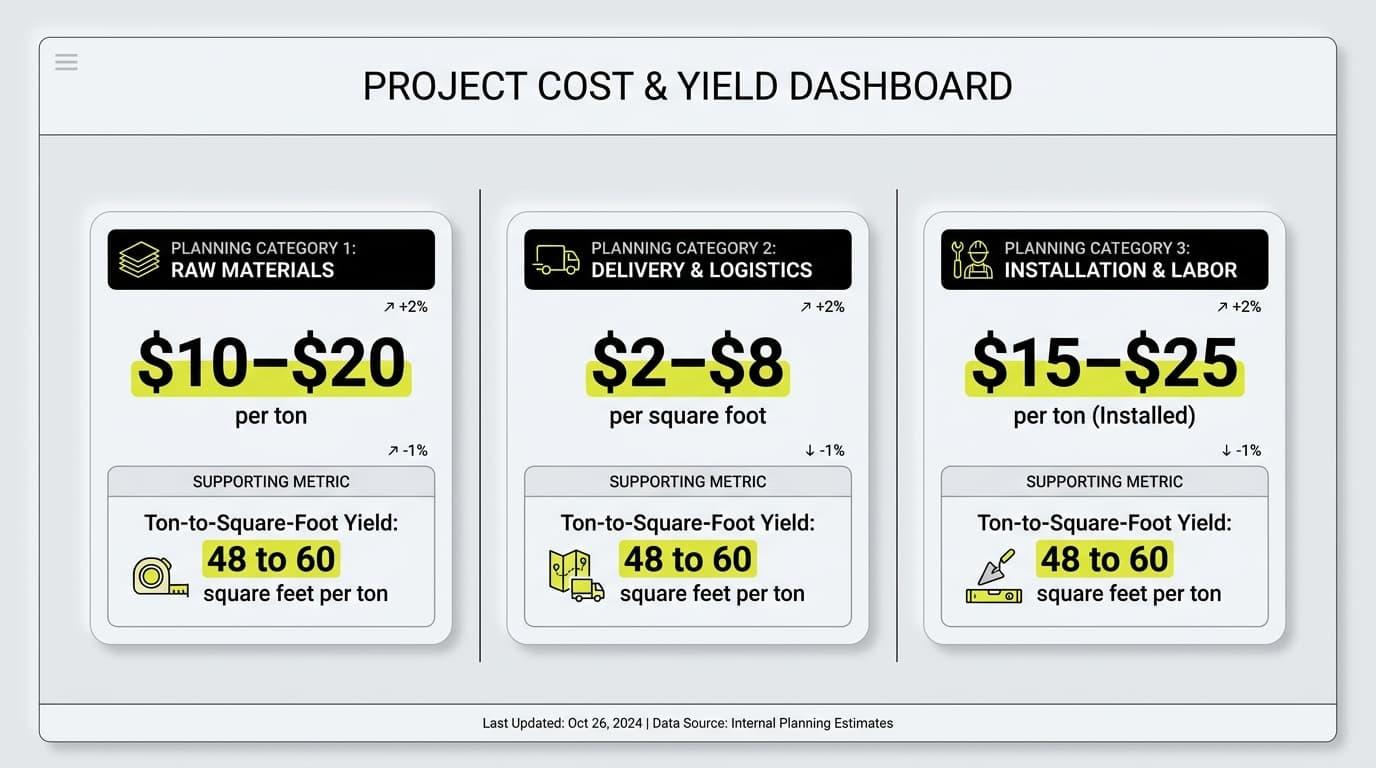
Material quantity is calculated from the area, compacted depth, and the supplier’s stated density. Federal Highway Administration data indicate that compacted RAP weighs between 100 and 125 pounds per cubic foot, which works out to approximately 48 to 60 square feet per ton at a four-inch depth. Add an allowance only after the supplier or installer confirms the material and expected compaction.
Your final quote can still vary based on delivery distance, existing ground conditions, grading, base preparation, and compaction. A driveway with a solid, well-drained base requires less preparation than one with soft spots, ruts, or drainage problems.
The table below gives broad 2026 planning ranges. Michigan pricing can vary by supplier, haul distance, project size, and site conditions.
| Cost Category | 2026 Planning Range |
| Material only | $10–$20 per ton |
| Delivery | Quoted by load size and haul distance |
| Installed driveway | $2–$8 per square foot |
What Does a 600-Square-Foot Millings Driveway Cost?
A 600-square-foot driveway may require 10 to 13 tons of material at a four-inch compacted depth. Using the broad installed range of $2 to $8 per square foot, the planning total is approximately $1,200 to $4,800 before any unusual excavation, drainage, or base reconstruction.
The actual quote depends on what needs to happen before and during installation. If the existing base is in good condition, the crew may need relatively little preparation. If the driveway has settled, developed ruts, or has drainage issues, grading and base work can increase the cost.
What Does a 1,200-Square-Foot Millings Driveway Cost?
A 1,200-square-foot driveway may require 20 to 25 tons of material at the same depth. The broad installed planning range is approximately $2,400 to $9,600, with site preparation and haul distance determining where the quote falls.
Larger driveways can sometimes have a lower effective cost per square foot because equipment mobilization and other fixed costs are spread over a larger surface area. However, the condition of the existing base and the amount of preparation required can still significantly affect the final price.
Asphalt Millings vs. Hot-Mix Asphalt: What’s the Difference?
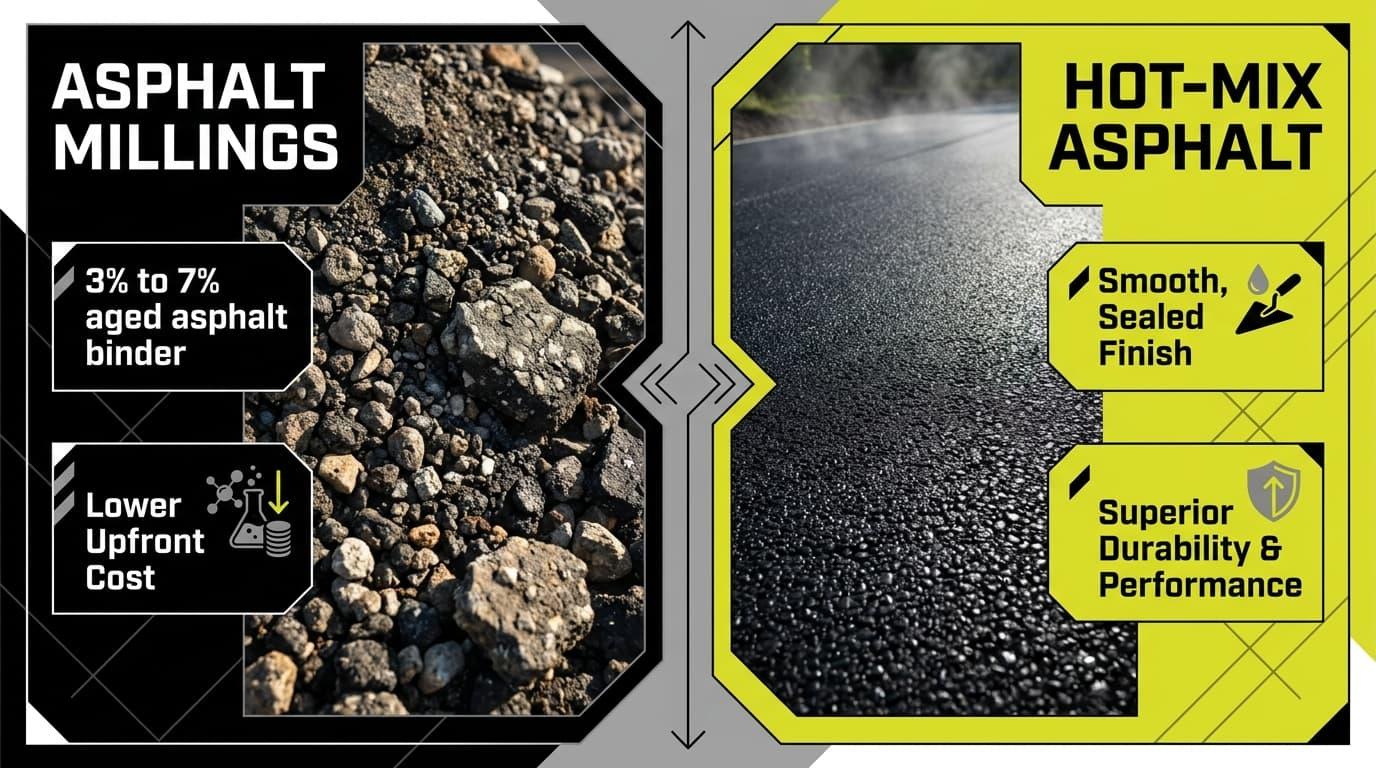
Asphalt millings are recycled pavement pieces created when existing asphalt is removed during road and parking lot resurfacing. Instead of sending that material to waste, it can be processed and reused as a driveway surface. Hot-mix asphalt, by comparison, is manufactured at an asphalt plant using aggregate and liquid asphalt binder.
The two materials differ in how they’re produced, how they perform, and what homeowners can expect from the finished surface. Millings generally cost less upfront, but they don’t produce the same smooth, sealed finish as new hot-mix asphalt.
How Are Asphalt Millings Made?
Asphalt millings are created during the removal or rehabilitation of existing pavement. A milling machine grinds off a controlled layer of the old asphalt surface, producing reclaimed asphalt pavement, commonly called RAP. That material is then collected, transported, and processed for reuse.
During asphalt resurfacing, milling removes the deteriorated upper portion of the pavement while leaving the underlying structure in place when the project calls for it. The recovered material can then be screened and processed into usable millings rather than discarded.
The Federal Highway Administration’s RAP material data show that reclaimed pavement is mostly aggregate with about 3% to 7% aged asphalt binder by weight. That binder is harder and more viscous than new binder, so loose millings should not be described as turning back into new hot-mix asphalt simply through sun and traffic.
Source material, crushing, screening, particle size, and contamination all affect consistency. Ask whether the millings were processed and screened, and confirm the supplier’s density before estimating coverage.
Factors That Affect Asphalt Millings Driveway Cost
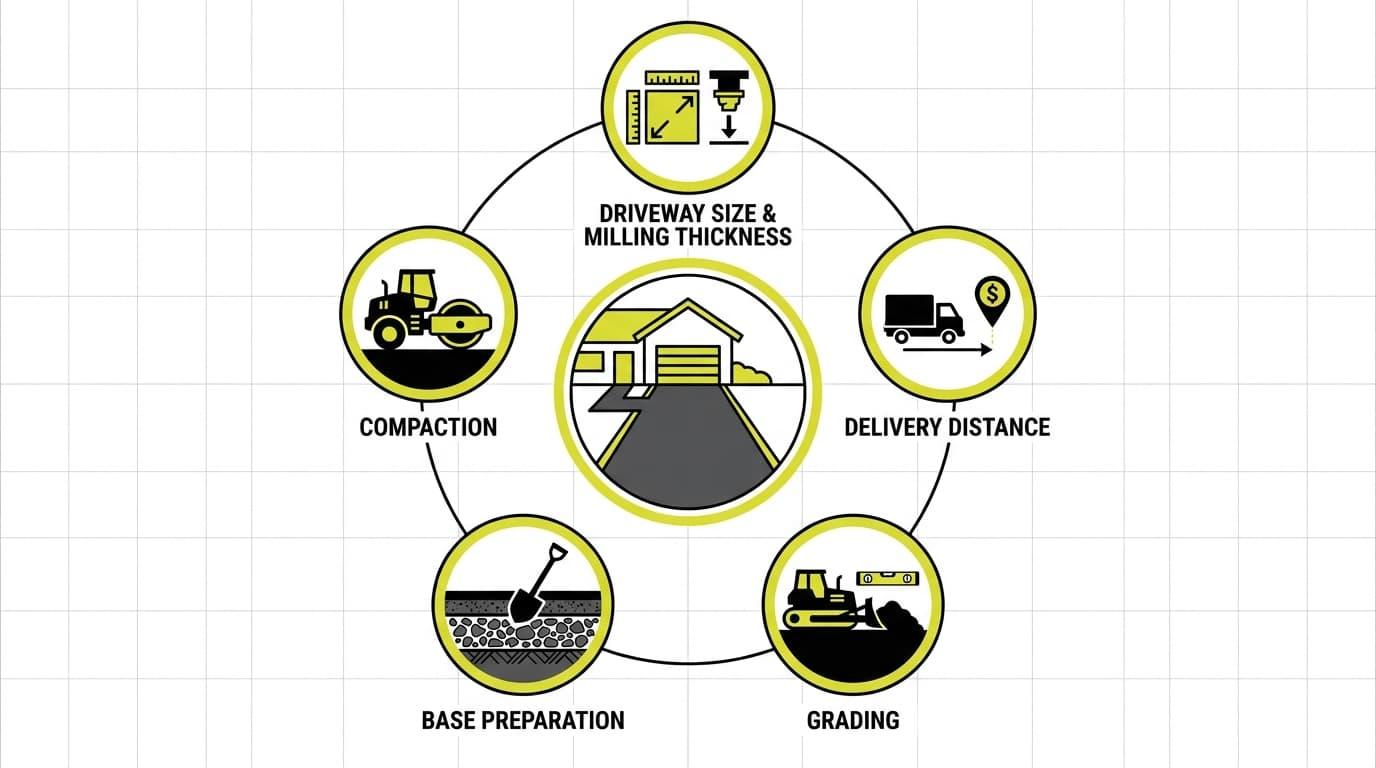
Two driveways can be the same size and still receive very different quotes. The biggest reasons are straightforward. The condition of the property and the amount of work required to prepare, install, and compact the driveway can significantly affect the final price.
Driveway Size and Milling Thickness Determine Tonnage
The larger the driveway and the deeper the finished layer, the more material the project needs. At a four-inch compacted depth, a 900-square-foot driveway may require roughly 15 to 19 tons, depending on the RAP’s compacted density.
Depth should match the existing base, soil, drainage, and expected vehicle loads. Using a thinner layer solely to reduce tonnage can lead to movement or rutting when the underlying support is weak.
Delivery Distance Can Increase Material Costs
Haul distance matters across Bart’s Asphalt’s service area in central and Southeast Michigan. A source near Jackson, Lansing, Ann Arbor, or another project location may reduce trucking time, while longer hauls and partial loads can raise the delivered cost per ton.
Partial loads can also make delivery less economical. If a truck is already making the trip, filling it with the amount of material your project actually needs can help spread that transportation cost across more tons.
Grading, Base Prep, and Compaction Add Labor Costs
This is where two seemingly similar milling projects can start to look very different on paper. Before the millings arrive, the crew needs to determine whether the existing surface can support them or whether the base needs additional work.
The main preparation and installation costs usually come from:
- Grading: Reshaping uneven or settled areas so the driveway has a consistent surface and proper drainage.
- Base Preparation: Reworking weak areas or adding stone where the existing ground doesn’t provide a stable foundation.
- Compaction: Running the appropriate equipment over the millings to create a dense, stable surface.
Compaction shouldn’t be treated as an optional finishing step. Loose millings can shift, rut, and migrate toward the edges when they aren’t properly compacted.
For commercial parking areas and access lanes, the same base, drainage, and compaction principles guide Bart’s Asphalt’s commercial paving work. The company does not provide residential milling driveway installation.
The True Cost of Free Asphalt Millings
Free millings remove only the purchase price. Hauling, unloading, grading, equipment, compaction, and material consistency still affect the real project cost.
A few costs can quickly change the math.
- Trucking: Moving 10 tons yourself can involve fuel, mileage, and trailer rental. Depending on the distance, a contractor’s delivery charge may be more economical.
- Equipment Rental: You’ll need a way to spread the millings and compact them properly. A skid steer, roller, or plate compactor can incur high rental costs.
- Rework: Free millings can vary in consistency and moisture. If the material doesn’t compact properly, you may end up spending more time correcting soft spots, ruts, or uneven areas.
Before accepting free material, confirm the quantity, particle size, contamination, loading arrangements, and whether local rules allow the proposed placement. Poorly processed material can cost more to correct than screened millings from a known source.
Asphalt Millings vs. Gravel and New Asphalt Costs
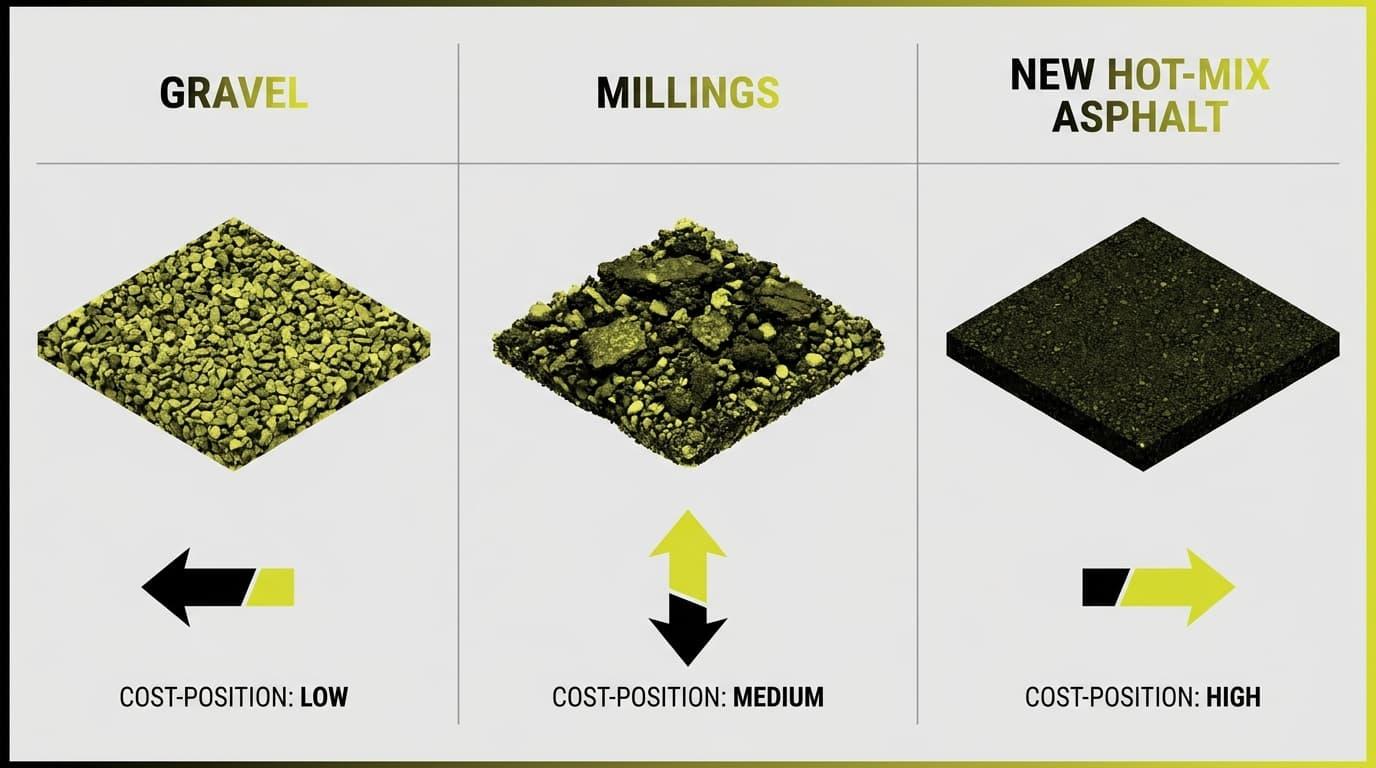
Gravel often has the lowest upfront material cost, millings fall in the middle, and new hot-mix asphalt usually has the highest initial price. The difference can narrow once each option includes delivery, grading, drainage, base preparation, and compaction.
Gravel vs. Millings
Gravel can be less expensive to install, but traffic can displace loose aggregate into wheel paths and edges. Compacted millings usually create a smoother, darker finish than gravel. Periodic regrading and the addition of stone may be necessary.
The tradeoff comes with ongoing maintenance. Gravel doesn’t bind together, so traffic gradually pushes stone into tire tracks, lawns, and surrounding areas.
Ruts and uneven areas can also develop over time, requiring periodic regrading and additional stone. Millings also produce less dust than traditional gravel, especially in dry conditions.
Compacted millings can form a firmer, less mobile surface than loose gravel, but they remain a granular RAP layer rather than a sealed hot-mix pavement.
Millings Vs. New Asphalt
Published cost guides place installed millings in a broad $2-$8 per square foot range. New hot-mix asphalt is usually more expensive, but exact comparisons require matching the same excavation, base, drainage, thickness, and access scope.
That means the cheapest material doesn’t always produce the lowest project quote. A driveway with a solid existing base may be a good candidate for millings, while a property requiring extensive reconstruction could narrow the price difference between millings and new asphalt.
For homeowners looking for an alternative between loose gravel and a fully paved asphalt surface, our asphalt vs. chip seal comparison covers another option.
A Solid Base for Michigan Freeze-Thaw Conditions

Base preparation is especially important in Michigan. MDOT’s 2026 spring restriction notice explains that thawing can trap moisture in softened ground beneath pavement, making the roadbed more susceptible to damage. A residential driveway is smaller than a state road, but the same moisture-and-support issue makes drainage and a stable base critical.
Build a Stable Base
Loose or poorly compacted soil can shift as temperatures rise and fall. Before spreading millings, a contractor may need to compact the subgrade, add stone, reshape the grade, or rebuild soft sections.
Once the base is ready, the millings can be spread and compacted in lifts. A roller handles the main surface, while a plate compactor reaches edges and tighter areas. Skipping this preparation can lead to settlement and regrading sooner than expected.
Keep Water Moving Off the Driveway
Drainage also plays a key role in driveway performance. Water that collects on the surface or becomes trapped underneath can weaken the base, and poor runoff control after heavy rain can also lead to softening and surface problems. Freezing and expansion can then contribute to rutting and uneven areas.
A properly graded driveway should move runoff away without creating low spots. A 2% cross slope, about one-quarter inch per foot, is a common starting point, but the correct grade depends on the property, garage elevation, neighboring land, and local drainage requirements.
Low areas may require regrading, a swale, an underdrain, or another site-specific solution. Before work begins, check municipal requirements for driveway approaches, drainage, and work near the road right-of-way.
How Millings Are Installed
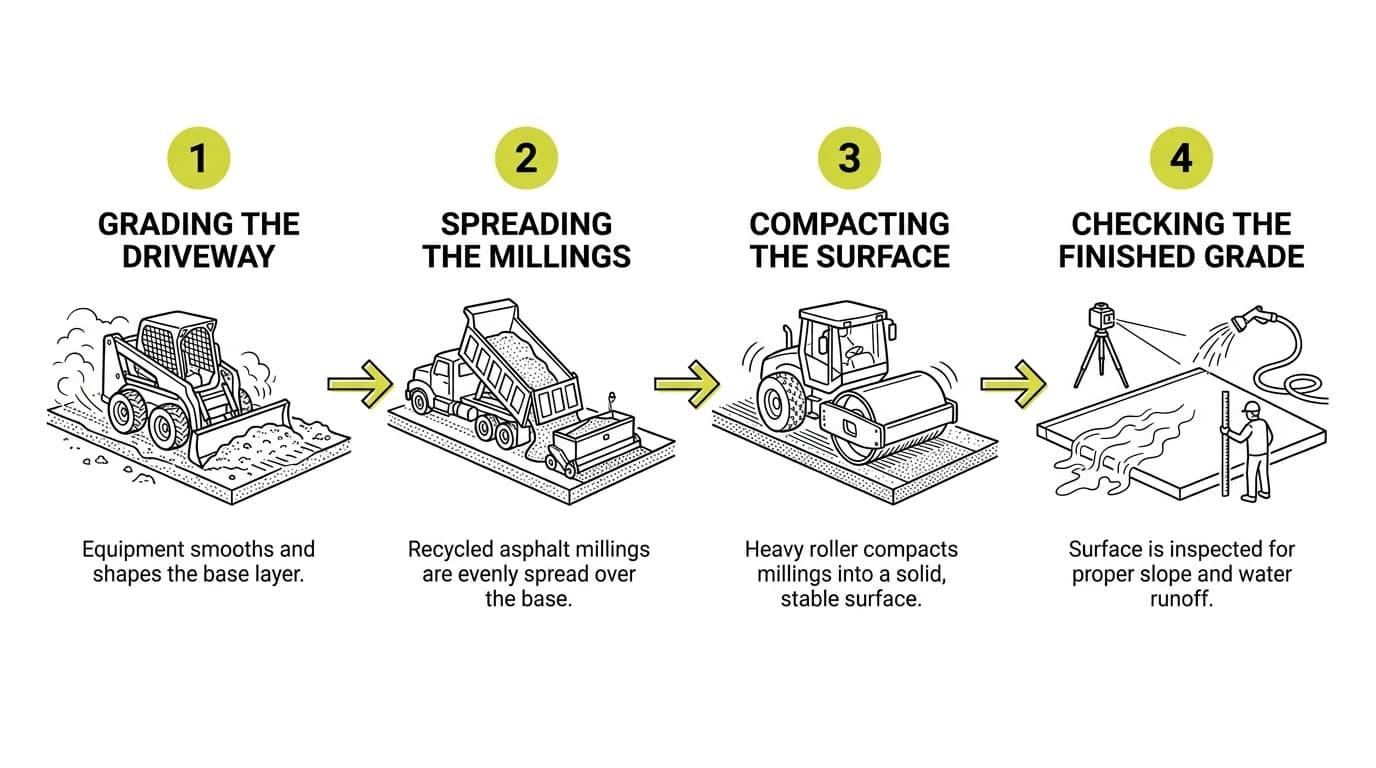
Installation should follow the design established after the base, drainage, material, and finished depth are confirmed.
Here’s how the process typically works:
- Grading the Driveway: High spots are cut down, low areas are filled, and the surface is shaped to promote drainage.
- Spreading the Millings: Place material evenly in manageable lifts so the compaction equipment can reach the required density throughout the layer.
- Compacting the Surface: A roller handles the main driveway, while tighter areas, edges, and aprons may require a plate compactor.
- Checking the Finished Grade: The completed surface should shed water without creating low spots where moisture can collect.
Get the Moisture Right
Moisture can affect how well millings compact. Slightly damp material can settle more tightly, while overly dry millings may remain loose. Too much water can also cause problems by making the material unstable during compaction.
Crews may lightly wet the material or wait for better conditions before compacting. The goal is a firm, even surface that locks together without excessive movement.
The Pros and Cons of an Asphalt Millings Driveway
This millings driveway pros-and-cons comparison highlights the same trade-off between lower cost and a less finished appearance.
Lower Cost With Some Ongoing Maintenance
Millings can hold up well under regular driveway traffic and offer a relatively low maintenance surface compared with gravel, but they don’t behave exactly like a sealed asphalt surface. Over time, some material can loosen or migrate, particularly around the edges and in heavily traveled areas.
Over time, a millings driveway may need some basic maintenance to keep the surface firm, even, and in good condition, including:
- Regarding pulling displaced material back into low or worn areas.
- Re-compaction to firm up sections that have settled or loosened. This is different from patching asphalt potholes, which is more typical with conventional asphalt.
- Edge maintenance to keep loose millings from spreading into the lawn or surrounding areas.
Installation Quality Shapes the Finished Surface
The final appearance of a millings driveway depends heavily on how it is graded and compacted. When the base is prepared properly and the material is compacted thoroughly, a recycled asphalt driveway can provide a practical surface for homeowners who prioritize function and cost over the smooth appearance of new asphalt.
Poor installation can leave puddles, loose areas, and uneven edges. A properly prepared surface should have consistent coverage, a firm finish, and enough slope to move water away.
When Asphalt Millings Make Sense
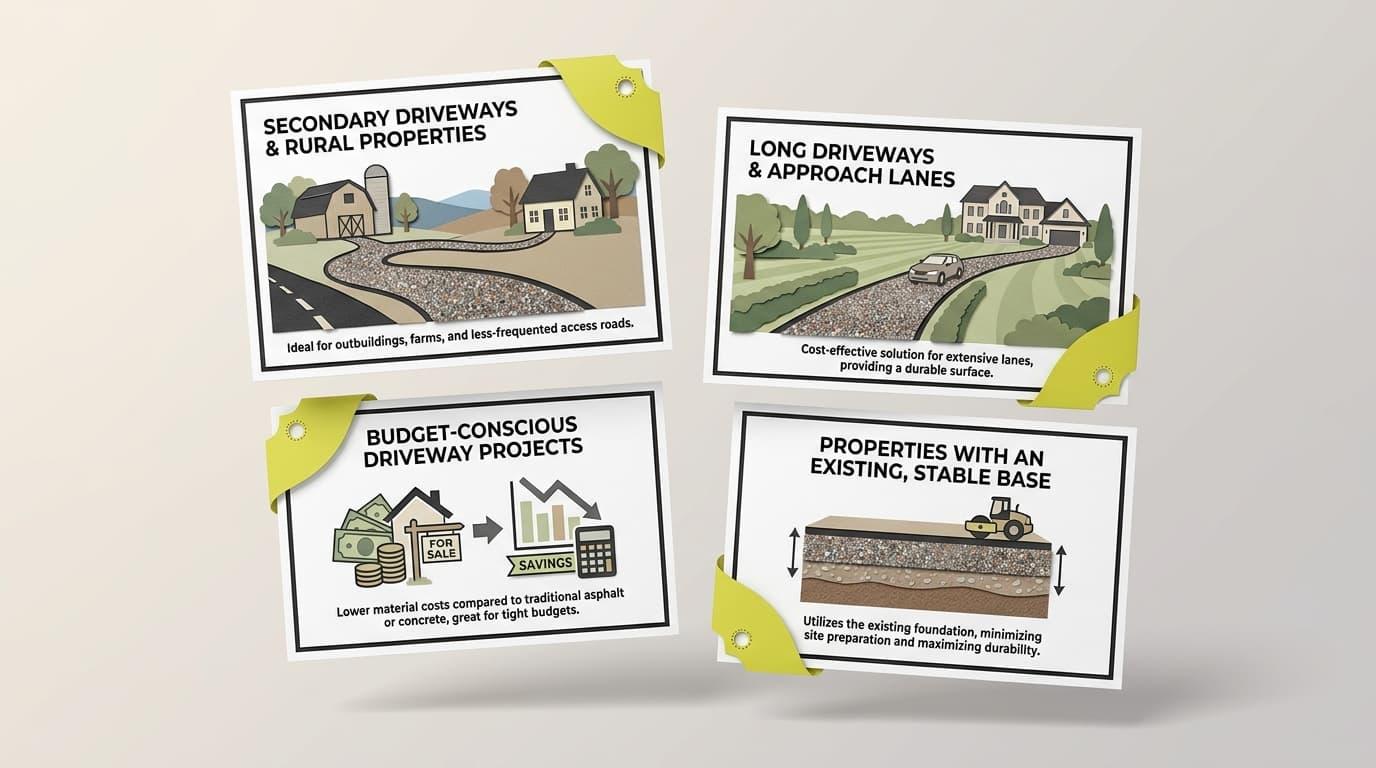
Asphalt millings can be a good fit for homeowners who want a firm driveway surface without the cost of new asphalt. They work especially well for:
- Secondary driveways and rural properties
- Long driveways and approach lanes
- Budget-conscious driveway projects
- Properties with an existing, stable base
For a prominent front driveway where appearance is a priority, new asphalt or concrete may be a better choice. A finished asphalt surface provides a smoother, more uniform appearance, while concrete offers another durable option.
Our repair-or-replace decision guide can also help when you’re deciding whether an existing surface is worth improving or replacing.
Questions to Ask When Getting a Quote
A detailed quote should break the estimate into the main items so you can compare contractors on scope, not just price. Reputable providers should explain what is included before you sign anything. Before choosing a contractor, ask:
- What compacted depth and total tonnage does the quote include?
- Is delivery included, and how is the delivery cost calculated?
- Does the price include grading and base preparation?
- What equipment will be used for compaction?
- Where do the millings come from, and are they screened for consistency?
- Should the site be cleared of rocks and debris before delivery and installation?
Clear answers can help you compare quotes based on the actual scope of work rather than simply choosing the lowest number.
Get a Millings Driveway Estimate Based on Your Property
The cost of an asphalt millings driveway depends on more than the price per ton. Your driveway size, existing base, grading needs, delivery distance, and compaction requirements all influence the final price.
That’s why online averages can only give you a starting point. A site-specific estimate gives you a clearer picture of what your project will actually require.
At Bart’s Asphalt, we can evaluate your driveway, identify the preparation it needs, and provide pricing based on your property rather than a generic estimate.
If you’re considering millings for a new driveway or replacement, we’re happy to help you compare your options and understand the costs before work begins.
Get Your Free Driveway Estimate
Frequently Asked Questions About Asphalt Millings Cost
How much does a dump truck load of asphalt millings cost?
A standard dump truck carries about 10 to 16 tons of millings. At $10 to $40 per ton, that puts a picked-up load around $100 to $640 before delivery charges.
How much does a 1,000-square-foot driveway cost with new hot-mix asphalt?
A 1,000-square-foot driveway with new hot-mix asphalt typically costs about $4,000 to $8,000 installed. That is considerably more than the estimated $2,000 to $5,000 million equivalent.
What is the most affordable driveway option overall?
Gravel typically costs the least upfront, followed by asphalt millings and then new asphalt. However, gravel can require more frequent regrading and additional material, which can increase its long-term maintenance costs.
Is it cheaper to pour concrete or install asphalt?
Asphalt generally costs less to install than concrete for residential driveways. Concrete can offer a longer service life with proper installation, but its higher upfront cost makes asphalt more budget-friendly for many homeowners.
How thick should an asphalt millings driveway be?
A 4-inch compacted layer is a common choice for residential driveways in Michigan. To estimate how many tons a driveway needs, start with the square footage, then factor in the compacted depth and material density; some suppliers or contractors may also price or measure area by the square yard instead of the square foot. The appropriate thickness can vary based on traffic, soil conditions, drainage, and whether the existing base requires additional preparation.
Do asphalt millings need to be sealed?
Asphalt millings generally do not receive traditional sealcoating. Their aged binder gradually helps the material knit together through compaction, heat, and traffic, while maintenance typically focuses on grading and re-compacting worn areas.